
In This Article
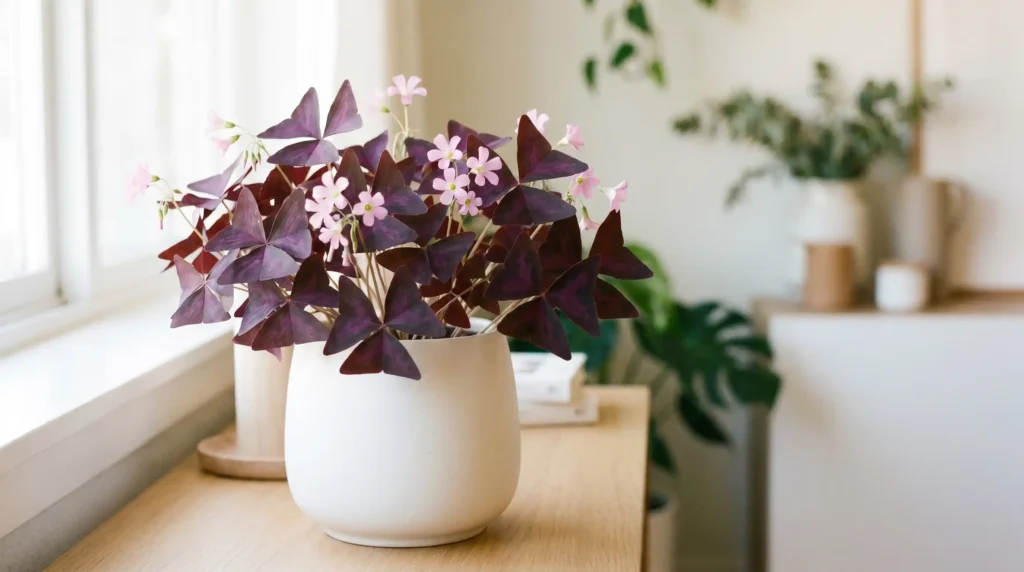
Meet the oxalis love plant (Oxalis triangularis) a cheerful houseplant with deep purple, clover-shaped leaves that fold up at night like tiny butterflies. Native to Brazil, it belongs to the wood sorrel family. It’s beginner-friendly, quick to rebound from neglect, and adds serious drama to any windowsill.
Plant Care Card
| Field | Details |
|---|---|
| Common Name | Oxalis Love Plant, Purple Shamrock, False Shamrock |
| Botanical Name | Oxalis triangularis |
| Family | Oxalidaceae |
| Plant Type | Perennial bulb |
| Mature Size | 6–12 inches tall × 12 inches wide |
| Sun Exposure | Bright indirect light |
| Soil Type | Well-draining potting mix |
| Soil pH | 6.0–7.0 |
| Hardiness Zones | USDA 8–11 |
| Native Area | Brazil, South America |
| Toxicity | Toxic to cats, dogs, and horses |
Oxalis Love Plant Care
The oxalis love plant is genuinely one of the more forgiving houseplants out there a solid choice even if you’ve killed plants before. The sections below cover everything from light and water to propagation and common problems. Trust me, you’ve got this.
Light
The oxalis love plant thrives in bright indirect light a few feet from an east- or west-facing window is ideal. Direct afternoon sun scorches the purple leaves, so avoid harsh midday rays. Too little light causes stretching and color loss. South-facing windows work fine with a sheer curtain.
Soil
Use a light, well-draining potting mix standard houseplant soil plus perlite works perfectly. A simple recipe: 2 parts potting soil + 1 part perlite. Oxalis bulbs rot fast in soggy conditions. According to University of Florida IFAS Extension, proper drainage is key to preventing root disease. Always use pots with drainage holes.
Water
Watering the oxalis love plant is pretty straightforward once you get the rhythm down. Check the top 2–3 inches of soil if they’re dry, it’s time to water. If not, wait a few more days.
Overwatering is the most common mistake. Yellow, mushy leaves at the base usually mean the roots are sitting in too much moisture. On the flip side, underwatering shows up as drooping, papery-thin leaves that perk back up quickly after a drink.
Similar watering needs apply to the oyster plant, another easy-care tropical that hates soggy soil just as much. In fall and winter, when oxalis may go semi-dormant, cut back watering significantly maybe once every two weeks or less.
Temperature and Humidity
Oxalis loves temperatures between 60–75°F (15–24°C) and tolerates most typical household conditions well. It doesn’t need a humidifier or misting routine, which makes it super low-maintenance compared to many tropical plants.
That said, keep it away from cold drafts, air conditioning vents, and heating units. Sudden temperature swings stress the plant and can trigger early dormancy. Anything below 50°F (10°C) for extended periods is a no-go.
Fertilizer
Feed your oxalis love plant with a balanced liquid fertilizer (10-10-10) diluted to half strength every 3–4 weeks during spring and summer. Skip fertilizing entirely in fall and winter, especially if the plant goes dormant. According to Penn State Extension’s houseplant fertilization guide, over-fertilizing can cause salt buildup and leaf burn less is truly more here.
Types of Oxalis Love Plant
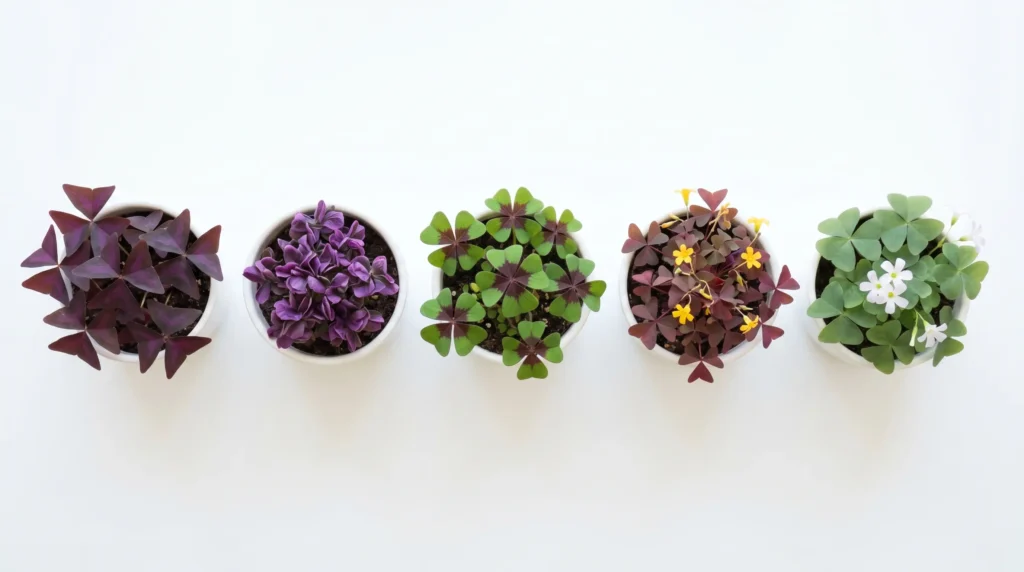
There are several great varieties worth knowing about, each with its own personality.
- Oxalis triangularis ‘Atropurpurea’ — The most common variety. Deep purple-maroon leaves with lighter pink flower clusters. Stunning contrast.
- Oxalis triangularis ‘Mijke’ — A compact cultivar with vivid purple leaves edged in a lighter hue. Great for small spaces.
- Oxalis tetraphylla (Iron Cross) — Four-leafed green foliage with a dramatic dark burgundy cross pattern in the center.
- Oxalis vulcanicola ‘Zinfandel’ — Reddish-purple leaves and bright yellow flowers. A bold, unusual pairing.
- Oxalis regnellii — Green, three-leafed variety with delicate white flowers. A lighter, softer alternative to the purple types.
Pruning
Pruning the oxalis love plant is minimal but helpful. Remove dead or yellowing leaves at the base regularly to keep the plant tidy and encourage new growth.
If the plant looks leggy or sprawling especially after a dormancy period cut it back by about a third. Use clean scissors or pruning shears. This signals the plant to push out fresh, compact growth. Spring is the best time for a harder trim.
Propagating Oxalis Love Plant
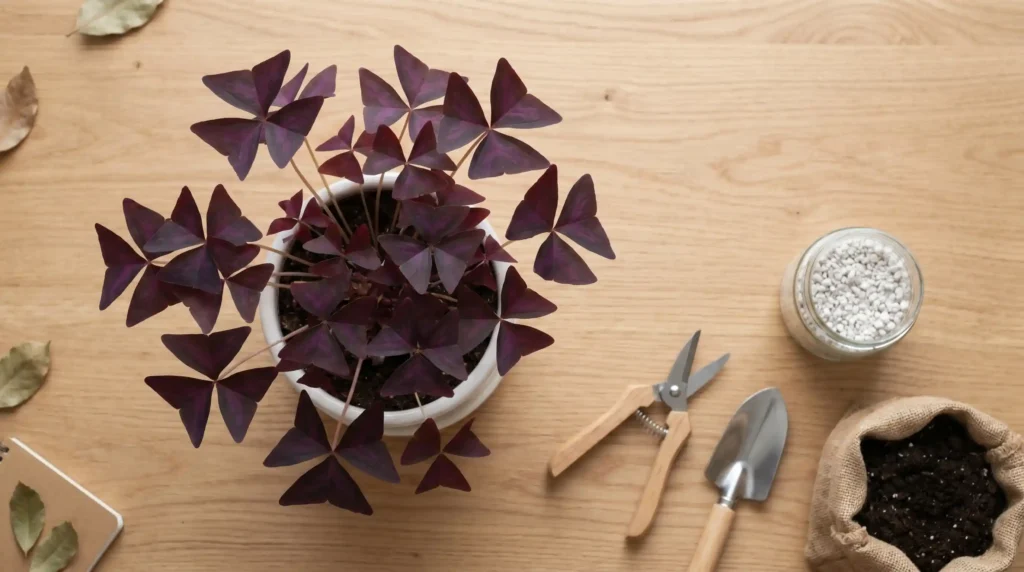
The best time to propagate is during spring or early summer, when the plant is actively growing. The oxalis love plant is one of the easiest plants to multiply you’ll have extras to share in no time.
Propagating by Division
Division is the most reliable and beginner-friendly method for this plant.
Materials needed:
- Sharp, clean knife or your hands
- Fresh potting mix with perlite
- Small nursery pots with drainage holes
- Watering can
Steps:
- Remove the plant from its pot and gently shake off excess soil to expose the bulb cluster underneath.
- Separate the bulbs carefully by hand or with a clean knife. Each section needs at least 2–3 small bulbs to thrive.
- Plant each cluster about 1 inch deep in fresh, well-draining potting mix. Space them evenly so they have room to spread.
- Water lightly and place in a warm spot with bright indirect light. Avoid overwatering at this stage.
Expect new growth within 2–4 weeks under good conditions. This propagation method works equally well for the bridal veil plant, another easy-to-divide houseplant that multiplies fast.
Propagating by Leaf Cuttings in Water
This method works, though it’s slower than division. Snip a healthy stem with a leaf attached at the base. Place the cut end in a small glass of water, keeping the leaf above the waterline. Change the water every few days and watch for tiny roots to appear in 3–5 weeks. Once roots are about an inch long, pot it up in fresh soil. The oxalis love plant isn’t always the most reliable via this method, so division is still the top pick.
Potting and Repotting Oxalis Love Plant
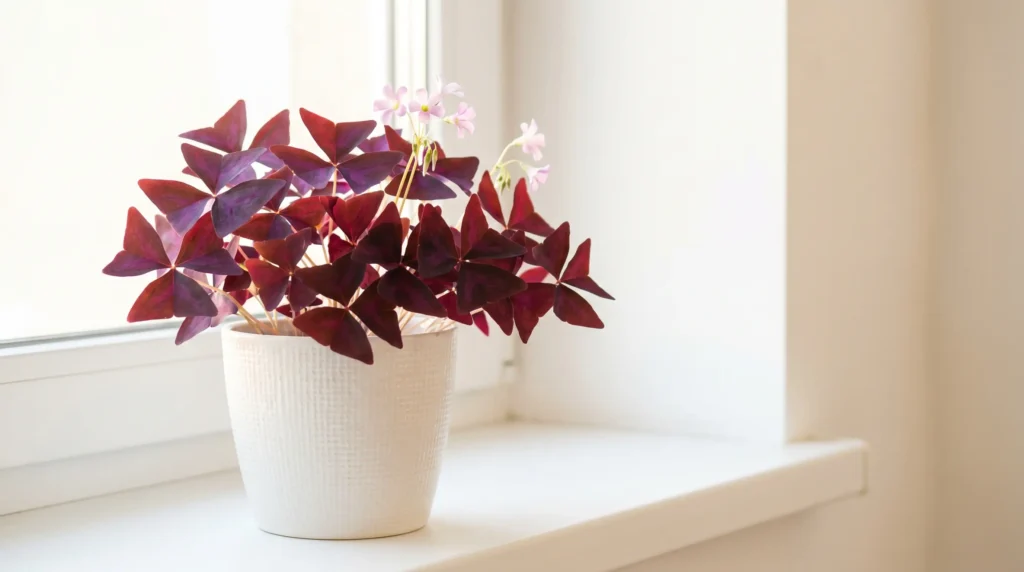
Repot your oxalis love plant every 1–2 years or when you see roots poking out of the drainage holes. Choose a pot that’s 1–2 inches larger in diameter than the current one going too big invites overwatering issues.
The best time to repot is early spring, right before the growing season kicks off. Gently remove the plant, loosen the root ball, and place it in fresh potting mix. Don’t bury the bulbs too deep about 1 inch below the surface is ideal. Water it lightly after repotting and keep it in a warm, bright spot while it settles in. The licorice plant follows a very similar repotting schedule every 1–2 years in spring making it a great companion plant to grow alongside your oxalis.
Common Pests and Diseases
Like most houseplants, oxalis can occasionally attract a few unwanted visitors. Catching them early makes treatment much easier.
Spider Mites
Look for fine webbing on leaf undersides and tiny moving dots. Treat with neem oil spray or a strong water rinse repeated weekly until gone.
Mealybugs
White, cottony clusters near leaf joints are the giveaway. Dab them with rubbing alcohol on a cotton swab and follow up with insecticidal soap.
Scale Insects
Brown bumpy dots stuck to stems that don’t wipe off easily. Scrape them off manually, then treat with neem oil or horticultural oil spray.
Aphids
Small soft-bodied insects clustered on new growth. Blast them off with water, then apply insecticidal soap. Repeat every 4–5 days for a couple weeks.
Fungus Gnats
Tiny flies hovering around the soil signal larvae feeding on roots. Let the soil dry out more between waterings and use sticky yellow traps to catch adults. According to University of California IPM guidelines, allowing the top inch of soil to dry completely is the most effective preventive measure.
Common Problems with Oxalis Love Plant
Here’s how to troubleshoot common issues:
Yellow Leaves
Overwatering is the top cause soggy soil suffocates roots quickly. Nutrient deficiency shows up as pale yellowing across the whole leaf. Sometimes it’s just natural aging. Let soil dry out, add diluted fertilizer if needed. Similar yellowing appears in calandiva plant care when watering is off.
Brown Leaf Tips
Brown tips usually mean low humidity or inconsistent watering. Tap water with high fluoride or chlorine content can also cause crispy brown edges over time. Try switching to filtered or distilled water and misting the area around the plant (not directly on leaves). If underwatering is the cause, the tips brown while the rest of the leaf looks fine just water more consistently.
Drooping or Wilting Leaves
Drooping leaves almost always point to a watering problem either too much or too little. Overwatered oxalis will droop AND feel soft/mushy at the base. Underwatered plants droop but perk right back up within an hour of watering. Check the soil first before doing anything. The black ZZ plant shows similar wilting symptoms when its watering routine gets thrown off.
Leggy Growth / Sparse Foliage
If your plant looks stretched out with long, weak stems and sparse leaves, insufficient light is the cause. Move it closer to a bright window ideally east or west-facing. Pair that with a light trim to encourage bushier, more compact growth going forward.
FAQ
Is Oxalis a Good Indoor Plant?
Yes, absolutely. The oxalis love plant is beginner-friendly, compact, and incredibly rewarding with its unique folding leaves and seasonal blooms.
Is Oxalis Indoor or Outdoor?
Oxalis grows well both ways. Indoors, it thrives in bright indirect light. Outdoors, it prefers partial shade in warmer climates.
Do Oxalis Come Back Every Year?
Yes. Oxalis is a perennial bulb. After dormancy, it reliably regrows each season with fresh foliage and flowers.
Are Oxalis Hard to Take Care of?
Not at all. Oxalis is one of the easier houseplants to maintain just avoid overwatering and give it bright indirect light.
1 thought on “How to Grow and Care for Oxalis Love Plant”
Comments are closed.