
In This Article
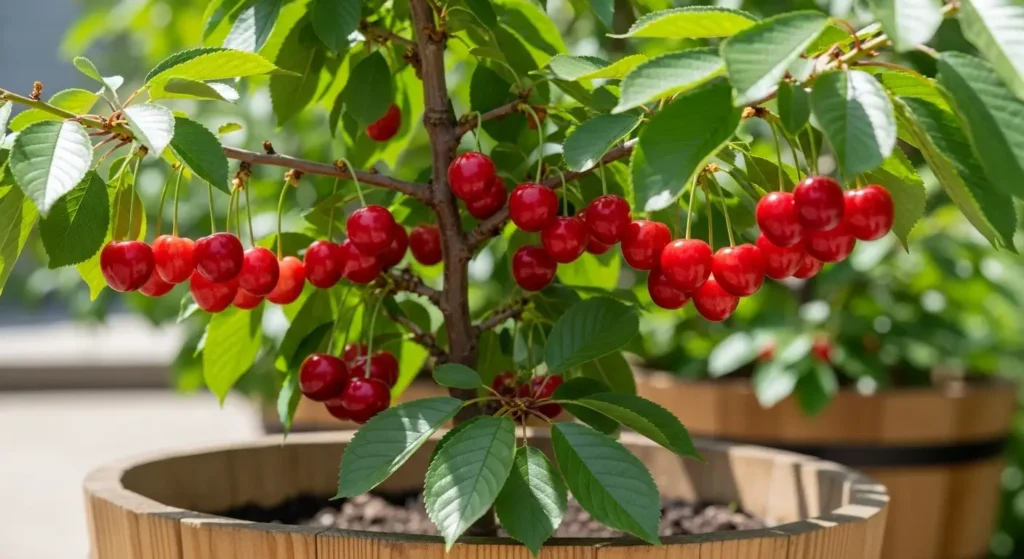
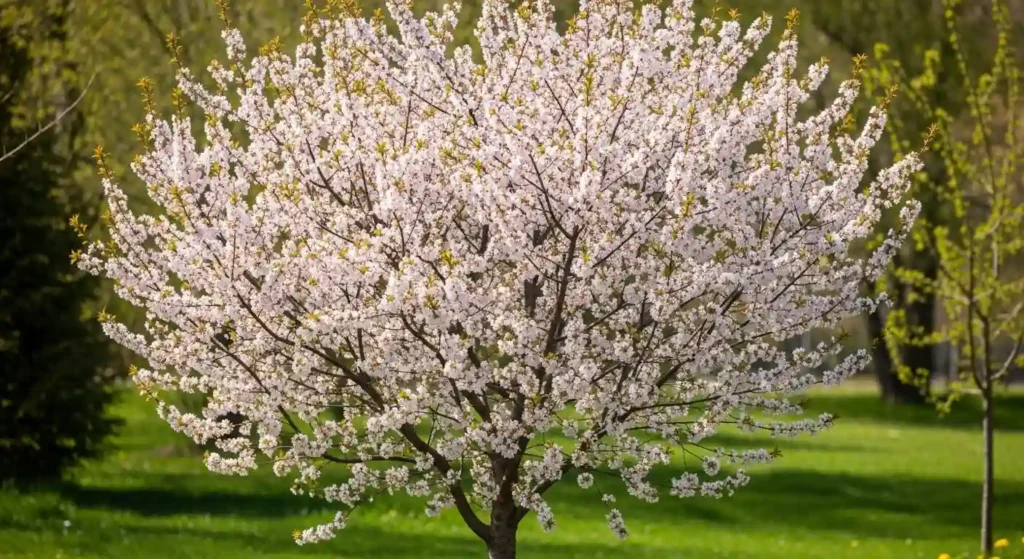
The dwarf cherry tree (Prunus cerasus) is one of the most rewarding fruit trees for home gardens. These compact trees produce stunning spring blossoms followed by glossy red cherries in summer. Native to Western Asia, they thrive in USDA zones 4–9 and are surprisingly easy to grow.
| Care Factor | Details |
|---|---|
| Common Name | Dwarf Cherry Tree |
| Botanical Name | Prunus cerasus, Prunus avium (dwarf) |
| Family | Rosaceae |
| Plant Type | Deciduous fruit tree |
| Mature Size | 8–12 ft tall × 6–10 ft wide |
| Sun Exposure | Full sun (6–8 hours daily) |
| Soil Type | Well-draining, loamy or sandy loam |
| Soil pH | 6.0–7.0 (slightly acidic to neutral) |
| Hardiness Zones | USDA Zones 4–9 |
| Native Area | Western Asia, Europe |
| Bloom Time | Spring (March–April) |
| Toxicity | Leaves and pits toxic to pets and humans; fruit is safe |
Dwarf Cherry Tree Care
A dwarf cherry tree does well once it’s established in the right spot with good drainage and plenty of sun. Here’s what you need to know about light, soil, water, pruning, and feeding. With proper placement, this tree practically takes care of itself through most of the season.
Light
Dwarf cherry trees need full sun at least 6 to 8 hours daily. Less light means sparse blooms and weak growth. Place your tree in a south- or west-facing spot, away from fences or competing trees. In hotter climates, a little afternoon shade is fine, but morning sun is essential.
Soil
Dwarf cherry trees prefer loamy, well-draining soil with a pH of 6.0–7.0. Avoid heavy clay it suffocates roots. Mix in compost and coarse sand if your soil is dense. According to the University of California Agriculture and Natural Resources, organic amendments significantly improve fruit tree establishment in poor soils.
Water
Water newly planted trees once or twice weekly. Once established, water every 1–2 weeks in summer just like a Bartlett pear tree, deep watering during fruit development boosts size and flavor. Reduce watering in fall and winter. Yellowing leaves signal overwatering; wilting means your tree needs a drink.
Temperature and Humidity
Dwarf cherry trees grow best between 45°F and 85°F. Most varieties need 700–1,000 chill hours in winter to set fruit properly. In zones 4–6, mulch with 3–4 inches of wood chips each fall. In hot, humid climates, choose low-chill varieties and maintain good air circulation to reduce disease pressure.
Fertilizer
Feed your dwarf cherry tree with a balanced 10-10-10 slow-release fertilizer once in early spring, just as buds begin to swell. A second light feeding in early summer is fine for young trees. Stop fertilizing by late July to avoid pushing tender new growth that can’t harden before winter frost.
Types of Dwarf Cherry Tree
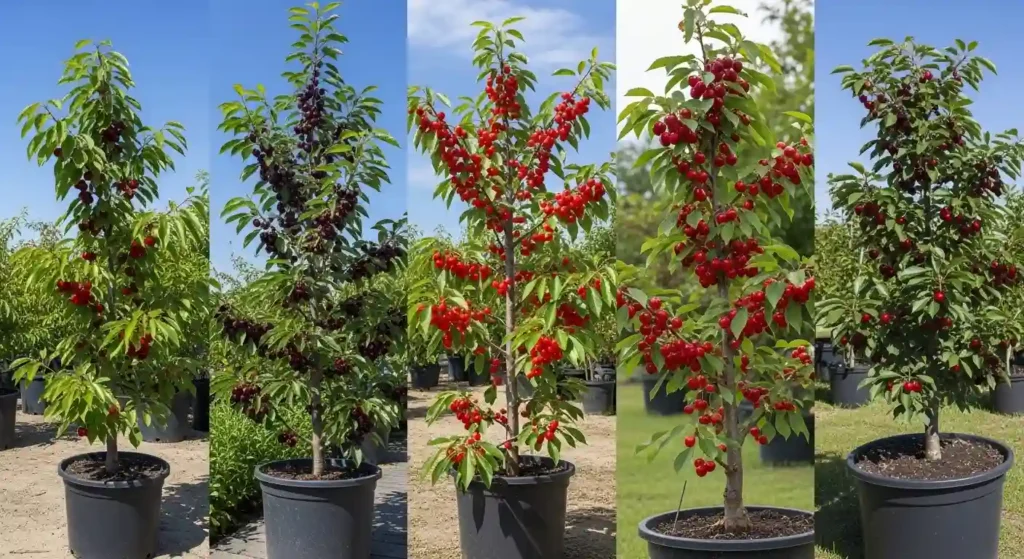
Several outstanding dwarf cherry varieties are worth knowing before you shop. Here are the most popular options:
- Stella Cherry (Prunus avium ‘Stella’): A self-fertile sweet cherry with large, dark red fruits. One of the most popular choices for home gardens. Grows to about 10 feet.
- Compact Stella: A smaller version of Stella, topping out at 8 feet. Perfect for tight spaces or large containers on a sunny patio.
- Northstar Cherry (Prunus cerasus ‘Northstar’): A sour cherry variety bred for cold climates. Exceptionally cold-hardy down to Zone 4. Produces bright red, tart cherries ideal for pies and preserves.
- Meteor Cherry (Prunus cerasus ‘Meteor’): Another cold-hardy sour type, self-fertile, and very reliable in northern gardens. The fruit hangs late into summer.
- Black Gold Cherry: A semi-dwarf sweet cherry with rich, dark red-black fruit. Self-fertile with excellent disease resistance. A great choice for smaller yards.
Pruning
Prune your dwarf cherry tree in late winter or very early spring, just before buds open. This is the best time to shape the tree, remove dead or crossing branches, and open up the canopy for better airflow. Avoid heavy pruning in fall fresh cuts can invite disease during wet winter weather.
Use sharp, clean pruning shears for small branches and a pruning saw for anything thicker than an inch. Cut back to an outward-facing bud at a slight angle. Aim for an open vase shape with 3–5 main scaffold branches. Regular pruning keeps dwarf cherry trees at a manageable size, improves light penetration, and directly boosts your fruit yield each year.
Propagating Dwarf Cherry Tree
The best time to propagate a dwarf cherry tree is in late spring or early summer, when the tree is actively growing and cuttings root most reliably.
Propagating by Stem Cuttings
Stem cuttings are the most practical method for home gardeners. Like growing a Eureka lemon tree from cuttings, success comes down to using healthy new growth and keeping humidity high during rooting.
Materials needed:
- Sharp, sterile pruning shears
- Rooting hormone powder or gel
- Small pots with well-draining potting mix
- Clear plastic bags or a humidity dome
Steps:
- Take your cutting. In late spring, snip a 6–8 inch stem tip from healthy new growth. The cutting should have 3–4 leaf nodes and no flowers or fruit. Cut at a 45-degree angle just below a node.
- Prepare the cutting. Remove the bottom leaves, leaving only 2–3 at the top. Dip the cut end into rooting hormone and tap off any excess powder.
- Plant it. Insert the cutting about 2 inches deep into a moist potting mix. Firm the soil gently around the stem so it stands upright without support.
- Create humidity. Cover the pot with a clear plastic bag to trap moisture. Place in bright, indirect light avoid direct sun, which will cook the cutting. Check moisture every few days.
Roots typically form in 4–8 weeks. Once you see new leaf growth, the cutting has rooted successfully. Gradually remove the plastic cover over a week to harden it off before transplanting outdoors.
Propagating by Grafting
Most commercial dwarf cherry trees are created through grafting a scion (desired variety) is joined to a dwarfing rootstock like Gisela 5 or Colt. This is the same method used for other compact fruit trees like the grapefruit tree, giving you precise control over mature tree size.
Steps for simple cleft grafting:
- Prepare the rootstock. Cut a healthy rootstock stem cleanly across with a sharp grafting knife in early spring.
- Prepare the scion. Cut a 4–6 inch shoot from your desired dwarf cherry variety, with 2–3 buds.
- Join them. Make a vertical split in the rootstock and insert the scion so the cambium layers align on at least one side.
- Wrap and seal. Secure with grafting tape and seal the cut with grafting wax to prevent moisture loss.
Grafts take about 3–4 weeks to show signs of success. New bud swelling and leaf growth from the scion confirm a successful join. This method is trickier than cuttings but produces a true dwarf cherry tree that stays reliably compact over its lifetime.
Planting and Transplanting Dwarf Cherry Tree
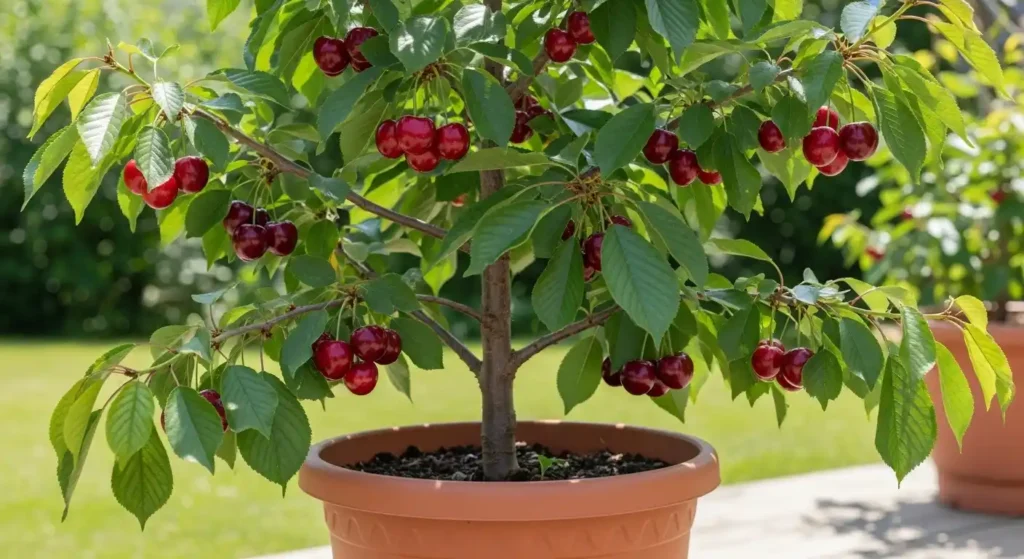
Plant your dwarf cherry tree in early spring after the last frost, or in early fall at least 6 weeks before the ground freezes. Spring planting gives the tree a full growing season to establish before its first winter. According to the USDA Plants Database, Prunus varieties perform best when planted in well-prepared, well-draining sites with full sun exposure. Space trees 10–15 feet apart to allow for mature spread and good air circulation.
Dig a hole twice as wide as the root ball but only as deep as the root ball itself. Set the tree so the graft union sits 2 inches above the soil line burying the graft can cause the rootstock to take over and the tree to lose its dwarfing habit. Backfill with native soil and water deeply.
Transplanting established dwarf cherry trees is stressful and should only be done on young trees under 3 years old. Move them in early spring before new growth begins, and water thoroughly for the first month after transplanting.
Common Pests and Diseases
Like most garden fruit trees, dwarf cherry trees can occasionally face pest or disease challenges especially during warm, humid weather. Staying on top of issues early makes a big difference.
Aphids
Look for clusters of tiny green or black insects on new shoots and curling leaves. Knock them off with a strong stream of water or apply insecticidal soap directly to affected growth. This pest also commonly targets raspberry plants grown nearby, so inspect both at the same time.
Spider Mites
Tiny webbing on the underside of leaves signals mite activity. Treat with neem oil spray, especially in hot and dry conditions when mites thrive. Repeat applications every 7 days until the problem clears.
Powdery Mildew
A white, powdery coating on young leaves and shoots indicates this fungal disease. Improve air circulation by opening up the canopy, and treat with a sulfur-based fungicide. According to Penn State Extension, removing infected leaves promptly and avoiding overhead watering are the most effective prevention strategies for powdery mildew on fruit trees.
Root Rot
Yellowing leaves, wilting despite moist soil, and a soft discolored trunk base are the classic signs. Improve drainage immediately and reduce watering. Severely affected trees rarely recover fully prevention through well-draining soil is far better than treatment.
Cherry Fruit Flies
Small maggots inside the cherries are the telltale sign of fruit fly damage. Use sticky yellow traps hung in the canopy and apply an appropriate organic spray at petal fall to manage populations before they peak.
Common Problems with Dwarf Cherry Tree
Here’s how to troubleshoot common dwarf cherry tree issues:
Poor or No Blooms
Insufficient chill hours, over-fertilizing with nitrogen, and late-season pruning are the main culprits. Too much nitrogen pushes leafy growth instead of flowers. Cutting too late removes next year’s buds. Switch to a low-nitrogen fertilizer and prune only in late winter or early spring.
Yellow or Browning Leaves
Yellow leaves usually mean overwatering, poor drainage, or iron chlorosis a pattern also seen in the Arizona ash tree in compacted soil. Test your soil pH, improve drainage, and add chelated iron if alkalinity is causing yellowing between leaf veins.
Wilting or Drooping
Wilting in summer usually means underwatering during a heat spell water deeply and the tree typically bounces back within hours. Transplant shock causes wilting in newly moved trees; keep soil consistently moist and avoid fertilizing for 4–6 weeks after moving. Crown rot from overwatering can also cause dramatic wilting that doesn’t improve no matter how much you water.
Leggy or Sparse Growth
A leggy dwarf cherry tree almost always points to not enough sun. Move the tree to a sunnier location if possible, or remove competing overhead shade. Over-fertilizing with nitrogen can also produce long, soft shoots with very little side branching. Prune back leggy growth by one-third in early spring and switch to a low-nitrogen formula going forward.
Frost Damage
Late spring frosts after bloom can wipe out an entire cherry harvest in a single night. Look for blackened flower centers or shriveled, undeveloped fruit. Cover the tree with frost cloth when late freezes are forecast, and plant in a spot protected from cold north winds. Some growers delay bloom by mulching heavily around the roots in early spring to keep soil cool and slow bud development just long enough to dodge a final frost.
FAQ
How big do dwarf cherry trees get?
Most dwarf cherry trees reach 8–12 feet tall at maturity. The exact size depends on the rootstock used and your pruning habits.
What is the best dwarf cherry tree?
Stella and Compact Stella are top picks for sweet cherries. Northstar is the best choice for cold climates and sour cherry pies.
Are dwarf cherries edible?
Yes, absolutely. Dwarf cherry trees produce the same full-flavored fruit as standard trees. Yield per tree is smaller but quality is identical.
What is the disadvantage of a dwarf fruit tree?
Dwarf fruit trees have shallow roots and need staking and more frequent watering. They also produce less total fruit than standard-size trees.