
In This Article
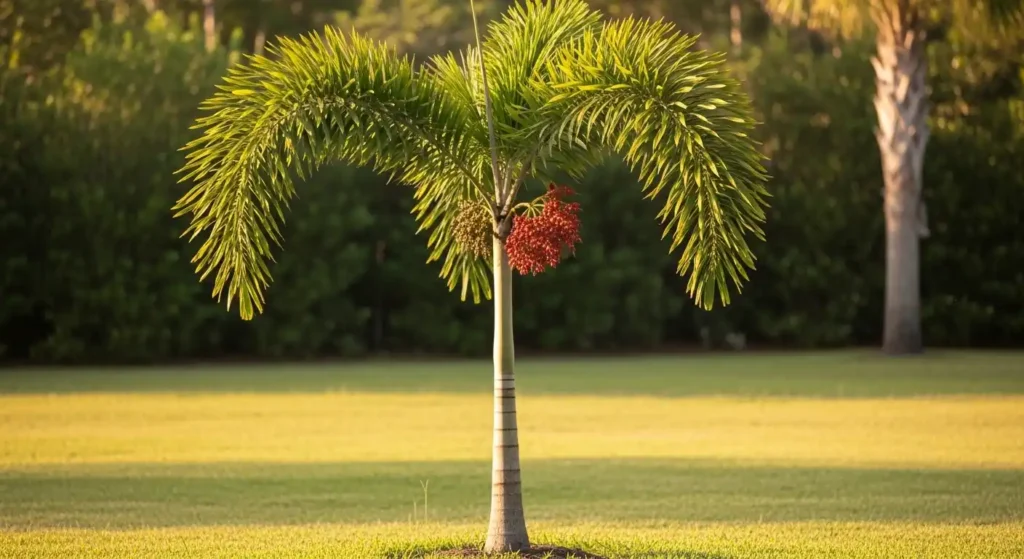
The Christmas palm tree (Veitchia merrillii) is a compact, elegant Florida favorite native to the Philippines. Known for its brilliant red holiday fruits and feathery arching fronds, it thrives in USDA zones 10–11 easy to maintain once established, but sensitive to cold temperatures.
Plant Care Card
| Detail | Info |
|---|---|
| Common Name | Christmas palm tree |
| Botanical Name | Veitchia merrillii |
| Family | Arecaceae |
| Plant Type | Palm tree |
| Mature Size | 15–25 ft tall x 5–8 ft wide |
| Sun Exposure | Full sun |
| Soil Type | Sandy, well-draining |
| Soil pH | 6.0–7.5 (slightly acidic to neutral) |
| Hardiness Zones | 10–11 (USDA) |
| Native Area | Philippines |
| Bloom Time | Spring to summer |
| Toxicity | Non-toxic to humans and pets |
Christmas Palm Tree Care
The Christmas palm tree is relatively low-maintenance once it’s settled into the right spot. Here’s what you need to know about sun, soil, water, temperature, and upkeep. With proper placement, this palm practically cares for itself.
Light
The Christmas palm tree thrives in full sun, needing 6–8 hours of direct light daily. Without it, growth slows and red fruit clusters won’t develop. Plant in an open, south- or west-facing spot. Mature trees need unobstructed sunlight, though young palms tolerate slight afternoon shade while establishing.
Soil
The Christmas palm thrives in sandy, fast-draining soil with a pH of 6.0–7.5. Standing water causes rapid root damage. According to the University of Florida IFAS Extension, coastal sandy soils suit it perfectly. For poor-draining soil, mix 1 part coarse sand or perlite with 2 parts native soil.
Water
Water newly planted Christmas palms every 2–3 days for the first few months, then weekly in summer and every 10–14 days in cooler months. Check moisture 2–3 inches deep before watering. Yellowing fronds signal overwatering; crispy brown tips indicate underwatering. During Florida’s rainy season, skip watering entirely.
Temperature and Humidity
The Christmas palm thrives in temperatures between 65°F and 95°F in humid, tropical conditions. It’s not frost-tolerant temperatures below 30°F can be fatal. During cold snaps, protect young trees with burlap or frost cloth and mulch the base. Established palms handle brief cool spells slightly better.
Fertilizer
Feed your Christmas palm with a slow-release palm-specific fertilizer look for an 8-2-12 or similar formulation three to four times per year during the active growing season (spring through early fall). Reduce feeding in winter when the tree is growing more slowly. Avoid high-nitrogen fertilizers, which can cause lush but weak growth.
Types of Christmas Palm Tree
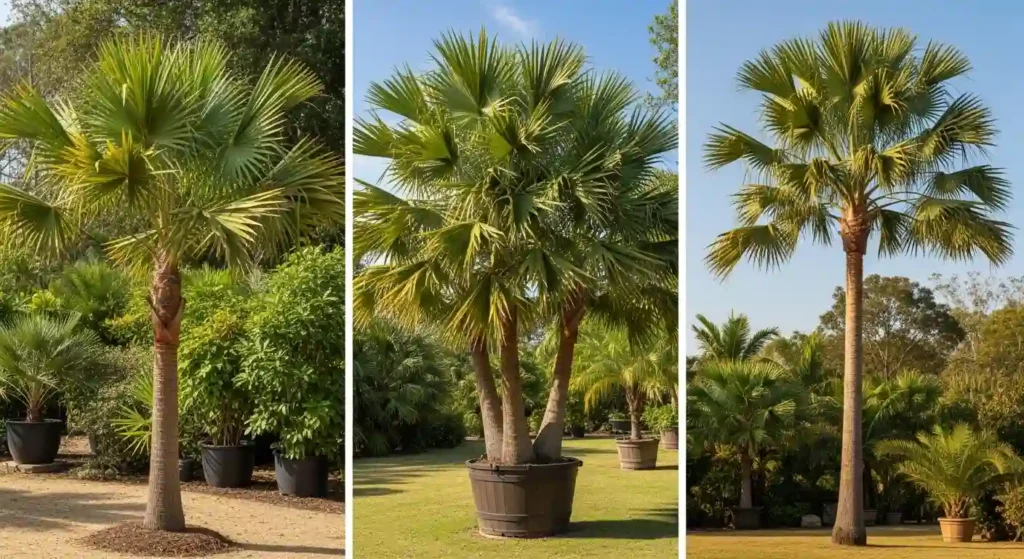
There are a few notable variations and closely related species worth knowing:
- Veitchia merrillii ‘Standard’: The classic single-trunk form most commonly sold in nurseries; reaches 15–25 feet with a slender grey trunk and arching fronds.
- Double Christmas Palm: Not a separate species, but a nursery-grown multi-trunk planting of two or three specimens in one container; creates a lush, fuller look for landscape use.
- Veitchia arecina (Sunshine Palm): A closely related cousin; slightly taller and used similarly in tropical landscaping, sometimes sold interchangeably.
- Veitchia montgomeryana (Montgomery Palm): Larger relative reaching up to 40 feet; similar red fruiting clusters but better suited to spacious commercial landscapes.
Pruning
Prune your Christmas palm tree in late spring or early summer, once the tree has pushed out fresh new fronds. Remove dead, brown, or heavily damaged fronds by cutting them cleanly at the base of the leaf stem. Never remove green fronds this stresses the tree and can reduce fruit production significantly. Only take off naturally browning fronds that hang below horizontal.
Use sharp, clean pruning shears or a pruning saw for larger fronds, and wipe your blades with rubbing alcohol between cuts to avoid spreading any disease. A well-pruned Christmas palm looks tidy, produces more vibrant red fruit clusters, and is less susceptible to pests that hide in dead frond debris. Avoid “hurricane cutting” over-stripping the canopy which weakens the tree long-term.
Propagating Christmas Palm Tree
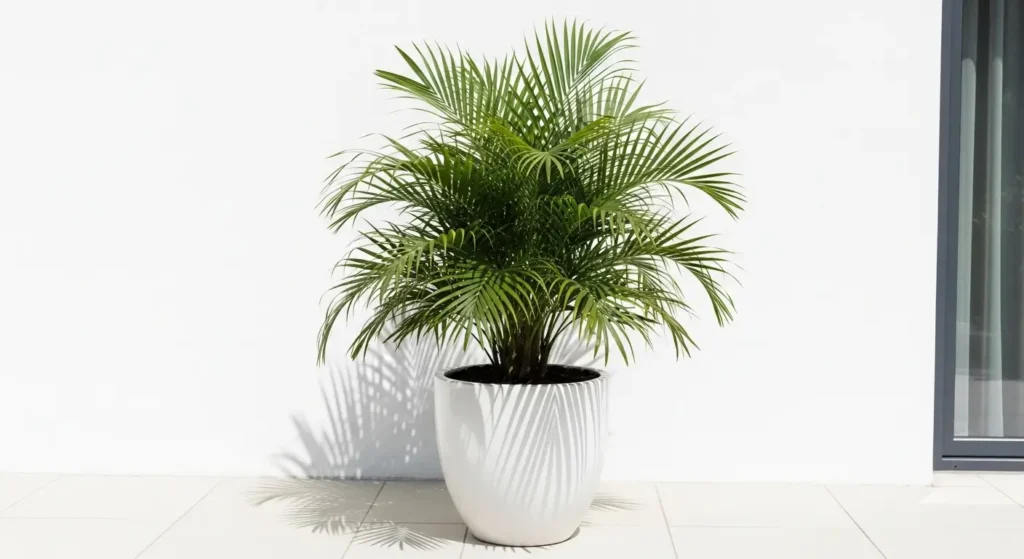
The best time to propagate a Christmas palm tree is in spring or early summer when warm temperatures support germination and root development. The primary method for this species is growing from seed, as it does not produce offshoots or suckers like some other palms.
Propagating by Seed
Growing Christmas palm trees from seeds is the most reliable propagation method and a rewarding project if you have patience.
Materials needed:
- Fresh ripe red fruits (seeds) harvested from the tree
- Bucket of warm water
- Well-draining seed-starting mix (equal parts sand and perlite)
- Small nursery pots or a seed tray
Step 1: Harvest ripe red fruits from the tree in winter. Remove the outer red flesh completely by soaking seeds in warm water for 24–48 hours, then scrubbing off the pulp.
Step 2: Fill small pots with your sand-and-perlite mix. Plant each seed about 1 inch deep, pointed side down if visible, and water gently until the mix is evenly moist.
Step 3: Place pots in a warm, bright spot with temperatures around 80–85°F. A heat mat can be helpful. Keep the mix consistently moist but never waterlogged during germination.
Step 4: Be patient germination takes anywhere from 4 to 12 weeks. Once seedlings sprout a small frond, move them to a sunnier spot and begin feeding lightly with a diluted palm fertilizer.
Propagating by Air Layering
Air layering is rarely used for Christmas palm tree propagation, but it can work for other palms in the Veitchia family with multiple growth points. For standard single-trunk specimens, seed propagation remains the go-to method. Similarly, if you’re growing other tropical trees in your yard, check out our guide on Travelers Palm growing and care for another approach to tropical palm propagation in warm climates.
Planting and Transplanting Christmas Palm Tree
Plant your Christmas palm tree in spring or early summer when soil temperatures are warm and the growing season is underway. Space multiple trees at least 6–8 feet apart to allow for mature canopy spread and good air circulation around the trunks.
Dig a hole twice as wide as the root ball but only as deep as the root ball height you want the root flare sitting right at or just above ground level. Backfill with the native soil mix, water thoroughly, and apply a 3-inch layer of mulch around the base, keeping it away from the trunk. For more detail on planting tropical palms successfully, the USDA Plant Guide is a great reference for hardiness and regional suitability.
Transplant established palms in spring when possible. Water deeply for several weeks after moving to reduce transplant shock. Avoid disturbing palms in fall or winter the cold season is tough enough on them already. Similar to the Sylvester Palm tree, Christmas palms respond well to careful root ball handling during transplanting.
Common Pests and Diseases
Like most garden plants, the Christmas palm tree can face occasional pest or disease challenges. Here’s what to watch for:
Aphids
Look for tiny green or black clusters on new growth. Treat with a strong jet of water or neem oil spray applied weekly until pests clear.
Spider Mites
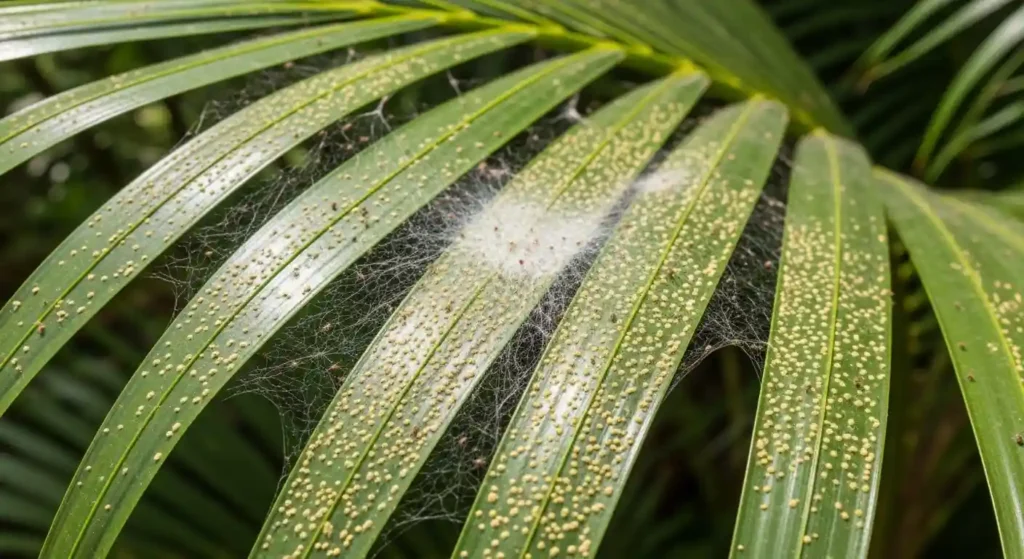
Watch for fine webbing on fronds and a dusty, stippled leaf surface. Treat with insecticidal soap or miticide spray; increase ambient humidity around the plant.
Ganoderma Butt Rot
This serious fungal disease causes white rot at the base of the trunk and is unfortunately incurable. According to University of Florida IFAS, avoid wounding the trunk during mowing or maintenance, as wounds are the primary entry point for this pathogen.
Root Rot
Overwatered or poorly drained palms develop root rot. Look for yellowing lower fronds and soft, dark roots. Improve drainage immediately and reduce watering frequency.
Scale Insects
Tiny brown or white shell-like bumps on fronds indicate scale. Treat with horticultural oil applied directly to affected areas; repeat every two weeks for a month.
Common Problems with Christmas Palm Tree
Here’s how to troubleshoot common issues:
Poor or No Fruit Production
Insufficient sunlight is the most common cause of poor fruiting shaded trees rarely produce fruit clusters. Excess nitrogen fertilizer also diverts energy toward foliage over fruit. Ensure full sun all day, switch to a low-nitrogen palm fertilizer, and note that trees under 5–6 years may not fruit yet.
Yellow or Browning Fronds
Yellowing lower fronds are sometimes normal as the tree drops old growth but widespread yellowing is a warning sign. Overwatering and poor soil drainage cause root stress that shows up as yellow fronds fast. A magnesium or potassium deficiency (very common in sandy Florida soils) also causes yellow or bronze discoloration on older fronds. Treat nutrient deficiency with a palm-specific fertilizer that includes micronutrients. For overwatering, improve drainage and cut back on irrigation.
Wilting or Drooping Fronds
Newly planted trees almost always droop a little that’s normal transplant shock. For established palms, drooping usually points to underwatering during a heat wave or root damage from a recent disturbance. Water deeply and consistently, and mulch the root zone well. Also check for any trunk damage that could be restricting water movement. Similar wilting issues can affect other tropical garden plants like Elephant Ears during summer heat.
Leggy or Sparse Canopy
A thin canopy with stretched, widely spaced fronds almost always means the tree isn’t getting enough light. Move container-grown palms to a sunnier location. For in-ground trees, consider whether a nearby structure or fast-growing tree has started blocking sunlight. Over-fertilizing with nitrogen can also cause weak, elongated frond growth scale back feeding and focus on a balanced palm formula.
Frost Damage
Brown, wilted fronds after cold weather indicate frost burn. Don’t prune damaged fronds right away they actually insulate the still-living growing point. Wait until temperatures stay consistently above 50°F before trimming. If the spear (the newest emerging frond) still pulls away cleanly, the tree has likely survived. Much like the cold sensitivity of Bougainvillea, early protection is far better than recovery. Prevent future damage with frost cloth and deep root mulching before cold nights.
FAQ
How big do Christmas tree palms get?
Christmas palm trees typically reach 15 to 25 feet tall with a slender, self-cleaning trunk and a canopy spread of 5 to 8 feet wide at maturity.
Are Christmas palm roots invasive?
No, Christmas palm tree roots are not invasive. They have a compact, non-aggressive root system, making them safe to plant near walkways, pools, or structures.
What are Christmas palm trees?
Christmas palm trees are compact tropical palms native to the Philippines, prized for clusters of bright red fruits that ripen in December, resembling holiday decorations.
Is a Christmas palm cold hardy?
No, the Christmas palm tree is cold-sensitive, rated for USDA zones 10–11 only. Frost or temperatures below 30°F can cause severe damage or kill the tree.