

In This Article
Blazing star (Liatris spicata) is a striking native perennial with tall purple spikes that bloom from the top down a quirky trait pollinators love. Native to North American prairies, it thrives in USDA zones 3–8 and tolerates cold winters with ease. Easy to grow, it suits beginners and experienced gardeners alike.
Plant Care Card
| Detail | Info |
|---|---|
| Common Name | Blazing star, gayfeather |
| Botanical Name | Liatris spicata |
| Family | Asteraceae |
| Plant Type | Herbaceous perennial |
| Mature Size | 2–4 ft tall × 1–2 ft wide |
| Sun Exposure | Full sun |
| Soil Type | Well-draining, sandy or loamy |
| Soil pH | 5.5–7.0 (slightly acidic to neutral) |
| Hardiness Zones | USDA 3–8 |
| Native Area | Eastern North America |
| Bloom Time | Mid to late summer (July–September) |
| Toxicity | Non-toxic to humans; mildly toxic to dogs and cats |
Liatris Care
This perennial is surprisingly low-maintenance once it gets settled in the right spot. Here’s what you need to know about sun, soil, water, and seasonal upkeep. With good placement, blazing star practically cares for itself.
Light
Blazing star needs full sun at least 6–8 hours daily for strong stems and abundant blooms. Shadier spots lead to leggy growth and far fewer flowers. For best results, place it in a south- or west-facing bed with no overhead shade. In very hot climates, a little afternoon shade is fine.
Soil
Blazing star thrives in well-draining, sandy or loamy soil poor drainage is the fastest way to lose it, as corms rot quickly in clay or waterlogged conditions. According to University of Minnesota Extension, improving drainage before planting boosts establishment success. Aim for a pH of 5.5–7.0 and amend heavy soil with sand and compost.
Water
Water newly planted corms once or twice per week until established. After that, blazing star is quite drought-tolerant water only when the top 2 inches of soil feel dry. During summer, every 7–10 days is usually enough. Overwatered plants show yellowing leaves and mushy stems; underwatered ones look limp but recover quickly.
Temperature and Humidity
Blazing star thrives across USDA zones 3–8, handling frigid winters below -30°F and hot summers above 90°F with ease. Humidity is rarely an issue, though good air circulation helps prevent fungal problems. In colder zones, apply a 2–3 inch mulch layer over corms after the first frost for added winter protection.
Fertilizer
Apply a balanced slow-release fertilizer (10-10-10) once in early spring when new growth appears. Avoid over-fertilizing too much nitrogen leads to floppy stems and reduced blooms. Skip feeding entirely in fall and winter when the plant is dormant.
Types of Liatris
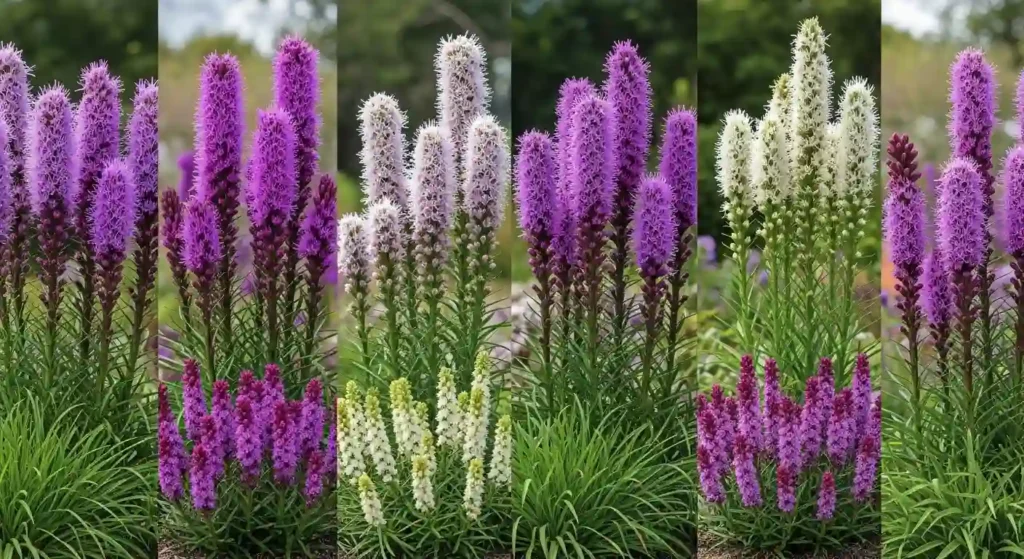
Several species and cultivars offer slightly different heights, colors, and habits here are the best ones to grow.
- ‘Kobold’ (Liatris spicata ‘Kobold’): A compact variety reaching 18–24 inches, with rich violet-purple spikes. Perfect for smaller gardens and front borders.
- ‘Alba’ (Liatris spicata ‘Alba’): The elegant white-flowered form, offering creamy white spikes that pair beautifully with purple coneflower or gerbera daisy.
- ‘Floristan White’: A taller white cultivar reaching 3 feet, excellent for cutting gardens and bouquets.
- Liatris pycnostachya (Prairie blazing star): A wilder species growing 3–5 feet, native to midwestern prairies and extremely cold-hardy.
- Liatris punctata (Dotted blazing star): A drought-tolerant species native to dry prairies ideal for water-wise garden designs in drier regions.
Pruning
Deadhead spent spikes throughout summer, cutting them to the base once flowering finishes. Leave healthy foliage until it dies back naturally. In late fall or early spring, cut all stems to 2–3 inches above ground. This annual cleanup encourages fresh growth similar to how you’d manage other tall perennials like oriental poppy.
Propagating Liatris
The best time to propagate blazing star is spring or early fall when it’s not in active bloom. This perennial multiplies easily, and dividing established clumps actually improves bloom performance over time.
Propagating by Division
Division is the easiest and most reliable propagation method. It gives you instant, bloom-ready plants with very little effort.
Materials needed:
- Garden fork or spade
- Sharp, clean knife or pruners
- Compost-amended planting soil
- Watering can
Step 1: In early spring before new growth emerges or in early fall dig around the clump with a garden fork, working about 6 inches from the base to avoid slicing through corms.
Step 2: Lift the entire clump out and gently shake off excess soil. You’ll find a cluster of rounded, disc-shaped corms connected at the base.
Step 3: Use a sharp, clean knife to separate the corms into individual sections, making sure each division has at least one healthy growing point or visible eye. Discard any soft or discolored corms immediately.
Step 4: Replant each division right away at the same depth about 1–2 inches deep water thoroughly, and expect new growth within 2–4 weeks in spring.
Divide clumps every 3–4 years to prevent overcrowding. Congested plants consistently produce fewer, smaller flower spikes.
Propagating from Seeds
Growing from seed requires patience. Cold-stratify seeds in a damp paper towel in the fridge for 4–6 weeks, then sow indoors 8–10 weeks before the last frost don’t cover them, as they need light to germinate. Expect blooms in year two or three. The University of Illinois Extension offers excellent guidance on starting perennials from seed.
Planting and Transplanting Liatris
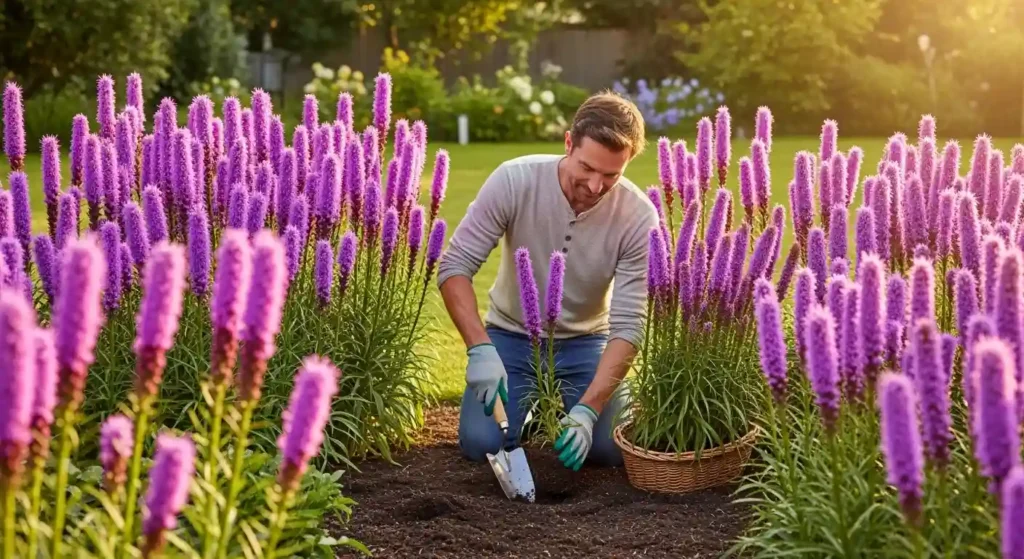
Plant corms in spring after the last frost date, or in early fall at least 6 weeks before the ground freezes. Space them 12–15 inches apart to allow good air circulation and room to multiply. For a bold garden display, plant in groups of 5–7 corms massed plantings look far more dramatic than solo specimens.
Dig a hole 2–3 inches deep and place each corm with the flat side down and the rougher or pointed side facing up. Cover with amended soil and water gently. Correct planting depth is key to reliable blooming, just as it is for other corm-based perennials like crocus. Transplant or divide established clumps every 3–4 years in early spring or fall.
Common Pests and Diseases
Like most garden plants, blazing star can occasionally face pest or disease challenges though it’s generally quite resilient once established. Here’s what to watch for.
Aphids
Look for small green or black insects clustering on new growth and emerging spikes. Treat with a strong spray of water or insecticidal soap applied every few days until populations drop.
Spider Mites
Look for fine webbing on leaves and a dusty, stippled appearance on foliage. Treat with neem oil or insecticidal soap, and water plants consistently during hot, dry spells.
Powdery Mildew
Look for a white, chalky coating on leaves in late summer. Improve air circulation by spacing plants properly and treat with a baking soda solution or a fungicide labeled for powdery mildew.
Root Rot
Look for mushy, darkened corms and stems collapsing at the base. The cause is almost always waterlogged soil. Remove affected material and improve drainage immediately this is why soil prep matters so much.
Caterpillars / Leaf Miners
Look for chewed leaf edges or winding tunnels inside foliage. Hand-pick caterpillars or apply Bacillus thuringiensis (Bt), a natural biological control recommended by USDA integrated pest management resources.
Common Problems with Liatris
Here’s how to troubleshoot the most common issues:
Poor or No Blooms
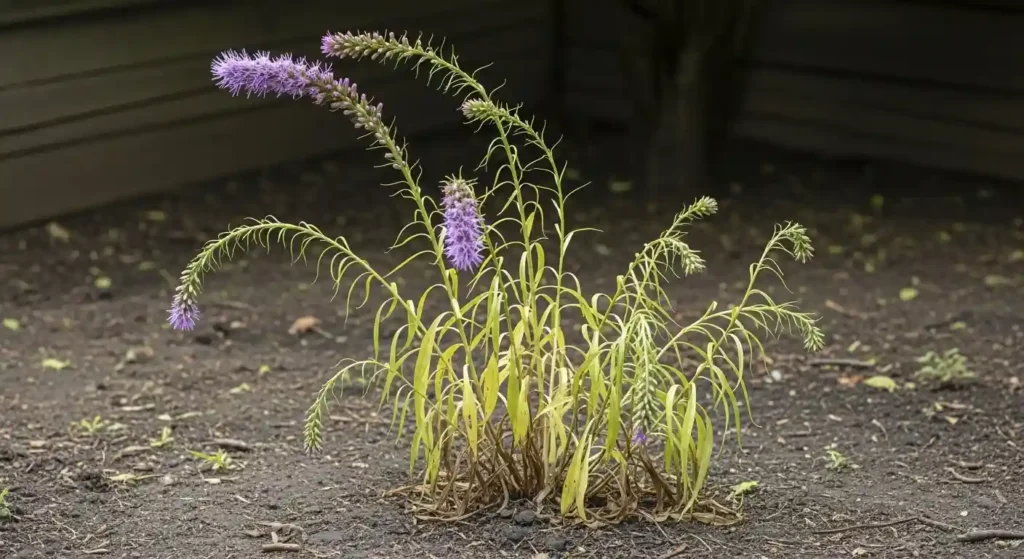
This is the most frequent complaint gardeners have. Insufficient sunlight is usually the culprit fewer than 6 hours of direct sun per day simply won’t support strong flowering. Over-fertilizing with nitrogen is another major cause, pushing leafy growth at the expense of flower spikes. Additionally, overcrowded clumps that haven’t been divided in 4+ years gradually stop blooming. Move plants to a sunnier spot, reduce fertilizer, and divide congested clumps to restore strong performance. A plant that won’t bloom is almost always a placement issue. For comparison, similar sun-related bloom failures occur in tall native perennials like obedient plant.
Yellow or Browning Leaves
Yellow foliage most often signals overwatering or poor drainage the corms are sitting too wet for too long. Nutrient deficiency, particularly a lack of iron in very sandy soils, can also cause yellowing. Finally, natural dormancy in late fall causes foliage to yellow and die back completely, which is entirely normal. For non-seasonal yellowing, check drainage first and cut back on watering before assuming a nutrient problem.
Wilting or Drooping
Wilting is almost always underwatering during hot summer spells. Water deeply and the plant typically bounces back within a day. Transplant shock is another common cause newly divided or moved plants often droop for a week or two before settling in. In extreme heat above 95°F, some midday wilting is normal and not a concern. Similar heat-stress wilting occurs with other summer perennials like tiger lily.
Leggy or Sparse Growth
Leggy, floppy stems are a clear sign of insufficient light. Plants reaching toward sun produce weak, tall stems that fall over without support. This also happens with excess nitrogen, which drives rapid, soft vegetative growth. Moving to a full-sun location is the real fix staking is only a temporary band-aid.
FAQ
Does Liatris come back every year?
Yes, it is a hardy perennial that returns reliably each spring from its corm, growing stronger and producing more blooms with each passing year.
Does Liatris like sun or shade?
Full sun is essential at least 6 to 8 hours of direct light daily. Performance drops sharply in shade, with fewer and smaller flower spikes.
Do Liatris bulbs multiply?
Yes, the corms multiply slowly each season. Dividing clumps every three to four years keeps plants vigorous and prevents overcrowding.
Where is the best place to plant Liatris?
Choose a sunny, well-draining bed with loamy or sandy soil. South- or west-facing garden spots with no overhead shade give the best results.
2 thoughts on “How to Grow and Care for Liatris (Blazing Star)”
Comments are closed.