
In This Article
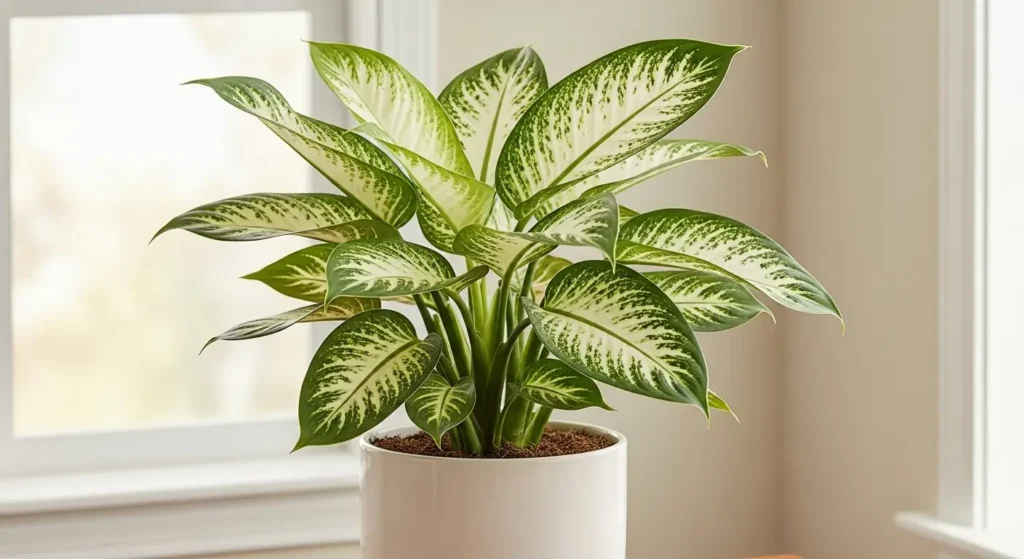
Meet the dumb cane (Dieffenbachia) a bold tropical houseplant with stunning cream, yellow-green, and deep green variegated leaves. Native to Central and South America, it’s moderately easy to care for, making it perfect for beginners and experienced plant parents alike.
Plant Care Card
| Field | Details |
|---|---|
| Common Name | Dumb Cane |
| Botanical Name | Dieffenbachia spp. |
| Family | Araceae |
| Plant Type | Tropical perennial |
| Mature Size | 3–5 ft tall × 1–2 ft wide |
| Sun Exposure | Bright indirect light |
| Soil Type | Well-draining, rich potting mix |
| Soil pH | 6.0–7.0 |
| Hardiness Zones | USDA Zones 10–12 (outdoors) |
| Native Area | Central and South America |
| Toxicity | Toxic to humans and pets |
Dumb Cane Care
Dumb cane is a moderately easy-to-care-for houseplant that rewards a little attention with gorgeous, lush foliage. The sections below cover everything from light and soil to watering, fertilizing, and propagation. You’ve got this it’s much easier than it looks!
Light
Dumb cane thrives in bright indirect light. A spot near an east- or north-facing window is ideal, where it gets gentle morning light without harsh afternoon sun. Too much direct sunlight will scorch those beautiful leaves fast.
On the flip side, too little light leads to dull, faded foliage and leggy growth. If your space is on the darker side, a spot a few feet back from a west-facing window works well. Basically, think “bright room, no direct rays” and you’re good to go.
Soil
This tropical plant loves a rich, well-draining potting mix. A standard indoor potting soil works well on its own, but mixing in some perlite really helps with drainage. A solid DIY ratio is 2 parts potting mix : 1 part perlite.
Good drainage is non-negotiable soggy soil is the fastest way to trigger root rot. According to the University of Florida IFAS Extension’s guide on container soil mixes, proper aeration in the root zone is essential for tropical plants grown indoors.
Water
Water your dumb cane when the top 2–3 inches of soil feel dry. Stick your finger in if it comes out damp, wait a few more days. In spring and summer, that usually means watering every 5–7 days.
In fall and winter, cut back significantly. The plant slows down and needs far less moisture. Overwatering is the #1 killer watch for yellowing leaves and a mushy stem base. Underwatering shows up as drooping and crispy leaf edges.
Similar watering habits apply to the nerve plant, another humidity-loving tropical that hates sitting in wet soil.
Temperature and Humidity
Dumb cane prefers temperatures between 60–80°F (15–27°C). It tolerates typical household temps just fine, but keep it away from drafts, air conditioning vents, and heating units those sudden swings stress it out.
As a tropical plant, it appreciates moderate to high humidity (50–60%). If your home is dry, especially in winter, a small humidifier or a pebble tray with water does wonders.
Fertilizer
Feed your dumb cane with a balanced liquid fertilizer (10-10-10) every 2–4 weeks during spring and summer. Stop fertilizing in fall and winter when growth slows. Over-fertilizing causes salt buildup and brown leaf tips, so less is genuinely more here.
Types of Dumb Cane
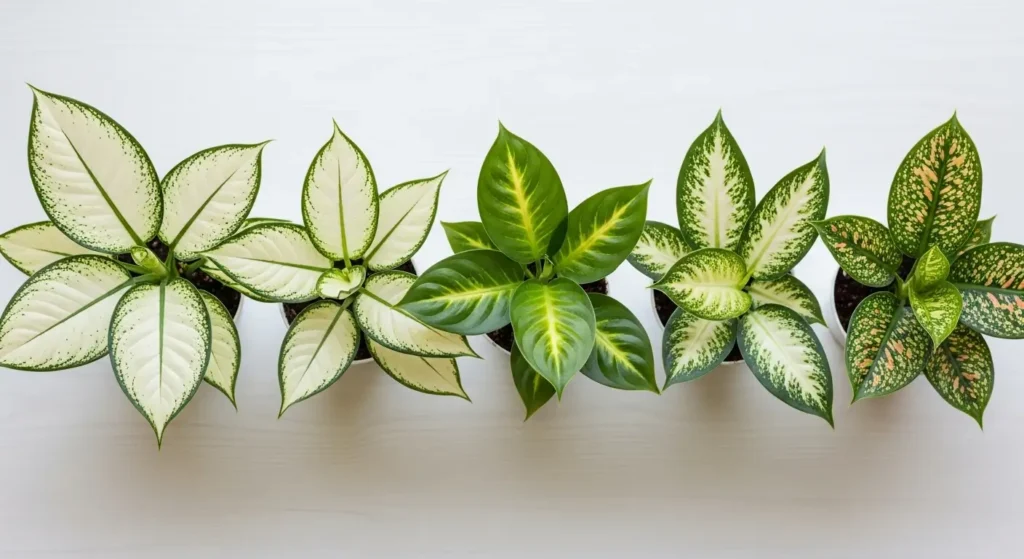
There are quite a few Dieffenbachia varieties out there, each with its own personality. Here are some popular ones worth knowing:
- Dieffenbachia seguine The most common species. Large green leaves with creamy white or yellow centers. Can grow up to 5 feet tall indoors.
- Dieffenbachia ‘Camille’ Compact and very popular. Pale yellow-cream leaves with dark green edges. Great for smaller spaces and shelves.
- Dieffenbachia ‘Tropic Snow’ Wide, dark green leaves with heavy white variegation. Bold and seriously eye-catching.
- Dieffenbachia ‘Compacta’ A smaller, bushier cultivar with heavily spotted, creamy-green leaves. Perfect for desks or side tables.
- Dieffenbachia maculata Also called “Spotted Dumb Cane.” Features distinctive white spots and streaks across deep green leaves.
Propagating Dumb Cane
The best time to propagate dumb cane is during spring or early summer when the plant is actively growing. Two reliable methods work really well: stem cuttings and division.
⚠️ Important: Dumb cane sap is toxic and can irritate skin and eyes. Always wear gloves when handling cuttings!
Propagating by Stem Cuttings
Stem cuttings are the most popular and reliable way to grow new dumb cane plants.
Materials needed:
- Sharp, sterilized scissors or pruning shears
- Small pot with well-draining potting mix
- Rooting hormone (optional but helpful)
- Gloves
Steps:
Step 1: Put your gloves on first. Cut a healthy stem section 4–6 inches long with at least 2–3 leaf nodes. Make a clean cut just below a node.
Step 2: Remove the lower leaves, leaving only 1–2 leaves at the top. Dip the cut end in rooting hormone if you have it.
Step 3: Plant the cutting about 2 inches deep in moist potting mix. Firm the soil gently around the base so it stands upright on its own.
Step 4: Place the pot in bright indirect light and keep the soil consistently moist (not soggy). Cover loosely with a plastic bag to hold in humidity.
Roots typically form in 3–5 weeks. Once you see new leaf growth pushing out, your cutting has rooted successfully!
Propagating by Division
Division is quick and easy if your dumb cane has grown into a large, multi-stemmed clump. This method also works beautifully for the calathea plant, another tropical that benefits from being divided every couple of years.
Step 1: Remove the entire plant from its pot and gently shake off excess soil. Look for natural separation points where individual stems meet the root mass.
Step 2: Use clean scissors or your hands to carefully separate individual stems with their own roots still attached.
Step 3: Pot each division into its own container with fresh potting mix. Water lightly and place in bright indirect light.
New growth should appear within 2–4 weeks once the divisions settle into their new homes.
Potting and Repotting
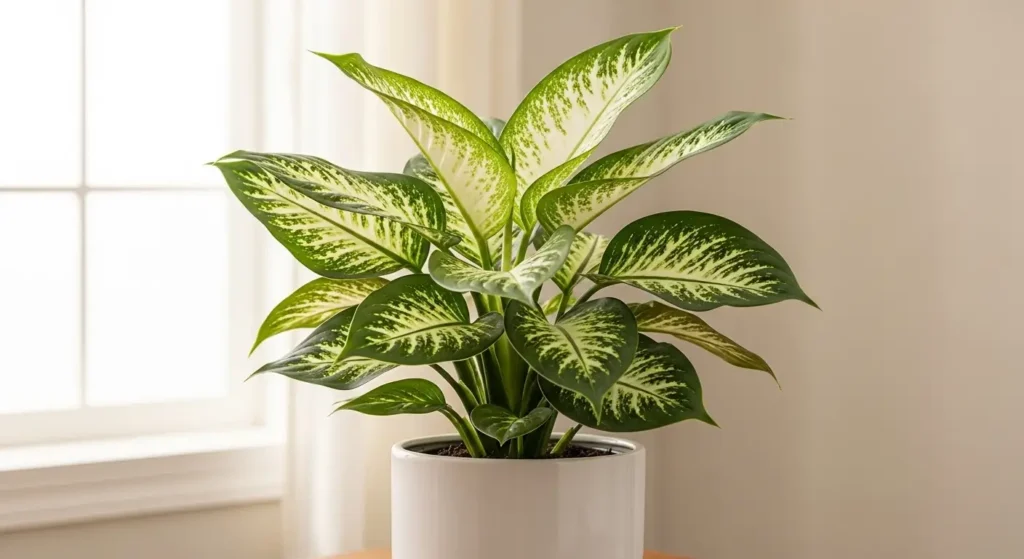
Repot your dumb cane every 1–2 years or when you see roots poking out of the drainage holes. A tight pot slows growth noticeably. Move up to a pot 1–2 inches larger in diameter nothing bigger, or the extra soil holds too much moisture and invites root rot.
When repotting, always choose a container with good drainage holes. Spring is the best time to do it, just as active growth kicks in. Gently loosen the root ball, shake off old soil, and settle the plant into fresh potting mix. Water thoroughly after repotting and keep it in bright indirect light while it adjusts.
Common Pests and Diseases
Like most tropical houseplants, dumb cane can occasionally attract a few unwanted visitors. Catching them early makes treatment much easier.
Spider Mites
Look for fine webbing and tiny dots on leaf undersides. Treat by wiping leaves with a damp cloth and spraying with neem oil or insecticidal soap weekly.
Mealybugs
White cottony clusters in leaf joints are the telltale sign. Dab with rubbing alcohol on a cotton swab, or spray with diluted neem oil to clear them out.
Scale Insects
Watch for brown, shell-like bumps on stems and leaves. Scrape them off manually and follow up with insecticidal soap spray to stop a comeback.
Aphids
Look for tiny green or black insects clustered on new growth. A strong blast of water knocks most of them off; neem oil handles the stubborn ones.
Fungus Gnats
These tiny flies hover around soggy soil. Let the top layer dry out between waterings and use sticky yellow traps to catch adults. The University of California IPM program has a solid guide on managing common houseplant pests without harsh chemicals.
Common Problems
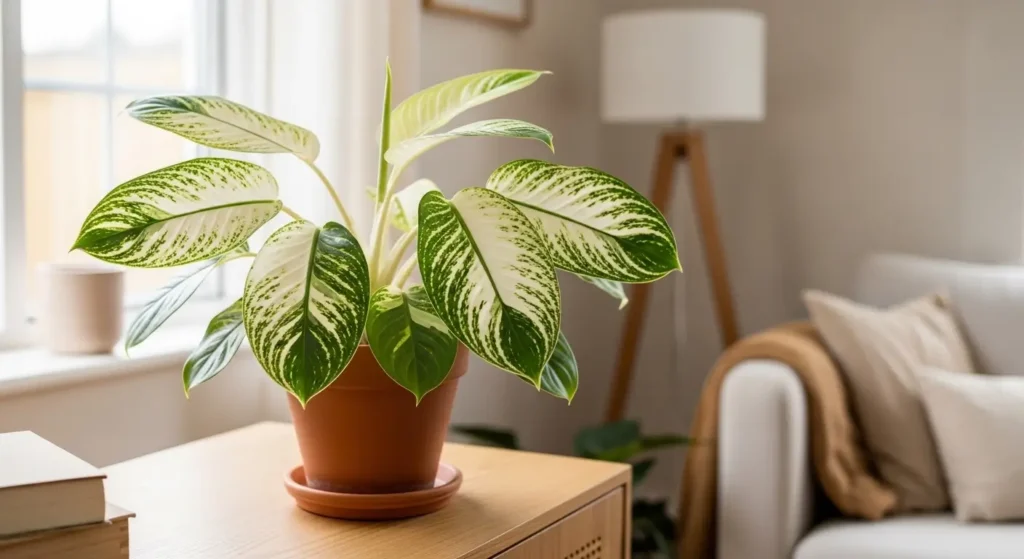
Here’s how to troubleshoot the most common dumb cane issues:
Yellow Leaves
Yellow leaves are the most frequent complaint with this plant. Overwatering is usually the culprit check the soil and let it dry out before watering again. A nutrient deficiency can also cause yellowing, especially if the plant hasn’t been fed in several months. Sometimes, older lower leaves just yellow naturally as they age that’s totally normal. Adjust your watering routine and add a balanced fertilizer if needed. The same yellowing issues show up in arrowhead plants when they’re overwatered, so the fix is identical.
Brown Leaf Tips
Brown tips are almost always a humidity or water quality issue. Tap water high in fluoride or chlorine can burn leaf edges over time try switching to filtered or rainwater. Low humidity is another common cause, especially in dry winter months. Boost moisture with a humidifier or set the pot on a pebble tray filled with water.
Drooping or Wilting Leaves
Drooping can go either way overwatering or underwatering. Check the soil first. Dry and pulling away from the pot? Water thoroughly right away. Wet and soggy? Hold off and let it dry completely. If the soil looks fine, gently remove the plant and check the roots for rot. This same wilting issue frequently affects the swiss cheese plant when its watering schedule goes off track.
Leggy Growth / Sparse Foliage
Long, stretched-out stems with few leaves? That’s a light problem, plain and simple. Move your dumb cane closer to a bright window as soon as possible. Prune leggy stems back to encourage bushier, fuller growth the plant responds quickly. The rubber plant faces the exact same issue in low-light spots, and a brighter location fixes both plants fast. Penn State Extension also notes that consistent light and fertilization during the growing season helps prevent sparse indoor foliage altogether.
FAQ
Is the dumb cane plant poisonous?
Yes, dumb cane is toxic to humans and pets. Its sap contains calcium oxalate crystals, causing mouth irritation and swelling if ingested. Keep away from children and animals.
How do you take care of a dumb cane plant?
Dumb cane needs bright indirect light, well-draining soil, and watering only when the top few inches dry out. Fertilize monthly in spring and summer.
What are the benefits of dumb cane plants?
Dumb cane adds bold tropical beauty indoors and may help improve air quality. It’s relatively low-maintenance and grows quickly with minimal effort.
What is the difference between Dieffenbachia and dumb cane?
They’re the same plant! “Dumb cane” is the common name for plants in the Dieffenbachia genus. The nickname comes from the plant’s toxic sap causing temporary speech loss.
1 thought on “How to Grow and Care for Dumb Cane”
Comments are closed.