
In This Article
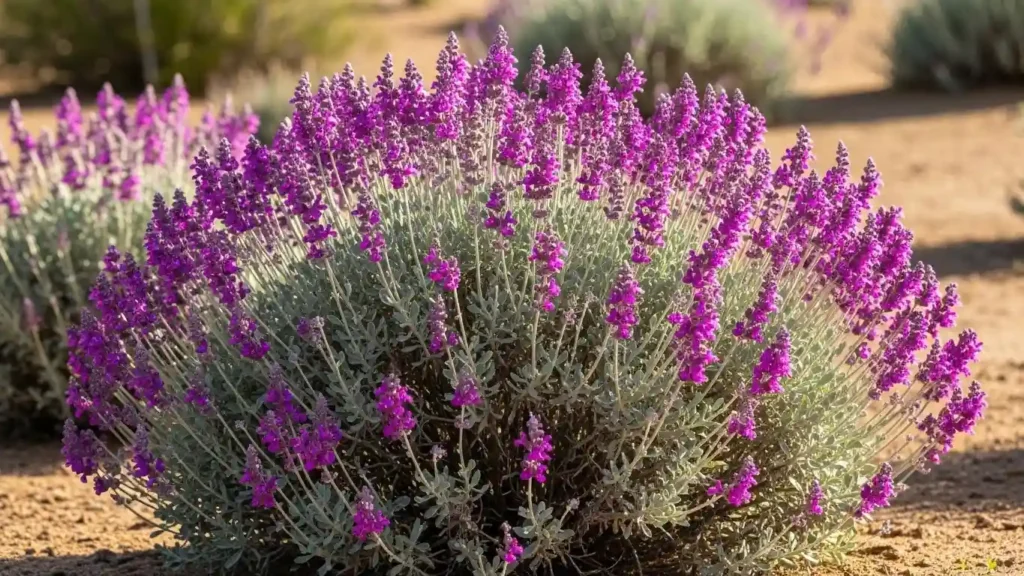
If you’re looking for a low-maintenance shrub that thrives in heat and drought, texas sage is your answer. Also known as Leucophyllum frutescens, this stunning plant features silvery-gray foliage and vibrant purple flowers that appear after rainstorms. Native to the Chihuahuan Desert and southwestern United States, this hardy shrub is perfect for xeriscaping and water-wise landscapes. Honestly, it’s one of the easiest outdoor plants you can grow if you live in a hot, arid climate.
Texas Sage Care Card
| Care Aspect | Details |
|---|---|
| Common Name | Texas Sage, Texas Ranger, Barometer Bush, Cenizo |
| Botanical Name | Leucophyllum frutescens |
| Family | Scrophulariaceae |
| Plant Type | Evergreen shrub, perennial |
| Mature Size | 5-8 feet tall, 4-6 feet wide |
| Sun Exposure | Full sun (6-8 hours daily) |
| Soil Type | Well-draining, sandy or gravelly |
| Soil pH | 7.0-8.5 (neutral to alkaline) |
| Hardiness Zones | USDA Zones 8-11 |
| Native Area | Texas, New Mexico, northern Mexico |
| Toxicity | Non-toxic to pets and humans |
Texas Sage Care
This desert-adapted shrub is incredibly easy to maintain once established in the right conditions. The following sections cover everything from light requirements to common problems, helping you grow healthy, vibrant plants. You’ll love how little effort it takes to keep this beauty thriving year-round.
Light
Texas sage absolutely loves full sun and needs at least 6-8 hours of direct sunlight daily to thrive. In fact, the more sun it gets, the more profusely it blooms with those gorgeous purple flowers. If your plant doesn’t receive enough light, you’ll notice leggy, sparse growth and significantly fewer blooms.
Plant it in the hottest, sunniest spot in your yard where nothing else seems to grow. This shrub can handle intense afternoon sun and reflected heat from walls or pavement without missing a beat.
Soil
The key to success with texas sage is well-draining soil that doesn’t hold moisture. This plant thrives in sandy, gravelly, or rocky soil with excellent drainage and prefers slightly alkaline conditions. Heavy clay soil or areas where water pools will quickly lead to root rot.
If you’re dealing with dense soil, amend it with coarse sand and gravel in a 1:1:1 ratio with your existing soil. Additionally, planting on a slight slope or mound helps water drain away from the roots. According to Oklahoma State University Extension, proper soil drainage is essential for preventing root diseases in drought-tolerant plants.
Water
Here’s the thing about watering texas sage less is definitely more. During the first few weeks after planting, water deeply every 3-4 days to help roots establish. Once established (after 2-3 months), this shrub becomes extremely drought-tolerant and only needs watering during extended dry periods.
Check the soil by sticking your finger 3-4 inches down. If it feels dry, give it a deep soak. Overwatering causes yellowing leaves and root rot, while severe underwatering leads to leaf drop. In winter, cut back watering to once every 2-3 weeks or rely on natural rainfall.
Similar watering needs apply to French lavender, another drought-tolerant beauty that prefers drier conditions. Moreover, during monsoon season or periods of high humidity, you’ll often see your plant burst into bloom that’s why it’s called the Barometer Bush!
Temperature and Humidity
Texas sage thrives in hot temperatures ranging from 50°F to 110°F and can tolerate brief cold snaps down to 10-15°F. This heat-loving shrub actually performs best in muggy, hot conditions and blooms most abundantly when humidity rises after dry periods.
Nevertheless, protect young plants from hard freezes below 10°F, as prolonged cold can damage foliage. Keep plants away from cold drafts and ensure they’re in a warm microclimate if you’re in Zone 8.
Fertilizer
Texas sage is a light feeder that thrives in poor soil, so don’t overdo it. Apply a balanced, slow-release fertilizer once or twice a year in late winter or early spring. Too much fertilizer causes leggy growth and reduces flowering, so less is definitely more with this low-maintenance shrub.
Types of Texas Sage
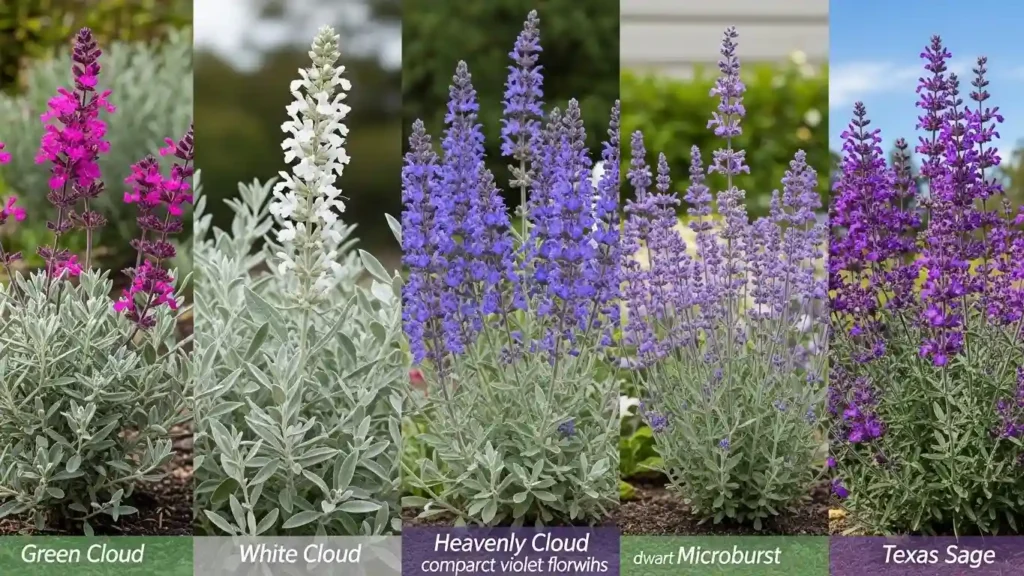
While Leucophyllum frutescens is the classic species, several cultivars and related species offer different colors and sizes for your landscape.
- ‘Green Cloud’: Features gray-green foliage and magenta flowers, growing 8-10 feet tall. This variety is more forgiving of heavy pruning and can tolerate slightly more moisture than other types.
- ‘White Cloud’: Produces pure white flowers instead of purple, creating a striking contrast with its silver foliage. Reaches 6-8 feet tall and blooms profusely after rains.
- ‘Heavenly Cloud’: A hybrid with silvery leaves and vibrant violet-blue flowers. This compact variety stays around 3-5 feet tall, making it perfect for smaller gardens.
- ‘Lynn’s Everblooming’ (Leucophyllum langmaniae): A Texas Superstar selection with continuous blooming from spring through fall. Features light purple flowers and gray foliage, reaching 5 feet tall.
- ‘Microburst’: A dwarf variety growing only 3 feet tall and wide, with ultraviolet flowers. Interestingly, this cultivar tolerates heavier, damper soils better than most texas sage varieties.
Pruning
Texas sage has a naturally attractive rounded form that rarely needs pruning, but occasional maintenance keeps it looking its best. If pruning is necessary, do it in late March or early April before new growth begins. Remove dead branches and lightly shape the plant by cutting stems at varying lengths rather than shearing uniformly.
Avoid using hedge trimmers to shape this shrub into tight balls this causes the interior to thin out and eventually die back. Instead, use hand pruners for selective cuts that maintain a natural appearance.
Propagating Texas Sage
The best time to propagate texas sage is during late spring through summer when the plant is actively growing. This shrub roots easily from cuttings, making it simple to expand your collection or share with friends.
Propagating by Softwood Cuttings
This is the easiest and most reliable propagation method for texas sage. Take 4-6 inch cuttings from new growth in late spring or early summer when stems are still flexible and green.
Materials needed:
- Sharp, clean pruning shears
- Rooting hormone powder (optional but helpful)
- Well-draining potting mix (50% perlite, 50% peat moss)
- 4-inch pots with drainage holes
Steps:
- Cut a 4-6 inch section from the tip of a healthy stem, making your cut just below a leaf node. Remove all leaves from the bottom 2 inches of the cutting, leaving 2-3 leaves at the top.
- Dip the cut end in rooting hormone if desired, though many gardeners find it roots easily without it. Insert the cutting 2 inches deep into pre-moistened potting mix.
- Place the pot in bright, indirect light and keep the soil consistently moist but not soggy. Mist the cutting daily to maintain humidity around the foliage.
- Roots typically develop in 3-4 weeks. Gently tug on the cutting if you feel resistance, roots have formed and it’s ready to transplant outdoors.
Propagating by Semi-Hardwood Cuttings
For late summer propagation, take slightly more mature cuttings from wood that’s starting to harden. Follow the same process as softwood cuttings, but expect rooting to take 6-8 weeks instead of 3-4. These cuttings are more durable and less likely to wilt during the rooting process.
Planting and Transplanting Texas Sage
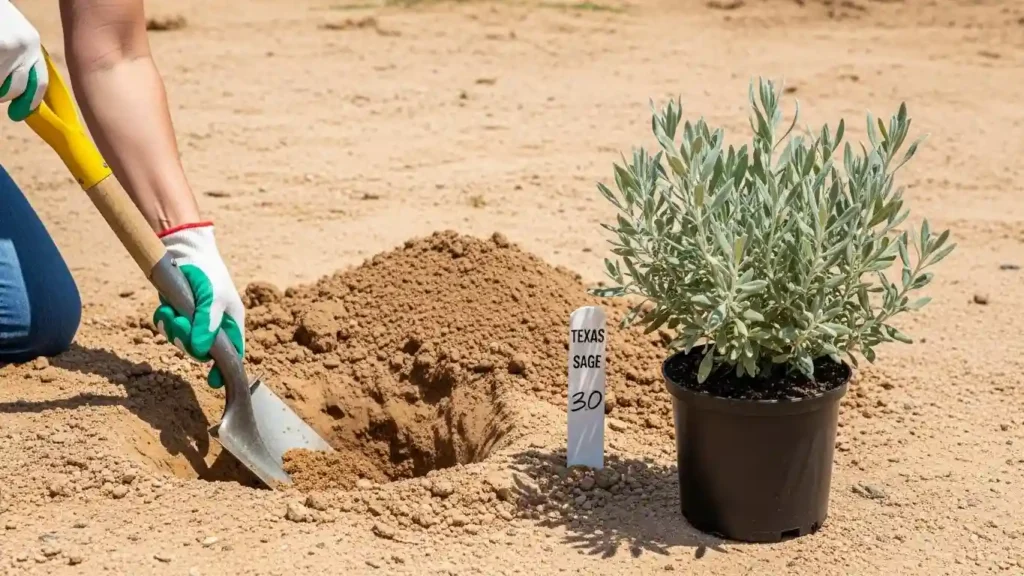
Plant texas sage in spring or fall when temperatures are moderate. Space plants 3-4 feet apart if creating a hedge, or 5-6 feet apart for individual specimens. Dig holes twice as wide as the root ball but no deeper.
Place the plant at the same depth it was growing in its container, backfill with native soil, and water deeply. Mature plants rarely need transplanting, but if necessary, do it in early spring. Dig a wide circle around the plant to preserve as many roots as possible.
Common Pests and Diseases
Like most drought-tolerant natives, texas sage has few pest problems and resists most diseases when grown in proper conditions.
Spider Mites
Look for fine webbing on leaves and stippled, yellowing foliage, especially during hot, dry weather. Treat with insecticidal soap or a strong spray of water to dislodge mites from leaves.
Scale Insects
These appear as small, brown bumps on stems and leaves that don’t move. Scrape off with your fingernail or treat with horticultural oil applied directly to affected areas.
Aphids
Soft-bodied insects cluster on new growth and leaf undersides, causing distorted leaves. Blast them off with water or use neem oil spray for persistent infestations.
Root Rot
Caused by overwatering or poor drainage rather than pests. Prevent by ensuring excellent soil drainage and avoiding frequent watering once plants are established.
Common Problems with Texas Sage
Here’s how to troubleshoot common issues with your texas sage:
Yellow Leaves
Most commonly, yellowing leaves indicate overwatering or poor drainage. Texas sage roots need oxygen and will suffocate in soggy soil, causing foliage to turn yellow. Cut back watering significantly and improve drainage around the plant.
Nutrient deficiency can also cause yellowing, though this is rare in established plants. If leaves are pale yellow rather than bright yellow, apply a light feeding in spring. Sometimes older leaves naturally yellow and drop as new growth emerges, which is perfectly normal.
Similar issues occur with snake plants when they receive too much water.
Brown Leaf Tips
Brown tips usually result from inconsistent watering during the establishment period or extremely low humidity. While texas sage tolerates drought, young plants need regular water until their roots spread.
Additionally, water quality can cause brown tips if you have hard water with high mineral content. Using rainwater or allowing tap water to sit overnight before watering can help.
Drooping or Wilting Leaves
If leaves suddenly droop, check soil moisture immediately. Both severe underwatering and overwatering cause wilting, so assess the soil before taking action. For dry soil, water deeply and the plant should perk up within hours.
Overwatered plants with drooping leaves need better drainage and less frequent watering. If the soil stays constantly wet, you may need to transplant to a better location. These symptoms also affect croton plants when watering isn’t balanced.
Leggy Growth or Sparse Foliage
Insufficient sunlight is the culprit when texas sage becomes tall and spindly with sparse leaves. This plant absolutely requires full sun to maintain compact growth and abundant foliage.
Move container plants to a sunnier location or prune back leggy growth in spring to encourage bushier regrowth. Plants in partial shade will never achieve the dense, compact form that makes texas sage so attractive.
FAQ
Does Texas sage like full sun or shade?
Texas sage thrives in full sun and requires at least 6-8 hours of direct sunlight daily for optimal growth. Shade causes leggy growth and reduces flowering significantly, so plant it in the hottest, sunniest spot available.
How large do Texas sage get?
Most varieties reach 5-8 feet tall and 4-6 feet wide at maturity, though dwarf cultivars stay around 3 feet. Growth is slow, typically taking 2-3 years to reach mature size in optimal conditions.
Is Texas sage hallucinogenic?
No, texas sage is not hallucinogenic and contains no psychoactive compounds. It’s completely safe and non-toxic to humans and pets. You’re probably thinking of a different plant with a similar name.
What is Texas sage good for?
Texas sage excels in xeriscaping, water-wise landscapes, and drought-tolerant gardens. It provides year-round silvery foliage, attracts pollinators when blooming, requires minimal maintenance, and thrives in hot, dry conditions where other plants struggle.