
In This Article
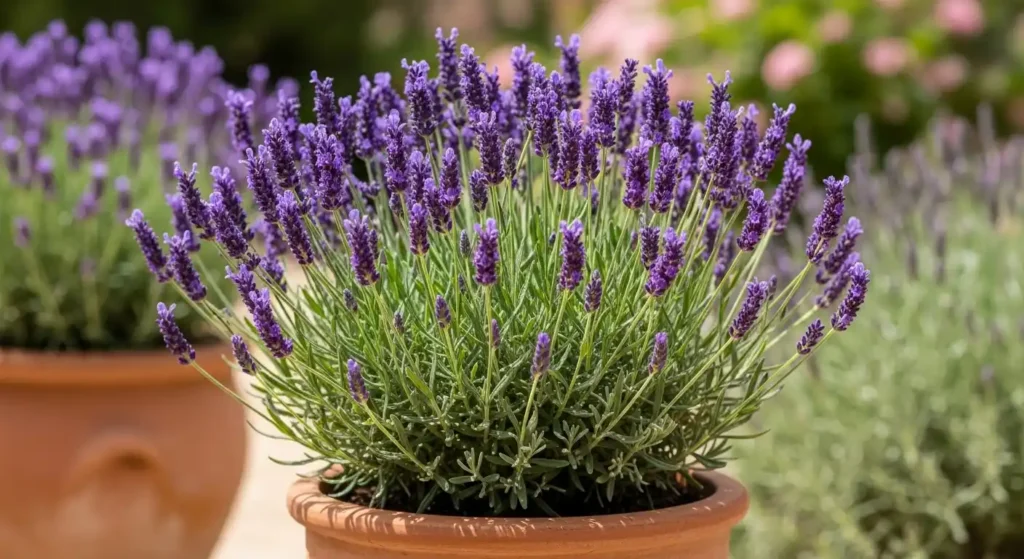
French lavender (Lavandula dentata) is a stunning Mediterranean herb loved for its toothed, aromatic leaves and unique flower spikes topped with showy bracts. Native to Spain and the western Mediterranean region, this perennial plant brings both fragrance and visual appeal to gardens and containers. Honestly, it’s one of the easiest lavenders to grow if you’re just starting out with herbs. Unlike some fussier varieties, French lavender adapts well to various climates and tolerates heat better than its English cousins.
French Lavender Care Card
| Property | Details |
|---|---|
| Common Name | French Lavender, Fringed Lavender |
| Botanical Name | Lavandula dentata |
| Family | Lamiaceae |
| Plant Type | Perennial, Evergreen Shrub |
| Mature Size | 2-3 feet tall, 2-4 feet wide |
| Sun Exposure | Full sun (6+ hours daily) |
| Soil Type | Sandy, well-draining |
| Soil pH | 6.5-7.5 |
| Hardiness Zones | USDA 8-11 |
| Native Area | Spain, Mediterranean |
| Toxicity | Non-toxic to humans; mildly toxic to pets |
French Lavender Care
French lavender is a relatively low-maintenance plant that adapts well to various growing conditions. Here’s everything you need to know about light, water, soil, and more to keep it thriving. With just a little attention, you’ll have a healthy, happy plant.
Light
French lavender absolutely loves full sun and needs at least 6-8 hours of direct sunlight daily for best growth and flowering. Place it in the sunniest spot you’ve got think south-facing locations for maximum exposure. Too little light and your plant will get leggy with sparse blooms.
If you’re growing indoors, a bright south or west-facing window works best. Furthermore, consider supplementing with grow lights during winter months if natural light is limited.
Soil
This Mediterranean native thrives in sandy, well-draining soil that’s on the lean side. Heavy, moisture-retentive soils lead to root rot fast. The key is drainage, drainage, drainage!
For container planting, try a simple DIY mix: 2:1 ratio of potting soil to coarse sand or perlite. Moreover, avoid amending garden soil with compost French lavender actually prefers slightly poor soil that mimics its native habitat.
Water
Let’s face it, overwatering is the biggest mistake people make with lavender. Water deeply but infrequently, allowing the top 2-3 inches of soil to dry completely between waterings. For established plants, this usually means watering every 7-10 days during the growing season.
Newly planted lavender needs more consistent moisture for the first few months until roots establish. Signs of overwatering include yellowing leaves and drooping stems, while underwatering causes crispy brown leaves.
During fall and winter, reduce watering significantly maybe once every 2-3 weeks depending on rainfall. The dormant period requires minimal moisture to prevent root rot.
Temperature and Humidity
French lavender prefers temperatures between 60-75°F during the day and doesn’t mind warm conditions up to 90°F. It’s more heat-tolerant than English lavender. Nevertheless, protect plants from frost below 25°F.
This species handles typical household humidity levels just fine. Actually, French lavender prefers low to moderate humidity around 40-50%. Therefore, keep it away from cold drafts, air conditioning vents, and heating registers.
Fertilizer
Feed sparingly with a balanced liquid fertilizer (10-10-10) diluted to half strength every 4-6 weeks during spring and summer. Honestly, this plant doesn’t need much overfertilizing leads to foliage growth at the expense of flowers. Stop fertilizing in fall and winter.
Propagating French Lavender
The best time to propagate is during spring and summer when growth is most active.
Propagating by Stem Cuttings
Stem cuttings are the most reliable method for propagating French lavender and maintain the parent plant’s characteristics.
Materials needed:
- Clean, sharp scissors or pruning shears
- Small pots (4-inch)
- Well-draining potting mix (2:1 sand and peat)
- Rooting hormone (optional)
- Clear plastic bag or humidity dome
Step 1: Select healthy, non-flowering stems from the current season’s growth and cut 3-4 inch sections just below a leaf node. Remove leaves from the bottom two inches of each cutting.
Step 2: Dip the cut end in rooting hormone if using, then insert cuttings about 2 inches deep into moistened potting mix. Firm the soil gently around each cutting.
Step 3: Place pots in a bright location with indirect light and cover with a plastic bag to maintain humidity. Keep soil slightly moist but not soggy.
Step 4: Check for root development after 3-4 weeks by gently tugging the cutting. Once roots are established (usually 4-6 weeks), remove the plastic covering and gradually acclimate plants to normal conditions.
Expect 70-80% success rate with softwood cuttings taken in spring. Therefore, take several cuttings to increase your chances of success.
Propagating by Layering
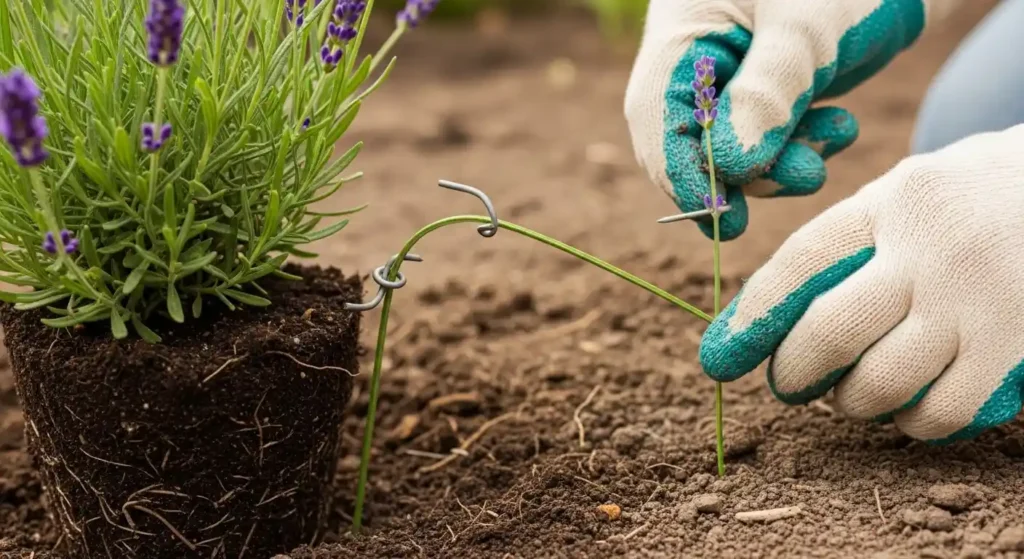
Layering works well for French lavender and requires minimal effort. Choose a flexible, low-growing stem in spring and bend it down to the soil. Make a small wound on the underside where it touches ground, then bury this section 2-3 inches deep.
Secure it with a U-shaped pin or small stone while keeping the tip exposed. Water regularly and roots typically form within 2-3 months. Once well-rooted, sever the new plant from the parent.
Potting and Repotting French Lavender
French lavender actually prefers being slightly root-bound, so don’t rush to repot. Signs you need to repot include roots growing out of drainage holes or significantly slowed growth. Typically, repotting every 2-3 years is sufficient.
When repotting, choose a container only 1-2 inches larger in diameter than the current pot. Use terracotta pots that breathe well and wick away excess moisture. Moreover, make sure your new pot has adequate drainage holes. Water lightly after repotting and keep in bright, indirect light for a few days.
Common Pests and Diseases
Like most herbs, French lavender can occasionally attract pests, though it’s naturally quite resistant.
Spider Mites
Look for fine webbing between stems and tiny specks on leaf undersides causing yellowing. Treat with insecticidal soap spray or neem oil applied every 5-7 days. Increase humidity slightly and rinse leaves regularly.
Whiteflies
These tiny white insects cluster on leaf undersides and fly up when disturbed, weakening plants. Spray with insecticidal soap or use yellow sticky traps to reduce populations effectively.
Aphids
Soft-bodied insects congregate on new growth, leaving sticky residue. Blast them off with water or apply neem oil solution. Introduce beneficial insects like ladybugs for biological control.
Fungus Gnats
Small black flies hovering around soil indicate overly wet conditions. Let soil dry out more between waterings and consider applying beneficial nematodes to eliminate larvae.
Common Problems with French Lavender
Here’s how to troubleshoot common issues:
Yellow Leaves
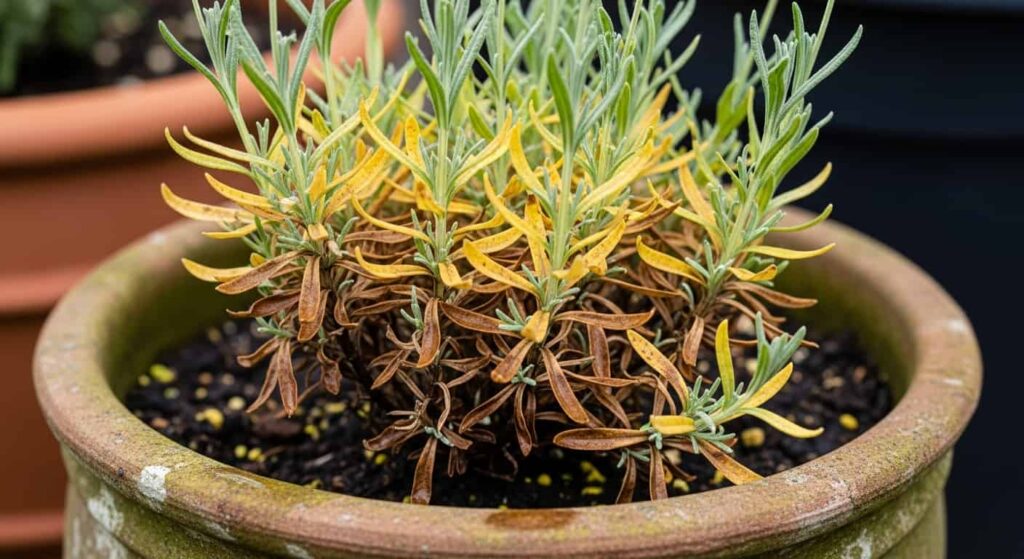
Yellow leaves on French lavender typically signal overwatering the most common problem for this drought-tolerant plant. Check if soil stays consistently damp, which leads to root rot and yellowing foliage. Additionally, nutrient deficiency from overly lean soil occasionally causes older leaves to yellow.
Cut back on watering frequency dramatically and make sure your pot has excellent drainage. If the problem persists despite drier soil, try feeding with a diluted balanced fertilizer. Natural leaf drop of older bottom leaves is also normal, so don’t panic over a few yellow leaves.
Brown Leaf Tips
Brown, crispy leaf tips usually indicate underwatering or low humidity, though tap water quality can also be the culprit. Hard water with high mineral content causes salt buildup that burns leaf edges. Furthermore, excessive fertilizer creates similar browning symptoms.
Water more consistently when the top few inches dry out, and consider using filtered or rainwater. If using fertilizer, reduce the concentration by half. Trim off brown tips with clean scissors for appearance.
Drooping or Wilting Leaves
Wilting can mean either too much or too little water check the soil to determine which. If soil is bone dry, water thoroughly. Conversely, if soil is soggy and leaves are soft, root rot is likely the problem.
For underwatering, soak the pot until water drains freely. For overwatering issues, you’ll need to repot in fresh, dry soil and trim any rotted roots. Going forward, only water when soil dries out significantly.
Leggy Growth
Insufficient light is the primary cause of leggy, stretched stems with sparse foliage. French lavender needs full sun to maintain its compact habit. Plants reaching toward light will have long internodes between leaves.
Move your plant to the sunniest location possible. Additionally, prune back leggy stems to encourage bushier growth. Similar to sun-loving tropical plants, adequate light is non-negotiable for healthy growth.
No Flowers or Poor Blooming
Lack of flowers usually results from insufficient sunlight, overfertilizing, or improper pruning. Too much nitrogen promotes leafy growth rather than blooms.
Make sure your plant receives 6-8 hours of direct sun daily. According to North Carolina State University Extension, French lavender requires full sun and lean soil for optimal flowering. Stop using fertilizer or switch to a bloom-boosting formula. Prune lightly after blooming rather than cutting severely.
FAQ
What is the difference between lavender and French lavender?
The main differences are leaf shape and cold hardiness. French lavender has distinctly toothed leaves and showy bracts, while English lavender features smooth-edged leaves. French lavender tolerates heat better but is less cold-hardy.
Does French lavender come back every year?
Yes, French lavender is a perennial evergreen in USDA zones 8-11 and returns year after year. In colder zones, it may die back in winter or behave as an annual.
Does French lavender like sun or shade?
French lavender absolutely requires full sun with at least 6-8 hours of direct sunlight daily. It will not thrive in shade, resulting in leggy growth and fewer flowers.
How do you care for French lavender?
Provide full sun, well-draining sandy soil, and infrequent deep watering allowing soil to dry between sessions. Feed sparingly every 4-6 weeks during growing season and prune after blooming to maintain shape.
7 thoughts on “French Lavender: Complete Care Guide for Beautiful Blooms”
Comments are closed.