
In This Article
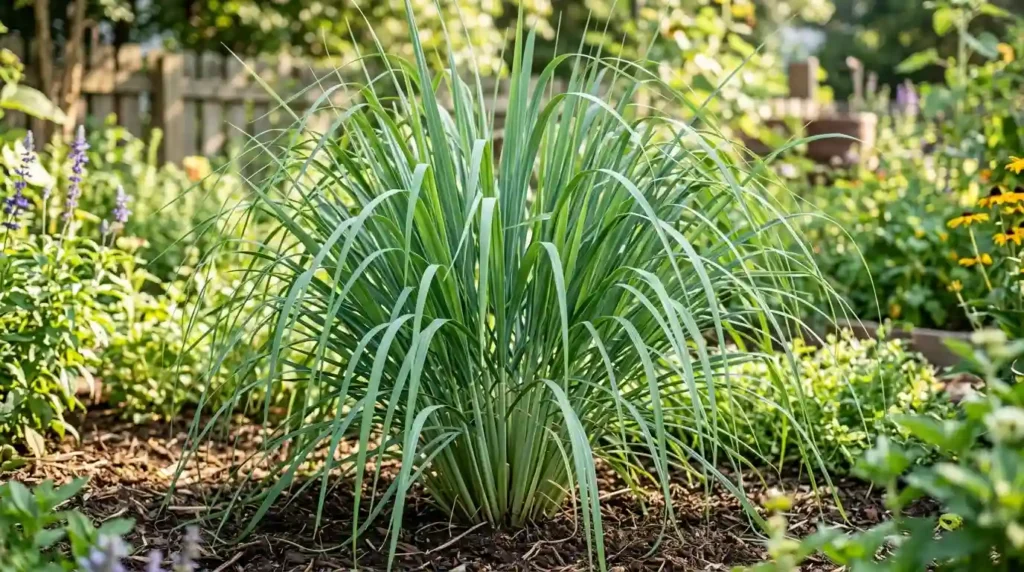
The lemon grass plant (Cymbopogon citratus) is a tall, clumping perennial grass with slender, arching blue-green blades and a strong citrus scent. Native to tropical Asia, it thrives in USDA zones 8-11. Honestly, it’s an easy plant to grow.
Plant Care Card
| Category | Details |
|---|---|
| Common Name | Lemon grass, lemongrass |
| Botanical Name | Cymbopogon citratus |
| Family | Poaceae |
| Plant Type | Perennial grass (grown as annual in cold zones) |
| Mature Size | 3-4 ft. tall x 2-4 ft. wide |
| Sun Exposure | Full sun |
| Soil Type | Loamy, well-draining |
| Soil pH | Slightly acidic to neutral (6.0-6.5) |
| Hardiness Zones | 8-11 (USDA) |
| Native Area | Tropical Asia |
| Bloom Time | Rarely blooms outside its native tropics |
| Toxicity | Non-toxic to humans; mildly irritating to pets if chewed |
Lemon Grass Plant Care
The lemon grass plant thrives with minimal fuss once it settles into a warm, sunny spot. Here’s what you need to know about sun, soil, water, and general upkeep. With the right placement, this grass practically takes care of itself.
Light
This grass wants full sun at least 6 to 8 hours daily. Too little light leads to weak, floppy stalks and a much milder scent. Pick a south-facing bed or an open patio corner where nothing blocks the sun for best results.
Soil
Loamy, well-draining soil is ideal, though this grass tolerates sandy or slightly clay-heavy ground if amended. Aim for a slightly acidic to neutral pH. For soil prep basics, this soil texture and drainage guide covers the fundamentals well.
Water
Keep the soil evenly moist, watering about twice a week during summer. Check by poking a finger an inch deep dry means it’s time. Cut back in cooler months. Like this grass, peppermint prefers consistent moisture rather than soggy or bone-dry soil.
Temperature and Humidity
This tropical grass loves warmth, ideally between 65-95°F. It’s not frost-hardy, so bring potted plants indoors below 40°F. Humidity boosts growth, but the plant tolerates drier air just fine outdoors in summer.
Fertilizer
Feed monthly with a balanced liquid fertilizer during spring and summer growth. Reduce or stop feeding once temperatures drop in fall. Over-fertilizing causes weak, floppy growth rather than lush, aromatic blades.
Types of Lemon Grass Plant
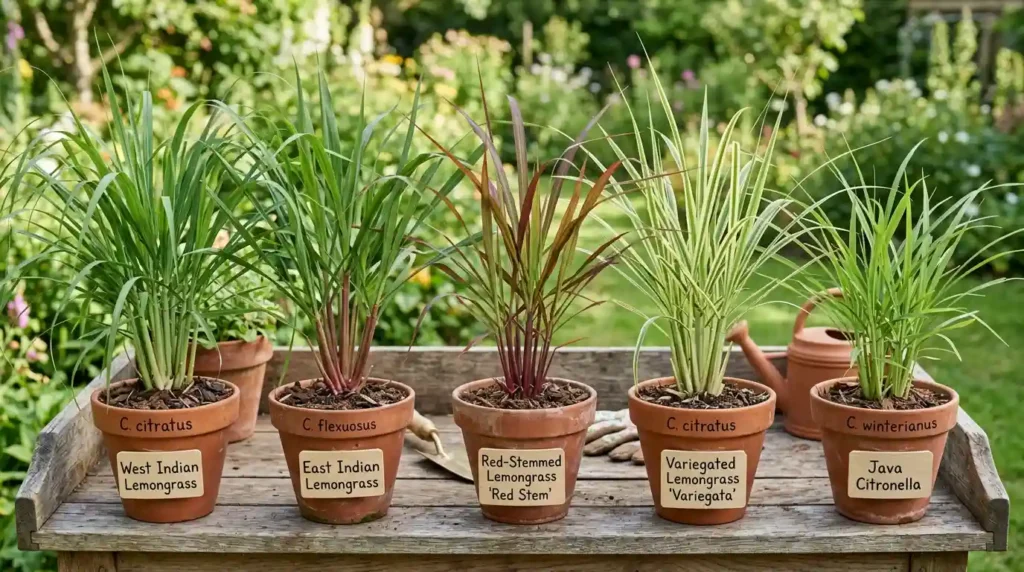
While Cymbopogon citratus is the classic culinary lemon grass, a few related varieties bring different scents and growing habits to the garden. Here’s a look at the most notable ones gardeners plant.
- East Indian Lemongrass (Cymbopogon flexuosus): A wilder, taller cousin with reddish stem bases and a sharper citrus aroma, often distilled for essential oil rather than cooking.
- West Indian Lemongrass (Cymbopogon citratus): The standard culinary variety found at most nurseries, prized for its mild, sweet lemon flavor and thick, edible stalks.
- Citronella Grass (Cymbopogon nardus): A close relative grown mainly for pest-repelling oils rather than eating; it has coarser, reddish-tinged foliage.
- Java Citronella (Cymbopogon winterianus): A hardier citronella type with a stronger scent, commonly used in candles and outdoor sprays.
- Variegated Lemongrass: An ornamental cultivar with cream-striped blades, grown more for looks than flavor in decorative garden beds.
- Thai Lemongrass: A slightly shorter, thicker-stalked strain popular in Southeast Asian cooking, prized for its tender, easy-to-slice base.
- Fever Grass: A common name used in the Caribbean for the same Cymbopogon citratus species, often steeped as a soothing herbal tea.
Most home gardeners stick with West Indian lemon grass for cooking, while the citronella types earn a spot near patios for their bug-deterring reputation. Whichever variety you choose, this perennial grass rewards a sunny spot with vigorous, fragrant growth all summer long.
Pruning
Prune your lemon grass plant in early spring before new growth kicks in, removing dead, brown, or frost-damaged blades down to the base. Established clumps also benefit from a hard cutback to about 6 inches once a year.
Use sharp garden shears or a pruning saw for thick clumps, cutting at an angle just above the crown. This keeps the plant tidy, improves airflow, and encourages fresh, tender stalks. Regular trimming also prevents the center from getting woody.
Don’t skip deadheading spent flower stalks if your plant blooms it redirects energy into new growth instead.
Regular pruning also makes harvesting easier, since you’ll always have fresh, tender stalks near the base of the lemon grass plant ready to snip for the kitchen.
Propagating Lemon Grass Plant
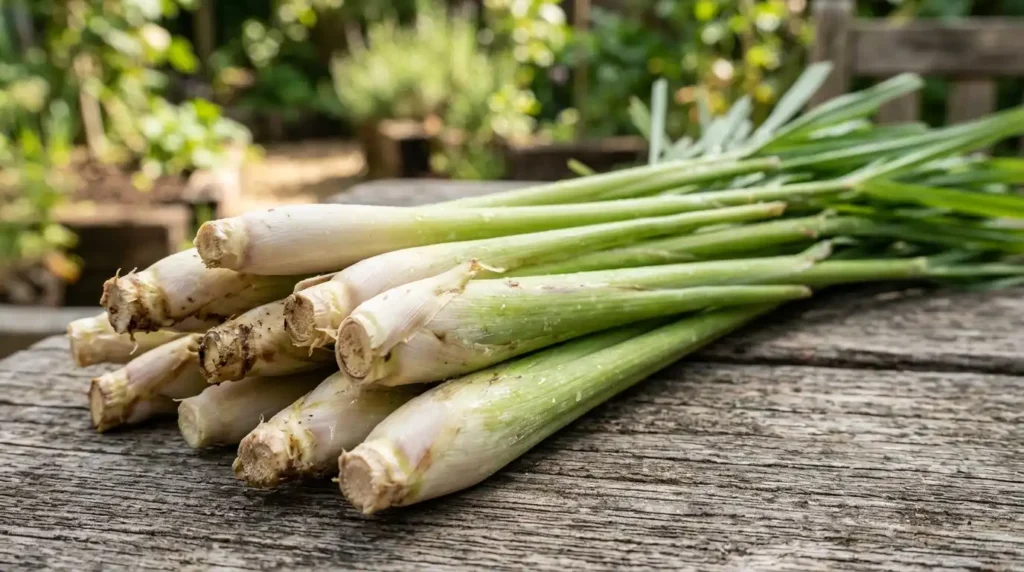
Spring and early summer are the best times to propagate a lemon grass plant, while it’s actively pushing out new growth. Two reliable methods work well: division and stalk regrowth in water. Both are beginner-friendly and give you extra plants for free.
Propagating by Division
Dividing established clumps is the fastest way to multiply your lemon grass plant.
Materials needed:
- A sharp spade or garden knife
- Fresh potting mix or garden soil
- A watering can
Steps:
- Dig up the entire clump once it’s at least a year old and well established.
- Shake off excess soil so you can clearly see individual stalks and root sections.
- Use a sharp knife to slice the clump into sections, each with roots and 3-4 stalks attached.
- Replant each division immediately in prepared soil, spacing them about 2 feet apart.
- Water thoroughly right after planting to settle the roots and reduce shock.
Expect new growth within two to three weeks as the divisions establish themselves in their new spots. This is the fastest way to bulk up your lemon grass plant collection ahead of summer.
Propagating from Store-Bought Stalks
This budget-friendly method turns grocery store lemongrass into new plants. Grab a few fresh stalks with the root end intact for the best results.
Materials needed:
- Fresh lemongrass stalks with a firm base
- A glass or jar of water
- Potting soil and a container
Steps:
- Trim the stalk to about 4-5 inches, keeping the pale root end intact.
- Place the stalk root-down in a glass with a couple inches of water.
- Set the glass in a bright, warm spot and change the water every few days.
- Watch for roots to develop over 2-3 weeks, then pot into soil once roots reach an inch long.
- Keep the new lemon grass plant moist and shaded for the first week after transplanting.
This method takes a bit longer than division but is a fun, nearly free way to start several new plants at once.
Planting and Transplanting Lemon Grass Plant
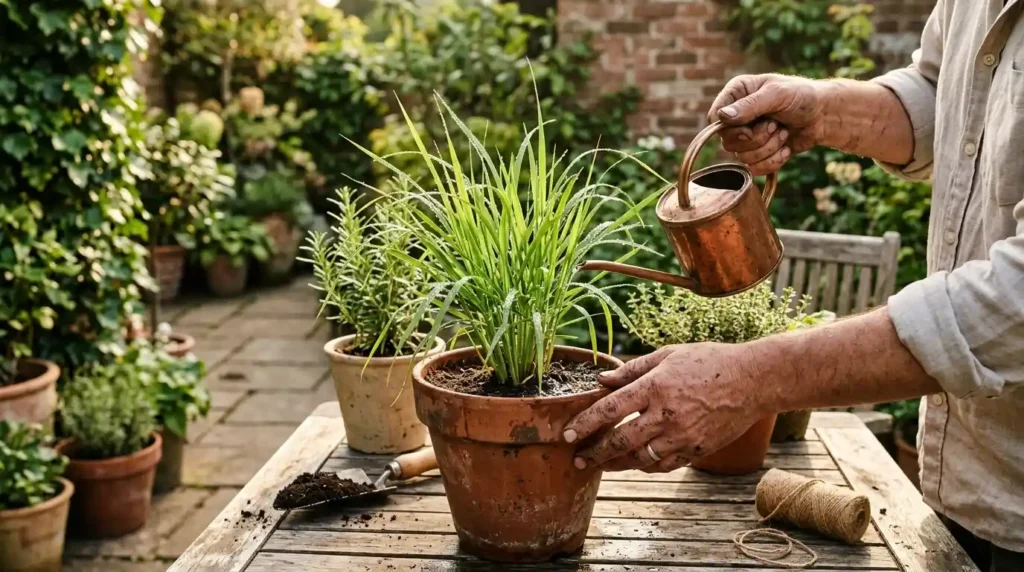
Plant a lemon grass plant outdoors in late spring, once nighttime temperatures stay reliably above 50°F. Space clumps 2 to 4 feet apart since this grass spreads wide as it matures.
Dig a hole as deep as the root ball and slightly wider, then backfill with loosened, well-draining soil. Water deeply right after planting to help roots establish quickly in their new spot.
Divide and transplant established clumps every 2-3 years in spring to keep growth vigorous. Loosen soil around the roots first, then relocate the divided sections to fresh ground.
Container-grown lemon grass plant specimens need transplanting into a larger pot every couple of years too, once roots start crowding the container’s edges.
Common Pests and Diseases
Like most garden plants, a lemon grass plant can occasionally run into pest or disease trouble, especially in overly wet or crowded conditions. Here’s what to watch for.
Aphids
Look for clusters of tiny green or black insects on new growth and stalk tips. Treat with a strong water spray or insecticidal soap applied weekly.
Spider Mites
Fine webbing and speckled, dull leaves signal an infestation, especially in hot, dry weather. Rinse blades regularly and apply neem oil to control them.
Rust
Look for orange-brown pustules or streaks along the leaf blades. Remove and destroy affected foliage, and improve airflow around the clump.
Root Rot
Yellowing, mushy stalks near the base point to soggy, poorly drained soil. Cut back watering and improve drainage right away.
Caterpillars
Chewed, ragged leaf edges and visible droppings mean caterpillars are feeding. Handpick them off or treat with a natural Bt spray.
For broader pest identification, this integrated pest management overview is a solid general reference.
Common Problems with Lemon Grass Plant
Here’s how to troubleshoot the most common issues with a lemon grass plant.
Poor or No Growth
Stunted, sluggish growth usually points to insufficient sun, since this grass needs at least six hours daily to thrive. Compacted or nutrient-poor soil also slows things down considerably. Over-fertilizing can backfire too, pushing weak, leggy stems instead of sturdy ones. Move the plant to a sunnier spot, loosen the soil, and dial back feeding to fix it. Give it a full growing season, and your lemon grass plant should bounce back with thicker, taller stalks.
Yellow or Browning Leaves
Yellowing blades are often a sign of overwatering, which suffocates roots and invites rot. Poor drainage compounds the problem by keeping soil soggy for too long. Nutrient deficiency, particularly nitrogen, can also cause pale, washed-out color. If your bamboo shows similar yellowing, the fix is usually the same: cut back water and check drainage first.
Wilting or Drooping
Droopy, limp blades typically mean underwatering, especially during hot, dry stretches. Transplant shock after moving or dividing the clump can also cause temporary wilting. Heat stress on very hot days adds to the effect. Water deeply and provide light shade until the plant perks back up.
Leggy or Sparse Growth
Thin, sparse clumps usually trace back to insufficient light or crowding from nearby plants. Over-fertilizing can also push soft, floppy growth instead of dense blades. Move the plant into more sun and prune back hard to encourage bushier regrowth.
Frost Damage
Blackened, mushy, or bleached-out blades after a cold snap signal frost injury on this tropical grass. Cut away the damaged foliage once the weather warms, and mulch heavily around the base before winter. In borderline zones, container growing lets you move the rue plant and lemongrass indoors together for the cold months.
FAQ
Does lemongrass come back every year?
In USDA zones 8-11, a lemon grass plant returns as a perennial. In colder zones, treat it as an annual or bring potted plants indoors for winter.
Do lemongrass plants actually repel mosquitoes?
The living plant offers mild deterrence at best. Its relative, citronella, produces the oil widely used in candles and sprays for stronger mosquito-repelling effects.
Do lemongrass plants repel snakes?
There’s no solid evidence lemongrass repels snakes. The claim is mostly folklore; dense grass clumps may actually offer snakes cover instead.
Is lemongrass plant toxic to dogs?
Lemongrass isn’t considered toxic, but the fibrous blades can cause mild stomach upset or physical irritation if dogs chew and swallow large amounts.