
In This Article
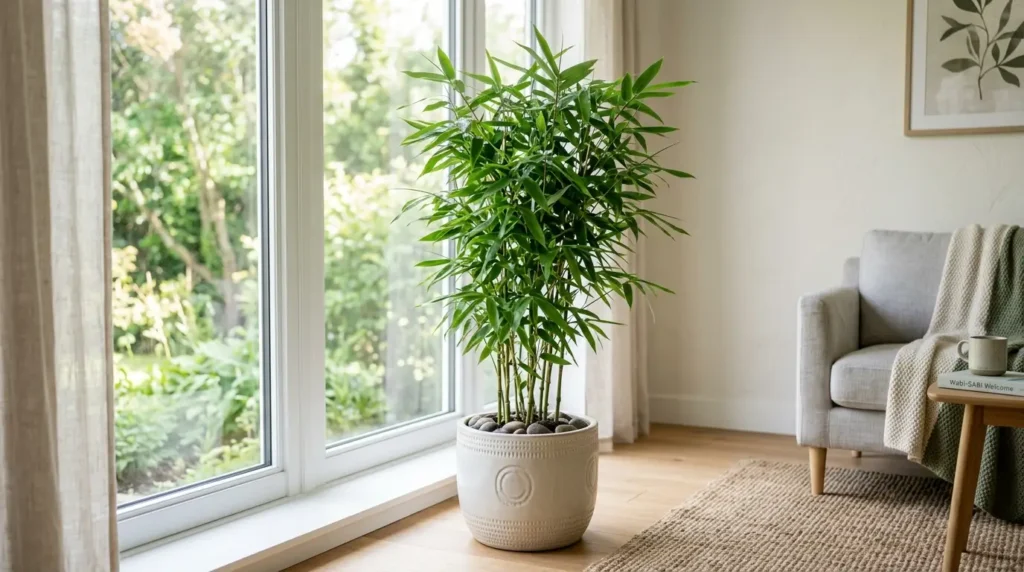
Bamboo plants (Bambusoideae) are among the fastest-growing plants on Earth, bringing an instant jungle vibe with tall canes and narrow leaves. Native to Asia, they now grow across Africa and the Americas too. Sizes range from countertop-friendly to towering privacy screens. Easy-to-moderate to care for, this guide covers it all.
Plant Care Card
| Feature | Details |
|---|---|
| Common Name | Bamboo |
| Botanical Name | Bambusoideae (subfamily) |
| Family | Poaceae |
| Plant Type | Perennial grass |
| Mature Size | 2–40 ft tall x 1–10 ft wide (varies by variety) |
| Sun Exposure | Full sun to partial shade |
| Soil Type | Rich, well-draining loam |
| Soil pH | 6.0–6.5 |
| Hardiness Zones | 5–10 (USDA), varies by species |
| Native Area | Asia, Africa, the Americas |
| Toxicity | Non-toxic to cats, dogs, and horses |
Bamboo Plants Care
Bamboo plants have an easy-to-moderate care difficulty, depending on the variety and whether you’re growing indoors or out. Below, you’ll find full details on light, soil, water, temperature, and fertilizer needs. Don’t worry once you get the hang of it, these plants basically take care of themselves.
Light
Most bamboo varieties love bright light, ideally 6+ hours of full sun daily. Clumping types tolerate partial shade in hot climates. Indoors, place near a south- or east-facing window. Too little light causes legginess; too much scorches leaf tips. Pale leaves mean move it back. Rotate occasionally for even growth.
Soil
Bamboo needs rich, loose soil that drains well but holds some moisture. Heavy clay traps water, causing root rot; sandy soil dries out roots too fast. A DIY mix of 2:1:1 potting soil, compost, and coarse sand works great. According to Oklahoma State University Extension, well-draining soil prevents root diseases.
Water
This plant likes consistently moist soil, but hates sitting in soggy water. Water when the top 2-3 inches of soil feel dry. Stick a finger in the soil to check before reaching for the watering can.
In spring and summer, that might mean watering two to three times a week. Cut back in fall and winter as growth slows. Overwatering shows up as yellow, mushy canes, while underwatering causes crispy, curling leaf tips. Container plants tend to dry out faster than those planted directly in the ground.
Bamboo shares similar watering needs with the spider plant both prefer evenly moist, never soggy, soil.
Temperature and Humidity
Bamboo plants thrive in temperatures between 65-95°F, and most varieties can’t handle frost well at all. Humidity preferences vary, but tropical types appreciate 40-60% humidity for the best-looking foliage.
Household humidity is usually fine for indoor bamboo, though a nearby humidifier helps in dry winter months. Keep plants away from heating vents and drafty windows. Sudden temperature swings can cause leaf drop pretty quickly, so avoid placing pots near exterior doors that open often in cold weather.
Fertilizer
Feed bamboo with a balanced liquid fertilizer every 2-4 weeks during spring and summer. Nitrogen-rich formulas work especially well since bamboo is a grass at heart. Penn State Extension notes that most grasses benefit from consistent, moderate feeding. Stop fertilizing completely in fall and winter.
Types of Bamboo Plants
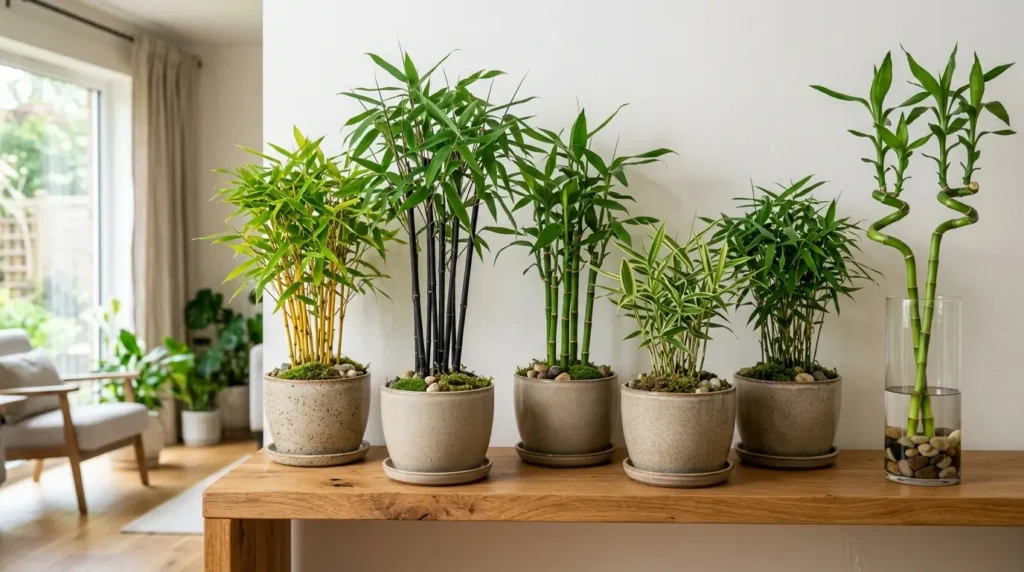
Bamboo plants come in dozens of varieties. A few stand out as favorites:
- Golden Bamboo (Phyllostachys aurea): Yellow-green canes that mature to a warm gold. Fast-growing and popular for privacy screens.
- Black Bamboo (Phyllostachys nigra): Canes start green and darken to jet-black over a couple years. A dramatic focal point.
- Lucky Bamboo (Dracaena sanderiana): Not true bamboo, but a popular low-light houseplant grown in water or soil.
- Buddha Belly Bamboo (Bambusa ventricosa): Known for swollen, belly-shaped internodes when grown bright and dry.
- Fargesia (Clumping Bamboo): A non-invasive type, ideal for small gardens since it won’t spread like running bamboo.
- Timber Bamboo (Phyllostachys bambusoides): One of the tallest species, with thick, sturdy canes often used for building material.
Pruning
Prune bamboo in late winter or early spring, before new shoots emerge. Remove dead, damaged, or thin canes at the base with sharp pruning shears. Thinning the clump yearly improves airflow and keeps growth tidy. For running varieties, trimming spreading rhizomes also helps keep the plant contained.
Propagating Bamboo Plants
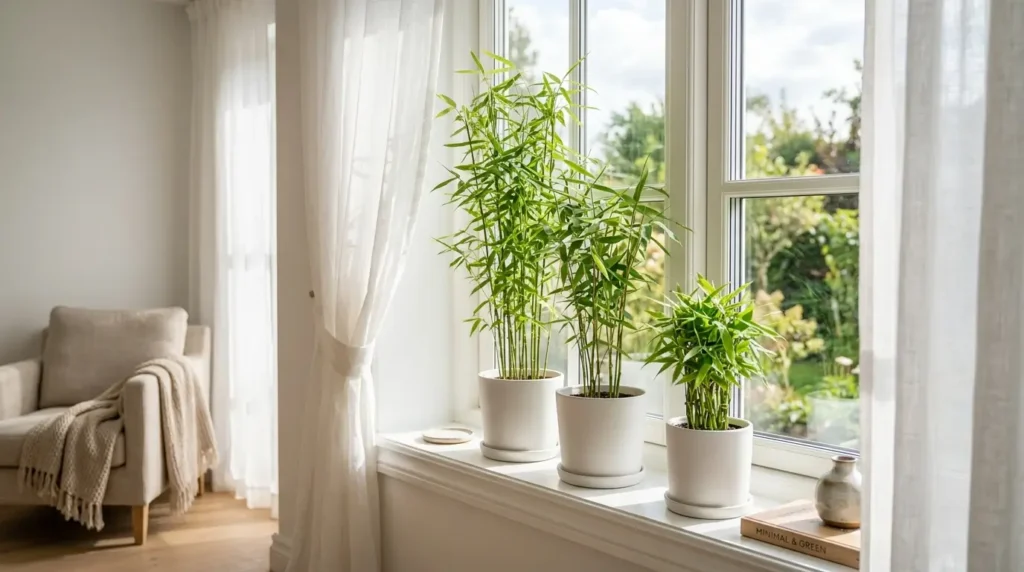
Best time to propagate bamboo plants is during spring and summer, right as new growth kicks in.
Propagating by Division
Division is the easiest, most reliable way to propagate this plant, especially clumping types.
Materials needed:
- Sharp spade or saw
- Gardening gloves
- New pot or planting site
- Fresh potting mix
Steps:
- Dig around the base of an established clump to expose the rhizome and roots.
- Use a spade or saw to cut off a section with at least 2-3 canes attached.
- Replant the division immediately in fresh soil, keeping it at the same depth.
- Water thoroughly and keep soil consistently moist for the first few weeks.
Expect new shoots within 4-8 weeks in warm, humid conditions. This method works a lot like dividing a money plant.
Propagating by Stem Cuttings
Stem cuttings work for many varieties too, though it’s a bit slower.
- Cut a healthy cane section with one or two nodes.
- Place the cutting in water or moist soil, node-side down.
- Keep it warm and in bright, indirect light.
- Roots should form in a few weeks, then transplant to soil.
This method takes patience, but it’s a fun, low-cost way to grow more plants from what you already have.
Water Propagation
Water propagation is a fun option for lucky bamboo and other small varieties.
- Snip a healthy cutting just below a node.
- Place the cut end in a jar of clean, room-temperature water.
- Change the water every 5-7 days to keep it fresh.
- Once roots appear, transfer to soil or keep growing in water long-term.
It’s a low-effort way to watch roots develop, and kids especially love seeing the progress.
Potting and Repotting Bamboo Plants
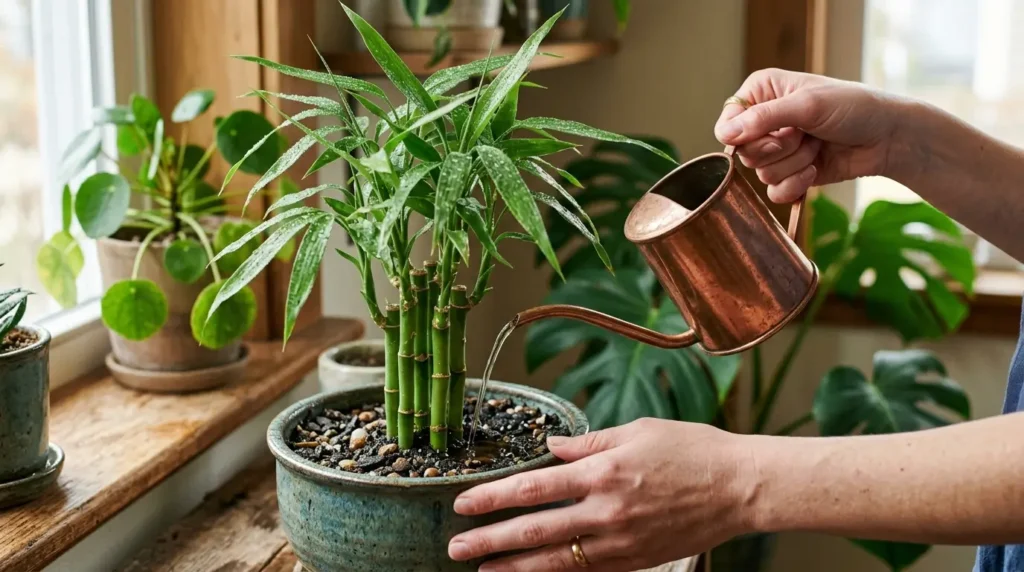
Repot bamboo plants every 1-2 years, or sooner if roots poke out of drainage holes. Slowing growth and a root-bound pot are both signs it’s time.
Choose a new pot 1-2 inches larger in diameter with good drainage holes. Loosen the root ball, trim circling roots, and settle the plant at the same depth as before. Good drainage prevents root rot, an issue that also trips up plants like the foxtail fern when pots stay soggy too long.
Common Pests and Diseases
Like most houseplants, bamboo can occasionally attract pests, especially when airflow is off. Here’s what to watch for.
Spider Mites
Look for fine webbing and tiny yellow speckles on leaves. Treat with insecticidal soap or a strong water spray to knock mites off.
Mealybugs
Look for white, cottony clusters near leaf joints. Treat with rubbing alcohol on a cotton swab or neem oil spray weekly.
Scale Insects
Look for small, brown bumps stuck along stems and leaves. Treat with horticultural oil or gently scrape them off by hand.
Aphids
Look for clusters of tiny green or black bugs on new growth. Treat with insecticidal soap or a firm water spray.
The EPA recommends regular pest monitoring as the first line of defense in home gardens.
Fungus Gnats
Look for tiny flying bugs near the soil surface. Let soil dry out between waterings and use sticky traps to catch adults.
Common Problems with Bamboo Plants
Here’s how to troubleshoot common issues:
Yellow Leaves
Yellowing leaves usually point to overwatering, which suffocates roots and blocks nutrient uptake. Low nitrogen can also cause pale foliage, or it could just be natural aging as older leaves drop. Cut back watering, feed with balanced fertilizer, and remove old leaves. The fixes are similar to yellowing on a snake plant.
Brown Leaves / Brown Leaf Tips
Brown, crispy tips often mean low humidity or mineral buildup from tap water. Underwatering can also cause crispy edges as the plant pulls moisture from older leaves. Try filtered water, boost humidity, and stick to a consistent schedule. Trimming brown tips won’t harm the plant.
Drooping or Wilting Leaves
Drooping usually signals a watering problem, either too much or too little. Check the soil first soggy means cut back, bone-dry means water immediately. This is a common issue for Boston ferns too, so the quick fix is the same: adjust watering and give it time.
Leggy Growth / Sparse Foliage
Leggy, stretched-out canes almost always mean insufficient light. Move your bamboo plant closer to a bright window or outdoors into more sun. A light prune after moving encourages fuller, bushier new growth.
Slow Growth / No New Growth
Slow growth often points to low light, poor nutrition, or a root-bound pot. Check if roots are circling the container and repot if needed. Regular feeding during spring and summer usually kicks growth back into gear.
FAQ
Do bamboo plants need sun or shade?
Most bamboo plants prefer bright, indirect light or partial sun. Full sun works for many outdoor types, while indoor plants do best near a bright window.
Will bamboo grow well in pots?
Yes, bamboo grows well in pots, especially clumping varieties. Choose a container with good drainage and repot every 1-2 years for steady growth.
Do bamboo plants grow fast?
Bamboo plants are famous for fast growth, with some varieties adding several feet per year. Growth rate depends heavily on species, light, and water.
Are bamboo plants easy to take care of?
Generally, yes bamboo plants are beginner-friendly and fairly low maintenance. Just give consistent water, bright light, and occasional fertilizer for happy canes.
1 thought on “How to Grow and Care for Bamboo Plants”
Comments are closed.