
In This Article
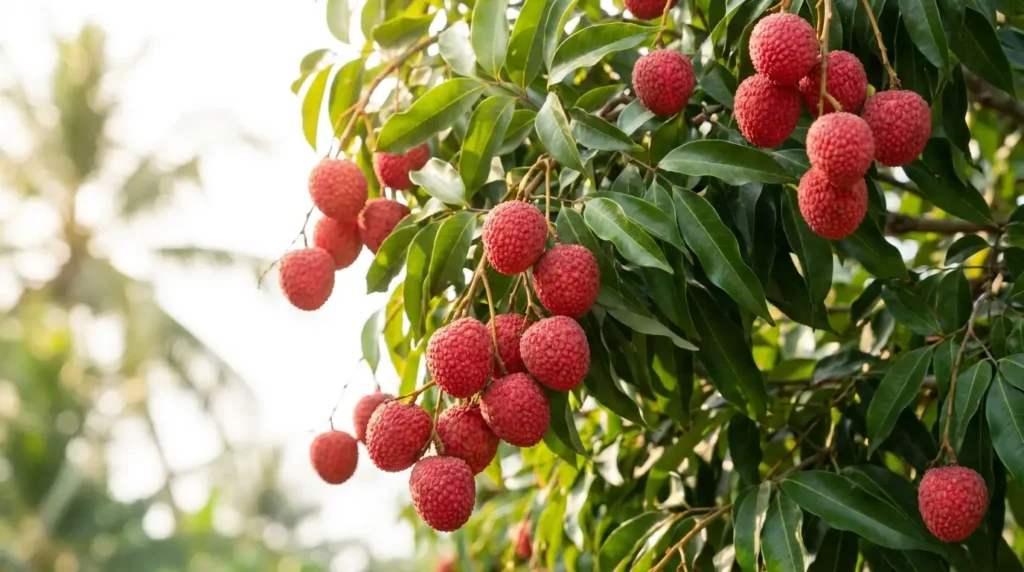
The lychee tree (Litchi chinensis) is a stunning tropical fruit tree native to southern China, known for its glossy leaves and clusters of bright red fruits. Thriving in USDA zones 10–11, it’s a moderate-difficulty tree but honestly, once you taste homegrown lychee, every effort is completely worth it.
Plant Care Card
| Field | Details |
|---|---|
| Common Name | Lychee tree |
| Botanical Name | Litchi chinensis |
| Family | Sapindaceae |
| Plant Type | Evergreen fruit tree |
| Mature Size | 20–40 ft. tall × 20–30 ft. wide |
| Sun Exposure | Full sun |
| Soil Type | Well-draining, sandy loam |
| Soil pH | 5.0–6.5 (slightly acidic) |
| Hardiness Zones | 10–11 (USDA) |
| Native Area | Southern China, Southeast Asia |
| Bloom Time | Late winter to early spring |
| Toxicity | Fruit seeds toxic to humans and pets; flesh is safe |
Lychee Tree Care
The lychee tree is moderately challenging but very manageable once you understand its specific needs. Here’s what you need to know about sun, soil, water, and seasonal maintenance. With the right placement and consistent care, this tree will fruit reliably for decades.
Light
Lychee trees need full sun at least 6–8 hours of direct sunlight daily. Less than that means poor fruit set and slow growth. Plant yours in the sunniest garden spot, ideally south or west-facing. Avoid shade from structures or hedges. Full sun all day is honestly ideal for this tree.
Soil
Lychee trees need well-draining, acidic soil with a pH between 5.0 and 6.5. According to the University of Florida IFAS Extension, lychee performs best in slightly acidic, well-aerated soils. If your ground is heavy clay, amend it with coarse sand and compost. Avoid any compacted soil that traps moisture around the roots.
Water
Water young lychee trees deeply once or twice a week during the growing season, always checking soil moisture first. Established trees tolerate some drought but need consistent moisture during spring flowering. Like the dwarf cherry tree, a drier fall and winter period triggers blooming. Yellowing leaves signal overwatering; curling foliage means thirst.
Temperature and Humidity
Lychee trees prefer temperatures between 68–95°F but need a brief cool period (32–45°F) in late fall to trigger flowering. Hard freezes below 28°F can kill the tree. In zone 9, plant in a sheltered south-facing spot, apply 3–4 inches of mulch, and cover young trees during cold snaps.
Fertilizer
Feed your lychee tree with a balanced slow-release fertilizer (such as 6-6-6 or 8-3-9) three to four times per year during the growing season — spring through early fall. Avoid fertilizing in late fall or winter when the tree needs its cool dormant period. Always water thoroughly after applying fertilizer to prevent root burn.
Types of Lychee Trees
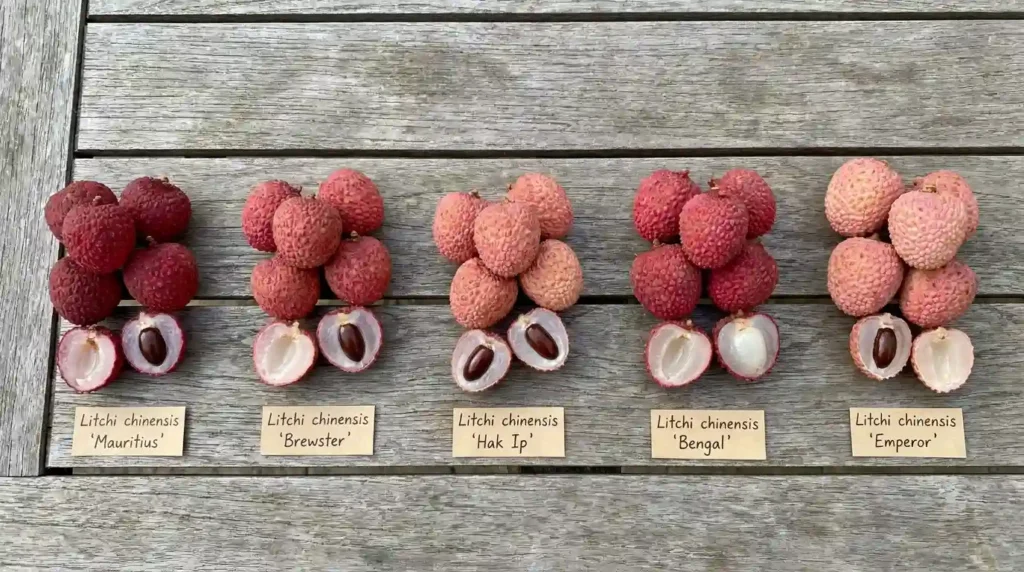
Several popular cultivars are widely grown, each with slightly different fruit characteristics and climate tolerances. Here are the most notable lychee tree varieties to consider:
- ‘Brewster’ (Litchi chinensis ‘Brewster’): One of the most common commercial varieties, producing large, deep red fruits with a rich, floral flavor. Slightly more cold-sensitive than other cultivars.
- ‘Mauritius’: A reliable and consistent producer with smaller, bright red fruits and excellent sweetness. Very popular with home growers in Florida and Hawaii.
- ‘Sweetheart’: Known for its small seed and exceptionally sweet flesh. A great choice for backyard growers who want the best edible fruit ratio.
- ‘Kaimana’: Developed in Hawaii, this variety suits humid tropical climates well. It produces medium-sized fruits and offers strong disease resistance.
- ‘Bengal’: A vigorous grower that produces large, bumpy red fruits with a rich taste. It’s especially popular in South Florida and handles humidity very well.
Pruning
Prune your lychee tree in late spring or early summer, right after harvest. Remove dead, crossing, or damaged branches first, then trim overly long shoots to improve airflow. Use clean, sterilized shears to avoid spreading disease. Light annual shaping is all this tree needs no heavy pruning required.
Propagating Lychee Trees
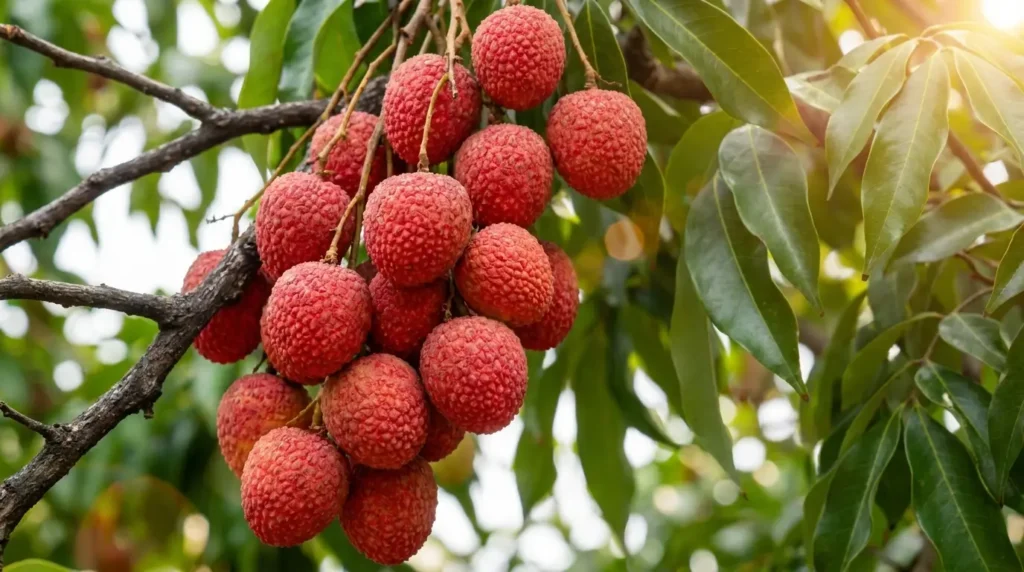
The best time to propagate a lychee tree is in late spring through summer, when the tree is actively growing and stems are semi-hardened. Air layering is by far the most reliable method for home growers, and seed propagation is also possible — though much slower.
Propagating by Air Layering
Air layering is the preferred method because it produces a true clone of the parent tree and fruits far sooner than seeds. This is how most commercial nurseries produce new lychee trees.
Materials needed:
- Sharp knife or grafting knife
- Sphagnum moss (pre-soaked in water)
- Rooting hormone powder
- Plastic wrap or a clear plastic bag
- Grafting tape or twist ties
Steps:
Step 1: Select a healthy, pencil-thick branch from the current or previous year’s growth, about 12–18 inches long. Choose a branch with no fruit or active flowers.
Step 2: Remove a 1.5-inch ring of bark from the selected branch using your sharp knife. Scrape away the green cambium layer completely to prevent regrowth of the bark.
Step 3: Apply rooting hormone powder to the exposed wood, then pack a generous handful of moist sphagnum moss tightly around the wound. The moss ball should be roughly the size of a baseball.
Step 4: Wrap the moss securely with plastic wrap, sealing both ends with tape or twist ties to lock in moisture. Check every 2–3 weeks for white roots growing visibly into the moss.
Roots typically appear within 6–10 weeks. Once roots are clearly visible through the plastic, cut the branch just below the moss ball and pot it up carefully in acidic, well-draining mix.
Propagating from Seeds
Growing a lychee tree from seed is possible but requires real patience fruiting can take 10–15 years or longer. Plant fresh seeds immediately after removing them from ripe fruit, as they lose viability very quickly. Press them about 1 inch deep into moist, acidic potting mix and keep them warm at 75–85°F. Germination usually happens within 1–3 weeks. Keep in mind that seed-grown lychee trees may not produce the same fruit quality as the parent tree.
Planting and Transplanting Lychee Tree
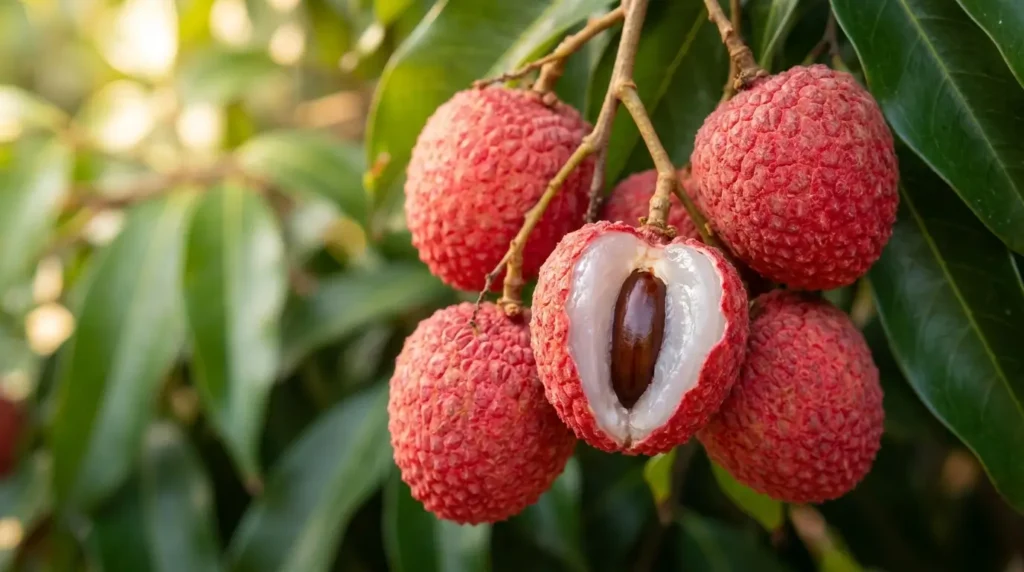
The best time to plant a lychee tree outdoors is in spring after the last frost, when soil is warm and the tree has the full growing season to establish. Space lychee trees 25–30 feet apart they get large and need excellent airflow. Like the brown turkey fig tree, lychee trees reward gardeners who plan generously for long-term space from day one.
Dig a hole twice as wide and just as deep as the root ball. Backfill with your amended soil mix, firm gently, and water deeply right after planting. Add a 3–4 inch mulch ring, keeping it 6 inches away from the trunk to prevent rot.
Transplanting established lychee trees is difficult and very stressful for the plant. If you must move one, do it in early spring with as much of the root ball intact as possible.
Common Pests and Diseases
Like most garden plants, lychee trees can occasionally face pest or disease challenges especially in warm, humid climates. Here’s what to watch for and how to handle each issue quickly.
Aphids
Look for clusters of small, soft-bodied insects massed on new growth tips. Treat with a strong water spray or diluted neem oil solution applied weekly until clear.
Erinose Mites
Look for velvety, rust-colored patches or blistering on new leaves caused by microscopic mites. Treat with sulfur-based sprays following the EPA-approved pesticide guidelines for fruit trees.
Anthracnose
Look for brown, sunken spots spreading across fruits and leaves, especially in wet weather. Treat with copper-based fungicide and improve canopy airflow through pruning. For more on managing fruit tree disease issues, check our guide on the bartlett pear tree.
Root Rot
Look for sudden wilting and yellowing despite moist soil, plus mushy roots when inspected. Prevention through excellent drainage is the best cure — there’s no easy fix once root rot is advanced.
Scale Insects
Look for small brown or waxy bumps stuck firmly to stems and branches. Treat with horticultural oil spray applied during the dormant season or in early spring before new growth flushes.
Common Problems with Lychee Tree
Here’s how to troubleshoot the most common lychee tree issues:
Poor or No Fruit
Poor flowering usually stems from insufficient cold exposure lychee trees need 100–200 hours below 50°F to bloom. Excess nitrogen fertilizer and inconsistent spring watering also cause fruit drop. Stop fertilizing after summer, water consistently during fruit development, and ensure your location gets adequate winter chill.
Yellow or Browning Leaves
Yellow leaves almost always point to overwatering or poor drainage, which deprives roots of oxygen over time. This is especially common in heavy soils or low-lying garden spots. On the other hand, iron or manganese deficiency in high-pH soils causes yellowing between the leaf veins a pattern called interveinal chlorosis. Browning leaf tips often signal salt buildup or fluoride stress from tap water. Check your soil drainage first, test the pH, and adjust accordingly. This same pattern of nutrient-related leaf issues affects other tropical fruit trees like the grapefruit tree in similar growing conditions.
Wilting or Drooping
Wilting despite moist soil almost always signals root rot from waterlogged conditions below the surface. Wilting during dry weather simply means the tree needs water check the soil 2 inches down before reaching for the hose. Newly planted lychee trees often wilt for a few weeks from transplant shock; keep them consistently moist and protected from harsh afternoon sun until they settle in.
Leggy or Sparse Growth
Leggy, reaching growth is almost always caused by insufficient sunlight. Lychee trees planted in partial shade stretch aggressively toward available light and produce very few fruit buds as a result. Move container specimens to a sunnier location, or consider cutting back surrounding vegetation to open the canopy. Light annual pruning also encourages denser, more productive branching overall.
Slow Growth
Slow growth in young lychee trees is often tied to cold soil temperatures or planting too early in spring before soil has warmed. According to University of California Agriculture and Natural Resources, tropical fruit trees grow very slowly in soil temperatures below 60°F. Make sure your lychee tree has warm soil, full sun, and regular feeding before expecting vigorous growth in its first few seasons.
FAQ
Can lychee trees grow in the US?
Yes, lychee trees grow well in USDA zones 10–11, including South Florida, Hawaii, and parts of Southern California with adequate frost protection.
Are lychee trees difficult to grow?
They’re moderately challenging, mainly needing the right warm climate, well-draining acidic soil, and a cool winter period to fruit reliably.
Can I eat 20 lychees in a day?
Eating very large amounts is not recommended. Lychee contains natural compounds that can cause low blood sugar, especially in children eating on an empty stomach.
How long does a lychee tree take to grow after planting?
Air-layered trees typically begin fruiting in 3–5 years. Seed-grown lychee trees can take 10–15 years or more to produce their first fruit.
1 thought on “How to Grow and Care for a Lychee Tree”
Comments are closed.