

In This Article
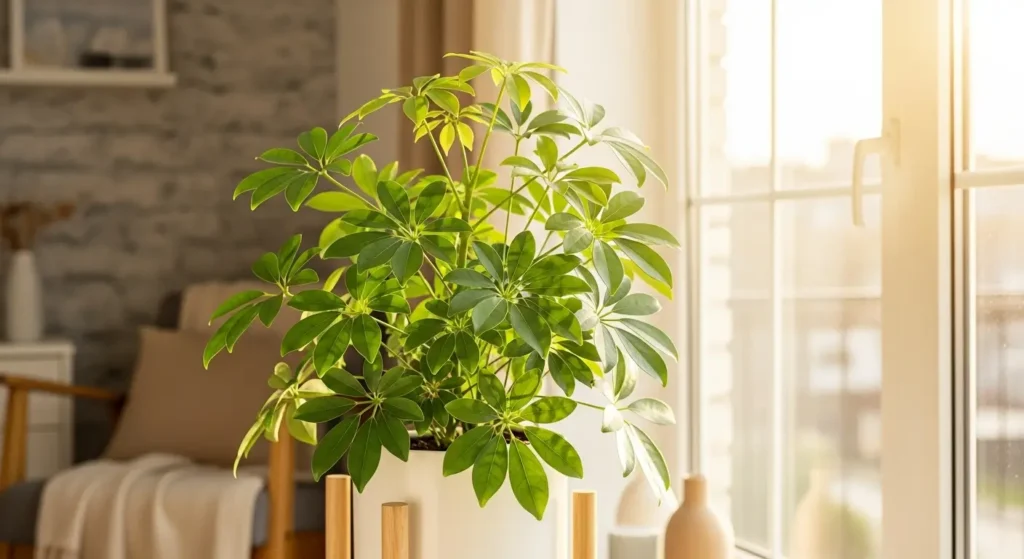
The umbrella plant (Schefflera arboricola), also called dwarf umbrella tree, gets its charming name from the way its glossy leaves spread out like tiny umbrellas. Native to Taiwan and Hainan, this tropical beauty brings a jungle vibe to your home without demanding too much attention. Honestly, it’s one of those plants that forgives the occasional care slip-up, making it perfect for both newbies and seasoned plant parents. With its lush, palmate foliage and compact growth habit, the umbrella plant adds a touch of greenery to any corner of your house.
Plant Care Card
| Attribute | Details |
|---|---|
| Common Name | Umbrella Plant, Dwarf Umbrella Tree |
| Botanical Name | Schefflera arboricola |
| Family | Araliaceae |
| Plant Type | Tropical evergreen perennial |
| Mature Size | 3-6 feet tall indoors, 2-3 feet wide |
| Sun Exposure | Bright indirect light |
| Soil Type | Well-draining, peat-based potting mix |
| Soil pH | 6.0-6.5 (slightly acidic) |
| Hardiness Zones | 10-11 (USDA) |
| Native Area | Taiwan, Hainan |
| Toxicity | Toxic to cats and dogs |
Umbrella Plant Care
Your umbrella plant is relatively low-maintenance and handles indoor conditions like a champ. The following sections cover everything you need to know about light, water, soil, and more. You’ll be surprised how easy it is to keep this tropical stunner thriving year-round!
Light
Bright indirect light is the sweet spot for your umbrella plant. Place it near an east or west-facing window where it gets plenty of filtered sunshine throughout the day. Too much direct sun can scorch those beautiful leaves, turning them yellow or brown. On the flip side, insufficient light leads to leggy growth and sparse foliage. If you notice your plant stretching toward the window, it’s begging for more brightness. Simply move it closer to the light source, and it’ll perk right up.
Soil
Well-draining soil is non-negotiable for umbrella plants. A peat-based potting mix that allows water to flow through quickly works wonders. You want the roots to breathe, not sit in soggy conditions that invite root rot. Mix in some perlite or coarse sand to boost drainage even more. A simple DIY recipe? Try 2 parts peat moss to 1 part perlite. According to Oklahoma State University Extension, proper soil drainage is crucial for preventing common houseplant diseases and keeping roots healthy.
Water
Water your umbrella plant when the top 2-3 inches of soil feel dry to the touch. Stick your finger into the potting mix to check moisture levels before grabbing the watering can. During spring and summer, you’ll probably water once a week or so. In fall and winter, cut back to every 10-14 days as growth slows down. Overwatering shows up as yellow leaves and mushy stems, while underwatering causes drooping and crispy leaf edges. Similar watering needs apply to Philodendron Brasil, another beginner-friendly houseplant that thrives on a consistent moisture routine.
Temperature and Humidity
Keep your umbrella plant in temperatures between 60-75°F for optimal growth. It tolerates typical household humidity just fine, but higher levels (around 50-60%) make the foliage extra glossy and vibrant. Furthermore, avoid placing it near heating vents, air conditioners, or drafty windows. These sudden temperature swings stress the plant out and can cause leaf drop. If your home runs dry in winter, consider a humidifier or regular misting to keep this tropical plant happy.
Fertilizer
Feed your umbrella plant with a balanced liquid fertilizer (10-10-10 or 20-20-20) every 2-4 weeks during spring and summer. Dilute it to half strength to avoid burning the roots. In fall and winter, reduce feeding to once monthly or stop altogether. The plant’s growth naturally slows down during cooler months, so it doesn’t need as much nutrition.
Types of Umbrella Plant
While Schefflera arboricola is the standard variety, several stunning cultivars add extra visual interest to your indoor garden. Here’s what’s out there:
- ‘Gold Capella’: Features vibrant yellow and green variegated leaves that brighten up any space. This cultivar needs slightly more light than the standard green form to maintain its golden splashes.
- ‘Variegata’: Showcases creamy white and green patterns across its umbrella-shaped foliage. It’s a showstopper that grows a bit slower than solid green types.
- ‘Dazzle’: Sports irregular white variegation that creates a speckled, almost painted appearance. Each leaf is unique, making this variety a conversation starter.
- ‘Trinette’: Displays cream and green variegation with a more compact growth habit than other varieties. Perfect for smaller spaces or tabletop displays.
Propagating Umbrella Plant
The best time to propagate your umbrella plant is during spring and summer when it’s actively growing. You’ll have better success with quicker rooting and healthier baby plants.
Propagating by Stem Cuttings
Stem cuttings are the easiest and most reliable propagation method for umbrella plants. Here’s what you’ll need:
Materials:
- Clean, sharp scissors or pruning shears
- Small pot with drainage holes
- Well-draining potting mix
- Rooting hormone powder (optional)
- Clear plastic bag or humidity dome
Steps:
Step 1: Cut a 4-6 inch stem section just below a leaf node, making sure it has at least 2-3 sets of leaves. Use clean tools to prevent disease transmission.
Step 2: Remove the lower leaves, leaving only the top 1-2 sets. Dip the cut end in rooting hormone if you have it, though it’s not absolutely necessary.
Step 3: Plant the cutting in moist potting mix about 2 inches deep. Firm the soil gently around the stem to hold it upright and in place.
Step 4: Cover with a plastic bag or dome to maintain high humidity. Place in bright indirect light and keep the soil consistently moist but not waterlogged.
Expect roots to develop in 3-4 weeks. Once you see new leaf growth, remove the humidity cover and care for it like a mature plant.
Propagating by Air Layering
This method works great for larger, older umbrella plants. Make a small upward cut halfway through a stem, then wrap the wounded area with moist sphagnum moss. Cover the moss with plastic wrap and secure both ends with twist ties. In 4-6 weeks, roots will form in the moss. Cut below the new roots and pot up your new plant. This technique is similar to propagating Monstera Aurea, which also responds well to air layering methods.
Potting and Repotting
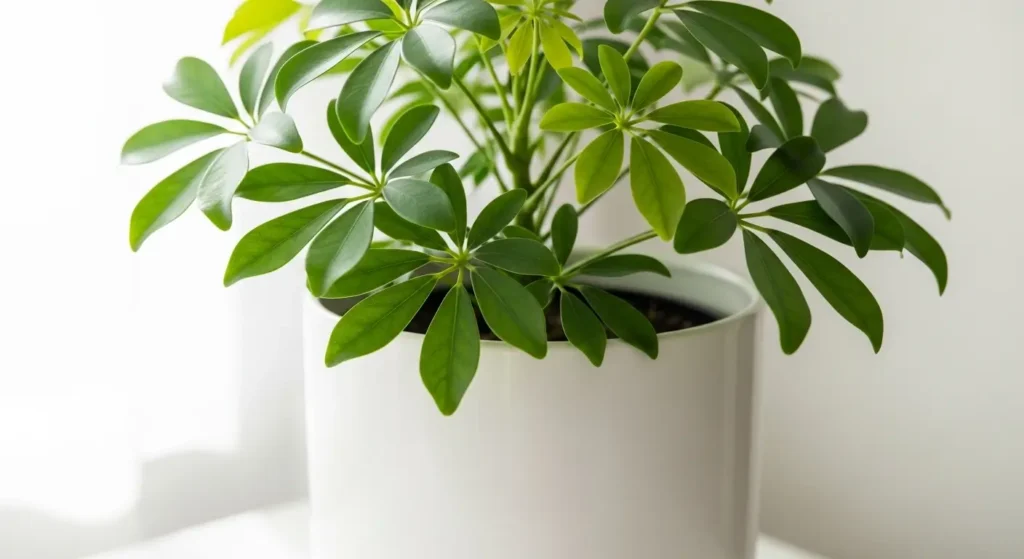
Umbrella plants generally need repotting every 1-2 years or when roots start poking out of drainage holes. If growth slows down or water drains too quickly, it’s probably time for a bigger home.
Choose a pot that’s 1-2 inches larger in diameter than the current one. Gently remove the plant, shake off old soil, and trim any dead or circling roots. Place it in the new pot with fresh, well-draining mix, keeping the same soil level as before. Water thoroughly after repotting and avoid fertilizing for about a month while the roots settle in.
Common Pests and Diseases
Like most houseplants, umbrella plants can occasionally attract pests, especially when stressed or in less-than-ideal conditions. Here’s what to watch for:
Spider Mites
Look for fine webbing between leaves and tiny specks moving on leaf undersides. Treat with insecticidal soap or neem oil spray, wiping leaves thoroughly to remove adults and eggs.
Mealybugs
These white, cottony pests cluster in leaf joints and along stems. Remove them with a cotton swab dipped in rubbing alcohol or spray with neem oil solution.
Scale Insects
Brown or tan bumps on stems and leaves indicate scale infestation. Scrape them off gently with your fingernail or a soft brush, then treat with horticultural oil spray. According to University of Florida IFAS Extension, integrated pest management strategies work best for controlling common houseplant pests.
Aphids
Small green, black, or white insects that cluster on new growth and leaf undersides. Rinse them off with a strong water spray or apply insecticidal soap every few days.
Common Problems Umbrella Plant
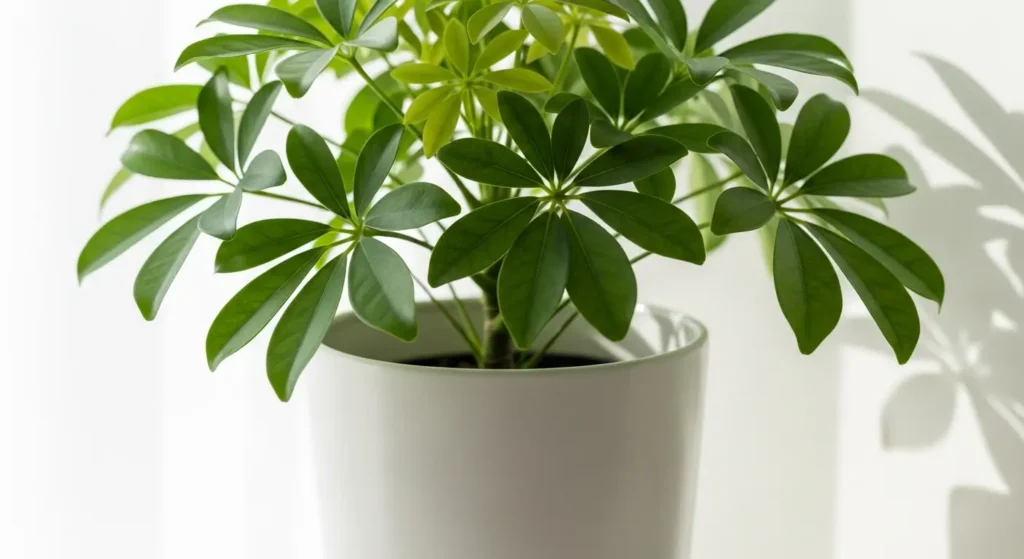
Here’s how to troubleshoot common issues:
Yellow Leaves
Let’s face it, yellow leaves can happen for several reasons. Overwatering is the most common culprit, causing roots to rot and leaves to turn yellow from the bottom up. Nutrient deficiency also shows up as yellowing, especially in older leaves that lose their vibrant green color. Natural aging causes lower leaves to yellow and drop occasionally, which is totally normal. Check your watering schedule first, then consider fertilizing if you haven’t fed the plant recently. Similar issues occur with Croton plants when watering or nutrient balance is off.
Brown Leaves or Brown Leaf Tips
Low humidity is usually the main cause of crispy brown leaf tips and edges. Tap water containing fluoride or chlorine can also burn leaf margins over time, creating brown spots. Additionally, underwatering stresses the plant and causes browning from lack of moisture. Increase humidity around your plant, switch to filtered or distilled water, and maintain a more consistent watering routine.
Drooping or Wilting Leaves
Drooping leaves signal a watering issue, either too much or too little. Check the soil moisture right away to figure out which problem you’re dealing with. If bone dry, give it a thorough drink and the leaves should perk up within hours. If soggy, hold off on watering and improve drainage. This same issue affects Spider plants when their watering schedule gets out of whack.
Leggy Growth or Sparse Foliage
Insufficient light causes your umbrella plant to stretch and become leggy with gaps between leaves. Move it to a brighter location near a window with more filtered sunlight. Prune back the leggy stems to encourage bushier, more compact growth from lower nodes.
FAQ
Do umbrella plants like sun or shade?
Umbrella plants prefer bright indirect light rather than full sun or deep shade. Direct sunlight scorches leaves while low light causes leggy, sparse growth and faded foliage.
How do you take care of an umbrella plant?
Provide bright indirect light, water when the top 2-3 inches of soil dry out, and maintain temperatures between 60-75°F. Feed monthly during the growing season with diluted fertilizer.
Are umbrella plants good indoor plants?
Yes, umbrella plants adapt wonderfully to indoor conditions and tolerate typical household humidity levels. Their compact size and low-maintenance nature make them perfect for beginners and busy plant parents alike.
Where should I put an umbrella plant in my house?
Place your umbrella plant near an east or west-facing window where it receives bright, filtered light throughout the day. Avoid direct afternoon sun and keep it away from drafty areas or heating vents.
1 thought on “How to Grow and Care for Umbrella Plant”
Comments are closed.