
In This Article
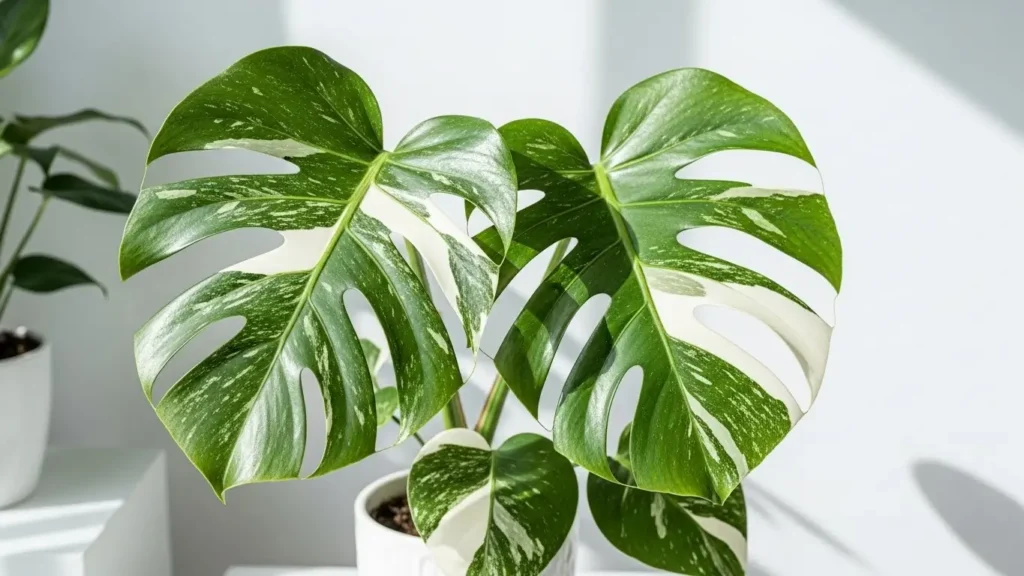
The monstera albo is one of the most sought-after houseplants, known for its stunning white-and-green variegated leaves. This tropical plant (Monstera deliciosa ‘Albo Variegata’) has become incredibly popular among plant collectors, despite its high price tag. Native to the rainforests of Central America, this beauty displays gorgeous marbled patterns of white and green. While it’s moderately challenging to grow compared to its all-green cousin, the rewards are totally worth it!
Plant Care Card
| Characteristic | Details |
|---|---|
| Common Name | Monstera Albo, Variegated Monstera |
| Botanical Name | Monstera deliciosa ‘Albo Variegata’ |
| Family | Araceae |
| Plant Type | Tropical perennial |
| Mature Size | 6-8 feet tall, 2-3 feet wide (indoors) |
| Sun Exposure | Bright indirect light |
| Soil Type | Well-draining, aerated potting mix |
| Soil pH | 5.5-7.0 |
| Hardiness Zones | 10-11 (indoor plant in most areas) |
| Native Area | Central America |
| Toxicity | Toxic to cats and dogs |
Monstera Albo Care
The monstera albo requires a bit more attention than regular monsteras due to its variegation. Throughout the following sections, you’ll learn exactly how to keep this plant thriving and producing those gorgeous leaves. With the right care, you’ll have a stunning specimen that’s the envy of all your plant-loving friends!
Light
Bright indirect light is the sweet spot for your monstera albo. This plant needs more light than a standard monstera because those white sections have no chlorophyll. Place it near an east or west-facing window, about three to five feet back from the glass. If your plant gets too little light, it’ll produce more green leaves and fewer white patches. Too much direct sun will scorch those delicate white areas, turning them brown and crispy not a good look.
Furthermore, you might need to rotate your plant every week or two. This makes sure all sides get equal light exposure, keeping growth balanced.
Soil
Your monstera albo thrives in a chunky, well-draining potting mix that provides plenty of aeration. According to Clemson University’s Home & Garden Information Center, a soil mix suitable for houseplants includes components that prevent compaction and promote drainage. A DIY recipe that works great is a 1:1:1 ratio of potting soil, orchid bark, and perlite. You can also add a handful of activated charcoal to keep things fresh.
Moreover, avoid using heavy garden soil or standard potting mix alone. The roots need oxygen just as much as water, and compacted soil leads to root rot fast.
Water
Watering your monstera albo correctly is super important for keeping it healthy and happy. Check the top 2-3 inches of soil with your finger before watering. If it feels dry, give it a thorough drink until water runs out the drainage holes. Just like with Heart Leaf Philodendron care, consistency is key these tropical plants appreciate regular moisture without sitting in soggy soil.
During spring and summer, you’ll probably water once a week. In fall and winter, slow down to every 10-14 days as growth slows. Signs of overwatering include yellow leaves and mushy stems, while underwatering causes drooping and crispy leaf edges.
Temperature and Humidity
This tropical plant loves warmth and moisture in the air. Keep temperatures between 65-85°F for best results. Additionally, aim for 60% humidity or higher a humidifier near your plant works wonders. If you don’t have one, grouping plants together or placing the pot on a pebble tray with water helps increase moisture.
Watch out for cold drafts from windows or air conditioners. Your monstera albo will also suffer near heating vents that blast dry air directly onto the leaves.
Fertilizer
Feed your monstera albo with a balanced liquid fertilizer every 3-4 weeks during spring and summer. A 20-20-20 formula diluted to half strength works perfectly. According to University of Maryland Extension, indoor plants don’t need fertilizer during winter months because reduced light results in slower growth. Basically, you want to support that gorgeous variegated growth without overloading the plant. Reduce feeding to once every 6-8 weeks in fall, and skip fertilizer entirely during winter when the plant is resting.
Types of Monstera Albo
The monstera albo family includes several stunning varieties worth knowing about:
- Monstera deliciosa ‘Albo Variegata’ – This is the classic version with white and green marbled variegation. Each leaf is unique, showing different patterns from sectoral to marbled. It’s the most common type you’ll find, though still pricey.
- Monstera deliciosa ‘Thai Constellation’ – Unlike the albo, this variety features creamy yellow speckled variegation that looks like stars. It’s tissue-cultured rather than grown from cuttings, making it more stable and slightly more affordable.
- Monstera adansonii ‘Variegata’ – The variegated version of the Swiss cheese vine has smaller leaves with holes. It displays beautiful white and green patterns similar to the deliciosa but in a more compact, trailing form.
- Monstera deliciosa ‘Aurea’ – This variety shows yellow variegation instead of white. Often confused with Thai Constellation, Aurea tends to have larger yellow sections and is even rarer than the albo.
Propagating Monstera Albo
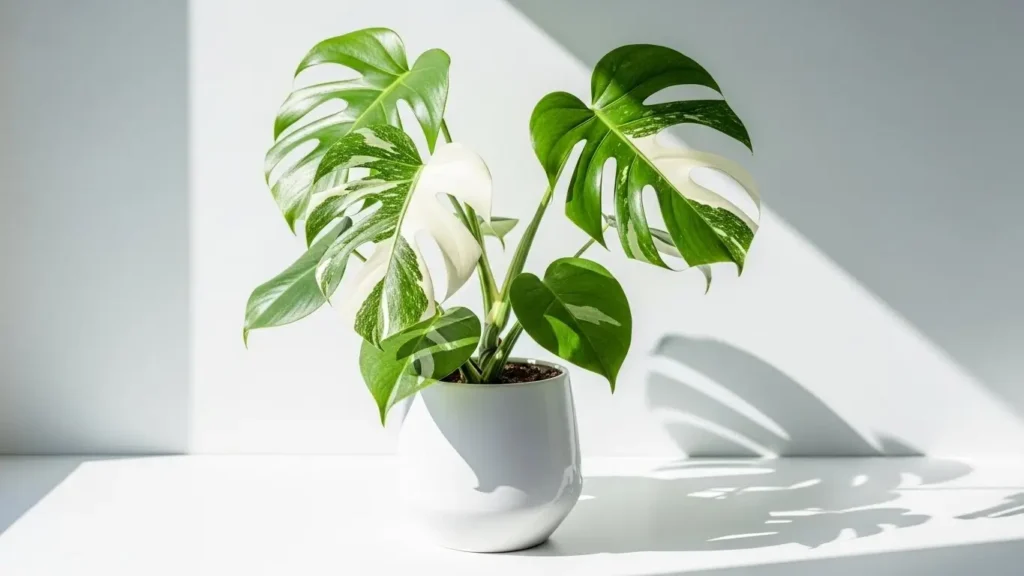
Best time to propagate is during spring and summer when the plant is actively growing.
Propagating by Stem Cuttings
This is the most reliable method for creating new monstera albo plants.
Materials needed:
- Clean, sharp pruning shears or scissors
- Small container or glass jar
- Rooting hormone (optional but helpful)
- Fresh potting mix
Step 1: Select a healthy stem with at least one node (the bump where leaves and roots grow) and one or two leaves. Make sure the cutting has both green and white variegation purely white cuttings won’t survive since they can’t photosynthesize.
Step 2: Cut just below a node at a 45-degree angle using sterilized scissors. Remove any lower leaves that would sit below the water line or soil surface to prevent rot.
Step 3: Place the cutting in water, making sure the node is submerged, or dip the cut end in rooting hormone and plant directly in moist potting mix. Keep it in bright indirect light and maintain consistent moisture.
Step 4: Change the water every 3-4 days if water propagating, or mist soil-propagated cuttings daily. After 4-6 weeks, you should see new roots developing. Once roots are 2-3 inches long, transplant water-rooted cuttings into soil.
Similar to Philodendron Billietiae propagation, patience and the right conditions are essential for success.
Potting and Repotting
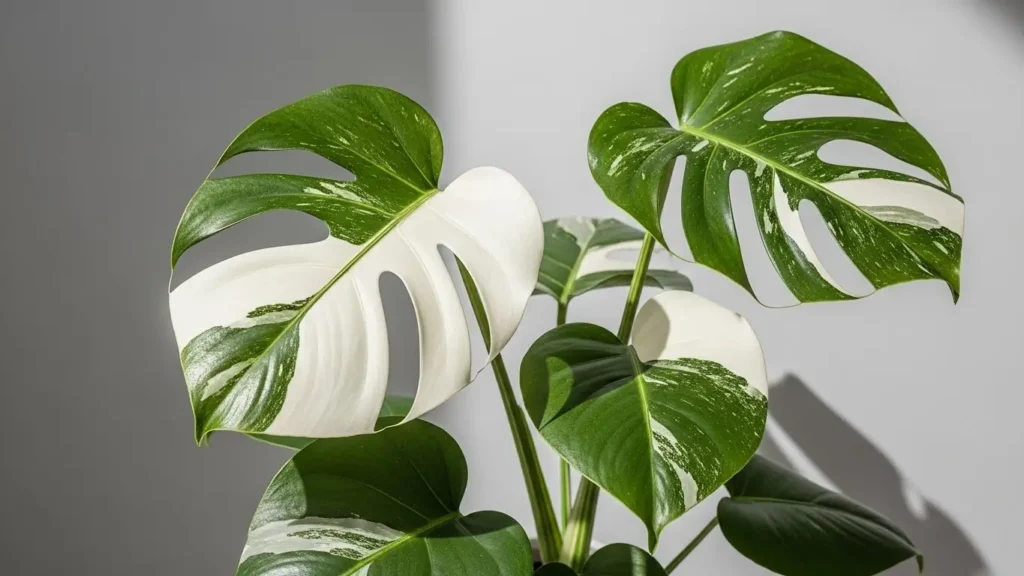
Signs your monstera albo needs repotting include roots growing out of drainage holes and slowed growth despite proper care. Generally, repot every 1-2 years in spring when the plant is actively growing. Choose a pot that’s 1-2 inches larger in diameter than the current one.
When repotting, gently loosen the root ball and remove any dead or damaged roots. Use fresh, well-draining potting mix and make sure your new pot has drainage holes. Water thoroughly after repotting, but then hold off on fertilizing for about a month the fresh soil provides plenty of nutrients initially.
Common Pests and Diseases
Like most houseplants, monstera albo can occasionally attract pests and diseases when conditions aren’t ideal. Following integrated pest management principles from University of Maryland Extension helps prevent problems before they start.
Spider Mites
Look for tiny webbing and stippled yellow spots on leaves, especially on the undersides. Treat with insecticidal soap or neem oil spray, making sure to coat all leaf surfaces thoroughly. Increase humidity to discourage future infestations.
Mealybugs
These appear as white cottony masses in leaf joints and along stems. Wipe them off with rubbing alcohol on a cotton swab, or spray with neem oil solution weekly until they’re completely gone.
Scale Insects
Scale looks like small brown or tan bumps stuck to stems and leaves. Scrape them off with your fingernail or a soft brush, then follow up with neem oil treatment every 5-7 days for three weeks.
Aphids
Tiny green, black, or white bugs cluster on new growth and leaf undersides. Rinse them off with a strong spray of water, or use insecticidal soap for heavier infestations.
Common Problems with Monstera Albo
Here’s how to troubleshoot common issues you might face:
Yellow Leaves
This is probably the most common problem with monstera albo. Overwatering is usually the culprit check if the soil is staying wet for too long and adjust your watering schedule. Nutrient deficiency can also cause yellowing, especially if you haven’t fertilized in months. Additionally, it could be natural aging if only the oldest, lowest leaves are turning yellow. Rhaphidophora Tetrasperma faces similar yellowing issues when watering isn’t dialed in correctly. Simply trim off yellow leaves and adjust your care routine accordingly.
Brown Leaves / Brown Leaf Tips
Low humidity is the most frequent cause of brown, crispy edges on your monstera albo leaves. Using tap water with high mineral content or chlorine can also lead to browning. Try switching to filtered or distilled water and increasing humidity around your plant. Underwatering causes more extensive browning that spreads inward from the edges. Mist your plant daily or invest in a humidifier for best results.
Drooping or Wilting Leaves
When leaves go limp and droopy, it’s usually a watering issue going either direction. Check the soil moisture immediately if it’s bone dry, your plant is thirsty and needs a good drink. If the soil is waterlogged, you’ve been overwatering and might be dealing with root rot. Similar to Alocasia Polly drooping issues, addressing the root cause quickly prevents permanent damage. Adjust watering habits based on what you find and your plant should perk up within 24-48 hours.
Leggy Growth / Sparse Foliage
Insufficient light makes your monstera albo stretch toward whatever light source it can find. The stems get long and spindly with large gaps between leaves, and new growth becomes smaller. Move your plant to a brighter location with more indirect sunlight. You can also prune back leggy stems to encourage bushier growth closer to the base.
FAQ
Why is Monstera albo so expensive?
Monstera albo is expensive because the variegation is a natural mutation that can’t be tissue-cultured reliably. Each plant must be propagated from cuttings, which is slow and labor-intensive, creating high demand with limited supply.
What monstera plant sold for $5000?
A mature, highly variegated monstera albo with multiple fenestrated leaves sold for around $5,000 on auction sites. Rare specimens with 50% or more white variegation and large size command premium prices from collectors worldwide.
Is Monstera albo difficult to grow?
Monstera albo is moderately challenging compared to standard monsteras because the variegation requires more light and careful watering. However, with proper bright indirect light, well-draining soil, and consistent care, it’s manageable for intermediate plant parents.
Which Monstera is the most expensive?
The Monstera Obliqua ‘Peru’ is typically the most expensive monstera species, sometimes selling for over $10,000 for mature plants. Monstera albo and Monstera Aurea are also among the priciest due to their rare variegation and high demand.