
In This Article
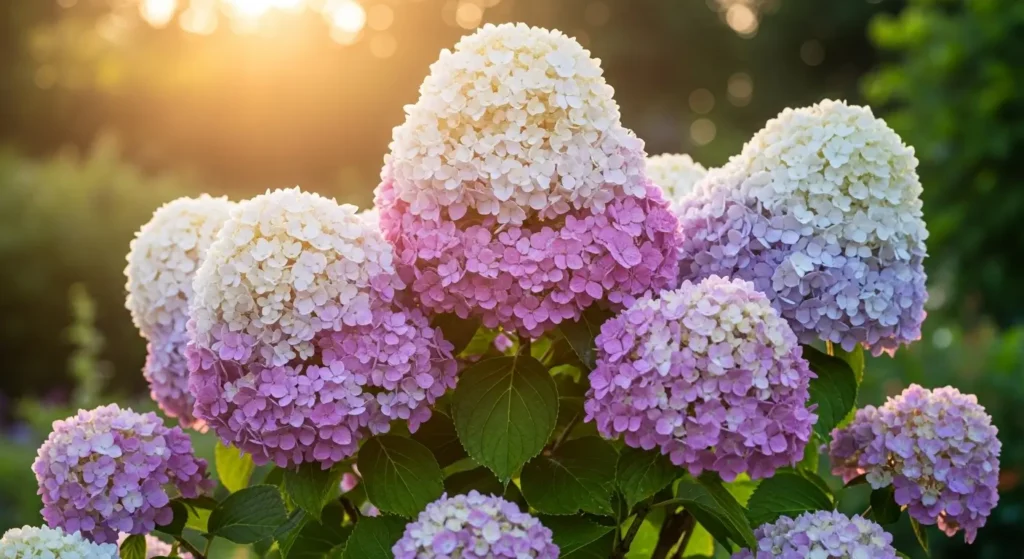
The hydrangea tree (Hydrangea paniculata or Hydrangea arborescens) transforms gardens with stunning cone-shaped or globe-like flower clusters. These shrubs are trained into tree form with a single trunk. Native to Asia and North America, they display white, pink, or blue blooms that change throughout the season. Thriving in USDA zones 3-9, they’re moderately easy to grow once established, adding height and elegance to borders, patios, or landscape beds.
Plant Care Card
| Attribute | Details |
|---|---|
| Common Name | Hydrangea tree, tree hydrangea, standard hydrangea |
| Botanical Name | Hydrangea paniculata, Hydrangea arborescens |
| Family | Hydrangeaceae |
| Plant Type | Deciduous shrub trained as tree |
| Mature Size | 6-8 feet tall, 4-6 feet wide |
| Sun Exposure | Full sun to partial shade |
| Soil Type | Moist, well-draining, rich |
| Soil pH | 5.5-6.5 (acidic to slightly acidic) |
| Hardiness Zones | 3-9 (USDA) |
| Native Area | Asia, North America |
| Bloom Time | Summer to fall |
| Toxicity | Toxic to pets and humans |
Hydrangea Tree Care
Standard hydrangeas require moderate care but reward you with months of spectacular blooms. Here’s what you need to know about sun, soil, water, and maintenance. With proper placement, this plant practically cares for itself.
Light
Hydrangea trees perform best with morning sun and afternoon shade, especially in warmer climates. They need at least 4-6 hours of sunlight daily for optimal flowering. Insufficient light results in sparse blooms and leggy growth that compromises the tree’s elegant form.
Plant your hydrangea tree on the east or north side of your property for ideal conditions. According to Iowa State University Extension, these trees tolerate full sun in cooler northern zones but benefit from afternoon protection in hot southern regions where temperatures regularly exceed 85°F.
Soil
These flowering trees demand rich, loamy soil with excellent drainage. They thrive in slightly acidic conditions with pH between 5.5 and 6.5. Additionally, similar to oriental poppies, organic matter is essential for moisture retention and healthy root development.
Avoid heavy clay or compacted soil that holds water. The USDA Natural Resources Conservation Service recommends amending poor soil with 2-3 inches of compost to improve structure and drainage. For container plants, use a high-quality potting mix designed for acid-loving shrubs.
Water
Water deeply once or twice weekly, providing about 1 inch of water per week through rain or irrigation. Check soil moisture by inserting your finger 2 inches deep water when it feels dry. Established plants show some drought tolerance but bloom best with consistent moisture.
During summer heat, increase watering frequency to prevent wilting. Newly planted hydrangea trees need more attention for the first growing season. In fall and winter, reduce watering significantly as the plant enters dormancy.
Temperature and Humidity
These hardy trees tolerate a wide temperature range from -30°F to 95°F depending on variety. Hydrangea paniculata handles colder zones 3-8, while Hydrangea arborescens suits zones 3-9. Most varieties prefer moderate humidity but adapt to various conditions once established.
Protect young trees from late spring frosts with burlap covers or frost blankets. Mulch around the base with 2-3 inches of organic material to insulate roots during winter and retain summer moisture.
Fertilizer
Feed your hydrangea tree with a balanced, slow-release fertilizer in early spring as new growth emerges. Apply again in mid-summer to support continued blooming. Stop fertilizing by late August to allow the plant to harden off before winter dormancy.
Types of Hydrangea Trees
Several varieties make excellent tree-form specimens, each offering unique characteristics:
- Limelight (Hydrangea paniculata ‘Limelight’): Displays chartreuse blooms that age to pink, reaching 6-8 feet tall. Exceptionally cold-hardy and reliable, this variety handles full sun better than most hydrangeas.
- Vanilla Strawberry (Hydrangea paniculata ‘Vanille Fraise’): Features white flowers that transform to pink then strawberry red as summer progresses. Compact habit makes it perfect for small gardens and containers.
- Pee Gee (Hydrangea paniculata ‘Grandiflora’): Classic variety with massive white flower clusters that fade to pinkish-tan. Fast-growing and vigorous, reaching up to 10 feet when trained as a tree.
- Bobo (Hydrangea paniculata ‘Bobo’): Dwarf selection growing 3-4 feet tall, ideal for small spaces or patio containers. White flowers cover the entire plant from summer through fall.
- Annabelle Tree (Hydrangea arborescens ‘Annabelle’): Produces enormous white snowball blooms up to 12 inches across. Similar to its shrub counterpart, this version offers dramatic impact in tree form.
Pruning
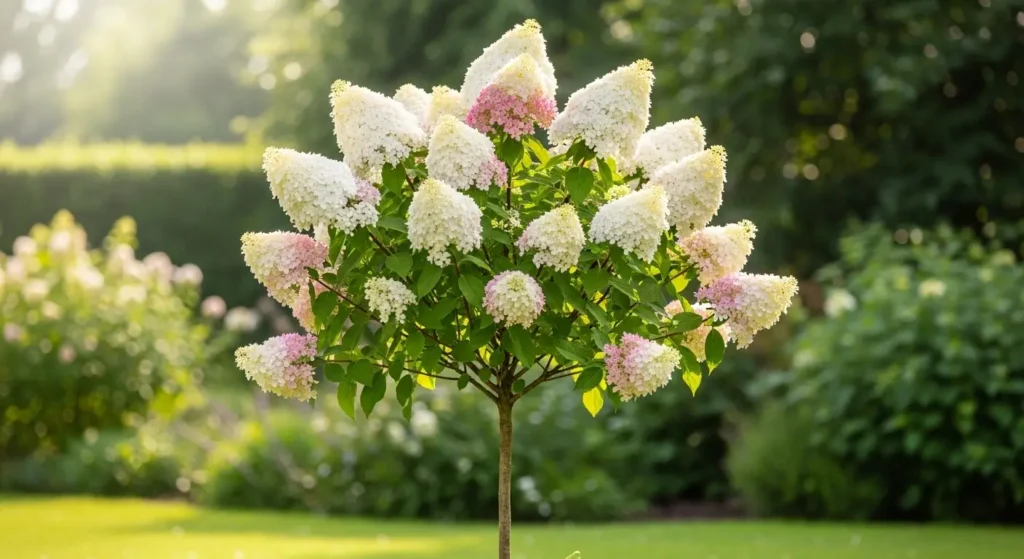
Prune hydrangea trees in late winter or very early spring before new growth starts. This timing prevents removing developing flower buds while the plant is still dormant. Avoid fall pruning, which encourages tender new growth that winter cold can damage.
Remove dead, damaged, or crossing branches first using clean, sharp pruning shears. Cut spent flower heads back to the first set of healthy buds to encourage next season’s blooms. Maintain the tree shape by removing any shoots emerging from the trunk base. Limit pruning to shaping and deadwood removal since hydrangea trees bloom on new wood.
Propagating Hydrangea Tree
Best propagation time is late spring through early summer when plants are actively growing.
Propagating by Stem Cuttings
This method produces new plants identical to the parent within one growing season.
Materials needed:
- Sharp, sterilized pruning shears
- Rooting hormone powder
- 4-inch pots with drainage holes
- Well-draining potting mix
- Clear plastic bags
Step 1: Take 4-6 inch cuttings from non-flowering shoots in early morning when plants are fully hydrated. Select healthy stems with 2-3 pairs of leaves and make cuts just below a leaf node at a 45-degree angle.
Step 2: Remove bottom leaves, keeping only the top two pairs. Dip the cut end in rooting hormone powder, tapping off excess. This hormone significantly improves rooting success rates for hydrangeas.
Step 3: Insert cuttings 2 inches deep in moist potting mix. Firm soil around the base to eliminate air pockets. Place pots in indirect bright light and cover with clear plastic to maintain humidity.
Step 4: Keep soil consistently moist but not waterlogged. Research from Clemson University Extension shows roots typically develop within 4-6 weeks for most hydrangea varieties. Tug gently to check for resistance, indicating successful rooting before transplanting.
Propagating by Layering
Ground layering works excellently for hydrangea trees with lower branches. Select a flexible lower branch that can bend to touch the ground in spring. Bend the branch down and identify where it contacts soil about 12 inches from the tip.
Remove leaves from a 6-inch section where the branch touches ground. Make a shallow wound on the underside by scraping bark lightly. Bury the wounded section 3-4 inches deep in amended soil, securing with a U-shaped wire pin. Roots form over 8-12 months before separating from the parent plant.
Planting and Transplanting Hydrangea Tree
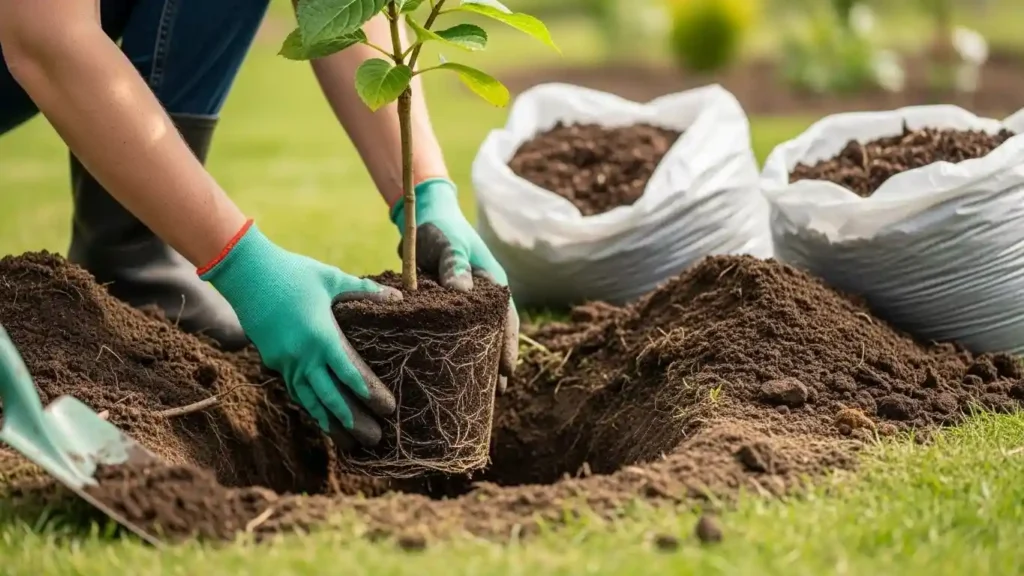
Plant hydrangea trees in early spring or fall when temperatures are mild. Space multiple trees 6-8 feet apart to allow for mature spread and good air circulation. Much like eagleston hollies, proper spacing prevents disease issues and ensures each tree receives adequate sunlight.
Dig a hole twice as wide as the root ball but the same depth. Set the tree so the root flare sits slightly above ground level to prevent crown rot. Backfill with native soil mixed with compost, water deeply, and apply mulch around the base.
Transplant established hydrangea trees in early spring before bud break or in fall after leaf drop. Water thoroughly for several weeks after transplanting to help roots establish. Most trees benefit from division every 8-10 years to maintain vigor.
Common Pests and Diseases
Like most garden plants, hydrangea trees can occasionally face pest or disease issues. However, they’re generally quite resilient with proper care.
Aphids
Look for clusters of tiny green or black insects on new growth and flower buds. Treat with strong water spray to dislodge pests, or apply insecticidal soap for heavier infestations. Natural predators like ladybugs provide excellent control.
Spider Mites
Watch for stippled yellow leaves and fine webbing on undersides. These microscopic pests thrive in hot, dry conditions. Increase humidity around plants and spray with neem oil every 5-7 days until mites disappear completely.
Powdery Mildew
Notice white, powdery coating on leaves during humid weather with poor air circulation. Improve spacing between plants and avoid overhead watering. Apply sulfur-based fungicide if infection persists beyond early stages.
Root Rot
Recognize by yellowing leaves, wilting despite moist soil, and stunted growth. This fungal disease results from overwatering and poor drainage. Improve soil drainage immediately and reduce watering frequency to prevent further damage.
Common Problems with Hydrangea Tree
Here’s how to troubleshoot common issues:
Poor or No Blooms
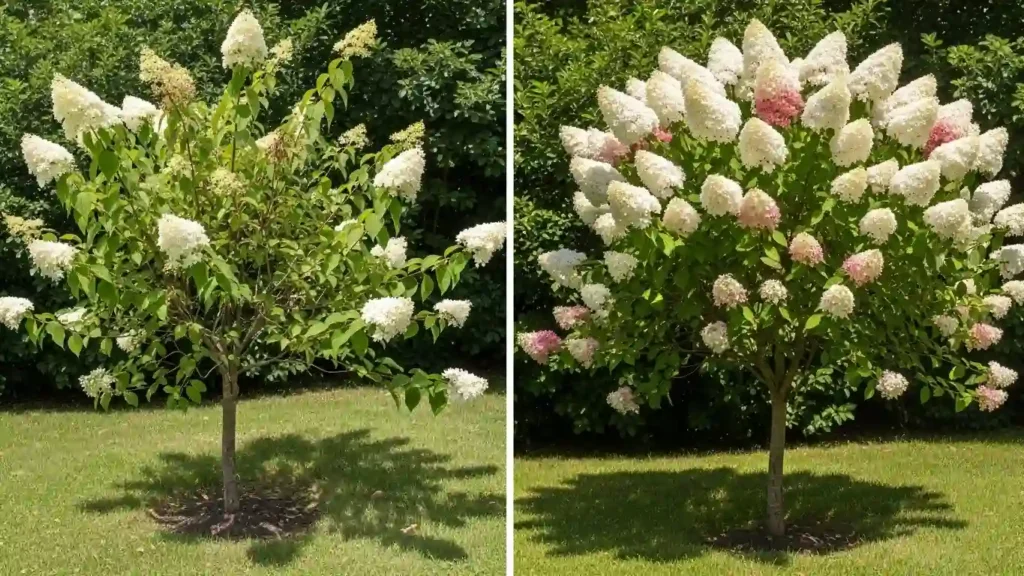
Insufficient sunlight is the primary cause of bloom failure in hydrangea trees. These plants need 4-6 hours of direct sun daily to produce abundant flowers. Over-fertilizing, especially with high-nitrogen products, promotes lush foliage at the expense of blooms.
Improper pruning timing can remove developing flower buds. Since these trees bloom on new wood, late-season pruning is safe. However, cutting back too early in spring may sacrifice the current year’s flowers. Immature plants often take 2-3 seasons to bloom reliably, so be patient with newly planted trees.
Yellow or Browning Leaves
Overwatering causes yellow leaves with brown edges and soft, mushy roots. Let soil dry slightly between waterings and improve drainage in heavy clay soil. Nutrient deficiency shows as overall yellowing, particularly on older leaves, requiring balanced fertilizer applications.
Iron chlorosis appears as yellow leaves with green veins, indicating overly alkaline soil that needs sulfur amendments. Underwatering produces brown, crispy leaf edges and overall wilting. Established trees need about 1 inch of water weekly, with more frequent watering during extreme heat.
Wilting or Drooping
Underwatering is the most common cause of sudden wilting in hydrangea trees. These plants have high water needs, especially during summer bloom period. Water deeply to rehydrate and establish consistent watering schedule moving forward.
Transplant shock causes temporary wilting after planting or moving trees. Keep soil evenly moist for 4-6 weeks until roots establish. Heat stress occurs during prolonged hot weather above 90°F, requiring afternoon shade and increased watering frequency.
Leggy or Sparse Growth
Insufficient light causes stretched, weak stems with sparse foliage and few flowers. Relocate trees to sites receiving 4-6 hours of morning sun for best results. Over-fertilizing promotes rapid, weak growth with poor structure, so reduce applications to twice yearly with balanced products.
Frost Damage
Late spring frosts blacken and damage new growth and emerging buds. Cover trees with frost cloth when temperatures drop below 32°F to protect developing flowers. Damaged growth typically recovers as new shoots emerge, though blooming may be delayed.
Harsh winter winds cause branch dieback and dried foliage. Plant in protected locations away from strong prevailing winds. Much like french lavender in cold regions, winter mulch provides crucial insulation against temperature fluctuations and freeze-thaw cycles.
FAQ
Where is the best place to plant a hydrangea tree?
Plant in locations with morning sun and afternoon shade, especially in hot climates. Eastern exposures work perfectly. Ensure soil drains well and avoid low spots where water collects.
What’s the difference between a hydrangea bush and a hydrangea tree?
A hydrangea tree is simply a shrub trained to a single trunk through strategic pruning and staking. Bushes have multiple stems from ground level while trees feature one main trunk with canopy growth.
Do hydrangea trees come back every year?
Yes, hydrangea trees are deciduous perennials that lose leaves in fall but return each spring. They’re cold-hardy in zones 3-9 depending on variety and become more vigorous with age.
Do hydrangeas come in trees?
Natural hydrangeas grow as multi-stemmed shrubs. Tree forms are created through horticultural training by removing lower branches and side shoots to develop a single trunk with top-heavy canopy of blooms.
1 thought on “How to Grow and Care for Hydrangea Tree : Complete Guide”
Comments are closed.