
In This Article
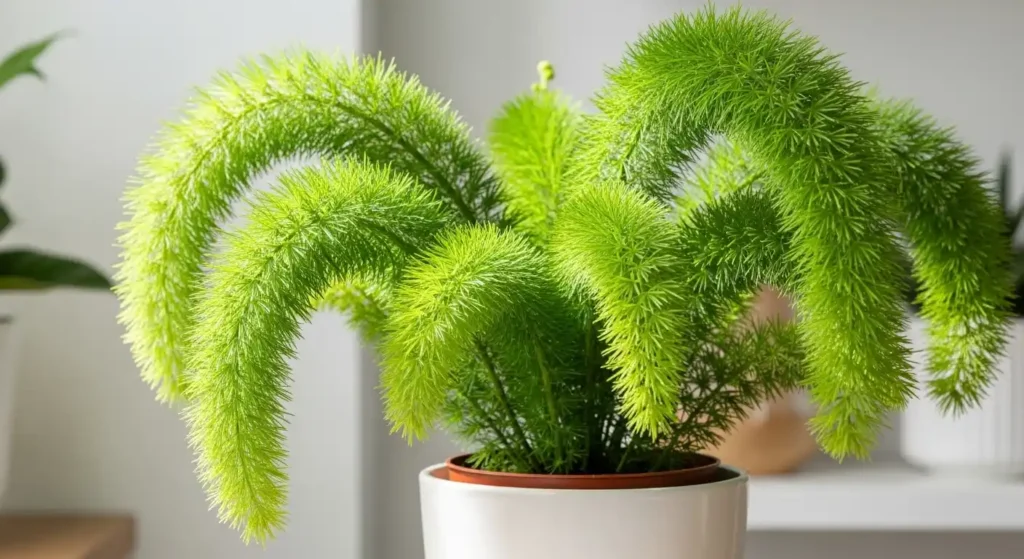
Looking for a fluffy, feathery plant that’s surprisingly easy? Meet the foxtail fern (Asparagus densiflorus ‘Myers’), a stunning houseplant with bright green, bottlebrush-like plumes.
Native to South Africa, this tropical beauty isn’t a true fern it’s part of the asparagus family. Despite its delicate appearance, it’s beginner-friendly and adds whimsical texture to any space.
Plant Care Card
| Common Name | Foxtail Fern, Myers Fern |
|---|---|
| Botanical Name | Asparagus densiflorus ‘Myers’ |
| Family | Asparagaceae |
| Plant Type | Perennial, tropical |
| Mature Size | 2-3 feet tall, 3-4 feet wide |
| Sun Exposure | Bright indirect light |
| Soil Type | Well-draining, loamy |
| Soil pH | 6.5-7.0 (slightly acidic to neutral) |
| Hardiness Zones | 9-11 (USDA) |
| Native Area | South Africa |
| Toxicity | Toxic to cats and dogs |
Foxtail Fern Care
This plant is moderately easy to care for, making it perfect for beginners with a bit of houseplant experience. In the sections below, we’ll cover light, soil, watering, temperature, humidity, and fertilizing needs. With a little attention, you’ll have a lush, fluffy fern in no time!
Light
Foxtail ferns thrive in bright, indirect light. Think of a spot near an east or north-facing window where the light is gentle and filtered. Too much direct sun will scorch those delicate plumes, turning them yellow or crispy. On the flip side, low light causes sparse, leggy growth.
If you notice the foliage losing its vibrant green color, it’s probably not getting enough light. Move it closer to a window, but avoid harsh afternoon rays. Similar to philodendron brasil, a sheer curtain works wonders if your only option is a south or west-facing window.
Soil
Well-draining soil is non-negotiable for foxtail ferns. They don’t like sitting in soggy conditions, as this leads to root rot fast. A standard houseplant potting mix works, but adding perlite or coarse sand improves drainage even more.
For a DIY mix, try a 2:1 ratio of potting soil to perlite or sand. This keeps things airy while retaining just enough moisture. According to North Carolina State University Extension, proper soil drainage is critical for preventing root diseases in container plants.
Water
Watering is where most people mess up. Foxtail ferns like consistently moist soil, but not waterlogged. Water when the top 2-3 inches of soil feel dry to the touch. During spring and summer, this might mean watering once or twice a week.
In fall and winter, slow down these plants go semi-dormant and need less frequent watering. Overwatering leads to yellowing fronds and mushy roots. Underwatering causes the tips to turn brown and crispy.
Here’s a pro tip: If you’re growing spider plants, you’ll find they have similar watering needs both appreciate consistent moisture without being drenched.
Temperature and Humidity
Foxtail ferns prefer temperatures between 65-75°F during the day. They can tolerate slightly cooler nights, but anything below 50°F stresses them out. Keep them away from cold drafts, heating vents, and air conditioning units.
Humidity-wise, they appreciate moderate to high levels (around 50-60%). Most homes are fine, but if your air is super dry, consider misting occasionally or placing a small humidifier nearby. Brown leaf tips often signal low humidity. For more information on managing indoor plant humidity, check out University of Minnesota Extension’s houseplant care guide.
Fertilizer
Feed your foxtail fern with a balanced liquid fertilizer (10-10-10 or 20-20-20) every 2-4 weeks during spring and summer. This keeps the growth lush and vibrant. Cut back to once a month in fall, and stop fertilizing completely in winter when the plant is resting.
Types of Foxtail Fern
While Asparagus densiflorus ‘Myers’ is the most common variety, there are a few close relatives worth mentioning:
- Sprengeri Fern (Asparagus densiflorus ‘Sprengeri’): This variety has a more cascading, trailing habit compared to the upright Myers. The foliage is slightly less dense and more delicate-looking. Great for hanging baskets!
- Asparagus Plumosus: Often called the plumosa fern, this one has feathery, lace-like foliage that’s softer and airier. It’s a bit more delicate than the foxtail fern and prefers slightly higher humidity.
Propagating Foxtail Fern
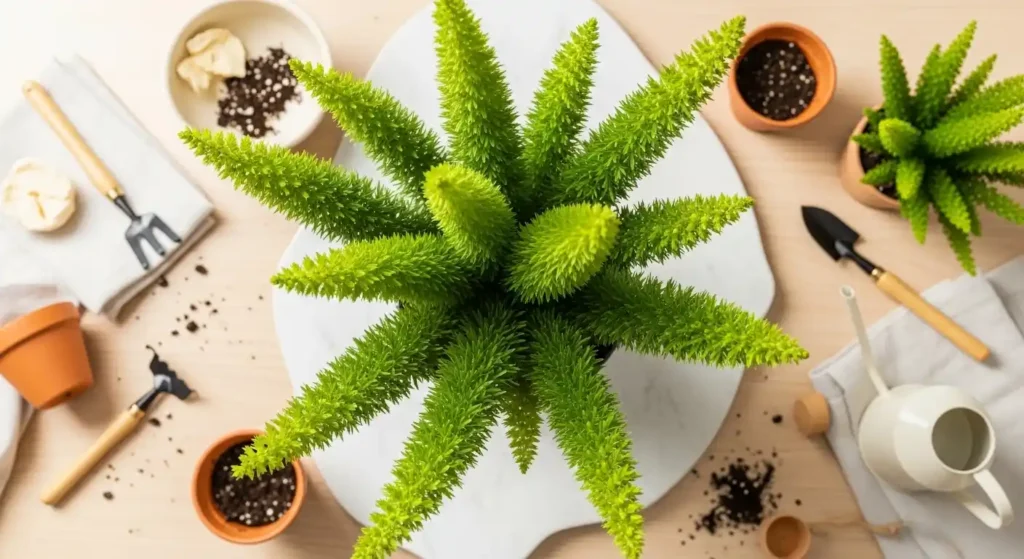
The best time to propagate is during spring and summer when the plant is actively growing.
Propagating by Division
Division is the easiest and most reliable method for foxtail ferns. You’re essentially splitting the root ball into multiple sections, each with its own roots and fronds.
Materials needed:
- Sharp, clean knife or garden shears
- Fresh potting mix
- Pots with drainage holes
- Watering can
Step 1: Remove the plant from its pot and gently shake off excess soil to expose the root ball. You’ll notice tuberous roots these store water and nutrients.
Step 2: Using a sharp knife, carefully divide the root ball into 2-3 sections. Make sure each section has healthy roots and at least a few fronds attached.
Step 3: Plant each division in its own pot with fresh, well-draining soil. Water thoroughly and place in bright, indirect light.
Step 4: Keep the soil consistently moist for the first few weeks while the divisions establish. You should see new growth within 4-6 weeks.
Division works just as well for alocasia polly plants, which also have tuberous root systems and appreciate being divided when rootbound.
Propagating by Seed
This method takes much longer and isn’t commonly used, but it’s possible. Foxtail ferns produce small berries that contain seeds. Remove the seeds, plant them in moist soil, and keep warm (around 70°F). Germination can take several weeks to months, so patience is key!
Potting and Repotting
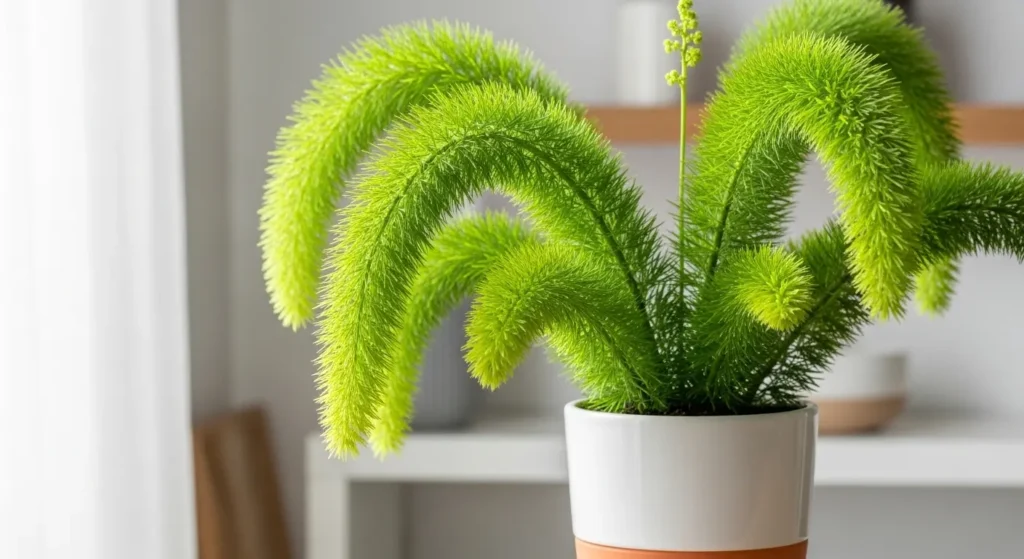
Foxtail ferns grow relatively fast and typically need repotting every 1-2 years. Signs it’s time include roots poking out of drainage holes, slowed growth, or soil drying out super quickly after watering.
When to Repot: Spring is the ideal time, right before the growing season kicks in. Avoid repotting in fall or winter when the plant is resting.
How to Repot: Choose a pot that’s 1-2 inches larger in diameter than the current one. Gently remove the plant, loosen any tightly bound roots, and place it in the new pot with fresh soil. Water well and let it settle in. Make sure the pot has drainage holes this plant hates sitting in water!
Common Pests and Diseases
Like most houseplants, foxtail ferns can occasionally attract pests, but they’re generally pretty resilient. Keep an eye out for these common culprits:
Spider Mites
Look for tiny webs on the foliage and stippled, discolored leaves. These pests thrive in dry conditions. Treat with insecticidal soap or neem oil, and increase humidity to prevent future infestations. For comprehensive pest management strategies, visit University of California’s Integrated Pest Management program.
Mealybugs
White, cottony clusters on stems and leaf joints are a telltale sign. Remove with a cotton swab dipped in rubbing alcohol, or spray with neem oil. Check regularly to catch them early.
Scale Insects
These look like small brown or tan bumps stuck to the stems. Scrape them off gently with your fingernail or a soft brush, then treat with neem oil to kill any remaining eggs.
Aphids
Soft-bodied, green or black insects that cluster on new growth. Rinse them off with water, or use insecticidal soap. They’re annoying but easy to control if caught early.
Common Problems with Foxtail Fern
Here’s how to troubleshoot common issues:
Yellow Leaves
Yellowing fronds are super common and usually caused by overwatering. Check the soil if it’s soggy, you’re watering too much. Let it dry out a bit before watering again. Nutrient deficiency can also cause yellowing, so make sure you’re fertilizing regularly during the growing season. Lastly, some yellowing is natural as older fronds age and die off. Just trim them away.
Similar to croton plants, foxtail ferns show stress through leaf discoloration, so adjust care accordingly.
Brown Leaf Tips
This is almost always a humidity issue. Foxtail ferns prefer moderate to high humidity, and dry air causes the tips to crisp up. Mist the plant regularly, group it with other plants, or use a humidifier. Poor water quality (like tap water with lots of chlorine or fluoride) can also cause browning. Try using filtered or distilled water instead.
Drooping or Wilting Leaves
Wilting usually means watering problems either too much or too little. Feel the soil to determine which. If it’s bone dry, give it a good soak. If it’s waterlogged, let it dry out and reduce watering frequency going forward.
Just like with wandering jew plants, consistent watering is key to preventing wilting and keeping foliage perky.
Leggy Growth
This happens when the plant isn’t getting enough light. The fronds stretch out, looking sparse and weak. Move your foxtail fern closer to a bright window, and prune back the leggy growth to encourage bushier, fuller fronds.
FAQ
Do foxtail ferns like sun or shade?
Foxtail ferns prefer bright, indirect light rather than full sun or deep shade. Direct sunlight scorches the delicate fronds, while too much shade causes sparse, leggy growth. An east or north-facing window is ideal.
Do foxtail ferns come back each year?
In USDA zones 9-11, foxtail ferns are perennial and come back year after year outdoors. In colder climates, they’re grown as annuals or brought indoors during winter. Indoors, they grow year-round with proper care.
Will foxtail ferns spread?
Yes, foxtail ferns can spread through underground rhizomes and tuberous roots, especially when grown in the ground outdoors. Indoors, they stay contained in their pot but will grow fuller and bushier over time with good care.
How toxic are foxtail ferns?
Foxtail ferns are toxic to cats and dogs if ingested. They contain saponins, which cause vomiting, diarrhea, and abdominal pain. Keep them out of reach of curious pets, and contact your vet if ingestion occurs.
1 thought on “How to Grow and Care for Foxtail Fern”
Comments are closed.