
In This Article
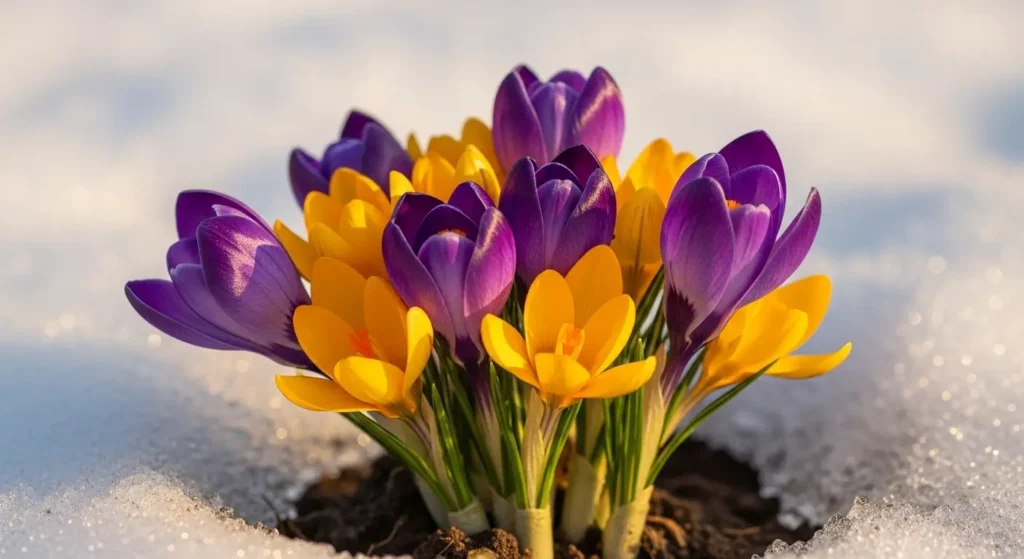
Want a guaranteed sign of spring? The crocus flowers plant (Crocus spp.) never disappoints. Native to Europe and Central Asia, these cheerful purple, yellow, and white blooms push through winter’s cold in USDA Zones 3–8. Easy to grow, low-maintenance, and perennial plant once, enjoy forever.
Plant Care Card
| Feature | Details |
|---|---|
| Common Name | Crocus, Spring Crocus, Dutch Crocus |
| Botanical Name | Crocus spp. (e.g., Crocus vernus, C. tommasinianus) |
| Family | Iridaceae |
| Plant Type | Hardy perennial bulb (corm) |
| Mature Size | 3–6 inches tall × 1–3 inches wide |
| Sun Exposure | Full sun to partial shade |
| Soil Type | Well-draining, sandy or loamy |
| Soil pH | 6.0–7.0 (slightly acidic to neutral) |
| Hardiness Zones | USDA Zones 3–8 |
| Native Area | Southern Europe, Central Asia, Middle East |
| Bloom Time | Late winter to early spring (February–April) |
| Toxicity | Toxic to dogs and cats; mildly toxic to humans |
Crocus Flowers Plant Care
The crocus flowers plant is genuinely one of the most low-maintenance perennials you can add to your garden. The sections below cover everything you need to know sun, soil, water, pruning, and propagation. Once they’re in the ground, they practically take care of themselves.
Light
Crocus thrives in full sun to partial shade, needing 4–6 hours of daily sunlight for best blooms. South- or east-facing beds are ideal. In warmer climates, afternoon shade prevents overheating. Planting under deciduous trees works beautifully bare branches allow spring light in, while summer leaves shade dormant corms perfectly.
Soil
Well-draining soil is absolutely non-negotiable for the crocus flowers plant. These corms will rot quickly in soggy, compacted, or clay-heavy ground. Sandy or loamy soil with good drainage is ideal. A neutral pH between 6.0 and 7.0 works best.
If your soil is heavy clay, amend it before planting. Mix in coarse sand and organic compost at a 1:1:1 ratio (existing soil, sand, compost) to improve drainage and aeration. According to the Penn State Extension guide on bulb planting and soil preparation, proper drainage is the single most important factor for healthy bulb performance.
Water
Newly planted corms need about 1 inch of water weekly. Once established, crocus are drought-tolerant and need little supplemental watering during bloom. Keep soil dry in summer when corms are dormant overwatering causes rot. Fall rainfall triggers root growth before winter. Watch for mushy stems (overwatering) or wilted leaves (underwatering). The Asiatic Lily shares similar watering needs, hating wet soil.
Temperature and Humidity
The crocus flowers plant is impressively cold-hardy, surviving temperatures well below freezing in Zones 3–8. They actually need a cold dormancy period (below 40°F / 4°C) to bloom properly so mild-winter climates can struggle. In Zone 9+, you may need to pre-chill corms in the refrigerator for 8–12 weeks before planting.
Humidity isn’t a major concern for crocus outdoors. However, good air circulation around the foliage helps prevent fungal issues. In very wet springs, make sure your planting bed drains freely to protect corms from rot.
Fertilizer
Feed crocus with a low-nitrogen, phosphorus-rich fertilizer (like 5-10-10) in early fall when you plant, and again lightly in early spring as shoots emerge. Avoid high-nitrogen fertilizers they push leafy growth at the expense of blooms. Skip feeding entirely during dormancy.
Types of Crocus Flowers Plant
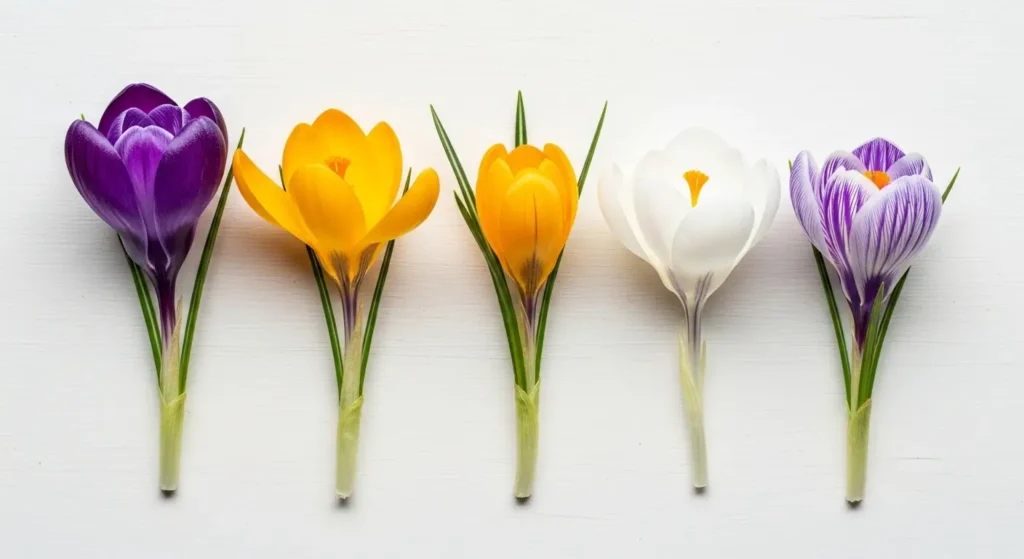
There are dozens of crocus species and cultivars. Here are the most popular for home gardens:
- Dutch Crocus (Crocus vernus): The classic large-flowered spring crocus. Bold purple, white, or striped blooms. Most commonly sold in garden centers.
- Snow Crocus / Tommy Crocus (Crocus tommasinianus): Smaller and more delicate than Dutch crocus, with lavender-purple flowers. Naturalizes beautifully and multiplies fast.
- Saffron Crocus (Crocus sativus): The source of culinary saffron. Blooms in fall rather than spring. Requires full sun and very well-drained soil.
- Golden Crocus (Crocus chrysanthus): Early-blooming with cheerful yellow, white, or bronze flowers. Great for rock gardens and borders.
- Giant Crocus (Crocus x hybridus): Large, showy blooms in a wide color range. Ideal for mass planting and cut flower displays.
Pruning
Pruning the crocus flowers plant is simple mostly it’s about what NOT to cut. After blooming, resist the urge to cut back the foliage right away. Those green leaves are photosynthesizing and sending energy back into the corm for next year’s blooms. Cut them too early, and you’ll have fewer (or no) flowers the following season.
Wait until the foliage turns completely yellow and dies back naturally usually 6–8 weeks after blooming ends. Then you can trim it down to the ground or simply pull it away. Deadhead spent flowers as they fade to keep the bed looking tidy, but leave the leaves alone. This simple routine keeps your crocus returning strong year after year.
Propagating Crocus Flowers Plant
The best time to propagate is in late summer to early fall, just before you’d normally plant corms. Crocus multiply naturally over time by producing small offsets (cormlets) around the parent corm.
Propagating by Division
Division is the easiest and most reliable method for the crocus flowers plant. You’ll get true-to-type plants that bloom quickly often the very next season.
Materials needed:
- Garden fork or hand trowel
- Clean, sharp knife (if separating clumps)
- Well-draining potting mix or amended garden soil
- Planting locations ready in advance
Step 1: After foliage dies back completely in late spring or early summer, carefully dig up the corm clumps with a garden fork. Shake off excess soil so you can see the offsets clearly.
Step 2: Gently separate the small cormlets from the main corm by hand, or use a clean knife for tightly attached ones. Each cormlet should be firm and healthy discard any that are soft or mushy.
Step 3: Allow the corms and cormlets to dry in a cool, airy spot for 1–2 days. This helps toughen the outer skin and reduces the risk of rot after replanting.
Step 4: Replant in fall at a depth of 2–4 inches (pointy side up), spaced 3–4 inches apart. Water lightly after planting and let fall rains do the rest.
Expect small cormlets to bloom within 1–2 seasons. This same method works great for Monkey Grass, another low-maintenance perennial that’s easy to divide and spread throughout your garden.
Propagating from Seeds
Seed propagation is slower but rewarding if you’re patient. Collect seeds after blooms fade and sow them in a cold frame or directly in the garden in fall. Seeds need a cold stratification period to germinate. Expect 3–5 years before seed-grown plants bloom definitely a long game, but fun for enthusiasts.
Planting and Transplanting Crocus Flowers Plant
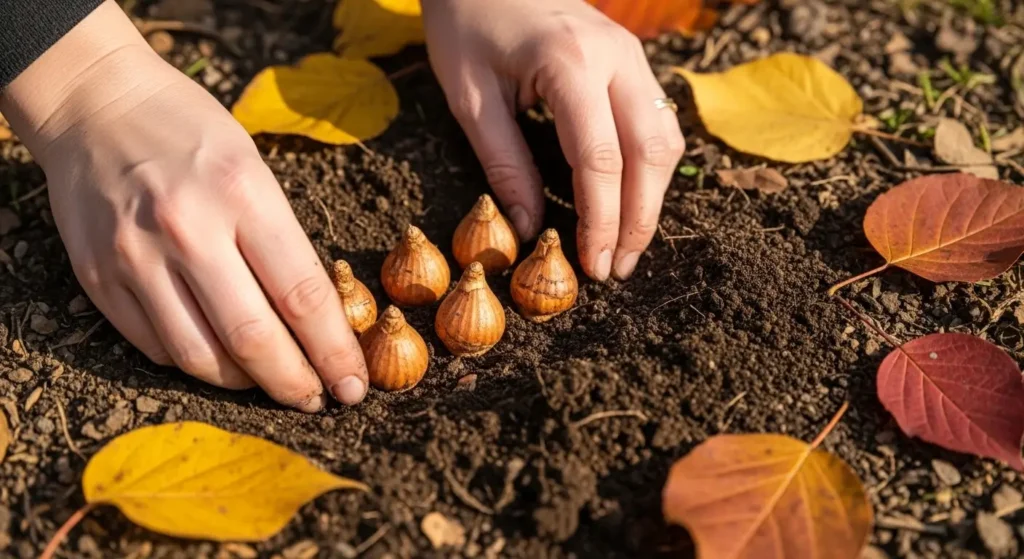
Plant your crocus flowers plant corms in fall, 6–8 weeks before the ground freezes typically September through November depending on your zone. This gives them time to establish roots before winter. Space corms 3–4 inches apart and plant them 2–4 inches deep, pointy side up.
For a natural, informal look, try the “scatter and plant” method: toss a handful of corms onto the soil and plant them wherever they land. Mass plantings of 25–50 corms together create the most visual impact when they bloom.
Transplant or divide established clumps every 3–5 years to prevent overcrowding, which reduces bloom quality over time.
Common Pests and Diseases
Like most garden plants, the crocus flowers plant can occasionally face pest or disease issues—especially in wet conditions or poorly drained beds.
Aphids
Look for clusters of tiny green or black insects on new shoots. Treat with a strong water spray or insecticidal soap applied weekly until clear.
Spider Mites
Fine webbing on leaves signals spider mites. Treat with neem oil spray, focusing on leaf undersides, every 5–7 days.
Powdery Mildew
White powdery coating on leaves appears in humid, low-airflow conditions. Improve air circulation and treat with a baking soda solution or fungicide.
Root Rot
Soft, mushy corms result from waterlogged soil. Dig up affected corms, remove rotted sections, dust with sulfur powder, and replant in better-draining soil.
Squirrels and Rodents
Digging and missing corms in spring mean critters found your stash. Cover beds with wire mesh just below the soil surface after planting to protect corms.
For detailed pest management strategies, the University of California IPM Program offers excellent outdoor plant pest resources.
Common Problems with Crocus Flowers Plant
Here’s how to troubleshoot common issues:
Poor or No Blooms
No blooms is the most frustrating crocus flowers plant problem and it’s almost always fixable. Insufficient sun is the top cause: crocus need at least 4–6 hours of direct light. Over-fertilizing with nitrogen pushes leafy growth instead of flowers, so switch to a phosphorus-rich feed. Additionally, cutting foliage too early the previous season starves the corm of energy reserves. Move plants to a sunnier spot and let foliage die back naturally. Similar bloom issues affect the Asiatic Lily when planted in too much shade.
Yellow or Browning Leaves
Some yellowing after bloom is completely normal it’s part of the natural die-back process. However, early yellowing before or during bloom often signals overwatering or waterlogged soil. Nutrient deficiency can also cause pale, yellowing foliage; a light spring feed helps. If leaves brown quickly and collapse, suspect root rot from poor drainage. Improve soil drainage and reduce watering frequency right away.
Wilting or Drooping
Drooping flowers or leaves usually point to underwatering during the active growing period especially in dry springs. Transplant shock after dividing corms can also cause temporary wilting; keep soil lightly moist for a few weeks after replanting. Heat stress in late spring can cause rapid wilting as temperatures spike. There’s not much to do there crocus naturally go dormant as it warms up, and that’s perfectly normal. The March Birth Flower guide covers similar spring bloom management tips worth reading.
Leggy or Sparse Growth
Tall, floppy stems with few flowers point directly to too much shade. Move your crocus flowers plant to a sunnier garden bed for next season. Over-crowded corms can also cause sparse blooming divide clumps every 3–5 years to give each corm room to grow. Additionally, planting corms too shallow (less than 2 inches deep) can result in weak, leggy stems that flop over easily.
Frost Damage
A late frost after blooms emerge can damage petals they turn mushy and brown. Cover emerging blooms with a light frost cloth if a freeze is forecast. The corms themselves are fine underground; damaged blooms don’t mean the plant is dead.
FAQ
Do crocus flowers come back every year?
Yes! Crocus are hardy perennials that return every year. They multiply over time and bloom more abundantly each spring season.
What do you do with crocus bulbs after they bloom?
Leave the foliage alone until it turns yellow naturally. Then trim it back. Never cut green leaves early.
What is special about a crocus flowers plant?
Crocus are among the first flowers to bloom in late winter. Their cold hardiness and cheerful colors make them truly special garden plants.
What problems do crocus flowers have?
Common issues include poor blooms from too much shade, root rot from soggy soil, and corms damaged by squirrels or rodents digging them up.
4 thoughts on “How to Grow and Care for Crocus Flowers Plant”
Comments are closed.