
In This Article
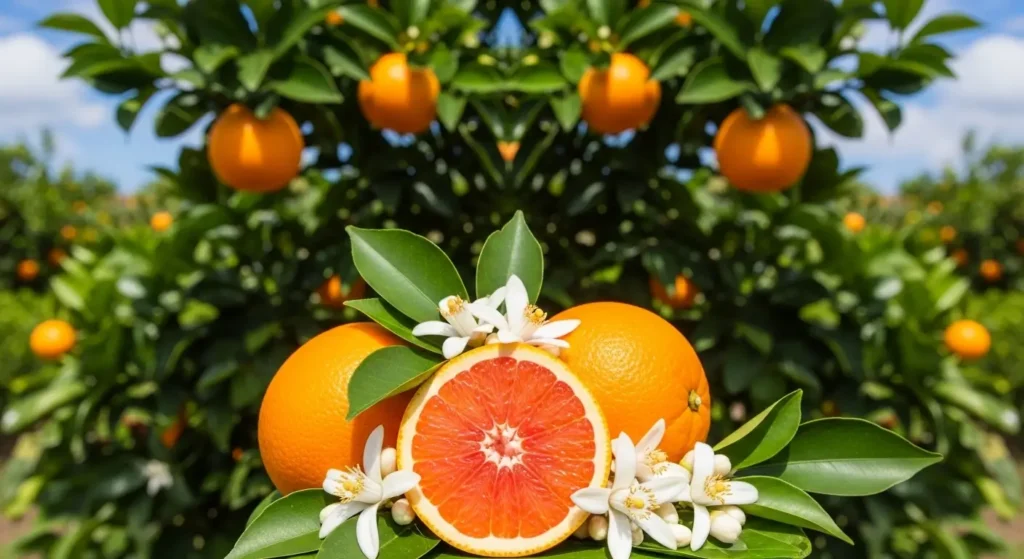
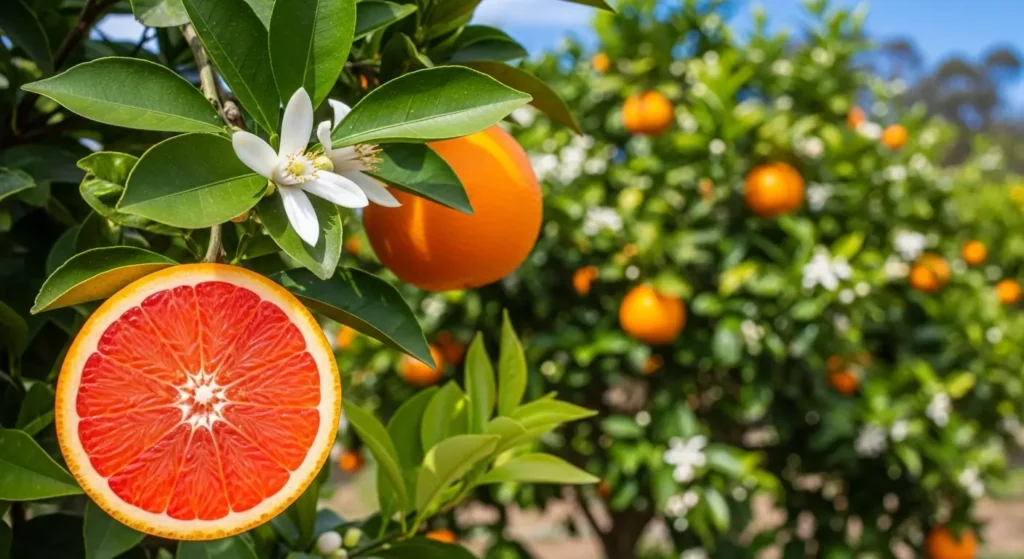
The Cara Cara orange reveals stunning pink-to-red flesh beneath its bright orange peel. Originating from Venezuela’s Hacienda Cara Cara in 1976, this navel variety reached California groves during the 1980s. Its evergreen tree features glossy dark leaves and fragrant spring blooms. Sweet, seedless, and berry-noted, Cara Caras flourish in USDA zones 9-11 with better cold tolerance than most citrus. Moderate care requirements make this rewarding variety ideal for beginner fruit growers.
Cara Cara Orange Tree Care Card
| Attribute | Details |
|---|---|
| Common Name | Cara Cara Orange, Cara Cara Navel Orange |
| Botanical Name | Citrus sinensis ‘Cara Cara’ |
| Family | Rutaceae |
| Plant Type | Evergreen fruit tree |
| Mature Size | 15-20 ft. tall, 10-15 ft. wide (full-size); 8-10 ft. (dwarf) |
| Sun Exposure | Full sun |
| Soil Type | Sandy loam, well-draining |
| Soil pH | 6.0-7.5 (slightly acidic to neutral) |
| Hardiness Zones | 9-11 (USDA) |
| Native Area | Venezuela (cultivar origin) |
| Bloom Time | Spring (March-May) |
| Fruit Harvest | Winter to early spring (December-April) |
| Toxicity | Non-toxic fruit; leaves and peel may cause mild stomach upset in pets |
Cara Cara Orange Tree Care
Cara Cara orange trees thrive with consistent sun exposure, regular watering, and protection from freezing temperatures. Here’s what you need to know about light, soil, water, temperature, fertilizing, and pruning. With proper care, you’ll enjoy sweet, pink-fleshed oranges within a few years.
Light
Let’s face it—citrus trees need sun, and lots of it. Cara Cara orange trees require full sun exposure for at least 8-10 hours daily to produce abundant, sweet fruit. Insufficient light leads to poor fruiting, weak growth, and sparse foliage.
Plant your tree in the sunniest spot available, ideally on the south or southwest side of your property. A location near a light-colored wall works beautifully since reflected heat creates a warmer microclimate. Additionally, this placement offers wind protection while maximizing sunlight throughout the day.
Soil
Cara Cara oranges absolutely need well-draining soil—this cannot be overstated for citrus success. Sandy loam or loamy soil works best, allowing water to move through while retaining some moisture. Heavy clay or compacted soil causes root rot, the most common killer of citrus trees.
The ideal soil pH ranges from 6.0 to 7.5 (slightly acidic to neutral). Before planting, amend your soil with compost to improve structure and drainage. However, avoid peat moss for citrus since it can make soil too acidic over time.
Water
Young Cara Cara trees need deep watering once or twice weekly during their first growing season to establish strong roots. Check soil moisture by sticking your finger 2-3 inches down—if it feels dry, it’s time to water. Established trees typically need watering every 7-10 days, though frequency depends on your climate and season.
Deep, infrequent watering encourages deeper root growth compared to shallow, frequent sprinkles. During summer and active fruiting periods, increase watering frequency since trees demand more moisture. Conversely, reduce watering in winter when growth slows.
Watch for yellowing leaves or leaf drop (overwatering signs) versus wilting or crispy leaf edges (underwatering indicators). Therefore, monitoring your tree’s appearance helps you adjust your watering schedule.
Temperature and Humidity
Cara Cara orange trees produce best fruit when daytime temperatures range from 55°F to 85°F. These trees handle USDA zones 9-11 well, tolerating brief dips to around 28°F when mature, though prolonged freezing damages fruit and foliage.
When frost threatens, cover your tree with frost cloth or burlap, and add a thick mulch layer around the base. Container-grown Cara Cara oranges should be moved to a protected area or garage during freezing weather. These citrus trees tolerate various humidity levels but appreciate moderate humidity around 50-60%.
Fertilizer
Cara Cara orange trees are heavy feeders that benefit from regular fertilization during the growing season. Use a citrus-specific fertilizer with a balanced N-P-K ratio like 6-6-6 or 8-8-8. Young trees need fertilizing monthly from March through September, while mature trees do well with three applications yearly.
Apply approximately 1 pound of fertilizer per foot of tree canopy spread for established trees. Additionally, citrus trees require micronutrients—especially iron, zinc, and manganese—to prevent nutritional deficiencies. Stop fertilizing by late summer since new growth before winter increases frost damage risk.
Types of Orange Trees
- Navel Orange – Classic seedless eating orange with thick, easy-to-peel skin and sweet flavor. Harvests winter to early spring. Grows slightly larger than Cara Cara and lacks the pink flesh, but equally cold-hardy.
- Valencia Orange – The premier juice orange with thin skin and few seeds. Harvests late spring through summer, providing fruit when Cara Cara is dormant. Fruit can stay on the tree for months without quality loss.
- Blood Orange – Dramatic deep red flesh with raspberry-berry notes similar to Cara Cara oranges. Requires cooler nights for color development. Slightly more cold-sensitive than Cara Cara.
- Hamlin Orange – Early-season orange ripening in October-December with mild, sweet flavor. Popular in Florida and Gulf Coast regions. More disease-resistant than many varieties but less flavorful.
Pruning Cara Cara Orange Trees
Prune Cara Cara oranges in late winter or early spring before new growth begins, or immediately after harvest finishes. Focus on removing dead, damaged, or diseased wood first, then cut away any suckers growing below the graft union. Additionally, remove crossing branches and water sprouts.
Create an open center structure by thinning interior branches to improve air circulation throughout the canopy. This reduces disease pressure and helps fruit ripen evenly. Use clean, sharp pruning shears for branches under ¾-inch diameter. Cara Cara trees need minimal pruning—just enough to maintain shape and manageable size for easier harvesting.
Propagating Cara Cara Orange Trees
Most Cara Cara orange trees are purchased as grafted specimens rather than propagated at home. Grafting provides true-to-type fruit with characteristic pink flesh and sweet flavor.
Grafting (Recommended)
Grafting is the preferred propagation method for all named citrus varieties including Cara Cara. This technique attaches a cutting from a mature tree onto disease-resistant rootstock. Grafted trees produce fruit in 3-4 years compared to 8-10 years for seed-grown trees.
Most home gardeners purchase pre-grafted trees from reputable nurseries. The graft union appears as a slight bulge on the trunk about 6-12 inches above soil level—always keep this above ground when planting.
Growing from Seed (Not Recommended)
Seeds from Cara Cara oranges won’t produce true-to-type trees. Citrus trees grown from seed take 8-10 years or longer to produce their first fruit, and quality is unpredictable. If growing seeds as an experiment, plant fresh seeds ½-inch deep in well-draining mix.
Planting and Transplanting Cara Cara Orange Trees
The best time to plant Cara Cara orange trees is spring after the last frost when soil warms up. Choose a site receiving full sun all day, with 12-15 feet of space from buildings and other trees. According to University of Florida IFAS Extension, proper spacing ensures adequate air circulation and reduces disease pressure.
Dig a hole 1.5 times wider than the root ball but no deeper—citrus trees should sit at the same depth they grew in the nursery container. The graft union must remain 4-6 inches above soil level. Mix removed soil with compost for improved drainage. After planting, water deeply and apply 2-3 inches of mulch around the base while keeping it away from the trunk.
Full-size Cara Cara trees need 12×12 feet spacing, while semi-dwarf varieties do fine with 8×8 feet. Dwarf Cara Cara varieties grow beautifully in containers for patios or areas with poor soil. Choose a pot at least 20-25 gallons with multiple drainage holes. Container trees need more frequent watering than in-ground specimens.
Harvesting Cara Cara Oranges
Cara Cara oranges typically ripen 5-12 months after flowering, with peak harvest season from December through April. Unlike some fruits, citrus doesn’t ripen after picking—fruit must mature on the tree. Texas A&M AgriLife Extension notes that proper harvest timing significantly impacts flavor and sweetness.
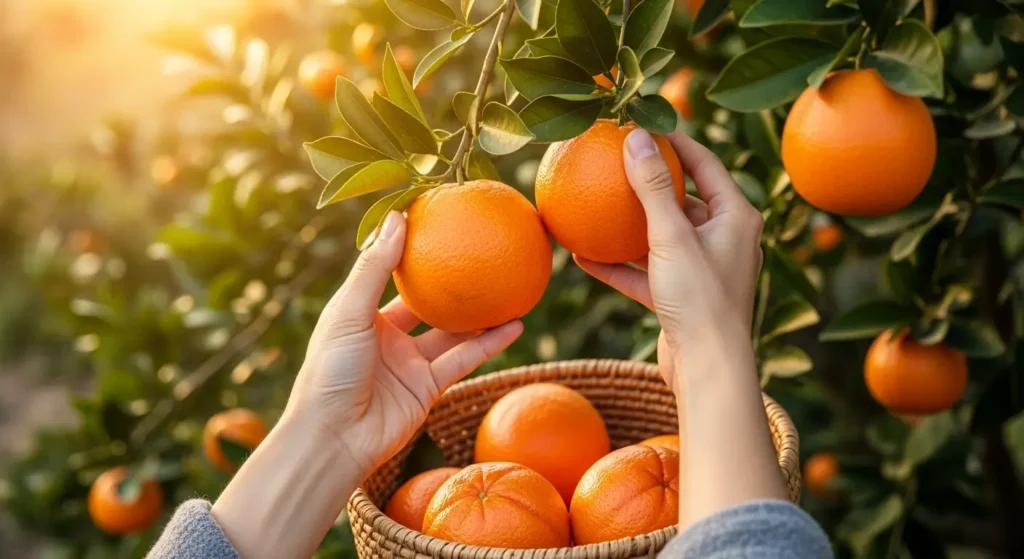
Color isn’t always a reliable ripeness indicator. Fruit may remain slightly greenish yet be perfectly ripe. Instead, taste-test is your best guide. Ripe oranges should feel heavy for their size, indicating good juice content. Harvest by grasping the fruit and using a gentle twist-and-pull motion. Grafted Cara Cara trees typically produce their first significant harvest 3-4 years after planting.
Common Pests and Diseases
Like most citrus trees, Cara Cara oranges can face pest and disease challenges. Early identification and prompt treatment prevent serious damage.
Asian Citrus Psyllid
These tiny insects feed on citrus leaves and new growth, causing curled, distorted foliage. More seriously, they spread citrus greening disease. Treatment: Apply horticultural oil or neem oil, and encourage natural predators like ladybugs.
Citrus Greening (Huanglongbing/HLB)
The most devastating citrus disease, spread by Asian citrus psyllids. Infected trees show yellow shoots, misshapen fruit, and bitter oranges. Unfortunately, no cure exists—remove infected trees immediately. Prevention: Control psyllid populations and purchase certified disease-free trees.
Citrus Canker
Bacterial disease causing raised, corky lesions on leaves, fruit, and stems. Treatment: Remove infected plant parts, avoid overhead watering, and apply copper-based fungicides according to USDA guidelines.
Aphids
Small insects clustering on new growth and undersides of leaves. They secrete sticky honeydew attracting ants and sooty mold. Treatment: Spray with strong water jets or apply insecticidal soap.
Scale Insects
Hard or soft scales appear as small bumps on stems and leaves, sucking sap and weakening trees. Treatment: Scrape off scales manually or apply horticultural oil during dormancy. Multiple treatments may be necessary.
Spider Mites
Microscopic pests causing stippled, bronzed leaves and fine webbing on foliage. Thrive in hot, dry conditions. Treatment: Increase humidity through misting or spray leaves with water regularly.
Common Problems with Cara Cara Orange Tree
Here’s how to troubleshoot common Cara Cara orange tree issues:
No Fruit or Poor Fruit Production
Your tree looks healthy but produces few or no oranges. Insufficient sunlight is the primary cause, as citrus needs 8-10 hours of full sun daily for good fruiting. Young trees under 3-4 years old simply haven’t reached maturity yet. Additionally, Cara Cara oranges need some winter chill to set fruit properly—excessively warm climates prevent fruiting.
Solutions: Make sure your tree receives maximum sun exposure by pruning surrounding vegetation. Wait for young trees to mature—grafted trees typically fruit in year 3-4. Avoid excessive nitrogen fertilizer promoting foliage over fruit. Similar to other fruit trees, proper sun and mature age are critical.
Fruit Drop
Losing fruit prematurely feels heartbreaking. Underwatering during fruit development commonly causes drop, especially during hot summer months when trees need consistent moisture. Natural fruit thinning occurs as trees shed excess oranges they cannot support. Stress from temperature extremes or pest infestations weakens trees and causes premature fruit loss.
Solutions: Maintain consistent soil moisture throughout fruit development. Don’t panic over some natural drop in early summer. Protect trees from temperature stress with shade cloth during heat waves or frost protection during cold snaps. Control pest populations promptly.
Yellow Leaves
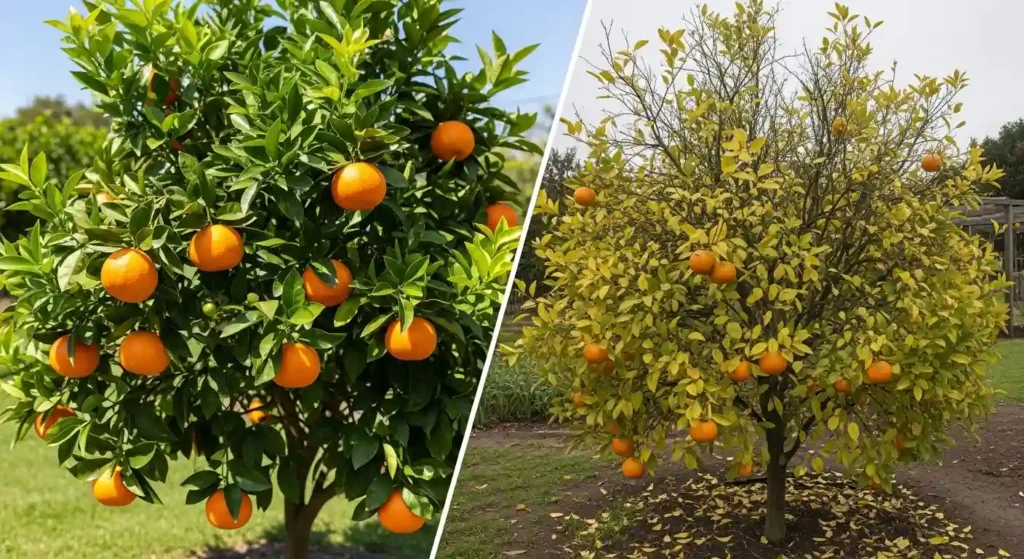
Yellowing foliage indicates nutritional deficiencies or watering issues. Nitrogen deficiency causes older leaves to yellow first while veins remain slightly greener. Overwatering suffocates roots, preventing nutrient uptake. Iron chlorosis produces yellowing between leaf veins while veins stay bright green, typically from overly alkaline soil.
Solutions: Apply citrus fertilizer with micronutrients monthly during growing season for nitrogen deficiency. Reduce watering frequency if soil stays soggy. For iron chlorosis, apply chelated iron as foliar spray, and amend soil with sulfur to lower pH gradually.
Fruit Won’t Ripen or Turn Orange
Your Cara Cara oranges stay green or greenish-orange despite being on the tree for months. Here’s the thing: citrus fruit needs cool night temperatures (below 60°F) to develop full orange color. Taste is the true ripeness indicator for citrus. Cara Cara flesh color develops internally regardless of skin color.
Solutions: Perform a taste test before assuming green fruit is unripe—it may be perfectly sweet. Allow fruit to remain on the tree longer since citrus stores well naturally. In consistently warm climates, accept that some greening is normal.
Stunted Growth
Your tree barely grows despite regular care. Poor fertilization starves trees of essential nutrients. Container trees become root-bound when roots circle the pot with nowhere to expand. Heavy clay soil or poor drainage prevents proper root development.
Solutions: Follow a regular fertilizing schedule with citrus-specific fertilizer applied monthly during spring and summer. Repot container trees every 2-4 years into larger containers with fresh soil. Improve in-ground soil drainage by creating raised beds.
FAQ
Where do Cara Cara Oranges grow best?
Cara Cara orange trees thrive in USDA zones 9-11 with full sun, well-draining soil, and protection from hard freezes. California, Florida, Texas, and Arizona provide ideal climates for production.
What is so special about Cara Cara Oranges?
Cara Cara oranges feature distinctive pink-to-red flesh with sweet flavor and berry-like notes. They’re seedless, less acidic than typical oranges, and contain more vitamin C and lycopene than standard navels.
How big do Cara Cara Orange trees get?
Standard Cara Cara orange trees reach 15-20 feet tall and 10-15 feet wide at maturity. Dwarf varieties stay compact at 8-10 feet tall, making them perfect for small yards and containers.
Is Cara Cara Orange self-pollinating?
Yes, Cara Cara orange trees are self-pollinating and don’t require another tree for fruit production. However, having multiple citrus trees nearby can increase pollination success and potentially boost fruit set slightly.