
In This Article
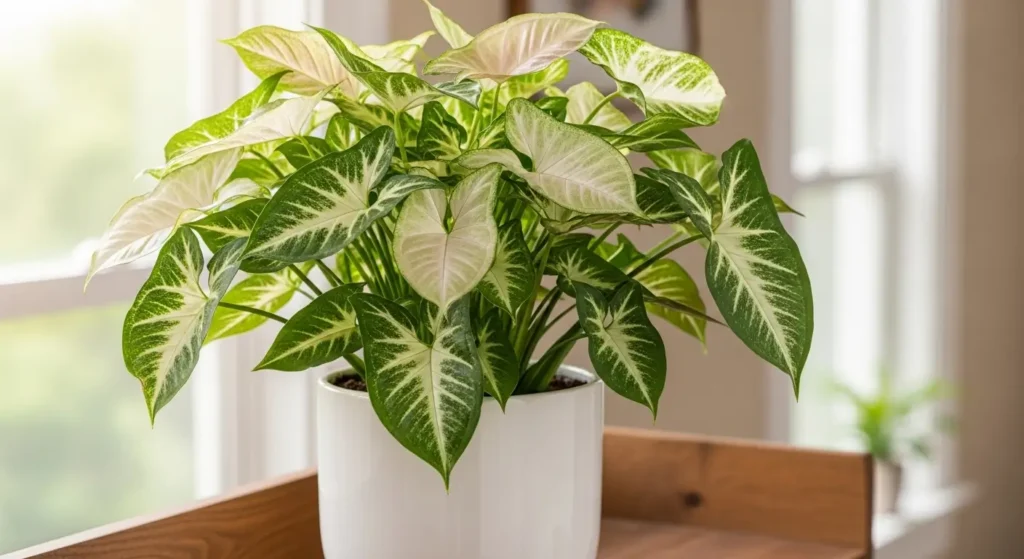
The arrowhead plant (Syngonium podophyllum) is a charming, low-maintenance tropical houseplant native to Central and South America. Its distinctive arrow-shaped leaves come in colors ranging from deep green to soft pink. Honestly, it’s beginner-friendly, visually striking, and adapts beautifully to typical home environments.
Plant Care Card
| Field | Details |
|---|---|
| Common Name | Arrowhead Plant, Arrowhead Vine |
| Botanical Name | Syngonium podophyllum |
| Family | Araceae |
| Plant Type | Tropical perennial |
| Mature Size | 3–6 ft tall; 1–2 ft wide |
| Sun Exposure | Bright indirect light |
| Soil Type | Well-draining, peat-based mix |
| Soil pH | 5.5–6.5 |
| Hardiness Zones | USDA 10–12 |
| Native Area | Central and South America |
| Toxicity | Toxic to cats, dogs, and humans |
Arrowhead Plant Care
Good news the arrowhead plant is genuinely easy to care for, even if you’ve struggled with houseplants before. The sections below cover everything from light and watering to propagation and common problems. You’ve totally got this!
Light
The arrowhead plant loves bright indirect light think a few feet back from a sunny window. An east- or north-facing window is usually ideal. Direct sunlight can scorch the leaves and cause color fading, which is a shame given how beautiful the foliage is.
On the flip side, too little light leads to slow, leggy growth and dull leaf colors. If your space is darker, the solid green varieties handle low light better than variegated ones. Move the plant gradually to brighter spots rather than making sudden changes.
Soil
Your arrowhead plant needs a well-draining, slightly acidic potting mix to stay happy. A standard houseplant mix works fine, but adding perlite improves drainage significantly. Try a simple DIY recipe: 1 part potting soil, 1 part perlite, and 1 part peat moss for a light, airy blend.
Good drainage is non-negotiable sitting in soggy soil quickly leads to root rot. As Penn State Extension notes in their guide to caring for houseplants indoors, using garden soil in indoor containers can introduce disease problems and poor drainage, so always use a quality potting mix.
Water
Watering is where most people trip up with the arrowhead plant. Check that the top 2 inches of soil are dry before watering again. In most homes, this means watering every 7–10 days in spring and summer.
Overwatering is the most common mistake yellowing leaves and mushy stems are your warning signs. Underwatering shows up as drooping, crispy leaves. Either way, your plant will let you know!
In fall and winter, cut back watering significantly since growth slows down. Similar watering habits work well for philodendron brasil, another tropical beauty that hates sitting in wet soil.
Temperature and Humidity
Arrowhead plants prefer temperatures between 60–85°F (15–29°C). They handle typical household temps well, but keep them away from cold drafts, air conditioning vents, and heating units sudden temperature swings stress the plant quickly.
Humidity above 50% is ideal. Misting the leaves occasionally or placing a small humidifier nearby makes a real difference. If your home is dry, a pebble tray with water works as a budget-friendly humidity booster.
Fertilizer
Feed your arrowhead plant with a balanced liquid fertilizer (20-20-20) every 2–4 weeks during spring and summer. In fall and winter, stop fertilizing entirely since the plant isn’t actively growing. Penn State Extension warns that over-fertilizing indoor plants causes harmful salt buildup in the soil, damaging roots over time. Less is always more here!
Types of Arrowhead Plants
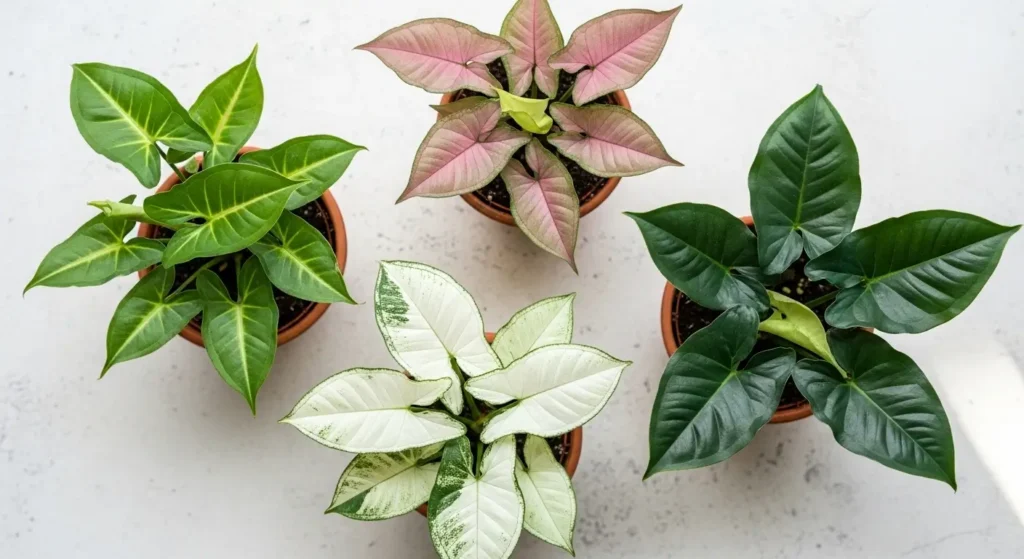
There are so many gorgeous arrowhead plant varieties to choose from! Here are some popular ones :
- Syngonium podophyllum ‘White Butterfly’ : Pale green to creamy white leaves with a delicate, almost translucent look. One of the most popular cultivars for indoor growing.
- Syngonium podophyllum ‘Pink Allusion’ : Soft pink-toned leaves with green edges. Slower growing but absolutely stunning in bright indirect light.
- Syngonium podophyllum ‘Neon Robusta’ : Bold bubblegum pink leaves that practically glow. Needs brighter light to maintain its vivid color.
- Syngonium podophyllum ‘Berry Allusion’ : Subtle pinkish-peach tones with green veining. A calmer, more muted beauty for minimalist spaces.
- Syngonium podophyllum ‘Emerald Gem’ : Deep, waxy dark green leaves. Very forgiving in lower light conditions.
Propagating Arrowhead Plant
Spring and summer are the best times to propagate the plant is actively growing and cuttings root much faster. Luckily, the arrowhead plant propagates very easily with a couple of reliable methods.
Propagating by Stem Cuttings
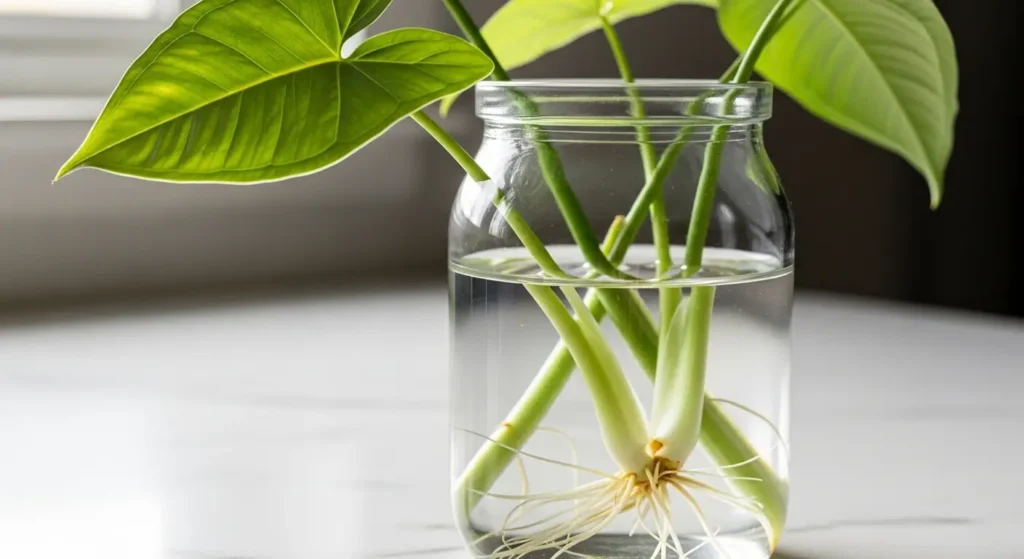
Stem cuttings are the most popular and reliable method for arrowhead plant propagation. You’ll need :
- Sharp, clean scissors or pruning shears
- A small jar of water or a pot with moist potting mix
- Optional : rooting hormone powder
Step 1 : Choose a healthy stem with at least 2–3 leaves and one visible node (the small bump where roots will grow). Cut just below the node.
Step 2 : Remove any lower leaves that would sit below the waterline or soil level, leaving 1–2 leaves at the top.
Step 3 : Place the cutting in a jar of water (change water weekly) or plant directly into moist potting mix. If using rooting hormone, dip the cut end before planting.
Step 4 : Keep the cutting in bright indirect light and maintain warmth above 65°F. Roots typically appear within 3–5 weeks.
This same propagation method works beautifully for heart leaf philodendron, which roots just as easily in water or moist potting mix.
Propagating by Division
Division works well when repotting a mature arrowhead plant with multiple stems.
Step 1 : Gently remove the plant from its pot and loosen the root ball with your hands.
Step 2 : Identify natural separation points between stems with their own roots attached.
Step 3 : Pull or cut sections apart carefully, making sure each new plant has healthy roots.
Step 4 : Pot each division into fresh soil and water lightly. New growth typically appears within 2–4 weeks.
Potting and Repotting
Repot your arrowhead plant every 1–2 years or when you see roots poking out of the drainage holes. Choosing a pot that’s 1–2 inches larger than the current one gives roots room to grow without drowning them in excess soil.
Spring is the ideal time to repot. Use fresh, well-draining potting mix and make sure the new pot has drainage holes this is non-negotiable. After repotting, water thoroughly and place the plant in bright indirect light to recover.
Common Pests and Diseases
Like most houseplants, the arrowhead plant can occasionally attract unwanted visitors. Check the leaves regularly, especially the undersides, to catch problems early. Penn State Extension recommends inspecting houseplants for pests before bringing them indoors, since catching spider mites, mealybugs, and aphids early makes treatment much simpler.
Spider Mites
Look for fine webbing and tiny dots on leaves. Treat with neem oil spray or wipe leaves with a damp cloth weekly until gone.
Mealybugs
White, cottony clusters appear on stems and leaf joints. Dab them with rubbing alcohol on a cotton swab and spray with insecticidal soap.
Scale Insects
Small, brown bumps along stems that don’t move. Scrape off manually and follow up with neem oil treatment.
Aphids
Tiny green or black bugs clustered on new growth. Knock them off with a strong water spray or treat with insecticidal soap.
Fungus Gnats
Small flies hovering near soil signal overwatering. Let the soil dry out more between waterings and use sticky traps to catch adults.
Common Problems with Arrowhead Plant
Here’s how to troubleshoot common issues :
Yellow Leaves
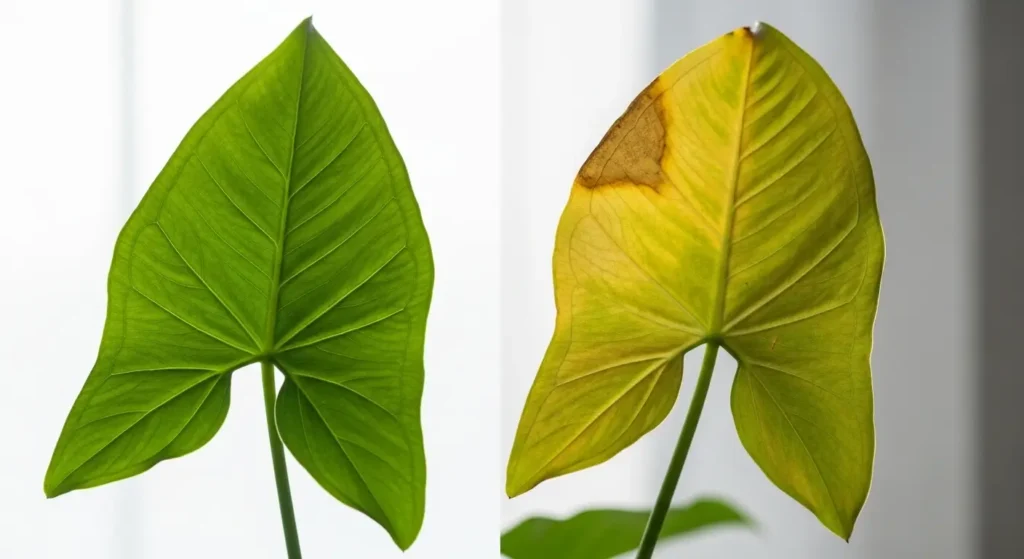
Yellow leaves are stressful to see, but they’re usually fixable. Overwatering is the most common cause check if the soil is soggy and cut back watering immediately. Nutrient deficiency can also cause yellowing ; a dose of balanced fertilizer usually helps. Sometimes, older lower leaves simply yellow naturally as the plant ages totally normal! These exact same yellowing patterns show up with aglaonema silver bay, which reacts the same way to excess moisture and low light.
Brown Leaf Tips
Brown tips almost always point to low humidity in your home bump it up with a humidifier or pebble tray. Water quality matters too ; fluoride and chlorine in tap water can cause tipping, so try using filtered or rainwater instead. Underwatering is another culprit check if the soil is bone dry. The rubber plant faces very similar brown-tip issues when indoor air gets too dry.
Drooping or Wilting Leaves
Drooping is your plant’s distress signal. Underwatering is most likely if the soil is very dry give it a good drink and it’ll perk up within hours. Overwatering can also cause wilting from root rot, which is trickier to fix. Check roots for mushiness and repot if needed. You’ll notice the exact same drooping behavior with the swiss cheese plant when its watering routine goes off track.
Leggy Growth / Sparse Foliage
Long, stretched-out stems with wide gaps between leaves mean the plant isn’t getting enough light. Move it to a brighter spot with indirect light. Trim leggy stems back to encourage bushier, fuller growth your arrowhead plant will thank you.
FAQ
How do you take care of an arrowhead plant?
Keep your arrowhead plant in bright indirect light, water when the top inch dries out, and feed it monthly during the growing season.
Can Arrowhead Plants live in water?
Yes! Arrowhead plant cuttings root easily in water and can live there short-term. Long-term soil growth is healthier overall.
Do Arrowhead Plants need a lot of sunlight?
No, arrowhead plants prefer bright indirect light. Direct sun scorches the leaves, while low light causes leggy, slow growth.
Is an arrowhead plant a Philodendron?
No, but they’re related. Both are in the Araceae family, which explains their similar arrow-shaped leaves and comparable care needs.
3 thoughts on “How to Grow and Care for Arrowhead Plant”
Comments are closed.