
In This Article
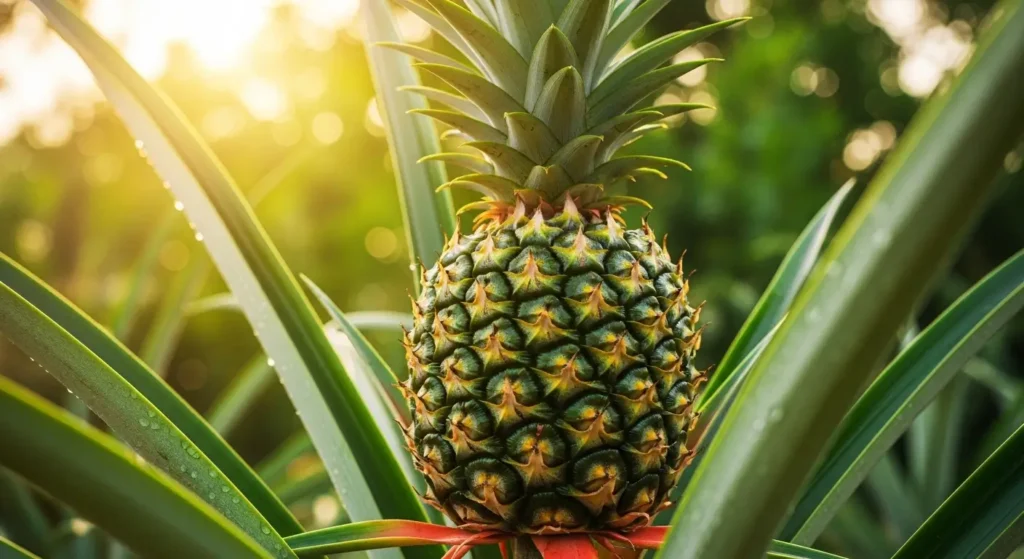
The ananas fruit tree (Ananas comosus) is a bold, architectural bromeliad native to South America. It features stiff, sword-shaped leaves and produces a single iconic crowned fruit. Thriving in USDA zones 11–12, this tropical perennial is moderately easy to grow with the right conditions.
Plant Care Card
| Detail | Info |
|---|---|
| Common Name | Pineapple plant |
| Botanical Name | Ananas comosus |
| Family | Bromeliaceae |
| Plant Type | Perennial fruit plant |
| Mature Size | 3–5 ft tall × 3–4 ft wide |
| Sun Exposure | Full sun |
| Soil Type | Well-draining, sandy or loamy |
| Soil pH | 4.5–6.5 (acidic) |
| Hardiness Zones | 11–12 (USDA); zones 9–10 with protection |
| Native Area | South America (Brazil, Paraguay) |
| Bloom Time | Spring to summer |
| Toxicity | Mildly toxic to pets (bromelain can irritate) |
Ananas Fruit Tree Care
The ananas fruit tree is moderately easy to grow once you match it to the right environment and conditions. Here’s what you need to know about sun, soil, water, pruning, and propagation. With proper placement and minimal fuss, this plant practically looks after itself.
Light
The ananas fruit tree needs full sun at least 6 to 8 hours daily. Without enough light, it focuses energy on leaves instead of fruit. Plant it in the sunniest south-facing spot available. In hotter climates, light afternoon shade helps prevent leaf scorch.
Soil
This plant thrives in sandy, well-draining soil with a slightly acidic pH of 4.5–6.5. According to the University of Florida IFAS Extension, pineapples perform best in light, porous soils. If your soil is heavy clay, amend it with coarse sand and perlite before planting.
Water
Water every 7 to 10 days during the growing season, letting soil dry slightly between waterings. Try pouring water directly into the leaf rosette cup pineapples absorb moisture through their leaves. Cut back in fall and winter. Overwatering is the most common killer, so when in doubt, wait.
Temperature and Humidity
This plant thrives between 65°F and 95°F with zero frost tolerance anything below 28°F will kill it. In zones 9–10, bring containers indoors before frost hits. Check our cara cara orange tree care guide for similar cold-protection tips. Mulch the base heavily in frost-prone areas.
Fertilizer
Feed your ananas fruit tree with a balanced, slow-release granular fertilizer (10-10-10) every 2 months during the growing season, from spring through early fall. You can also apply a diluted liquid fertilizer to the leaf cup every 3 to 4 weeks for a quick boost. Reduce feeding entirely in winter when the plant is dormant.
Types of Ananas Fruit Tree
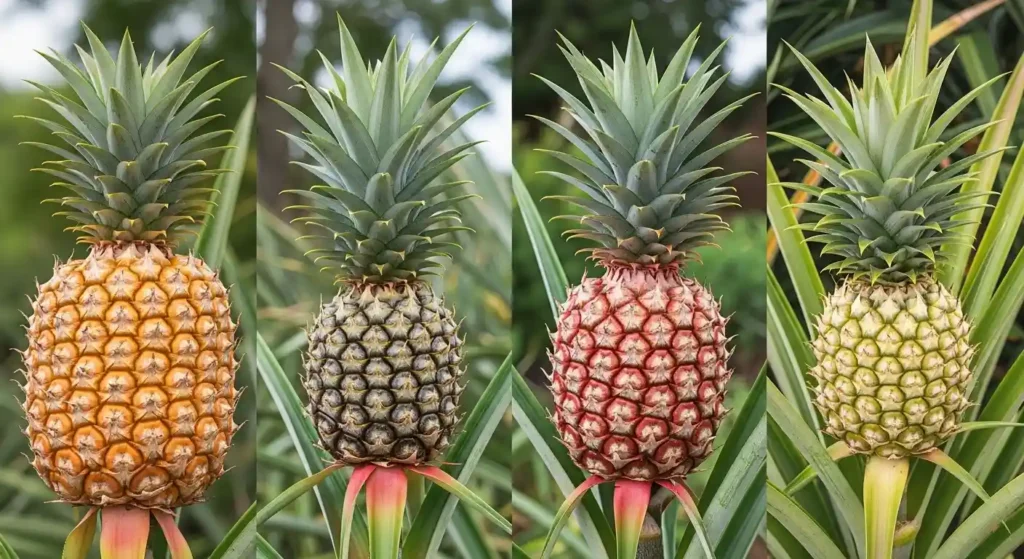
There are several interesting pineapple varieties worth knowing about. Each offers slightly different fruit characteristics or ornamental value.
- ‘Smooth Cayenne’ (Ananas comosus ‘Smooth Cayenne’) — The most widely grown commercial variety, producing large, juicy, golden fruits with almost no leaf spines. Ideal for home gardens in warm zones.
- ‘Queen’ (Ananas comosus ‘Queen’) — Smaller fruits with a crisp texture and intensely sweet flavor. More compact growth habit makes it great for containers.
- ‘Red Spanish’ (Ananas comosus ‘Red Spanish’) — Features reddish-tinged skin and a slightly tart flavor. Very heat-tolerant and popular in Caribbean gardens.
- ‘Sugarloaf’ (Ananas comosus ‘Sugarloaf’) — Produces a nearly white flesh with low acidity. A favorite among gardeners who find standard pineapple too sharp.
- ‘Variegatus’ (Ananas comosus var. variegatus) — Grown primarily as an ornamental; leaves show striking creamy-yellow and green striping, with edible but smaller fruit.
Pruning
Prune your ananas fruit tree right after harvesting, typically in late summer. Remove brown, dried, or damaged leaves at the base with clean shears. After fruiting, the plant sends out ratoon suckers keep one or two for the next crop and remove the rest to direct energy efficiently.
Propagating Ananas Fruit Tree
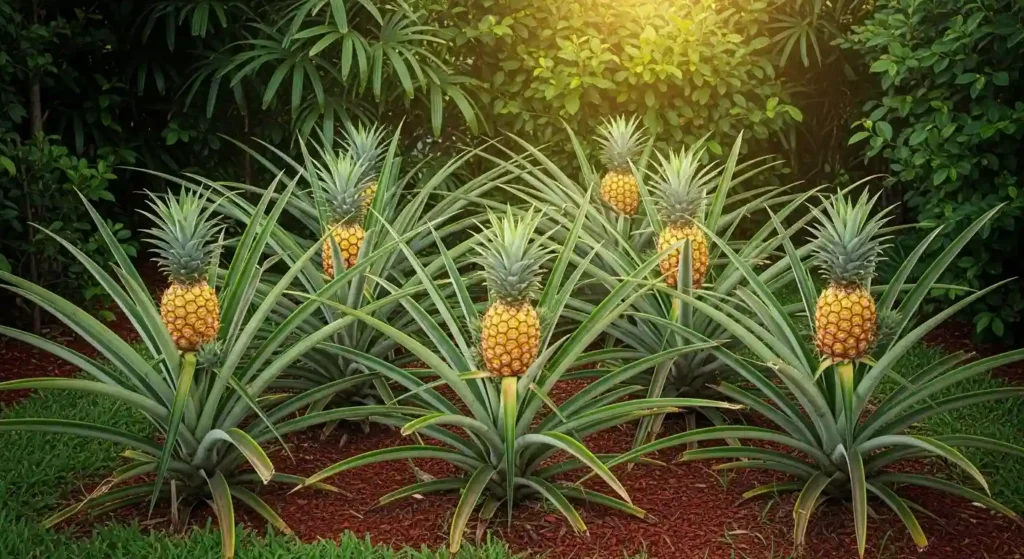
The best time to propagate the ananas fruit tree is in spring or early summer when the plant is actively growing. There are three reliable methods: crown planting, ratoon (sucker) division, and slip propagation. The University of California Cooperative Extension has detailed guidance on bromeliad propagation techniques that applies well to pineapples too.
Propagating by Crown
The crown the leafy top of the harvested fruit is the most popular propagation method for home gardeners.
Materials needed:
- A fresh, ripe pineapple fruit
- Clean knife or pruning shears
- Small pot with well-draining sandy mix
- Rooting hormone (optional)
Steps:
- Step 1: Twist or cut the crown off the top of a ripe pineapple. Remove the bottom 1 to 2 inches of leaves to expose the stem base.
- Step 2: Allow the cut end to dry for 2 to 3 days so it callouses over. This prevents rotting once planted.
- Step 3: Dip the base lightly in rooting hormone if desired, then press it 1 to 2 inches into moist, sandy potting mix.
- Step 4: Place the pot in a warm, bright location and water lightly every 5 to 7 days. Roots typically develop within 6 to 8 weeks.
Propagating by Ratoon Suckers
Ratoon suckers sprout naturally from the base of a mature ananas fruit tree after fruiting. This method is faster than crown propagation and works similarly to dividing lilikoi passion fruit plants both reward you with faster-fruiting new plants.
Steps:
- Step 1: Wait until the sucker is at least 6 to 8 inches tall before removing it.
- Step 2: Use a clean knife to cut the sucker away from the mother plant at the base, including a small piece of the connecting stem.
- Step 3: Let it dry for 1 to 2 days, then plant directly into well-draining soil outdoors or in a pot.
Ratoon-grown plants typically fruit in 12 to 18 months, which is significantly faster than starting from a crown.
Propagating by Slips
Slips are the small shoots that grow just below the fruit on the fruiting stem. They’re smaller than suckers but root readily.
- Twist or cut slips off the stem once the fruit is harvested.
- Dry for 2 to 3 days, then plant into sandy soil at a depth of 1 to 2 inches.
- Water lightly and keep in full sun. Expect rooting within 4 to 6 weeks.
Planting and Transplanting Ananas Fruit Tree
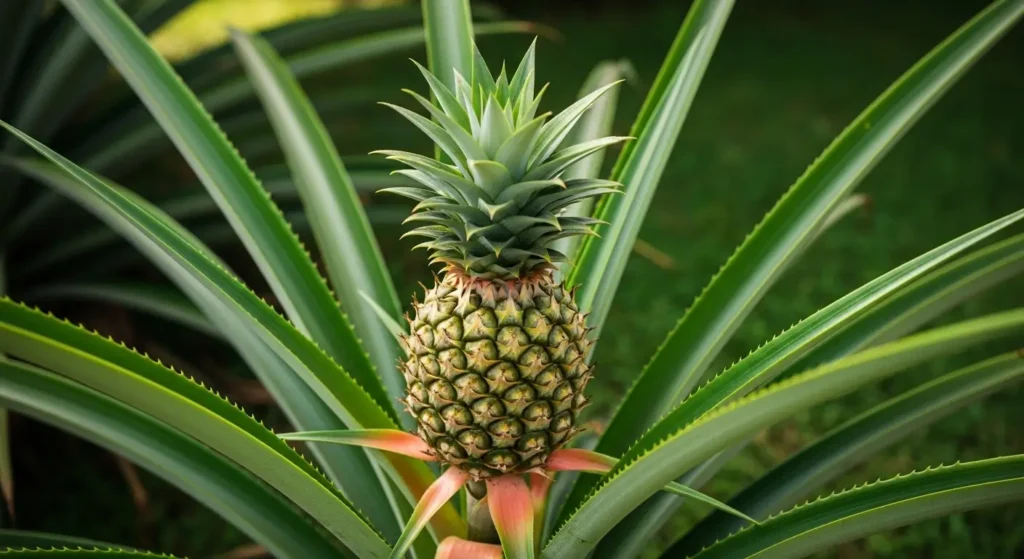
Plant your ananas fruit tree outdoors in spring, once all risk of frost has passed and soil temperatures are consistently above 60°F (15°C). Space plants at least 3 to 4 feet apart to allow for their full spread at maturity. Similar to elephant ears plant care, good spacing helps air circulation and reduces disease pressure.
Dig a hole just deep enough to cover the root base and the lowest 1 to 2 inches of the stem. Firm the soil gently around the plant and water in well. Avoid planting too deep burying the leaf base leads to rot.
Transplant established container plants into the garden every 2 to 3 years, or when the root system visibly crowds the pot. Handle roots gently to avoid transplant shock, and water thoroughly after moving.
Common Pests and Diseases
Like most garden plants, the ananas fruit tree can occasionally run into pest or disease challenges. Here’s what to watch for.
Aphids
Look for clusters of small, soft-bodied insects on new growth or leaf bases. Treat with a strong blast of water or insecticidal soap spray; repeat weekly until clear.
Mealybugs
Identify mealybugs by their fluffy white coating, often found in leaf crevices. Dab affected areas with rubbing alcohol on a cotton swab, or apply neem oil solution.
Scale Insects
Scale appears as small brown or tan bumps along leaves and stems. Scrape off manually, then treat with neem oil according to UC IPM pest management guidelines.
Root Rot
Root rot develops in waterlogged soil and presents as soft, blackened roots with yellowing leaves. Improve drainage immediately and reduce watering; in severe cases, remove affected roots before replanting.
Mealybug Wilt Virus
This virus is spread by mealybugs and causes leaf wilting and red discoloration. Control the mealybug population aggressively to prevent spread; infected plants may need removal.
Common Problems with Ananas Fruit Tree
Here’s how to troubleshoot common issues with the ananas fruit tree:
Poor or No Fruit Production
Insufficient sunlight is the top culprit this plant needs 6 to 8 hours of direct sun daily. Over-fertilizing with nitrogen also delays fruiting. Remember, pineapples typically fruit after 18 to 24 months. Try the ethylene trick: seal a ripe apple near the plant overnight to trigger flowering.
Yellow or Browning Leaves
Overwatering and poor drainage are the most common causes roots suffocate and lower leaves turn yellow and soft. Nutrient deficiency produces yellowing between veins. Check watering habits first, then try a foliar micronutrient spray. Similar patterns appear in loquat tree care when roots are stressed.
Wilting or Drooping
If your ananas fruit tree looks droopy, underwatering in hot weather is the most likely cause. Check the soil if it’s bone dry 2 inches down, water deeply right away. Transplant shock after moving the plant can also cause temporary wilting; keep the soil evenly moist for a few weeks and avoid fertilizing until the plant recovers. Extreme heat above 100°F can cause midday wilting even in well-watered plants this is normal and usually resolves by evening.
Leggy or Sparse Growth
Stretched, loose growth with wide spacing between leaves almost always signals insufficient light. Move the plant to a sunnier location as soon as possible. Over-fertilizing with nitrogen can also cause fast but weak, floppy growth. Cut back on fertilizer, trim leggy growth, and relocate the plant to full sun for best results.
Frost Damage
Frost-damaged leaves turn brown, mushy, and water-soaked almost overnight. Cut back all damaged foliage to healthy green tissue using sharp, clean shears. According to the USDA Plant Hardiness Zone Map, this plant is only reliably hardy in zones 11–12. In cooler zones, grow in containers you can bring indoors when temperatures drop.
FAQ
Do pineapples take 7 years to grow?
No, not typically. Most ananas fruit tree plants produce their first fruit in 18 to 24 months from planting under good conditions.
Is pineapple good for the pancreas?
Pineapple contains bromelain, an enzyme that may support digestion. Always consult a doctor before using it for specific health concerns.
Does Ananas grow on trees?
No the ananas fruit tree is not an actual tree. It’s a low-growing bromeliad perennial that reaches about 3 to 5 feet tall.
Is pineapple safe for diabetics?
Pineapple has a moderate glycemic index. Diabetics can enjoy it in small portions, but should consult a healthcare provider for personal guidance.