
In This Article
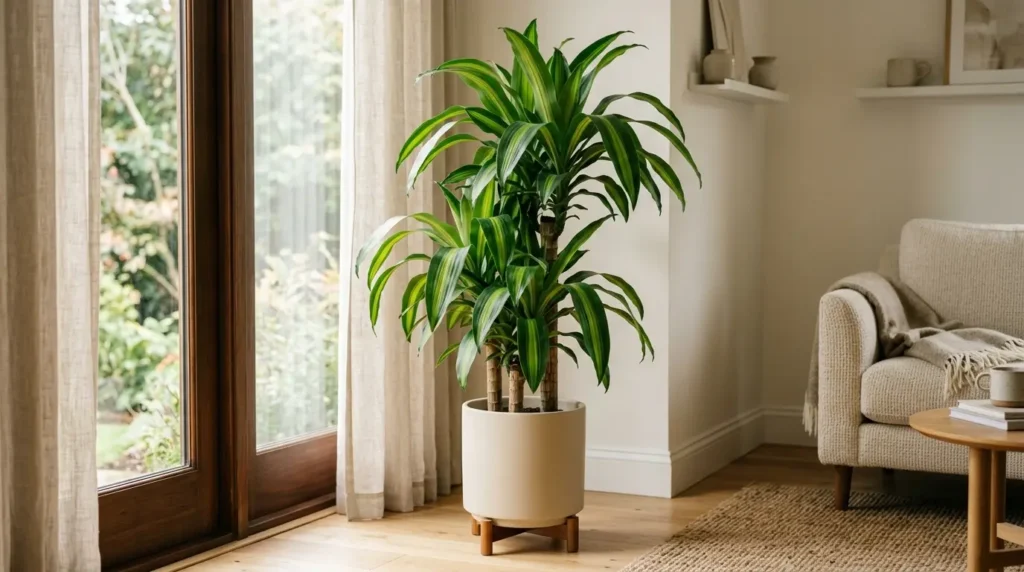
Meet the corn plant (Dracaena fragrans), a tall tropical beauty with strappy green leaves striped in yellow, just like a stalk of corn. Native to tropical Africa, it’s a longtime houseplant favorite. Honestly, it’s one of the easiest indoor plants to grow, great for beginners and busy plant lovers alike.
Plant Care Card
| Field | Details |
|---|---|
| Common Name | Corn Plant |
| Botanical Name | Dracaena fragrans |
| Family | Asparagaceae |
| Plant Type | Tropical, evergreen shrub/tree |
| Mature Size | 4-10 ft tall x 2-4 ft wide (indoors) |
| Sun Exposure | Bright, indirect light |
| Soil Type | Well-draining potting mix |
| Soil pH | 6.0-6.5, slightly acidic |
| Hardiness Zones | 10-12 (USDA) |
| Native Area | Tropical Africa |
| Toxicity | Toxic to cats and dogs |
Corn Plant Care
This plant is easy-going and forgives the occasional missed watering. The sections below cover light, soil, water, temperature, and fertilizer needs. Stick with these tips, and your plant will reward you with fresh new leaves in no time.
Light
Bright, indirect light keeps this plant happiest, though it also tolerates medium light. Too much direct sun scorches leaves, leaving brown, crispy patches, while low light causes slow growth and dull coloring. An east-facing window works great, giving gentle morning sun. North-facing windows work too, just expect slightly slower growth.
Soil
Well-draining soil is essential to keep roots healthy and happy. A chunky mix that holds moisture but drains quickly works best. Try 2:1:1 potting soil, perlite, and orchid bark for good aeration. According to University of Florida IFAS Extension, soggy soil is a top cause of root rot in houseplants.
Water
Water when the top 2-3 inches of soil feel dry to the touch. Overwatering causes yellow, mushy leaves, while underwatering causes dry, curling tips. Water more in spring and summer, less in fall and winter. If you’re growing another low-fuss houseplant, check our tips for the rubber plant, similar rhythm.
Temperature and Humidity
This plant thrives between 65-80°F, basically normal room temperature. Similar to the china doll plant, it handles average home humidity without extra fuss. Keep it away from cold drafts, heating vents, and air conditioning units. Sudden swings can cause leaf drop or brown edges, so choose a steady, calm spot.
Fertilizer
Feed with a balanced liquid fertilizer diluted to half strength every 2-4 weeks during spring and summer. Skip fertilizing in fall and winter when growth naturally slows down. Less is more here, since too much fertilizer can burn roots and scorch leaf tips. The Clemson HGIC fertilizing guide has more on getting the balance right.
Types of Corn Plant
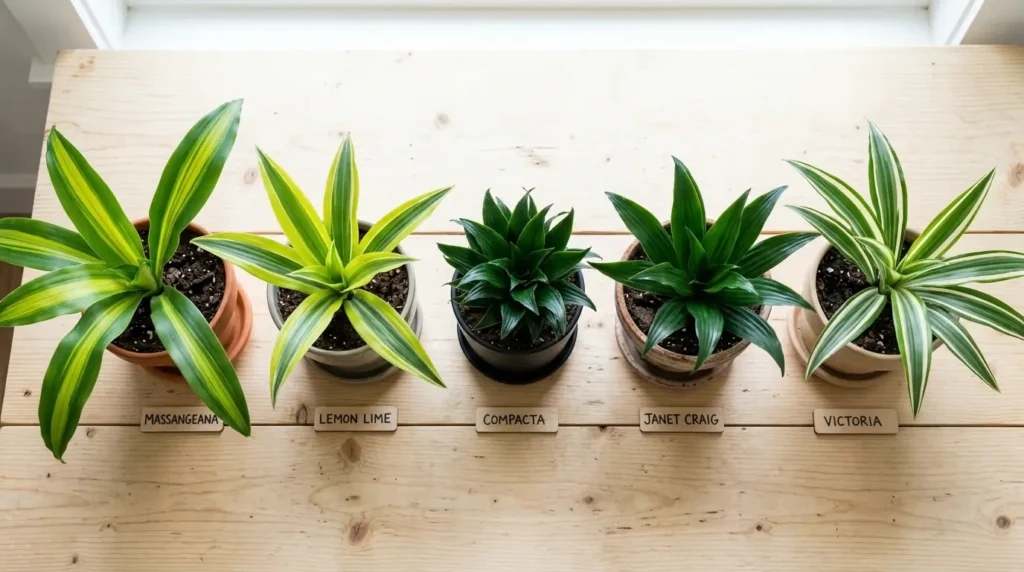
Corn plant comes in a handful of fun varieties, each with its own leaf pattern. Whichever corn plant variety you pick, care stays pretty much the same. Here are a few favorites:
- Massangeana: The classic variety, with a bright yellow stripe running down the center of each dark green leaf. Most commonly sold in stores.
- Lindenii: Features wide leaves edged in creamy yellow, with a solid green center instead of a stripe. A bit more dramatic looking.
- Victoria: A newer cultivar with bold yellow margins and a compact growth habit, great for smaller spaces.
- Compacta: A dwarf form that stays shorter and bushier, perfect for desks or tight corners.
- Janet Craig: A solid dark green variety with no yellow striping, giving a sleeker, more uniform look.
- Warneckii: Features narrow leaves with silvery-white and green stripes, a bit more slender than other types.
Pruning
Prune in spring to remove dead or yellowing leaves and control height. Simply snip leaves at the base with clean scissors or pruning shears. If the plant gets leggy, cut the main cane back and it will sprout new growth below the cut. Don’t worry, cutting the cane won’t kill it, new shoots usually appear within a few weeks. Wipe blades with rubbing alcohol first to avoid spreading disease.
Propagating Corn Plant
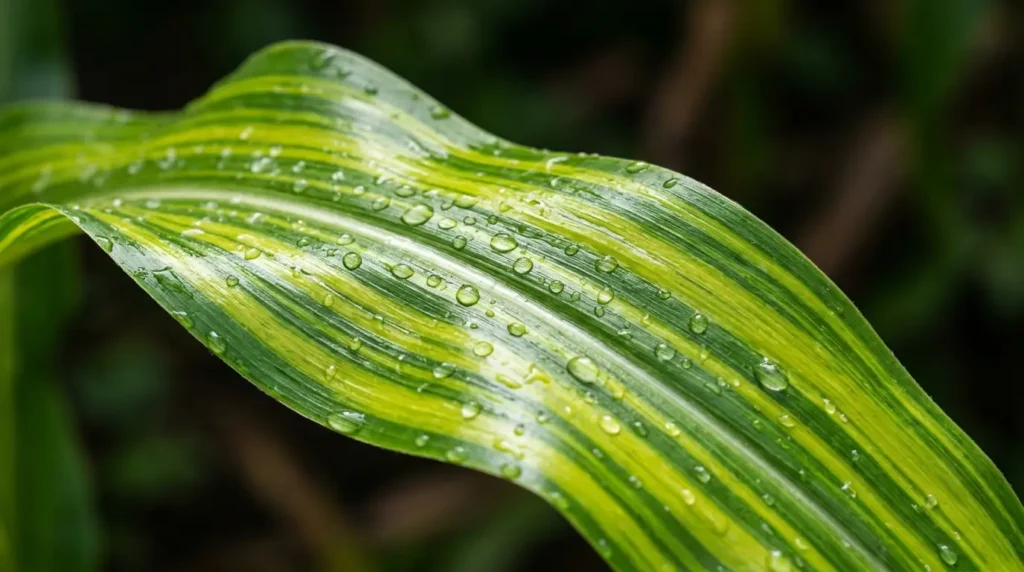
Spring and summer are the best times to propagate, while your corn plant is actively growing.
Propagating by Stem Cuttings
Stem cuttings are the easiest way to make new corn plants from an existing one.
You’ll need:
- Clean pruning shears
- A glass of water or small pot with potting mix
- Rooting hormone (optional)
Steps:
- Cut a 4-6 inch section of cane, making sure it has at least one node.
- Let the cutting callus over for a day so the cut end dries slightly.
- Place the cutting in water or moist soil, node facing down.
- Keep it in bright, indirect light and change the water weekly if using that method.
Roots typically show up in 4-6 weeks, with new leaf growth soon after. This corn plant propagation method works well for beginners since it needs almost no special equipment.
Propagating by Division
If your plant has multiple canes growing from the base, divide them instead. Carefully remove the whole plant from its pot and gently separate the canes, keeping roots intact on each section. Repot each division into fresh, well-draining soil. This method skips the rooting wait entirely, since each division already has established roots. If you enjoy dividing plants, our guide to the snake plant covers a similar technique.
Water Propagation
You can also root cuttings straight in water, which makes it easy to watch progress. Simply place a cane cutting in a jar of water, node submerged, and set it in bright, indirect light. Change the water every week to keep it fresh and prevent rot. Once roots reach a couple of inches long, transfer the cutting into potting mix. This method is a fun, low-mess way to grow new corn plants for gifting or expanding your own collection.
Potting and Repotting
When to Repot
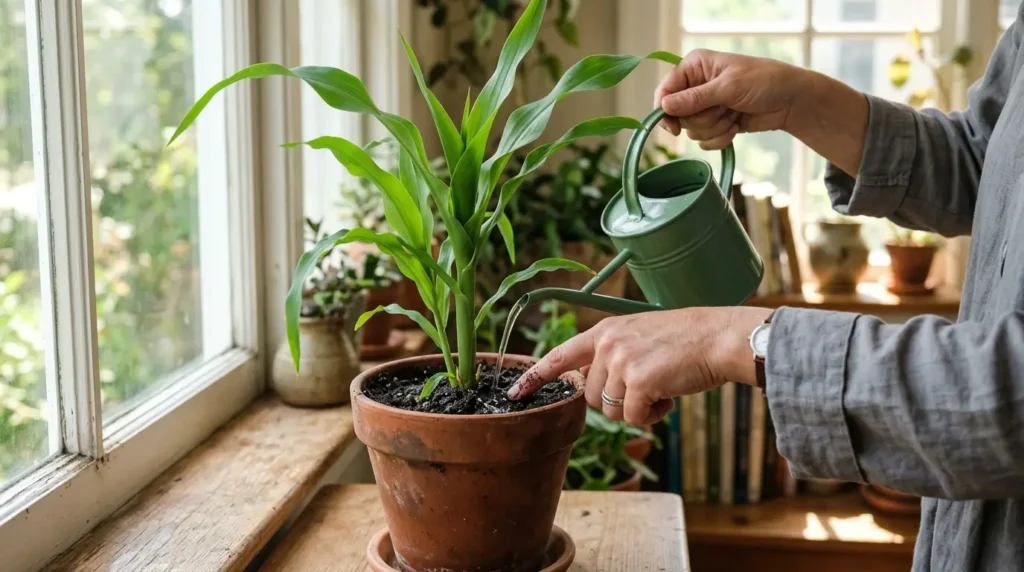
Repot your corn plant every 1-2 years, or once you notice roots poking out of the drainage holes. Slowing growth despite regular care is another clear sign it’s time for a bigger home.
How to Repot
Choose a pot just 1-2 inches wider than the current one, since too much extra space can hold excess moisture. Always use a pot with drainage holes to prevent soggy roots. Gently loosen the root ball, trim any mushy or dead roots you find, place it in fresh mix, and water well right after repotting.
Common Pests and Diseases
Like most houseplants, corn plant can occasionally attract a few common pests, especially in dry or crowded conditions. Catch these early for easy treatment.
Spider Mites
Look for fine webbing and tiny yellow speckles on leaves. Treat with insecticidal soap or a strong spray of water weekly.
Mealybugs
Watch for white, cottony clusters near leaf joints and stems. Dab them with rubbing alcohol on a cotton swab.
Scale Insects
Identify by small, brown bumps stuck along stems and leaf undersides. Scrape them off and follow up with horticultural oil.
Aphids
Spot clusters of tiny green or black bugs on new growth. Rinse with water or treat with insecticidal soap regularly. The University of Minnesota Extension has a solid overview of common houseplant pests.
Fungus Gnats
Look for tiny flying insects hovering near the soil surface. Let soil dry out more between waterings and use sticky traps to catch adults.
Common Problems
Here’s how to troubleshoot common issues:
Yellow Leaves
Yellowing usually means overwatering, which suffocates roots and stops them working properly. Nutrient deficiency can also cause pale, yellow leaves in older plants. Sometimes it’s just natural aging as old leaves drop for new growth. Cut back watering and check your schedule. For similar issues, see our ZZ plant troubleshooting tips.
Brown Leaf Tips
Brown, crispy tips usually point to low humidity or a buildup of fluoride and chlorine in tap water. Underwatering can also dry out leaf edges over time. Try switching to filtered or distilled water and misting occasionally. Trim brown tips with clean scissors for a tidier look.
Drooping or Wilting Leaves
Drooping usually signals a watering problem, either too much or too little. Check soil moisture first before adjusting your routine. Overwatered plants often have mushy stems, while underwatered ones feel dry and light. Our pothos care guide covers this same drooping issue.
Leggy Growth
Leggy, sparse growth happens when a corn plant doesn’t get enough light. Move it closer to a bright window to encourage fuller growth. You can also prune leggy canes back to promote new, bushier growth from the base.
Slow Growth or No New Growth
Slow growth is often normal in fall and winter when plants naturally rest. If it continues through spring and summer, check for low light, cramped roots, or a lack of fertilizer. Repotting or moving to a brighter spot usually helps.
FAQ
Does a corn plant like shade or sun?
Corn plant prefers bright, indirect light but tolerates partial shade well. Avoid direct sun, which scorches leaves, and deep shade, which slows growth.
Is a corn plant a good indoor plant?
Yes, corn plant is a great indoor plant. It’s low-maintenance, tolerates some neglect, and adapts to average home humidity and temperature easily.
Where is the best place to put a corn plant?
Place it near an east-facing window for gentle morning light. Keep it away from cold drafts, vents, and direct afternoon sun.
How do you take care of a corn plant?
Give it bright indirect light, water when soil dries out, and feed monthly in summer. It’s forgiving and beginner-friendly overall.