
In This Article
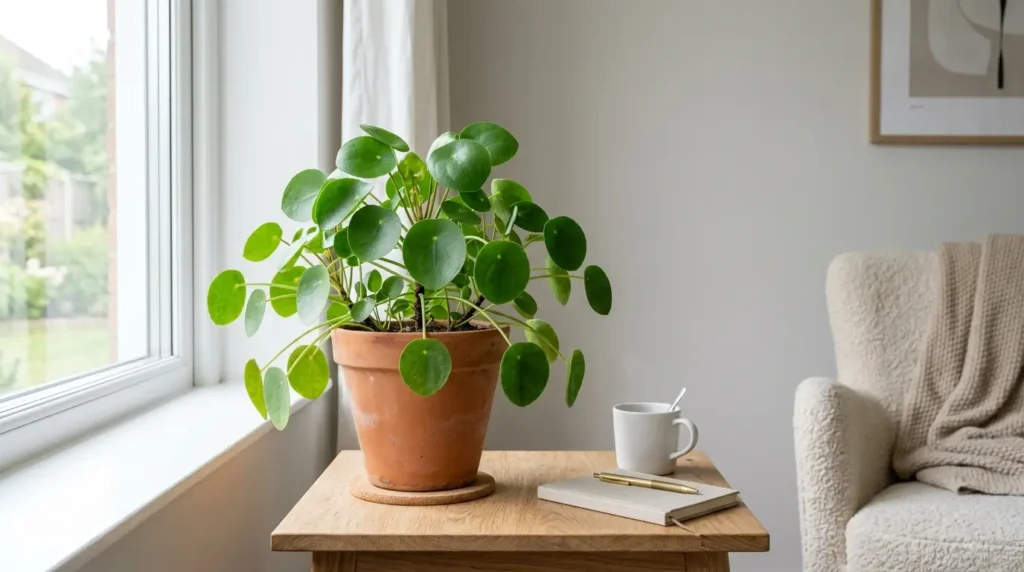
Meet the Chinese money plant, botanically Pilea peperomioides one of the most Instagram-famous houseplants around. Its round, coin-shaped leaves stack like tiny green pancakes on thin stems. Native to Yunnan, China, near the Himalayas, it’s beginner-friendly and forgiving. Bonus: it constantly grows baby plants, making it easy to share with friends.
Plant Care Card
| Feature | Details |
|---|---|
| Common Name | Chinese Money Plant, Pancake Plant, Missionary Plant |
| Botanical Name | Pilea peperomioides |
| Family | Urticaceae |
| Plant Type | Perennial, tropical foliage plant |
| Mature Size | 8-12 in. tall x 8-12 in. wide |
| Sun Exposure | Bright, indirect light |
| Soil Type | Well-draining potting mix |
| Soil pH | 6.0-7.0 (slightly acidic to neutral) |
| Hardiness Zones | USDA 10-11 (grown as houseplant elsewhere) |
| Native Area | Yunnan Province, China |
| Toxicity | Non-toxic to cats and dogs |
Chinese Money Plant Care
Good news: this plant is low-maintenance and pretty forgiving for beginners. Below, we’ll cover light, soil, water, humidity, and feeding basics. Stick with it, and you’ll have a thriving pancake plant in no time.
Light
Bright, indirect light suits it best an east-facing window works great. Too little light causes leggy stems; too much direct sun scorches leaves and leaves brown patches. South or west windows work too, kept back from glass. North-facing? Add a grow light. A calathea shares this same light preference.
Soil
This plant wants soil that drains fast and never stays soggy. A chunky, well-draining mix keeps roots happy and helps prevent rot.
Try a DIY blend of 2:1:1 potting soil, perlite, and orchid bark for extra airflow. According to University of Maryland Extension, adding organic matter improves both drainage and water-holding capacity in container soil.
Avoid dense, heavy soils. They hold too much moisture and basically invite root rot to the party.
A terracotta pot can help too, since the porous material wicks away extra moisture. Combine that with a chunky mix, and you’ve basically built a safety net against overwatering mistakes.
Water
Water when the top 2 inches of soil feel dry to the touch. Stick your finger in, and if it comes out clean, it’s time to grab the watering can.
Overwatering shows up as mushy, yellowing leaves and a soggy smell. Underwatering, meanwhile, causes drooping leaves that perk right back up after a drink.
In winter, cut back watering your Chinese money plant since growth slows down considerably. If you’re growing a watermelon peperomia too, you’ll notice it likes a similar “dry between waterings” routine.
Basically, always check the soil before watering rather than sticking to a rigid schedule. Every home has different light and airflow, so your watering rhythm might differ from your friend’s.
Temperature and Humidity
Keep things between 65-75°F for the happiest plant. Average household humidity is usually fine, though it won’t complain about extra moisture.
This plant sits in USDA hardiness zones 10-11 outdoors, per the USDA Plant Hardiness Zone Map, but it’s grown as an indoor plant almost everywhere else. Keep it away from cold drafts, heating vents, and AC blasts.
Fertilizer
Feed with a balanced liquid fertilizer diluted to half strength. Do this every 2-4 weeks during spring and summer growth spurts.
Stop or drastically reduce feeding in fall and winter. The University of Maryland Extension notes that overfeeding dormant plants just builds up harmful salt in the soil.
Types of Chinese Money Plant
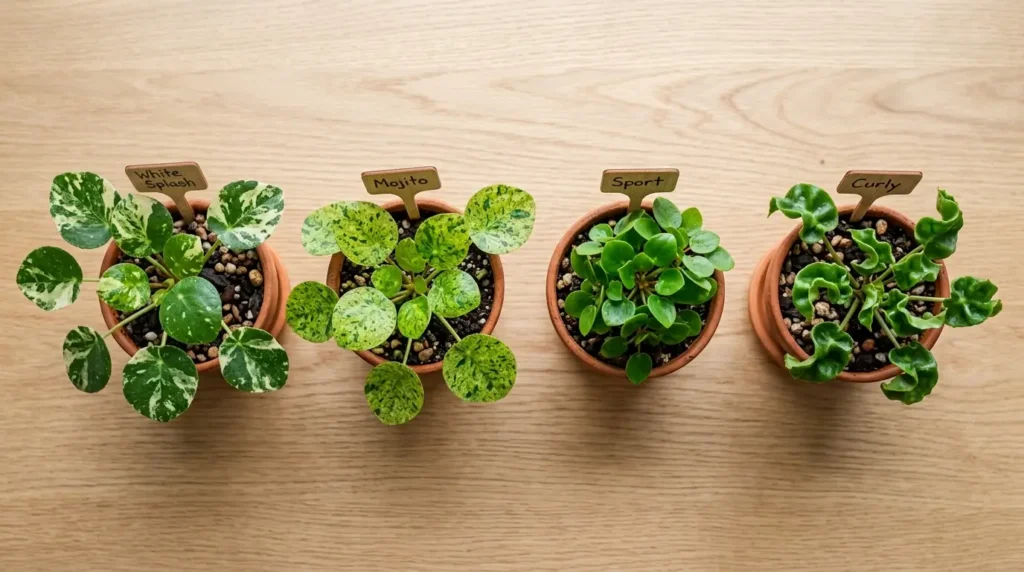
This tropical Chinese money plant does have a few fun variations worth hunting down. Here are the varieties collectors love most, each with its own quirky twist on the classic round leaf.
- Variegata: Splashed with creamy white patches across each leaf, this variety is a bit slower-growing and needs slightly brighter light to keep its variegation vivid.
- Mojito: Features playful yellow-green splotches scattered across the leaf surface, giving it a mottled, hand-painted look that’s totally unique per plant.
- Sport: A rare form with more compact, tightly clustered leaves and a bushier, denser growth habit than the standard type.
- Curly: Leaves cup gently upward at the edges, giving this variety a slightly ruffled, bowl-like shape that stands out from the flat classic form.
Pruning
Pruning your Chinese money plant isn’t required, but it does help keep things tidy. Snip off yellowed or damaged leaves right at the stem whenever you spot them.
If growth gets leggy or lopsided, pinch back the top to encourage bushier, fuller growth. A clean pair of scissors or snips is really all you need.
Propagating Chinese Money Plant
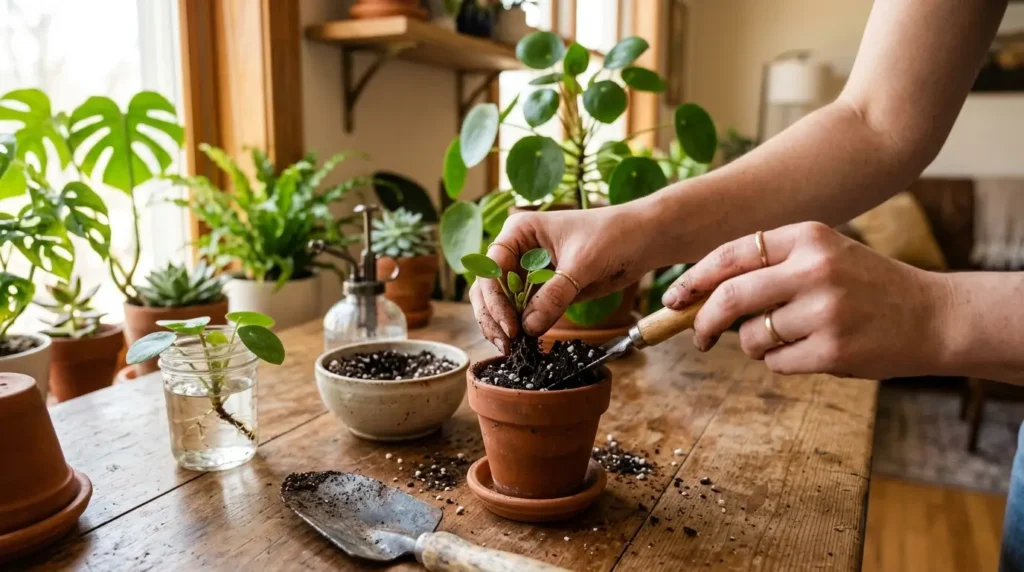
Best time to propagate your Chinese money plant is during spring and summer, when it’s actively growing.
Propagating by Baby Offshoots (Pups)
This plant famously grows little “pups” right from its base or roots. It’s the easiest method, honestly.
Materials needed:
- Sharp, clean knife or scissors
- Small pot with drainage
- Well-draining potting mix
Here’s how to do it:
- Step 1: Look for a baby offshoot at least 2-3 inches tall growing near the base.
- Step 2: Cut the pup away from the mother plant, keeping some roots attached if possible.
- Step 3: Pot the pup directly into moist, well-draining soil.
- Step 4: Keep soil lightly moist and place in bright, indirect light.
Expect new growth within 2-4 weeks once roots settle in.
Propagating by Stem Cuttings
No pups available on your Chinese money plant? Grab a stem cutting instead and root it in water. Simple as that.
Snip a 3-4 inch stem below a leaf node, then place it in a jar of water. Change the water every few days, and roots should appear within 3-6 weeks. Once roots reach an inch long, pot the cutting up in soil. This is the same trick that works beautifully for heart leaf philodendron cuttings.
Propagating by Division
If your plant has grown into a full, multi-stemmed clump, division works great too. Gently remove the whole plant from its pot and shake off excess soil.
Separate the root ball into sections by hand, making sure each piece keeps healthy roots attached. Repot each division immediately into fresh, well-draining soil and water lightly.
Potting and Repotting
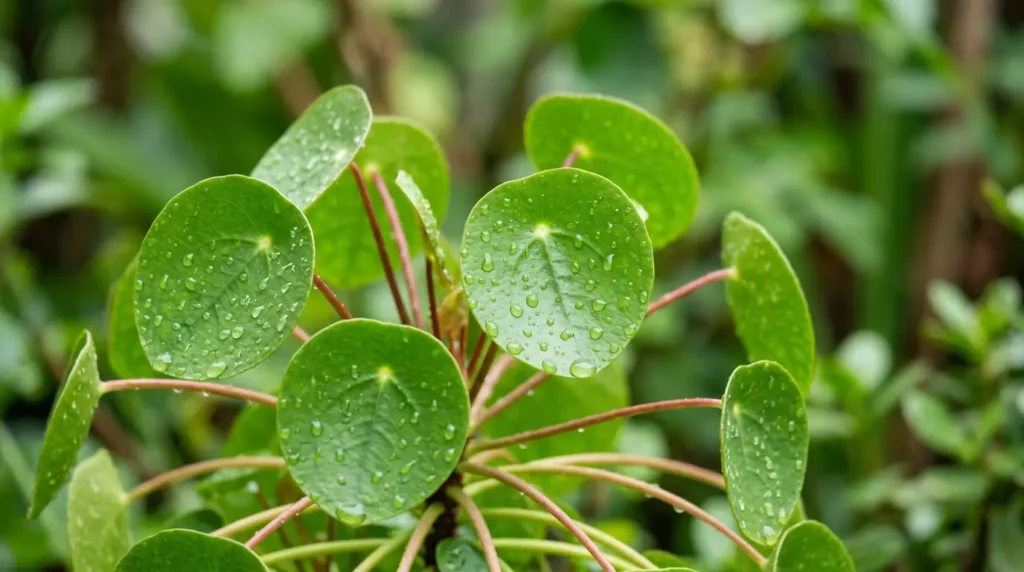
Repot your Chinese money plant every 1-2 years, or once you spot roots poking through drainage holes. Slowing growth is another telltale sign your plant has outgrown its pot.
Choose a new pot just 1-2 inches larger in diameter. Going too big too fast can lead to soggy, waterlogged soil that roots don’t need.
Gently loosen the root ball, place it in fresh mix, and water thoroughly. Good drainage holes are non-negotiable here, so don’t skip that step.
Terracotta and unglazed clay pots are great choices since they help wick away excess moisture. Whatever material you pick, just make sure it has at least one drainage hole.
Common Pests and Diseases
Like most houseplants, this plant can occasionally attract a few unwanted visitors. Catching problems early makes treatment much easier, and most infestations are simple to knock out.
Spider Mites
Look for fine webbing and tiny yellow speckles on leaves. Treat with insecticidal soap or a strong water spray.
Mealybugs
These show up as small, cottony white clumps in leaf joints. Dab them with rubbing alcohol on a cotton swab.
Scale Insects
Identified by small, brown bumps stuck along stems. Scrape off gently, then apply horticultural oil.
Aphids
Tiny green or black bugs clustering on new growth. Rinse with water or use insecticidal soap regularly.
Fungus Gnats
Tiny flying bugs hovering near the soil surface mean fungus gnats. Let soil dry out more between waterings to break their cycle.
Common Problems
Here’s how to troubleshoot common issues with your Chinese money plant:
Yellow Leaves
Yellowing is usually caused by overwatering, which suffocates roots and blocks oxygen uptake. Nutrient deficiency, especially nitrogen, can also turn leaves pale yellow. Sometimes, it’s just natural aging of older lower leaves. Cut back watering and check drainage first. If you’ve dealt with this on a rubber plant before, the fix is nearly identical.
Brown Leaf Tips
Brown tips often point to low humidity in your home, especially during winter heating season. Poor water quality, like heavy tap water minerals, can also cause browning. Underwatering between sessions is another common culprit. Try filtered water and a humidity tray for relief.
Drooping or Wilting Leaves
Drooping almost always means a watering imbalance, either too much or too little moisture. Check the soil moisture first before deciding which way to adjust. A quick, thorough watering usually perks things back up fast. This is the same troubleshooting approach that works for a wilting Swiss cheese plant.
Leggy Growth
Sparse, stretched-out stems mean your Chinese money plant isn’t getting enough light. Move it closer to a bright window immediately. Pruning leggy stems back also encourages fuller, bushier regrowth over time.
Slow Growth
Little to no new growth usually points to low light or a rootbound pot. Check for roots circling the container, then move to brighter light or a larger pot. Growth naturally slows in winter too, so don’t panic.
FAQ
Where is the best place to put a Chinese Money Plant?
Place your Chinese money plant near a bright, east-facing window with indirect light. Avoid direct afternoon sun, which can scorch its round leaves.
Can I put my Chinese Money Plant in the bathroom?
Yes, as long as the bathroom has a bright window nearby. Extra humidity from showers is actually a nice bonus.
What are the benefits of a Chinese Money Plant?
It’s low-maintenance, pet-safe, and produces easy-to-share baby offshoots. Many people also believe it brings good luck and prosperity.
How often should I repot a Chinese Money Plant?
Repot roughly every 1-2 years, or sooner if roots outgrow the pot. Watch for slowed growth as another repotting signal.
2 thoughts on “How to Grow and Care for Chinese Money Plant”
Comments are closed.