
In This Article
Looking for a bold, low-maintenance houseplant? The rubber plant (Ficus elastica) from Southeast Asia features thick, glossy leaves that add sculptural beauty to any room. Perfect for beginners, this tropical stunner delivers serious visual impact without demanding much attention. It’s surprisingly easy to care for!
Plant Care Card
| Attribute | Details |
|---|---|
| Common Name | Rubber Plant, Rubber Tree, Rubber Fig |
| Botanical Name | Ficus elastica |
| Family | Moraceae |
| Plant Type | Tropical evergreen perennial |
| Mature Size | 6-10 feet tall indoors (up to 100 feet outdoors) |
| Sun Exposure | Bright, indirect light |
| Soil Type | Well-draining, porous potting mix |
| Soil pH | 5.5-7.0 (slightly acidic to neutral) |
| Hardiness Zones | 10-12 (USDA) |
| Native Area | Southeast Asia (India, Nepal, Indonesia) |
| Toxicity | Toxic to cats, dogs, and humans |
Rubber Plant Care
Caring for a rubber plant is pretty straightforward, making it ideal for busy plant parents. In the following sections, we’ll cover everything from lighting to troubleshooting common issues. You’ll love how forgiving this plant can be!
Light
Rubber plants thrive in bright, indirect light think near an east or west-facing window where they get plenty of brightness without harsh afternoon sun. Too much direct sunlight can scorch those gorgeous leaves, leaving you with unsightly brown patches. On the flip side, insufficient light makes them leggy and slow-growing. If you notice your plant leaning heavily toward the window, it’s begging for more light. Simply rotate it every few weeks to keep growth even and balanced.
Soil
Your rubber plant needs well-draining soil that won’t hold excess moisture around the roots. A standard potting mix works fine, but adding perlite or orchid bark improves drainage significantly. According to North Carolina State University Extension, good drainage prevents root rot in tropical houseplants. You can create a simple DIY mix using 2 parts potting soil to 1 part perlite. This combination keeps roots happy and healthy without getting waterlogged.
Water
Water your rubber plant when the top 2-3 inches of soil feel dry to the touch. Stick your finger in the soil if it comes out clean and dry, it’s time to water. During spring and summer, you’ll probably water every 7-10 days, but in fall and winter, that stretches to every 2-3 weeks. Overwatering causes yellow leaves and mushy stems, while underwatering leads to droopy, sad-looking foliage. Similar watering needs apply to philodendron brasil, another beginner-friendly houseplant that appreciates the same “let it dry out” approach.
Temperature and Humidity
These tropical plants love warmth, thriving in temperatures between 60-75°F. They tolerate typical household humidity levels just fine, though they appreciate occasional misting during dry winter months. Keep your rubber plant away from cold drafts, heating vents, and air conditioning units. Sudden temperature drops can shock the plant and cause leaf drop. Additionally, avoid placing it near exterior doors where cold blasts might sneak in.
Fertilizer
Feed your rubber plant with a balanced liquid fertilizer diluted to half strength every 2-4 weeks during spring and summer. The University of Florida IFAS Extension recommends regular feeding for optimal houseplant growth. In fall and winter, stop fertilizing completely the plant’s growth naturally slows down during these months. Overfertilizing causes salt buildup in the soil and can burn the roots.
Types of Rubber Plant
Rubber plants come in several stunning varieties beyond the classic dark green. Here’s what you might encounter:
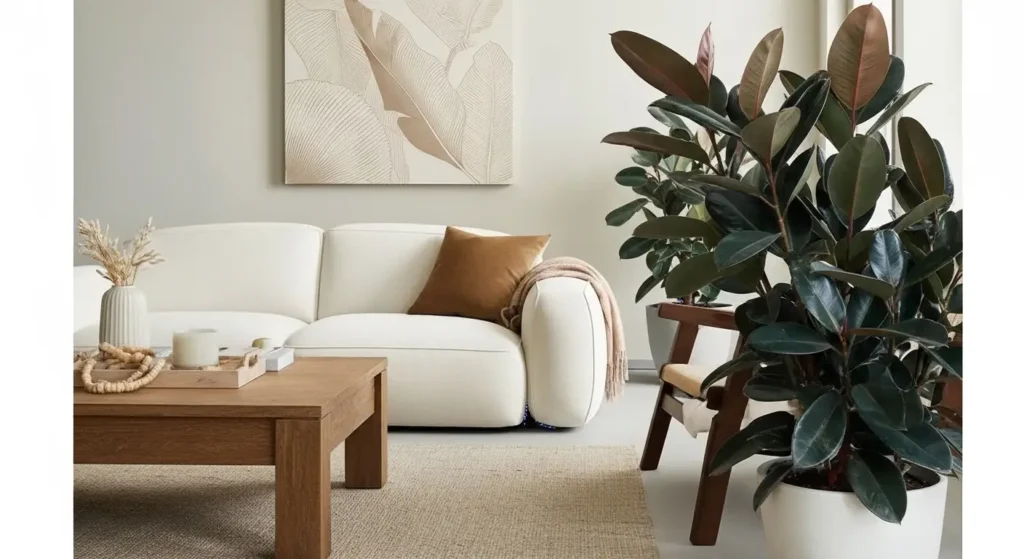
- Burgundy Rubber Plant (Ficus elastica ‘Burgundy’): Features deep burgundy-red leaves that look almost black in lower light. New growth emerges bright red before darkening. This variety adds dramatic flair to any space and requires identical care to the standard type.
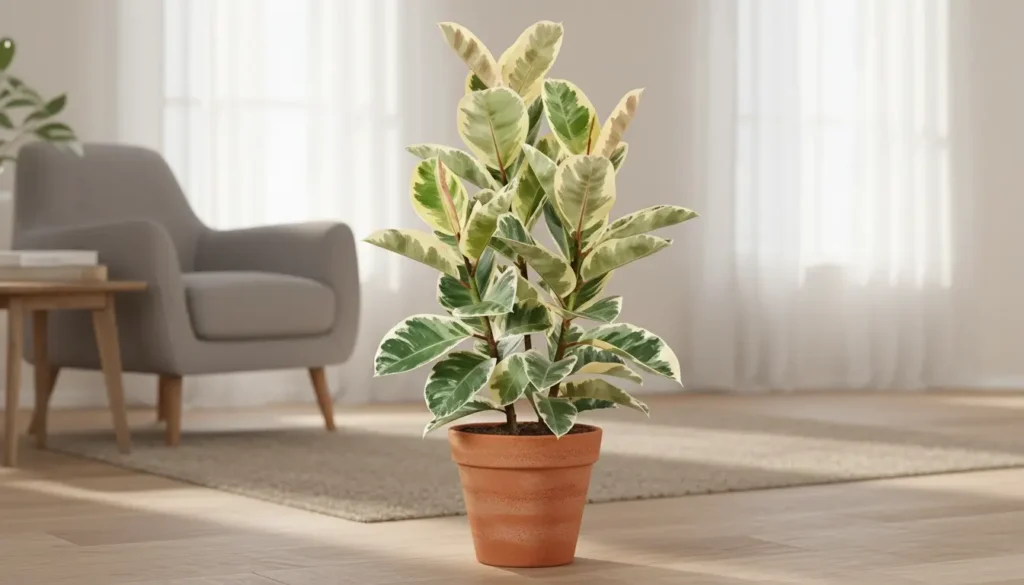
- Variegated Rubber Plant (Ficus elastica ‘Tineke’): Showcases green leaves splashed with creamy white and pink variegation. The pink edges are especially vibrant on new growth. Needs slightly brighter light than solid-colored varieties to maintain variegation.
- Ruby Rubber Plant (Ficus elastica ‘Ruby’): Displays tri-colored leaves in green, pink, and cream with a pinkish-red midrib. The variegation appears more intense in bright light. This compact variety grows slightly slower than standard rubber plants.
- Black Prince Rubber Plant (Ficus elastica ‘Black Prince’): Nearly black leaves with a glossy finish make this cultivar incredibly striking. It tolerates lower light better than variegated types. The dark foliage provides excellent contrast against light-colored walls.
Propagating Rubber Plant
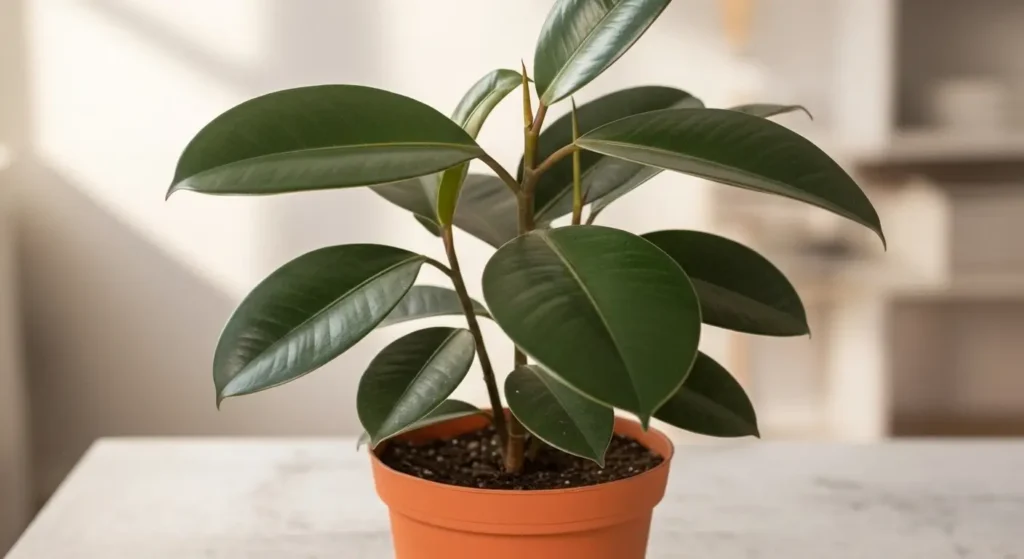
The best time to propagate your rubber plant is during spring and summer when active growth occurs. Let’s face it propagation sounds intimidating, but it’s actually pretty simple with this plant.
Propagating by Stem Cuttings
This is the most reliable propagation method for rubber plants. You’ll need sharp, sterilized pruning shears, a small pot with drainage holes, well-draining potting mix, and optional rooting hormone powder.
Step 1: Cut a 6-inch stem section just below a leaf node, making sure it has at least 2-3 leaves attached. Use clean, sharp shears to prevent disease transmission.
Step 2: Remove the bottom leaves and let the cutting sit for an hour to allow the milky sap to dry. You can dip the cut end in rooting hormone to speed things up, though it’s not absolutely necessary.
Step 3: Plant the cutting in moist potting mix, burying at least one node below the soil surface. Place a clear plastic bag over the pot to create humidity, but remove it for an hour daily to prevent mold.
Step 4: Keep the soil consistently moist and place the cutting in bright, indirect light. Roots should develop within 3-4 weeks, and you’ll see new leaf growth within 6-8 weeks.
Propagating by Air Layering
Air layering works well for larger rubber plants where you want to create a new plant without removing the entire stem. Make a small upward cut about one-third through a healthy stem, then wrap the wound with moist sphagnum moss secured with plastic wrap. Roots develop at the wound site within several weeks. Once roots are visible through the plastic, cut below the new root ball and pot it up. This method works equally well for philodendron melanochrysum, another tropical favorite.
Potting and Repotting
Rubber plants typically need repotting every 1-2 years when they become rootbound. You’ll know it’s time when roots start poking out of drainage holes or growth slows significantly. Choose a pot only 1-2 inches larger in diameter than the current one going too big causes the soil to stay wet too long. Gently loosen the root ball when repotting, removing any circling roots. Fresh potting mix gives your plant a nutrient boost and improves drainage. Spring is the ideal time for repotting when the plant enters its active growing phase.
Common Pests and Diseases
Like most houseplants, rubber plants can occasionally attract unwanted visitors. Catching them early makes treatment much easier.
Spider Mites
Look for tiny webbing between leaves and small dots moving on the undersides. These microscopic pests suck plant juices, causing stippled, yellowing foliage. Treat with insecticidal soap or neem oil spray, hitting the undersides of leaves thoroughly where mites hide.
Mealybugs
White, cottony clusters appear in leaf axils and along stems where these pests gather. They secrete sticky honeydew that attracts ants and causes sooty mold. Remove with rubbing alcohol on a cotton swab or spray with diluted neem oil weekly.
Scale Insects
Small, brown bumps stuck to stems and leaf undersides are scale insects feeding on plant sap. They’re tricky because their hard shells protect them from sprays. Scrape them off manually with your fingernail or a soft toothbrush, then follow up with horticultural oil.
Aphids
Tiny green, black, or brown insects cluster on new growth, causing leaves to curl and distort. They reproduce incredibly fast, so act quickly when you spot them. Blast them off with water or use insecticidal soap for heavier infestations. The University of California IPM program provides comprehensive guidance on managing common houseplant pests safely.
Common Problems with Rubber Plant
Here’s how to troubleshoot common issues you might encounter:
Yellow Leaves
Don’t panic—this happens to everyone at some point. Overwatering is the most common culprit, causing roots to suffocate and rot. Let the soil dry out more between waterings and check drainage holes. Nutrient deficiency from lack of fertilization also causes yellowing, especially in older leaves. Feed regularly during the growing season. Sometimes natural aging causes lower leaves to yellow and drop totally normal! Just like with monstera aurea, occasional leaf loss is part of the plant’s natural cycle. Remove yellowed leaves to keep your plant looking tidy.
Brown Leaf Tips
This frustrating issue usually points to low humidity or water quality problems. Tap water containing fluoride, chlorine, or salts can cause tip burn over time. Switch to filtered or distilled water and consider using a humidifier nearby. Underwatering also causes crispy brown tips when roots can’t access enough moisture. Adjust your watering schedule and ensure you’re soaking the soil thoroughly when you do water.
Drooping or Wilting Leaves
Limp, sad-looking leaves indicate a watering problem either too much or too little. Check the soil immediately by sticking your finger deep into the pot. If it’s bone dry, give it a good soak. If it’s soggy, you’ve been overwatering and need to let it dry out completely. Similar issues occur with alocasia polly when watering schedules get inconsistent. Consistency is key establish a regular watering routine based on soil moisture, not a calendar.
Leggy Growth
Sparse foliage and long, stretched-out stems mean your plant isn’t getting enough light. Move it closer to a bright window where it receives more indirect sunlight throughout the day. You can prune back leggy growth to encourage bushier development. The plant redirects energy to lower nodes, creating fuller growth.
FAQ
How do you take care of a rubber plant indoors?
Provide bright indirect light, water when the top 2-3 inches of soil dry out, and maintain temperatures between 60-75°F. Feed monthly during spring and summer with diluted fertilizer. Keep away from cold drafts and rotate regularly.
Do rubber plants need sunlight?
Yes, rubber plants need bright indirect sunlight to thrive and maintain their glossy foliage. They tolerate medium light but grow slowly. Direct hot sun burns leaves, causing brown patches. East or west-facing windows work perfectly for ideal light conditions.
Is a rubber plant poisonous to cats?
Yes, rubber plants are toxic to cats, dogs, and humans. The milky sap contains irritating compounds that cause vomiting, drooling, and skin irritation if ingested. Keep this plant out of reach of curious pets and children to prevent accidental poisoning.
Are rubber plants good for the house?
Absolutely! Rubber plants purify indoor air, removing toxins while adding visual interest to any room. Their large leaves create a bold statement without requiring expert care. They’re perfect for beginners wanting an impressive-looking plant that’s actually forgiving and low-maintenance.
8 thoughts on “How to Grow and Care for Rubber Plant”
Comments are closed.