
In This Article
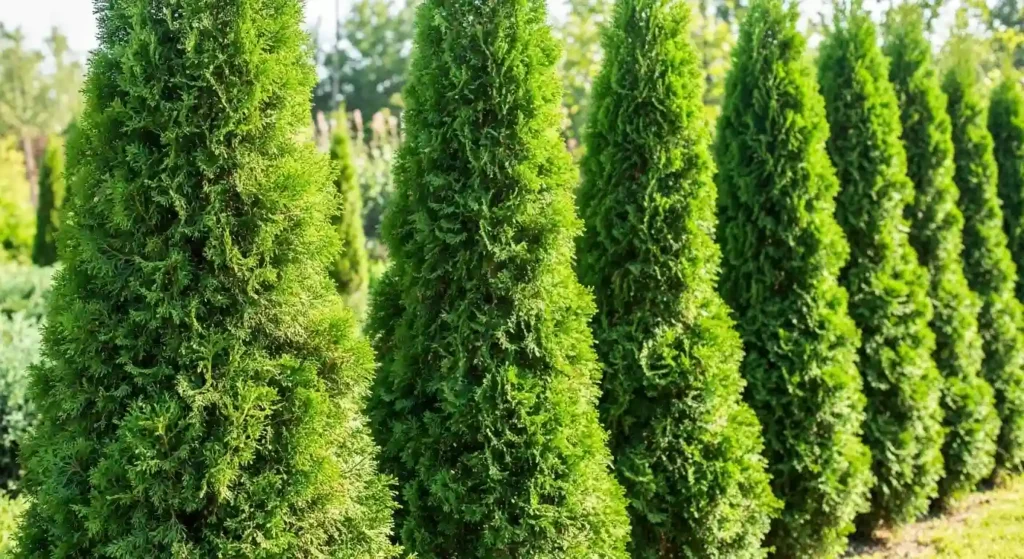
Emerald green arborvitae (Thuja occidentalis ‘Smaragd’) is a narrow, pyramid-shaped evergreen that brings year-round color to gardens and landscapes. This cultivar features dense, vibrant green foliage that holds its color beautifully through winter, making it a popular choice for privacy screens and formal hedges. Honestly, it’s one of the most reliable evergreens you can grow.
Native to North America, the emerald green arborvitae thrives in USDA hardiness zones 3-8, tolerating cold winters remarkably well. Whether you’re a beginner or experienced gardener, you’ll love how easy emerald green arborvitae is to care for once established.
Plant Care Card
| Attribute | Details |
|---|---|
| Common Name | Emerald Green Arborvitae |
| Botanical Name | Thuja occidentalis ‘Smaragd’ |
| Family | Cupressaceae |
| Plant Type | Evergreen shrub/tree |
| Mature Size | 12-15 feet tall, 3-4 feet wide |
| Sun Exposure | Full sun to partial shade |
| Soil Type | Well-draining, loamy, moist |
| Soil pH | 6.0-8.0 (slightly acidic to alkaline) |
| Hardiness Zones | 3-8 (USDA) |
| Native Area | North America (cultivar) |
| Bloom Time | Spring (inconspicuous) |
| Toxicity | Toxic to pets and humans if ingested |
Emerald Green Arborvitae Care
This evergreen thrives with minimal maintenance once established in the right location. Here’s what you need to know about sun exposure, soil requirements, watering needs, and basic upkeep. With proper placement, this conifer practically takes care of itself.
Light
These conifers perform best in full sun, receiving at least 6-8 hours of direct sunlight daily. This exposure promotes dense, vibrant foliage and maintains the plant’s characteristic compact shape. While it tolerates partial shade, insufficient light causes thin, sparse growth and may lead to browning on interior branches.
Plant your arborvitae on the south or east side of your property for optimal sun exposure. Avoid locations with heavy afternoon shade or competition from larger trees. Additionally, ensure adequate air circulation around the plant to prevent fungal issues.
Soil
These evergreens adapt to various soil types but thrive in well-draining, loamy soil enriched with organic matter. Good drainage is absolutely critical standing water leads to root rot and eventual plant death. According to North Carolina State University Extension, the ideal pH range falls between 6.0 and 8.0, though they tolerate both slightly acidic and alkaline conditions.
For heavy clay soils, amend with compost and coarse sand at a 2:1:1 ratio before planting. Avoid compacted soil and areas where water pools after rain.
Water
Newly planted specimens need consistent moisture, requiring deep watering 2-3 times weekly during the first growing season. Check soil moisture by inserting your finger 2-3 inches deep water when the top layer feels dry. Once established after the first year, these evergreens become moderately drought-tolerant.
During summer months, water deeply once weekly if rainfall is insufficient. In winter, evergreens continue losing moisture through their foliage, so water monthly during dry spells when the ground isn’t frozen. Overwatered plants develop yellowing foliage and root rot, while underwatered specimens show browning tips.
Temperature and Humidity
This cultivar tolerates a wide temperature range, thriving in zones 3-8 where winter temperatures drop to -40°F. These hardy evergreens handle cold remarkably well but appreciate protection from harsh winter winds. They also tolerate summer heat up to 90°F when adequately watered.
Apply 2-3 inches of organic mulch around the base to regulate soil temperature and retain moisture. For young plants in exposed locations, consider installing burlap windbreaks during their first winter.
Fertilizer
Feed in early spring with a balanced, slow-release fertilizer formulated for evergreens (10-10-10 or similar). Apply according to package directions, typically every 6-8 weeks during the growing season from April through July. Stop fertilizing by late summer to allow new growth to harden off before winter.
Types of Arborvitae
While emerald green arborvitae is incredibly popular, several other Thuja occidentalis varieties offer different characteristics. Here are notable selections worth considering:
• Degroot’s Spire: This narrow, columnar cultivar reaches 15-20 feet tall but only 3-4 feet wide, making it ideal for tight spaces. The twisted, rich green foliage provides unique texture and maintains excellent winter color.
• Green Giant: A fast-growing hybrid reaching 30-40 feet tall and 12-15 feet wide, perfect for quick privacy screens. Unlike emerald green arborvitae, it tolerates more shade and grows 3-5 feet annually.
• Little Giant: A dwarf, globe-shaped variety growing only 4-6 feet tall and wide at maturity. Similar to annabelle hydrangea in its compact habit, this selection works beautifully in foundation plantings.
• Golden Globe: This slow-growing dwarf features bright golden-yellow foliage that bronzes slightly in winter. It reaches just 3-4 feet in all directions, providing excellent color contrast in mixed borders.
Pruning Emerald Green Arborvitae
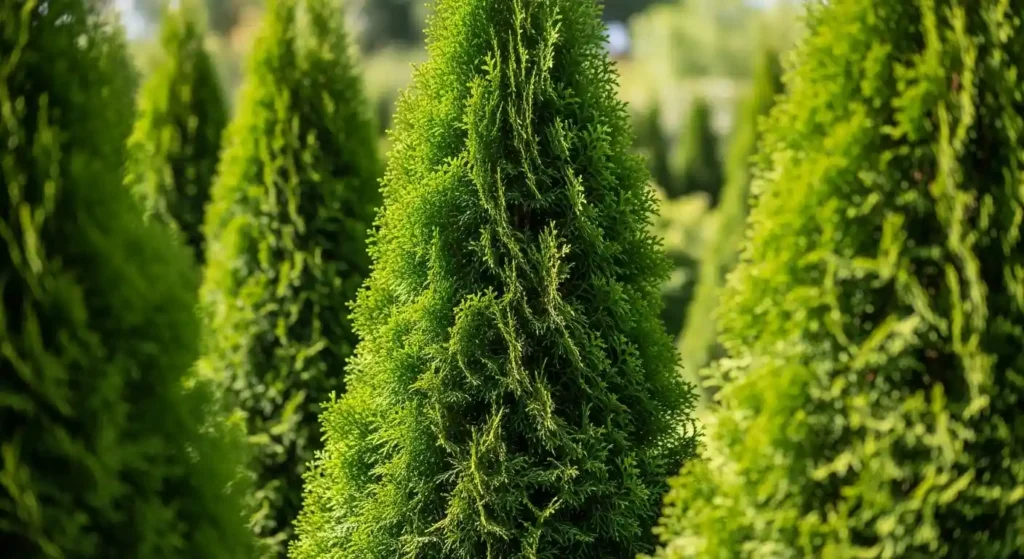
This cultivar naturally maintains its pyramidal shape and requires minimal pruning compared to other evergreens. The best time to prune is late spring or early summer after new growth emerges. Remove any dead, damaged, or diseased branches, along with interior brown foliage.
Use sharp bypass pruners or hedge shears for light shaping, cutting just above healthy green growth. Never cut into old, brown wood as arborvitae doesn’t regenerate from bare branches. Light pruning encourages denser foliage and maintains the plant’s natural form.
Propagating Emerald Green Arborvitae
The best time to propagate is early summer when plants are actively growing and temperatures remain consistently warm. Here’s how to create new plants successfully.
Propagating by Stem Cuttings
Stem cuttings provide the most reliable propagation method for maintaining the cultivar’s exact characteristics. Here’s what you need:
Materials needed:
- Sharp, sterile pruning shears
- Rooting hormone powder
- Small pots with drainage holes
- Well-draining potting mix (equal parts peat and perlite)
- Clear plastic bags for humidity domes
Step 1: Select healthy, semi-hardwood stems from the current year’s growth, cutting 4-6 inch sections in early morning. Remove foliage from the bottom 2 inches of each cutting.
Step 2: Dip the cut end in rooting hormone powder, tapping off excess. Insert cuttings 2 inches deep into moistened potting mix, spacing them 2-3 inches apart.
Step 3: Water thoroughly and cover pots with clear plastic bags to maintain high humidity. Place in bright, indirect light away from direct sun. Keep soil consistently moist but not waterlogged.
Step 4: Check for root development after 8-10 weeks by gently tugging the cutting resistance indicates successful rooting. Remove plastic covering gradually over one week. Transplant rooted cuttings to individual containers and grow for one full season before planting outdoors.
Propagating from Seeds
Seeds offer an economical but slower propagation method. Collect mature cones in fall when they turn brown and dry. Extract seeds by placing cones in a paper bag until they release naturally.
According to USDA Forest Service, stratify seeds in moist sand for 60-90 days in the refrigerator to break dormancy. Sow stratified seeds in spring, barely covering them with soil mix. Keep consistently moist in bright, indirect light. Germination takes 3-6 weeks.
Planting and Transplanting Emerald Green Arborvitae
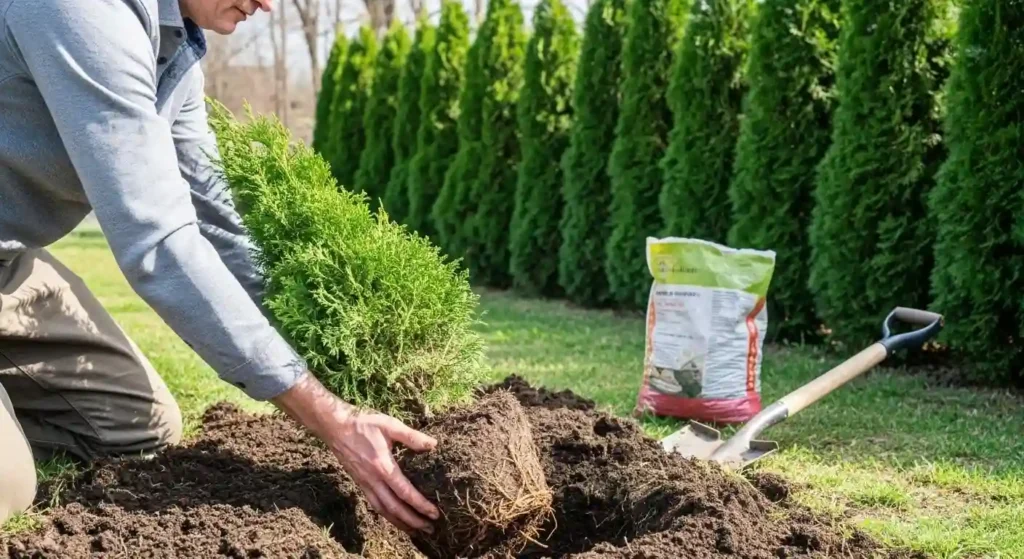
Plant emerald green arborvitae in spring or early fall when temperatures are moderate and rainfall is typically more consistent. Space plants 3-4 feet apart for hedges or 5-6 feet apart for individual specimens. Proper spacing promotes air circulation and prevents overcrowding.
Dig holes twice as wide as the root ball but no deeper than the container height. Place the emerald green arborvitae so the root flare sits slightly above ground level. Backfill with native soil mixed with compost, water deeply, and apply mulch around the base.
Transplanting established emerald green arborvitae is challenging due to their extensive root systems. If necessary, transplant in early spring before new growth begins. Water heavily before and after moving.
Common Pests and Diseases
Like most evergreens, emerald green arborvitae occasionally faces pest or disease challenges. Early detection and proper treatment prevent serious damage.
Spider Mites
Look for stippled, yellowing foliage and fine webbing between branches, especially during hot, dry weather. Treat with insecticidal soap or horticultural oil, spraying thoroughly every 7-10 days.
Bagworms
Identify these pests by spindle-shaped bags made from silk and plant material hanging from branches. Hand-pick and destroy bags in winter, or apply Bacillus thuringiensis (Bt) in late spring.
Leaf Miners
Notice serpentine trails or blotches on foliage where larvae tunnel between leaf surfaces. For detailed management strategies, consult the University of Minnesota Extension. Prune and destroy affected branches.
Root Rot
Watch for yellowing foliage, stunted growth, and eventual dieback caused by Phytophthora species in poorly drained soil. Prevention is critical plant emerald green arborvitae in well-draining locations and avoid overwatering.
Common Problems with Emerald Green Arborvitae
Here’s how to troubleshoot common issues with emerald green arborvitae:
Browning Foliage
Interior browning is actually normal as older foliage naturally dies and sheds. However, widespread browning on emerald green arborvitae indicates stress from several causes. Winter burn from cold, dry winds causes bronze or brown foliage, especially on exposed sides. Underwatering during summer or winter dry spells also leads to browning. Improve watering habits, apply mulch to retain moisture, and install windbreaks for exposed plants.
Sparse or Thin Growth
Insufficient sunlight is the primary cause of leggy, sparse foliage on emerald green arborvitae. Plants in too much shade stretch toward light, creating gaps in the canopy. Similar to eagleston holly tree requirements, overcrowding from neighboring plants also blocks sun. Transplant to a sunnier location if possible, or selectively prune competing plants.
Yellowing Needles
Yellow foliage on emerald green arborvitae starting from the tips inward typically signals overwatering or poor drainage causing root stress. Compacted soil or heavy clay prevents oxygen from reaching roots. Additionally, nutrient deficiency, particularly nitrogen, causes overall yellowing. Improve drainage by amending soil, reduce watering frequency, and apply balanced fertilizer in spring.
Winter Damage
Sudden temperature fluctuations and harsh winter winds cause foliage browning and branch dieback on emerald green arborvitae, especially on young plants. Ice and heavy snow loads can break branches or distort the plant’s shape. Protect plants with burlap screens on the windward side and gently brush off heavy snow. Damaged foliage typically recovers by mid-spring.
Poor Color Retention
Foliage on emerald green arborvitae that turns yellow-green or bronze instead of maintaining rich emerald color indicates several issues. Insufficient water during growing season stresses plants and dulls color. Similar to french lavender care needs, compacted soil restricts root growth. Deep watering during dry periods and annual fertilization restore vibrant color.
FAQ
How tall does an emerald green arborvitae get?
Emerald green arborvitae typically reaches 12-15 feet tall at maturity with a narrow 3-4 foot spread, though some specimens may grow slightly taller in ideal conditions with ample sunlight.
What are the downsides of emerald green arborvitae?
Main downsides of emerald green arborvitae include susceptibility to bagworms and spider mites, potential winter burn in harsh climates, relatively slow growth rate of 6-9 inches annually, and occasional browning from drought.
How fast will an emerald green arborvitae grow?
Emerald green arborvitae grows 6-9 inches vertically each year once established in optimal conditions, making it slower than varieties like Green Giant but providing manageable size for smaller landscapes and formal hedges.
What is the difference between Thuja and emerald green?
Thuja is the botanical genus containing all arborvitae species worldwide, while emerald green is a specific cultivar (Thuja occidentalis ‘Smaragd’) selected for compact size and excellent winter color retention throughout the year.