
In This Article
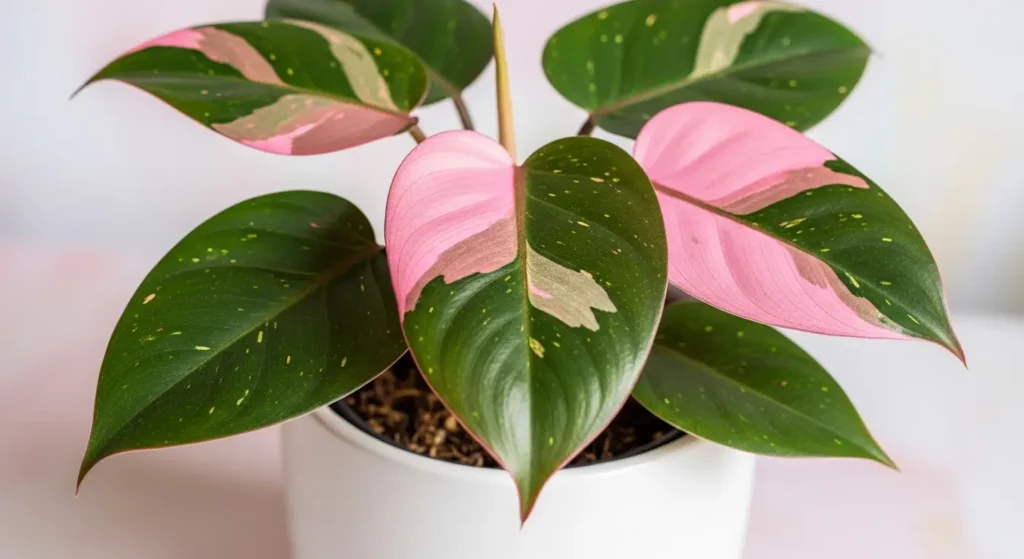
The pink princess philodendron is honestly one of the most stunning houseplants you’ll ever see. With its glossy, dark green leaves splashed with hot pink variegation, this tropical beauty turns heads everywhere. Philodendron erubescens ‘Pink Princess’ hails from the rainforests of Central and South America, where it naturally climbs trees in humid, warm conditions. Here’s the good news: the pink princess philodendron is easier to care for than you might think. While the pink princess philodendron can be a bit picky about light, it’s pretty forgiving otherwise and perfect for intermediate plant parents. Let’s dive into everything you need to know!
Plant Care Card
| Care Information | Details |
|---|---|
| Common Name | Pink Princess Philodendron |
| Botanical Name | Philodendron erubescens ‘Pink Princess’ |
| Family | Araceae |
| Plant Type | Perennial, tropical climbing vine |
| Mature Size | 2-4 feet tall, 1-2 feet wide |
| Sun Exposure | Bright indirect light |
| Soil Type | Well-draining, rich potting mix |
| Soil pH | 5.5-6.5 (slightly acidic) |
| Hardiness Zones | 10-12 (USDA) |
| Native Area | Central and South America (cultivar) |
| Toxicity | Toxic to cats, dogs, and humans |
Pink Princess Philodendron Care
The pink princess philodendron is moderately easy to care for once you understand its basic needs. In the following sections, we’ll cover lighting, watering, soil requirements, and more to keep your pink princess philodendron thriving. With the right conditions, you’ll be rewarded with stunning pink variegation year-round!
Light
Bright indirect light is absolutely critical for maintaining that gorgeous pink variegation on your pink princess philodendron. Place your pink princess philodendron near an east or west-facing window where it can see the sky but won’t get scorched by direct sun rays. Too much direct light causes leaf burn and fading, while insufficient light makes the pink disappear entirely—leaves will revert to boring green.
Additionally, the pink portions of leaves lack chlorophyll, meaning this plant needs extra light to photosynthesize properly. Rotate your pot every few weeks to encourage even growth and prevent your pink princess philodendron from leaning toward the light source.
Soil
This tropical beauty needs a loose, well-draining potting mix that’s rich in organic matter. According to University of Georgia Extension, proper drainage is essential for preventing root rot in tropical houseplants. The key is creating a medium that holds moisture without becoming waterlogged or compacted.
Try this simple DIY recipe for your pink princess philodendron: mix equal parts standard potting soil, perlite, and orchid bark (1:1:1 ratio). This combination provides excellent aeration while retaining just enough moisture for healthy root development.
Water
Water your pink princess philodendron when the top 2-3 inches of soil feel dry to the touch. Stick your finger into the soil to check—if it’s still moist, wait another day or two. Honestly, these plants prefer to dry out a bit between waterings rather than sitting in constantly soggy soil.
Overwatering leads to yellow leaves and root rot, while underwatering causes drooping and crispy brown leaf edges. During spring and summer, you’ll probably water your pink princess philodendron every 7-10 days, but in fall and winter, cut back as growth slows. Similar watering needs apply to heart leaf philodendron, another beginner-friendly trailing plant.
Use room temperature water whenever possible, and if you’re using tap water, let it sit for 24 hours to allow chlorine to evaporate.
Temperature and Humidity
The pink princess philodendron thrives in temperatures between 65-80°F, which is typical for most homes. However, they’re sensitive to cold drafts, so keep your pink princess philodendron away from air conditioning vents, drafty windows, and exterior doors during winter.
These tropical plants love humidity levels around 50-60% or higher. While it’ll tolerate average household humidity, you’ll notice happier growth with a humidifier nearby. Alternatively, place your pink princess philodendron on a pebble tray filled with water or group it with other humidity-loving houseplants.
Fertilizer
Feed your pink princess philodendron with a balanced liquid fertilizer every 2-4 weeks during spring and summer. According to Clemson University Extension, using a diluted 20-20-20 formulation works best for most tropical houseplants. Stop fertilizing in fall and winter when growth naturally slows.
Propagating Pink Princess Philodendron
The best time to propagate your pink princess philodendron is during spring and summer when the plant is actively growing.
Propagating by Stem Cuttings
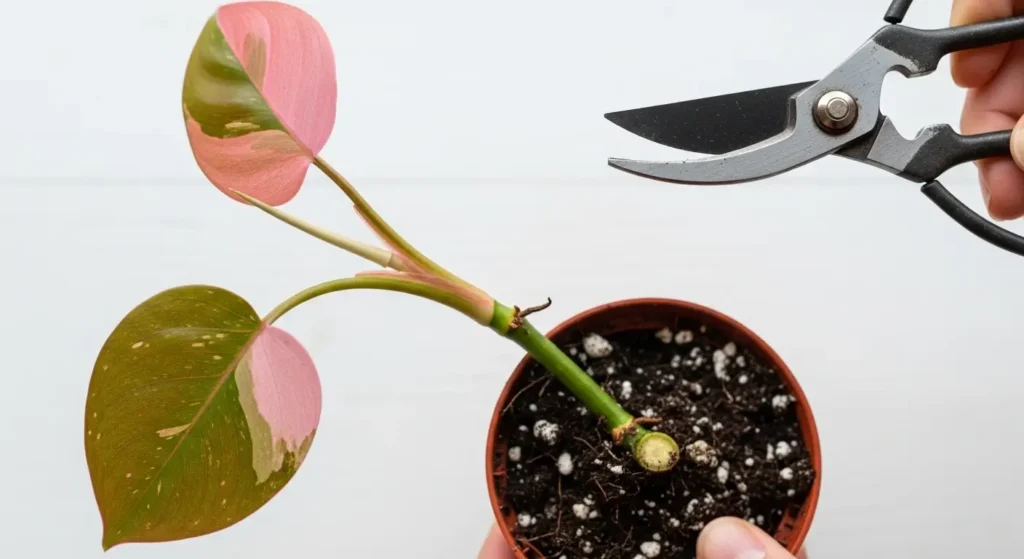
This method is reliable and gives you the best results for maintaining that pink variegation on your pink princess philodendron.
Materials needed:
- Clean, sharp scissors or pruning shears
- Small pot with drainage holes
- Well-draining potting mix
- Rooting hormone (optional)
Step-by-step instructions:
Step 1: Select a healthy stem with at least one node (the bump where leaves emerge) and one or two leaves, ideally with some pink variegation present.
Step 2: Make a clean cut just below a node using sterilized scissors, creating a cutting 4-6 inches long. Remove any lower leaves that would sit below the soil line.
Step 3: Dip the cut end in rooting hormone if desired, then plant it in moist potting mix, burying the node at least one inch deep.
Step 4: Place the cutting in bright indirect light and keep the soil consistently moist but not waterlogged. Cover with a clear plastic bag to maintain humidity if needed.
New roots typically develop within 3-4 weeks, and you’ll see new leaf growth in 6-8 weeks. Similar techniques work beautifully for philodendron micans, which shares many propagation traits.
Propagating by Water Propagation
This alternative method lets you watch roots develop, which is pretty satisfying!
Place your stem cutting in a glass of room temperature water, ensuring the node is submerged while leaves stay above water. Change the water every few days to prevent bacterial growth. Roots should appear within 2-3 weeks. Once roots reach 2-3 inches long, transplant into soil and keep it extra moist for the first week while roots adjust.
Potting and Repotting Pink Princess Philodendron
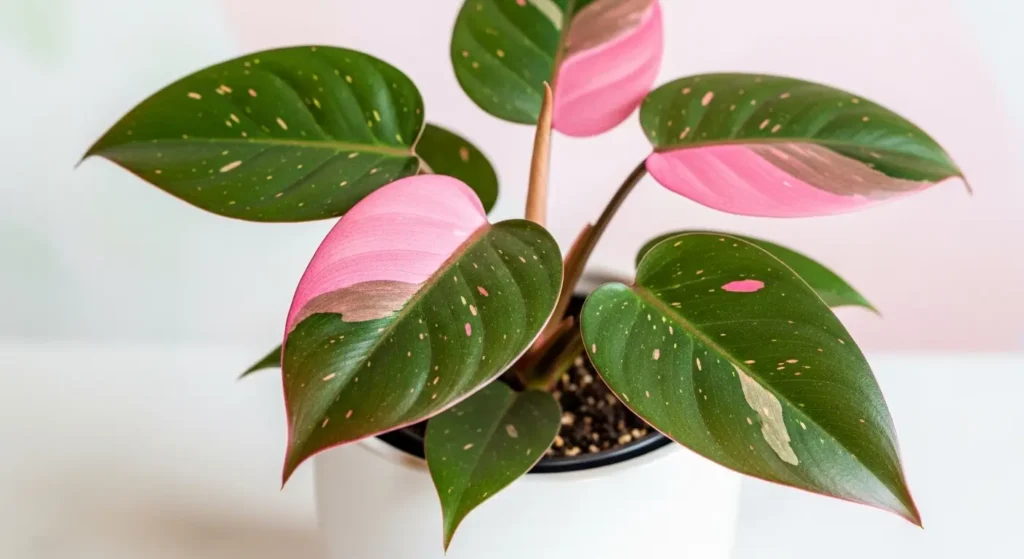
Signs your pink princess philodendron needs repotting include roots growing out of drainage holes, water running straight through the pot, or noticeably slowed growth. Generally, repot every 1-2 years in spring.
When to Repot
Check your pink princess philodendron annually in early spring before the growing season kicks off. If roots are circling the inside of the pot or visible on the surface, it’s time for an upgrade.
How to Repot
Choose a pot only 1-2 inches larger in diameter than the current one. Gently remove the plant, loosen the root ball, and trim any dead or mushy roots. Fill the new pot with fresh, well-draining potting mix and replant at the same depth. Water thoroughly and place in bright indirect light.
Common Pests and Diseases
Like most houseplants, the pink princess philodendron can occasionally attract pests, especially when stressed or kept in less-than-ideal conditions.
Spider Mites
Look for tiny webs on leaf undersides and stippled yellow spots on foliage. Treat with insecticidal soap or neem oil spray, applying weekly until mites disappear completely.
Mealybugs
These white, cottony insects cluster in leaf joints and along stems. Remove them with cotton swabs dipped in rubbing alcohol, or spray with insecticidal soap for heavier infestations.
Scale Insects
Hard, brown bumps on stems and leaves indicate scale insects sucking plant sap. Scrape them off with your fingernail or a soft brush, then apply neem oil to prevent recurrence.
Aphids
Small green or black bugs cluster on new growth, leaving sticky residue behind. According to University of California IPM, washing pests off with water or using insecticidal soap provides effective control for most houseplant pests.
Common Problems with Pink Princess Philodendron
Here’s how to troubleshoot common issues you might encounter with your pink princess philodendron:
Yellow Leaves
Yellow leaves usually signal overwatering, especially if accompanied by soft, mushy stems. Check your soil—if it’s staying wet for more than a week, you’re watering too frequently. Let the soil dry out more between waterings and make sure your pot has adequate drainage holes.
Yellow leaves can also indicate nutrient deficiency, particularly nitrogen. Feed your plant with a balanced fertilizer during the growing season. Sometimes, lower leaves naturally yellow with age—this is totally normal, so just remove them. For similar issues, check out care tips for rhaphidophora tetrasperma, which experiences comparable problems.
Brown Leaves
Brown leaf tips typically result from low humidity or water quality issues like fluoride in tap water. Increase humidity around your plant with a humidifier or pebble tray. Switch to filtered or distilled water if you suspect water quality problems.
Underwatering can also cause brown, crispy leaves along the edges. Make sure you’re watering deeply enough that water runs through drainage holes, not just wetting the surface soil.
Drooping or Wilting Leaves
Drooping leaves usually mean your plant is thirsty and needs a good drink immediately. Water thoroughly and leaves should perk up within a few hours. However, drooping can also indicate overwatering if soil is soggy—in this case, allow soil to dry out significantly before watering again.
Check the roots for rot if drooping persists despite proper watering. Similar issues affect alocasia polly, another humidity-loving tropical plant.
Leggy Growth
Insufficient light causes stretching between leaves, resulting in a sparse, leggy appearance. Move your plant closer to a bright window or supplement with a grow light. Prune back leggy stems to encourage bushier growth at the base, similar to techniques used for philodendron brasil.
FAQ
How do you care for a pink princess philodendron?
Provide bright indirect light, water when the top few inches of soil dry, maintain 65-80°F temperatures, and keep humidity at 50% or higher for stunning results.
Why are pink princess philodendron so expensive?
They’re rare, slow-growing cultivars with unstable variegation that can revert to green. Propagation is time-consuming, and demand from collectors keeps prices high, though availability improves.
Is philodendron pink princess a climber or crawler?
This variety is a natural climber that develops aerial roots and grows upward on moss poles or trellises. Without support, it will trail or spread horizontally instead.
How much sun does a pink princess philodendron need?
It needs bright indirect light for 6-8 hours daily to maintain pink variegation. Avoid direct sun, which burns leaves, and low light, which causes pink to fade.