

In This Article
Wood violets are charming wildflowers that carpet shady gardens with purple-blue blooms each spring. These low-growing perennials (Viola sororia) feature heart-shaped leaves and delicate five-petaled flowers that naturalize beautifully under trees. Native to eastern North America, they thrive in USDA zones 3-8 with minimal care, making them perfect for beginners seeking effortless spring color in challenging shade.
Wood Violet Care Card
| Attribute | Details |
|---|---|
| Common Name | Wood violet, common blue violet, wooly blue violet |
| Botanical Name | Viola sororia |
| Family | Violaceae |
| Plant Type | Herbaceous perennial |
| Mature Size | 4-8 inches tall, 6-12 inches wide |
| Sun Exposure | Partial shade to full shade |
| Soil Type | Moist, well-draining, rich in organic matter |
| Soil pH | 6.0-7.5 (slightly acidic to neutral) |
| Hardiness Zones | 3-8 (USDA) |
| Native Area | Eastern and central United States, Canada |
| Bloom Time | Early to mid-spring (April-May) |
| Toxicity | Non-toxic to pets and humans; flowers are edible |
Wood Violet Care
Wood violets thrive with minimal care once established in the right shady conditions. Here’s what you need to know about sun, soil, water, and maintenance. With proper placement in a woodland garden setting, this plant practically cares for itself.
Light
Wood violets prefer partial to full shade, needing 2-4 hours of dappled sunlight daily under trees or along borders. Plant where they receive morning sun and afternoon shade. Similar to snake plant varieties, they adapt to poor light, though blooms suffer in deep shade.
Soil
Wood violets thrive in moist, humus-rich soil mimicking forest floor conditions with excellent drainage and pH 6.0-7.5. Amend poor soil with 2-3 inches of compost before planting. According to university extension services, organic matter creates ideal growing conditions. Avoid waterlogged clay soil despite their moisture preference.
Water
Water wood violets once or twice weekly during their first season, checking soil moisture 1-2 inches deep before watering thoroughly. Established plants tolerate drought but prefer consistent moisture, especially during spring blooming. Increase watering above 85°F, reduce in winter dormancy. Overwatering causes root rot; underwatering reduces flowering.
Temperature and Humidity
Wood violets flourish in 50-75°F temperatures and survive below 0°F in zones 3-4. They may go dormant above 85°F but recover in fall. According to the USDA Plant Database, mulching with 2-3 inches of organic matter helps regulate temperature and moisture.
Fertilizer
Wood violets rarely need fertilizer and actually thrive in average garden soil without supplemental feeding. If desired, apply a light layer of compost or well-rotted manure in early spring before new growth emerges. Over-fertilizing encourages excessive leaf growth at the expense of flowers, so less is definitely more with these low-maintenance natives.
Types of Wood Violet
Several lovely varieties and related species offer different flower colors and growth habits for diverse garden settings.
- Viola sororia ‘Albiflora’: This pure white variety features pristine blooms without any purple markings and creates a beautiful contrast in shaded gardens. It spreads at the same rate as the species and tolerates slightly drier conditions once established.
- Viola sororia ‘Freckles’: The most distinctive cultivar showcases white flowers heavily speckled with purple-blue spots that look hand-painted. It’s slightly less vigorous than the straight species but equally hardy and charming.
- Viola sororia ‘Rubra’: This red-violet selection produces deep burgundy-purple flowers that appear almost wine-colored in certain light. It tends to come true from seed and naturalizes readily in woodland settings.
- Viola sororia ‘Priceana’ (Confederate violet): Features white flowers with blue-purple centers and veining, creating a striking bicolor effect. Despite its common name’s unfortunate historical association, it remains popular for its unique coloration.
Pruning
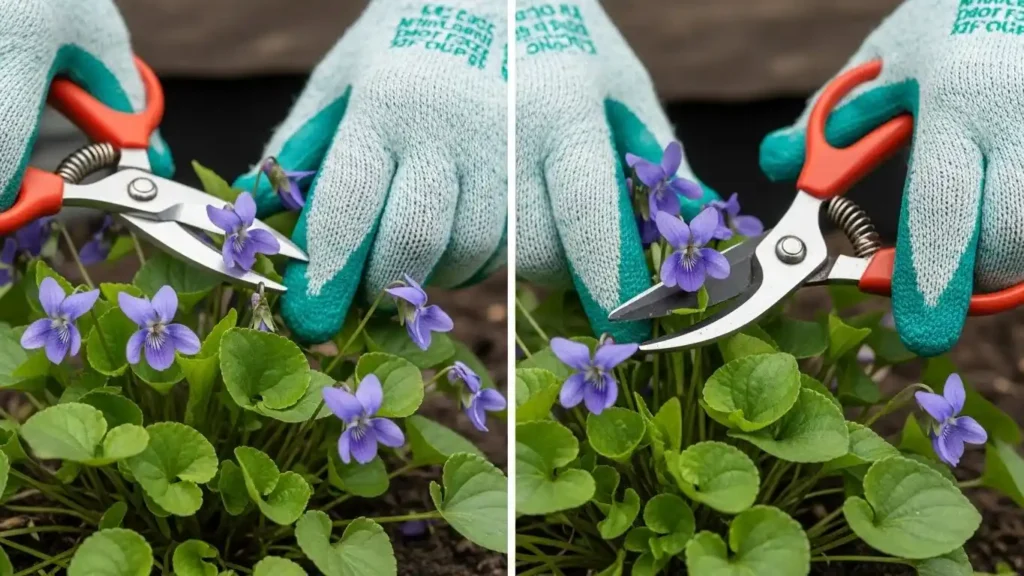
Wood violets require minimal pruning but benefit from occasional tidying to control spreading. After flowers fade in late spring, shear back foliage by one-third to encourage compact growth. Deadheading prevents excessive self-seeding if desired. Let’s face it these naturally tidy plants need pruning mainly for personal preference and managing their enthusiastic spreading habit.
Propagating Wood Violet
The best time to propagate wood violets is in early spring or fall when plants are actively growing and temperatures remain moderate.
Propagating by Division
Division is the quickest and easiest method for multiplying your wood violets while maintaining true-to-type characteristics of named varieties. This technique works best in early spring just as new growth emerges or in fall after blooming ends.
Materials needed:
- Garden fork or spade
- Sharp knife (optional)
- Compost or organic matter
- Watering can
Step 1: Dig up an established clump of wood violets using a garden fork, working carefully to preserve as many roots as possible. Shake off excess soil so you can clearly see the individual plants and their root systems.
Step 2: Gently pull apart sections with your hands, ensuring each division has both healthy roots and several leaves attached for successful establishment. For larger, more stubborn clumps, use a sharp knife to slice through thick root masses cleanly.
Step 3: Replant divisions immediately at the same depth they were growing previously, spacing them 6-8 inches apart in prepared soil enriched with compost. Firm soil around roots to eliminate air pockets and water thoroughly to help them settle in.
Divisions typically establish within 2-3 weeks and will bloom the following spring if divided in fall.
Propagating from Seeds
Wood violets self-seed readily, but you can also collect and plant seeds intentionally for larger quantities of plants. Seeds need a cold stratification period to germinate successfully, mimicking natural winter conditions.
Step 1: Collect seed capsules in late spring when they turn brown and begin splitting open, revealing tiny round seeds inside. Let capsules dry completely indoors for a few days before extracting seeds.
Step 2: Mix seeds with slightly moist sand in a sealed plastic bag and refrigerate for 8-12 weeks to provide cold stratification. According to research from state universities, this cold treatment significantly improves germination rates.
Step 3: Sow stratified seeds on the surface of moist potting soil in late winter or early spring, pressing them lightly but not covering them completely. Seeds need light to germinate, so keep them exposed while maintaining consistent moisture with a spray bottle.
Seedlings appear in 3-4 weeks at 65-70°F and can be transplanted outdoors after the last frost date.
Planting and Transplanting Wood Violet

The best time to plant wood violets is in early spring or fall when temperatures are cool and rainfall is typically more consistent. Space plants 6-12 inches apart depending on how quickly you want them to fill in closer spacing creates faster coverage. Plant at the same depth they were growing in their containers, with crowns level with the soil surface.
Dig holes twice as wide as the root ball and amend soil with compost before planting for the best start. Water thoroughly after planting and maintain consistent moisture for the first 4-6 weeks while roots establish. Wood violets spread naturally through runners and self-seeding, so transplanting is rarely necessary except to control their enthusiastic growth or move plants to new areas.
Mature clumps benefit from division every 3-4 years to maintain vigor and prevent overcrowding in smaller gardens.
Common Pests and Diseases
Like most garden plants, wood violets can occasionally face pest or disease issues, though they’re generally quite resilient and trouble-free in appropriate growing conditions.
Aphids
Look for small clusters of soft-bodied insects on new growth and flower buds that cause distorted leaves and stunted flowers. Treat with a strong spray of water to dislodge them or apply insecticidal soap for heavier infestations.
Slugs and Snails
These moisture-loving pests chew irregular holes in leaves, especially in damp, shady gardens where wood violets thrive naturally. Set out beer traps, hand-pick at night, or create barriers with diatomaceous earth around plant clumps.
Powdery Mildew
White, powdery coating on leaves indicates this fungal disease, which thrives in humid conditions with poor air circulation and crowded plantings. Improve spacing between plants and avoid overhead watering, or treat with organic fungicides if severe.
Crown Rot
Blackened, mushy crowns signal this fungal problem caused by poor drainage and excessively wet soil conditions during warm weather. Remove affected plants immediately and improve soil drainage before replanting in that location.
Common Problems with Wood Violet
Here’s how to troubleshoot common issues:
Poor or No Blooms
You’re probably not seeing many flowers, and it’s frustrating when these spring bloomers don’t perform as expected. Insufficient sunlight is the most common culprit wood violets need at least 2-4 hours of dappled light to flower well, and deep shade limits blooming significantly. Over-fertilizing with high-nitrogen products promotes lush foliage at the expense of flowers, so avoid feeding these low-maintenance natives unnecessarily.
Newly planted specimens may skip blooming their first year while establishing roots, which is perfectly normal behavior for transplants. Plant in brighter locations with morning sun, skip the fertilizer, and be patient established plants bloom reliably each spring. Additionally, similar to issues with croton plant care, proper light exposure makes all the difference in performance.
Yellow or Browning Leaves
Discolored foliage can indicate several different problems that need different solutions to correct successfully. Overwatering or poor drainage causes yellowing leaves with mushy, darkened roots that eventually lead to plant decline and death. Underwatering during hot, dry periods results in brown, crispy leaf edges and wilting foliage that recovers with deep watering.
Natural dormancy in late summer often causes leaves to yellow and die back, which is completely normal seasonal behavior for these spring ephemerals. Check soil moisture regularly and adjust watering accordingly, improve drainage if soil stays soggy, and don’t panic about late-summer dieback. If you’re experiencing similar issues with other shade plants, our guide on hoya kerrii offers additional moisture management tips.
Wilting or Drooping
Limp, drooping leaves usually signal water stress or environmental shock that needs quick attention to prevent permanent damage. Underwatering is the most obvious cause, especially during hot spells when soil dries out faster than usual. Transplant shock commonly affects recently moved or divided plants that haven’t established new roots yet.
Water deeply when soil feels dry and provide temporary shade for stressed plants until they recover fully. Mulching helps maintain consistent soil moisture and reduces water stress during summer heat waves.
Leggy or Sparse Growth
Thin, stretched plants with widely spaced leaves indicate insufficient light or occasionally too much nitrogen from fertilizer applications. Move plants to brighter locations with more dappled sunlight filtering through tree canopies overhead. Trim back leggy growth by one-third to encourage bushier, more compact plants that look healthier and fuller.
Aggressive Spreading
Wood violets can become enthusiastically invasive in ideal conditions, spreading beyond their intended areas into lawns and formal beds. Their combination of runners and prolific self-seeding makes them difficult to contain without regular management efforts. Create physical barriers with edging, deadhead flowers before seeds mature, and dig out unwanted plants promptly.
FAQ
Is wood violet native to Wisconsin?
Yes, wood violet is native throughout Wisconsin and much of eastern North America, thriving naturally in woodlands, meadows, and along stream banks across the state.
What is wood violet?
Wood violet is a low-growing native wildflower with heart-shaped leaves and purple-blue spring blooms that naturalizes readily in shady garden areas and woodland settings.
Are wood violets weeds?
Wood violets are native wildflowers, not weeds, though they spread enthusiastically and some gardeners consider them invasive in formal lawns or cultivated beds where they’re unwanted.
Do wood violets prefer sun or shade?
Wood violets prefer partial to full shade and perform best with 2-4 hours of dappled morning sunlight, struggling in hot, full-sun locations with intense afternoon exposure.