
In This Article
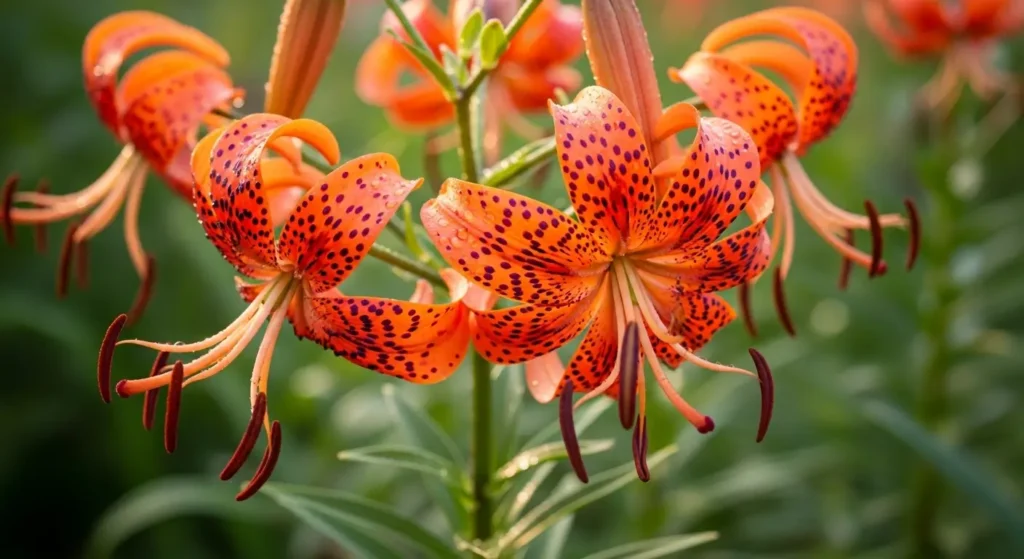
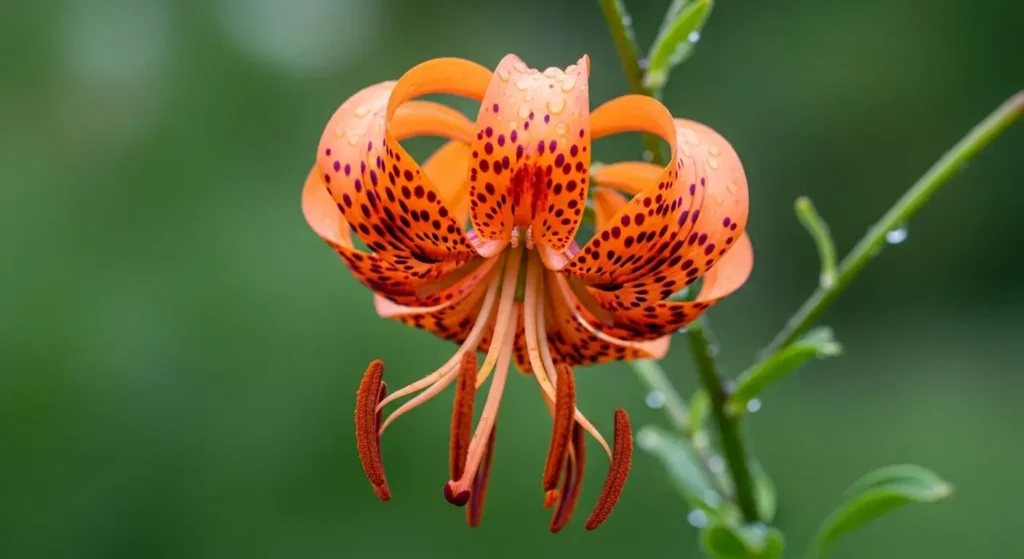
The tiger lily (Lilium lancifolium) is a bold, orange-red perennial native to East Asia, dotted with striking purple-black spots. Growing 3–5 feet tall, it thrives in USDA zones 3–9. Honestly, tiger lily care is easy to moderate once established, this gorgeous, reliable plant suits any gardener.
Plant Care Card
| Detail | Info |
|---|---|
| Common Name | Tiger Lily |
| Botanical Name | Lilium lancifolium |
| Family | Liliaceae |
| Plant Type | Perennial bulb |
| Mature Size | 3–5 ft. tall, 1–2 ft. wide |
| Sun Exposure | Full sun to partial shade |
| Soil Type | Well-draining, loamy or sandy |
| Soil pH | 5.5–6.5 (slightly acidic) |
| Hardiness Zones | 3–9 (USDA) |
| Native Area | East Asia (China, Japan, Korea) |
| Bloom Time | Mid to late summer (July–August) |
| Toxicity | Toxic to cats; non-toxic to dogs and humans |
Tiger Lily Care
The tiger lily is surprisingly low-maintenance once you get it into the right spot. Here’s what you need to know about sun, soil, water, and seasonal maintenance for tiger lily success. With proper placement, this perennial practically takes care of itself.
Light
Tiger lilies need full sun at least 6 hours daily for the best blooms and vivid color. Partial shade causes leggy stems and sparse flowering. A south- or west-facing bed is ideal. In hotter climates, some afternoon protection helps. Avoid deep shade entirely your tiger lily won’t bloom well.
Soil
Tiger lilies need well-draining, loamy or sandy soil with a pH of 5.5–6.5. Good drainage is critical waterlogged ground causes bulb rot fast. According to the University of Minnesota Extension, adding coarse sand or perlite to clay beds greatly improves bulb survival. Avoid compacted soil entirely.
Water
Water tiger lilies once or twice a week, letting the top inch of soil dry between waterings. Always water at the base wet foliage invites fungal disease. Reduce watering in fall as the plant goes dormant. Overwatering is the bigger risk; yellowing leaves in soggy soil means ease back immediately.
Temperature and Humidity
Tiger lilies thrive between 60–85°F and are cold-hardy through zone 3 without extra protection. In harsh winters, apply a 2–3 inch mulch layer over bulbs for insulation. They tolerate average humidity well but in humid climates, good air circulation around your tiger lily helps prevent fungal disease.
Fertilizer
Feed tiger lilies with a balanced, slow-release fertilizer (10-10-10 or similar) once in early spring as new growth appears. A second light feeding right before bloom time can help your tiger lily extend its flowering. Stop fertilizing by late summer, and don’t fertilize during dormancy over-feeding encourages leafy growth at the expense of blooms.
Types of Tiger Lily

Tiger lilies have a few standout cultivars worth knowing. Here’s a quick look at the most popular tiger lily varieties:
- ‘Flore Pleno’: A double-flowered form with extra layers of spotted petals, giving it a fuller, almost rose-like appearance. A real showstopper.
- ‘Splendens’: Features brighter, more intensely colored orange-red blooms with heavier spotting than the species. Slightly larger flowers overall.
- ‘Fortunei’: An early-blooming variety with slightly more upright petals. It tends to grow taller — sometimes up to 6 feet — and is especially vigorous.
- Yellow Tiger Lily (Lilium henryi): Not a true tiger lily but closely related. It produces pale yellow flowers with swept-back petals and is worth growing alongside L. lancifolium for contrast.
Pruning
Prune tiger lilies after blooming ends in late summer or early fall. Deadhead spent flowers immediately to redirect energy back to the bulb. Leave foliage until it yellows naturally it feeds the bulb underground. Once fully died back, cut tiger lily stems to an inch above soil level.
Propagating Tiger Lily
Tiger lilies are actually one of the easiest perennials to propagate. The best time to start is in late summer or early fall, when the tiger lily has finished blooming. You can propagate tiger lily using bulbils, bulb scales, or division all three methods work well.
Propagating by Bulbils
The tiger lily produces small, dark, bead-like bulbils along its stems this is actually the easiest propagation method and unique to this species.
Materials needed:
- Small container or seedling tray
- Well-draining potting mix
- Plastic wrap or humidity dome (optional)
Steps:
- Collect bulbils in late summer when they naturally fall from the stem or pull away easily with a gentle tug. Each plant can produce dozens.
- Fill a tray or small pots with moist, well-draining potting mix. Plant bulbils about 1 inch deep and 2–3 inches apart.
- Place in a cool, bright location a cold frame or unheated greenhouse works well. Keep the soil consistently moist but never soggy.
- Wait for sprouting, which usually happens in spring. Once seedlings reach 3–4 inches, transplant into the garden.
Bulbils typically take 2–3 years to produce flowering-size bulbs, so patience pays off here.
Propagating by Bulb Scales
Scaling is another reliable method for multiplying tiger lily bulbs.
Steps:
- Dig up a healthy bulb in fall and snap off several outer scales close to the base.
- Dust scales lightly with a fungicide powder and place them in a plastic bag with barely moist perlite.
- Store in a warm spot (65–70°F) for 6–8 weeks until tiny bulblets form at the base of each scale.
- Transfer scales with bulblets into pots and grow on until large enough to plant outside.
Expect small bulblets to form within 6–8 weeks. Like bulbils, these take a couple of growing seasons to reach blooming size.
Propagating by Division
Division is the fastest way to create new, blooming-size tiger lily plants. Divide established clumps every 3–4 years in early fall after the foliage dies back. Dig up the clump, gently separate the bulb offsets, and replant immediately at the same depth. You’ll often get blooms the very next season from divided bulbs.
Planting and Transplanting Tiger Lily
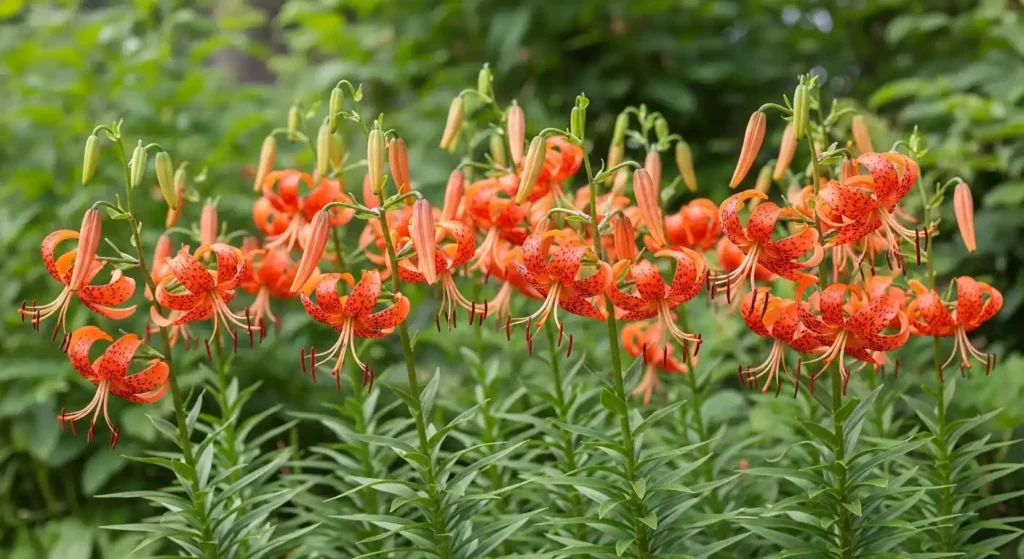
Plant tiger lily bulbs in spring or early fall, ideally when soil temperatures are between 50–65°F. Fall planting gives tiger lily bulbs time to establish roots before winter. Space bulbs 12–18 inches apart to allow for good air circulation and room to multiply over time. If you enjoy growing crocus flowers, the fall planting window works perfectly for both.
Plant each tiger lily bulb 4–6 inches deep with the pointed end facing up. Dig the hole a little wider than the bulb and mix in a handful of compost at the base. Water well after planting. As the USDA Plant Guide notes, proper planting depth is key to preventing frost heave in colder zones.
If transplanting established clumps, do so after foliage dies back in fall. Lift carefully with a garden fork to avoid damaging bulbs, and replant in the new location at the same depth right away. The May birth flower lily of the valley benefits from similarly careful transplanting techniques.
Common Pests and Diseases
Like most garden plants, tiger lilies can occasionally face pest or disease issues. Here’s what to watch for on your tiger lily.
Aphids
Look for clusters of small, soft-bodied insects on new growth and flower buds. Treat with a strong blast of water or apply insecticidal soap spray directly to affected areas.
Red Lily Beetles
Look for bright red beetles and their larvae eating holes in the leaves. Handpick adults and larvae daily, or treat with neem oil for heavier infestations.
Botrytis Blight
Look for gray, fuzzy mold on leaves and stems, especially in cool, wet weather. Remove affected plant parts and improve air circulation. Apply a copper-based fungicide if needed.
Root Rot
Look for yellowing, collapsing plants with soft, dark bulbs underground. Dig up affected tiger lily bulbs, discard any rotten sections, and replant in well-draining garden soil.
Viruses (Lily Mosaic Virus)
Look for mottled, streaked, or distorted leaves. Remove and destroy infected plants — there is no cure. Tiger lilies are known carriers that can spread virus to other lily species nearby.
Common Problems with Tiger Lily
Here’s how to troubleshoot common issues:
Poor or No Blooms
Poor blooming is one of the most common tiger lily complaints. Insufficient sunlight is usually the top cause tiger lilies need at least 6 hours of direct sun to flower well. Over-fertilizing with nitrogen is another culprit, pushing leafy growth instead of blooms. Additionally, bulbs planted too shallow may fail to bloom properly. Move your tiger lily to a sunnier spot, switch to a low-nitrogen fertilizer, and make sure bulbs are at least 4–6 inches deep. Dividing overcrowded clumps every few years also helps restore bloom production significantly.
Yellow or Browning Leaves
Yellowing leaves are often a sign of trouble below the surface. Overwatering or poor drainage is the most frequent cause waterlogged soil promotes root rot and turns foliage yellow fast. A nitrogen deficiency can also cause older leaves to yellow and drop prematurely. If leaves are browning at the tips, heat stress or underwatering may be to blame. Check your drainage first, adjust watering frequency, and consider a balanced fertilizer application in spring to address nutrient gaps. Similar leaf issues can affect pitcher plants and other perennials grown in waterlogged conditions.
Wilting or Drooping
Wilting tiger lily plants are usually just thirsty. Underwatering during hot summer weather is the most obvious cause water deeply at the base and your tiger lily will often perk up within hours. Transplant shock after moving bulbs can also cause temporary drooping; just keep the soil evenly moist and give the plant a week to recover. In severe heat, a little afternoon shade can prevent drooping during peak temperatures.
Leggy or Sparse Growth
Leggy, floppy stems almost always point to insufficient light. Tiger lily plants reaching toward the sun in a shady spot produce weak, elongated stems that can’t support the heavy flowers. Move your tiger lily to a full-sun location and stake stems for support while they adjust. Avoid over-feeding with nitrogen, which worsens the problem. You can find similar troubleshooting tips in our butterfly plant care guide.
Frost Damage
Late spring frosts can damage emerging tiger lily shoots. Look for blackened, mushy new growth after a cold snap. Protect young shoots with a frost cloth if a late freeze is forecast. Most plants will recover by sending up new growth from the bulb just remove damaged stems cleanly. Mulching around the base each fall reduces the risk in colder zones. For related winter care strategies, the University of Illinois Extension has excellent resources on protecting hardy bulbs.
FAQ
What do tiger lilies symbolize?
Tiger lilies symbolize confidence, wealth, and pride in many cultures. In Victorian flower language, they also represented positivity and fierce passion.
Do tiger lilies like sun or shade?
Tiger lilies prefer full sun with at least 6 hours of direct light daily. Partial shade is tolerated, but flowering decreases noticeably.
Do tiger lilies come back each year?
Yes, tiger lilies are true perennials. They die back in winter and reliably return each spring from the bulb underground.
What’s the difference between a tiger lily and a daylily?
Tiger lilies grow from bulbs and bloom once per season. Daylilies grow from fleshy roots and produce multiple blooms throughout the summer.