
In This Article
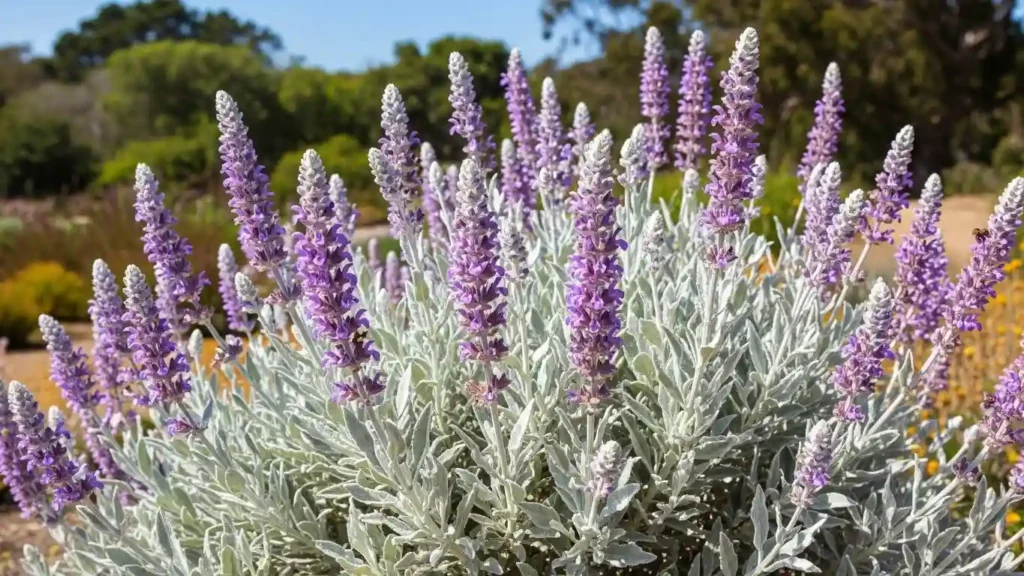
Swanleaf clouding sage (Salvia leucophylla) is a stunning California native perennial with silvery-gray foliage and soft purple flower spikes. This aromatic shrub grows 3-5 feet tall, thriving in USDA zones 8-10. Honestly, if you’re seeking a low-maintenance, drought-tolerant plant that attracts pollinators, you’ll love this beautiful California native.
Plant Care Card
| Common Name | Swanleaf Clouding Sage, Purple Sage |
|---|---|
| Botanical Name | Salvia leucophylla |
| Family | Lamiaceae |
| Plant Type | Evergreen perennial shrub |
| Mature Size | 3-5 feet tall, 4-6 feet wide |
| Sun Exposure | Full sun |
| Soil Type | Sandy, well-draining, rocky |
| Soil pH | 6.5-8.0 (slightly acidic to alkaline) |
| Hardiness Zones | 8-10 (USDA) |
| Native Area | California coastal regions |
| Bloom Time | Late spring to summer |
| Toxicity | Non-toxic to pets and humans |
Swanleaf Clouding Sage Care
Swanleaf clouding sage thrives with minimal care once established in sunny, well-draining locations. Here’s what you need to know about sun, soil, water, and maintenance. With proper placement, this California native practically cares for itself through summer heat and drought.
Light
Swanleaf clouding sage absolutely needs full sun exposure at least 6-8 hours daily for optimal flowering. Insufficient light causes leggy growth and reduced blooms. Plant in south or west-facing areas with unobstructed sunlight. The silvery foliage reflects excess heat, making this perfect for hot spots with good air circulation.
Soil
This drought-tolerant shrub demands excellent drainage and performs best in sandy, rocky, or gravelly soils that mimic its native coastal habitat. Heavy clay soils lead to root rot and plant decline, so amending soil is critical in gardens with poor drainage. Swanleaf clouding sage tolerates a wide pH range from slightly acidic to alkaline (6.5-8.0), similar to golden barrel cactus which also thrives in well-draining conditions.
If your garden has heavy soil, create raised beds or mounds with a mix of 2 parts native soil, 1 part coarse sand, and 1 part decomposed granite. According to UC Davis Arboretum, incorporating amendments improves drainage for California native plants significantly.
Water
Let’s face it overwatering is the biggest mistake with swanleaf clouding sage. Water newly planted shrubs weekly for 2-3 months, then reduce dramatically. Established plants need watering only every 2-4 weeks during dry periods. Check soil 3-4 inches deep water only when completely dry to prevent root rot.
Temperature and Humidity
Swanleaf clouding sage tolerates temperatures from 20°F to 110°F, handling summer heat exceptionally well in zones 8-10. Prolonged freezes may damage foliage, but plants recover. It thrives in low humidity and struggles in humid climates. Apply 2-3 inches of gravel mulch to moderate temperature and improve drainage.
Fertilizer
Swanleaf clouding sage rarely needs fertilization and actually performs better in nutrient-poor soils that mimic its native habitat. Over-fertilizing produces excessive foliage growth at the expense of flowers and increases water requirements. If desired, apply a light application of organic compost in early spring, but skip fertilizer entirely for established plants in most garden situations.
Types of Swanleaf Clouding Sage
While Salvia leucophylla doesn’t have many cultivated varieties, several closely related purple sages offer similar characteristics for California gardens.
- Point Sal Purple Sage (Salvia leucophylla ‘Point Sal’): This compact selection grows only 2-3 feet tall with intensely silvery foliage and deep purple flower spikes. It’s ideal for smaller gardens or front-of-border placements where its refined size shines.
- Figueroa Mountain Purple Sage (Salvia leucophylla ‘Figueroa’): A vigorous form reaching 5-6 feet tall with larger flower spikes and slightly greener foliage than the species. This selection tolerates more water than typical swanleaf clouding sage.
- Bee’s Bliss Sage (Salvia ‘Bee’s Bliss’): Though technically a hybrid, this groundcover sage shares the silvery foliage and purple flowers of swanleaf sage. It grows only 1-2 feet tall and spreads 6-8 feet wide, making it perfect for slopes.
Pruning
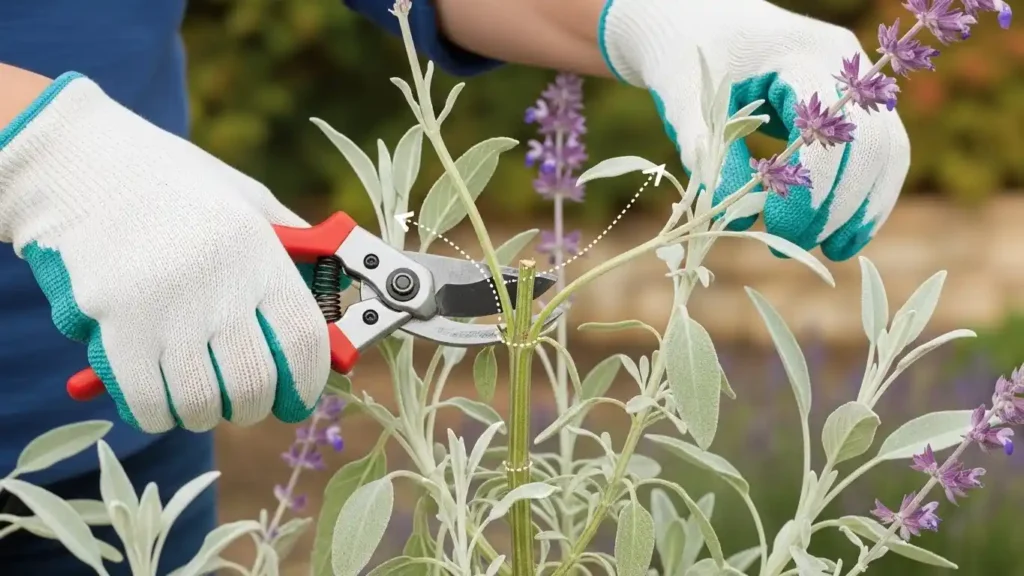
Swanleaf clouding sage benefits from annual pruning to maintain compact growth and encourage abundant flowering. Prune in late fall or early winter, removing spent flower stalks and cutting woody stems by one-third to one-half. Use sharp bypass pruners above leaf nodes. Avoid cutting into old, bare wood as native sages rarely resprout.
Propagating Swanleaf Clouding Sage
The best propagation time for swanleaf clouding sage is spring through early summer when plants are actively growing. This California native propagates readily from stem cuttings and semi-hardwood cuttings, making it easy to create new plants.
Propagating by Stem Cuttings
Stem cuttings provide the fastest and most reliable method for propagating swanleaf clouding sage with results in just 4-6 weeks.
Materials needed:
- Clean, sharp pruners or knife
- Rooting hormone powder
- Well-draining potting mix (equal parts perlite and sand)
- 4-inch pots with drainage holes
- Clear plastic bags or humidity dome
Step 1: Cut 4-6 inch stem sections from healthy, semi-hardwood growth in early morning when plants are well-hydrated. Choose stems that are firm but not completely woody, removing the lower leaves from the bottom half of each cutting.
Step 2: Dip the cut end in rooting hormone powder and tap off excess, then insert cuttings 2 inches deep into moistened potting mix. Space multiple cuttings 2-3 inches apart in the same pot to save space during the rooting process.
Step 3: Water thoroughly and cover pots with clear plastic bags or place under a humidity dome to maintain moisture. Position in bright, indirect light and keep soil barely moist not wet as excessive moisture causes stem rot in sage cuttings.
Step 4: Remove plastic covering once or twice daily for 10-15 minutes to prevent fungal growth. Roots typically form within 4-6 weeks, indicated by new leaf growth at the tip of the cutting.
Propagating by Layering
Layering works well for swanleaf clouding sage since its lower branches often rest near the ground.
Step 1: Select a flexible lower branch and bend it to the ground in early spring. Make a small wound on the underside where the branch touches soil by scraping away bark with a knife.
Step 2: Pin the wounded section to the ground with a landscape staple and cover with 2-3 inches of soil mixed with sand. Keep the area moderately moist but not soggy throughout spring and summer.
Step 3: Check for root development after 3-4 months by gently tugging the branch resistance indicates successful rooting. Once well-rooted, sever the new plant from the parent and transplant to its permanent location the following spring.
Planting and Transplanting Swanleaf Clouding Sage
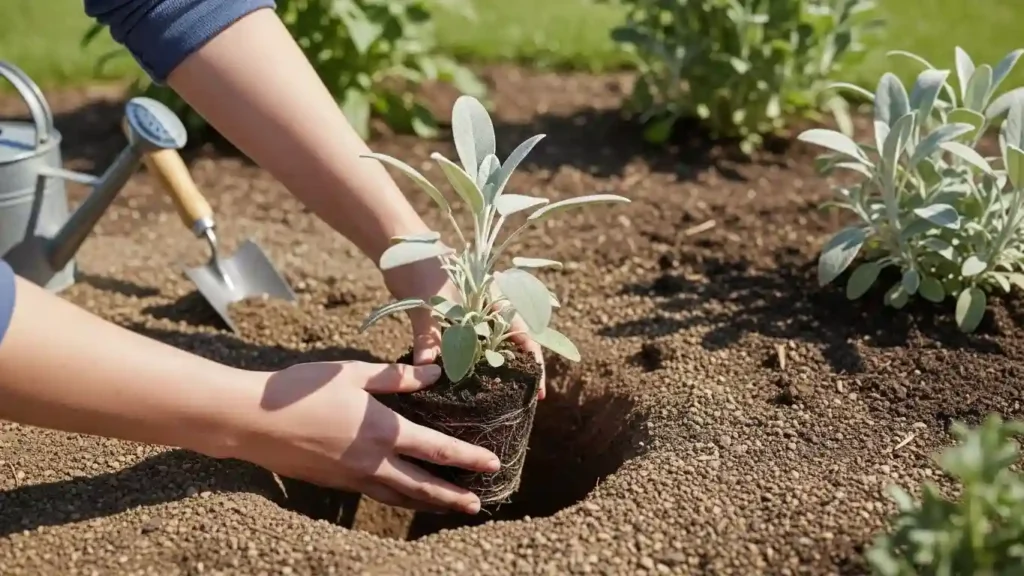
Plant swanleaf clouding sage in fall (October-November) or early spring (February-March) when temperatures are mild and winter rains provide natural irrigation, similar to French lavender which also prefers cool-season planting. Space plants 4-6 feet apart to accommodate their mature spread and ensure good air circulation. In mass plantings, this spacing creates a flowing, naturalistic effect within 2-3 years.
Dig planting holes twice as wide as the root ball but no deeper to prevent settling. According to USDA guidelines, planting at the same depth as container-grown plants prevents crown rot. Backfill with unamended native soil unless drainage is poor, then incorporate sand or decomposed granite.
Swanleaf clouding sage rarely needs transplanting once established since mature plants develop extensive root systems. If transplanting becomes necessary, do so in fall or early winter when plants are semi-dormant. Water transplanted specimens weekly for 6-8 weeks until re-established.
Common Pests and Diseases
Like most garden plants, swanleaf clouding sage can occasionally face pest or disease issues, though it’s remarkably resistant compared to non-native plants.
Whiteflies
Look for clouds of tiny white insects that fly up when foliage is disturbed, typically appearing during hot, dry weather. Treat with insecticidal soap spray or strong water blasts to dislodge adults, repeating applications every 5-7 days for three weeks to break the lifecycle.
Aphids
Soft-bodied green or gray insects cluster on new growth and flower buds, causing distorted leaves and sticky honeydew deposits. Spray affected areas with a strong stream of water or apply neem oil spray every 7-10 days until infestations clear.
Powdery Mildew
White, powdery patches appear on leaves during cool, foggy mornings with poor air circulation, especially in coastal gardens. Improve spacing between plants and avoid overhead watering; treat severe cases with organic sulfur fungicide applied according to product directions.
Root Rot
Yellowing leaves, wilting despite moist soil, and blackened roots indicate fungal root rot from poor drainage or overwatering. Unfortunately, severely affected plants rarely recover prevention through excellent drainage and minimal watering is critical for California native sages.
Common Problems with Swanleaf Clouding Sage
Here’s how to troubleshoot common issues with swanleaf clouding sage:
Poor or No Blooms
Insufficient blooms usually stem from inadequate sunlight plants need 6+ hours daily. Over-fertilizing produces foliage at the expense of flowers, especially with high-nitrogen fertilizers. Lack of pruning creates woody growth with reduced flowering. Young plants bloom sparsely during their first year while establishing roots.
Yellow or Browning Leaves
Yellowing foliage signals overwatering or poor drainage ensure soil drains within hours and reduce irrigation. Browning edges indicate salt accumulation; flush soil with deep watering. Natural lower leaf yellowing occurs in late summer. For similar issues, consult our guide on snake plant varieties.
Wilting or Drooping
Wilting during midday heat is normal for newly planted specimens water weekly until established. Severe wilting with dry soil indicates underwatering, though rare once established. Transplant shock causes temporary wilting resolving within 2-3 weeks. Wilting with wet soil indicates root rot requiring immediate watering reduction.
Leggy or Sparse Growth
Insufficient light produces stretched, weak stems swanleaf clouding sage absolutely requires full sun exposure. Over-fertilizing or excessive water creates lanky growth lacking compact form. Annual pruning prevents legginess by encouraging branching from the base; cut back stems by one-third each fall for dense growth.
Slow Growth
Young plants establish slowly during their first year, focusing energy on root development rather than top growth. Extremely poor soil may benefit from spring compost application, though this sage naturally grows moderately. Container-grown plants sometimes have circling roots massage root balls gently during planting.
Frost Damage
Unexpected hard freezes below 20°F blacken foliage and tips, particularly on young plants in zone 8 gardens. Don’t rush to prune damaged growth wait until spring when new growth emerges to assess damage. Most plants recover from the roots even when top growth dies back. Cover young plants with frost cloth during predicted freezes for added protection during the establishment period.
FAQ
How do you care for swanleaf clouding sage?
Provide full sun, well-draining sandy soil, and minimal water once established. Prune annually in fall and avoid fertilizers for best performance in zones 8-10.
Should swanleaf clouding sage be cut back every year?
Yes, annual pruning in late fall maintains compact growth and encourages abundant flowering. Cut back stems by one-third to prevent legginess and remove spent flower stalks completely.
What should you not plant next to swanleaf clouding sage?
Avoid planting water-loving perennials like hydrangea trees nearby, as their high water needs conflict. Similarly, skip heavy feeders requiring frequent fertilization which encourages excessive sage growth.
Where is a good place to plant swanleaf clouding sage?
Plant in full sun locations with excellent drainage, such as slopes, raised beds, or rocky areas. South or west-facing exposures provide ideal conditions for flowering.