
In This Article
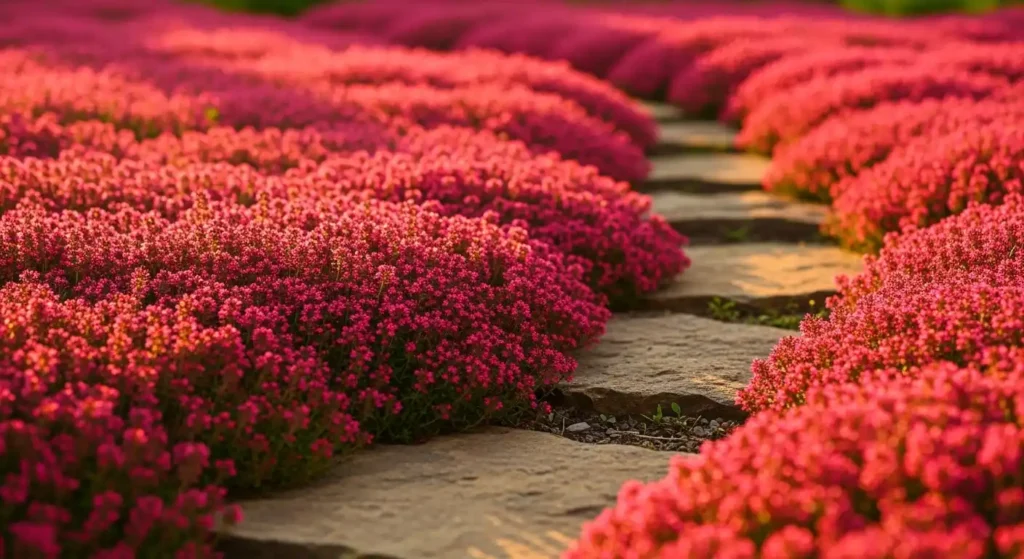
Red creeping thyme (Thymus praecox ‘Coccineus’) is a low-growing perennial that forms a dense carpet of tiny green leaves topped with vivid magenta-red flowers each summer. Native to Europe and Asia, it’s hardy in zones 4–9. Honestly, it’s one of the easiest, most rewarding plants you can grow.
Plant Care Card
| Detail | Info |
|---|---|
| Common Name | Red Creeping Thyme |
| Botanical Name | Thymus praecox ‘Coccineus’ |
| Family | Lamiaceae |
| Plant Type | Herbaceous perennial, ground cover |
| Mature Size | 2–4 inches tall × 12–18 inches wide |
| Sun Exposure | Full sun |
| Soil Type | Sandy, loamy, well-draining |
| Soil pH | 6.0–8.0 (slightly acidic to alkaline) |
| Hardiness Zones | USDA 4–9 |
| Native Area | Europe, western Asia |
| Bloom Time | Late spring to midsummer |
| Toxicity | Non-toxic to humans; generally non-toxic to dogs and cats |
Red Creeping Thyme Care
Red creeping thyme thrives with minimal care once you place it in the right spot. Here’s what you need to know about sun, soil, water, and seasonal maintenance. With good drainage and full sun, this perennial practically cares for itself.
Light
Red creeping thyme needs at least 6–8 hours of full sun daily. Less light means fewer blooms, loose growth, and higher fungal risk. Plant it in a south- or west-facing spot it’s perfect for hot slopes, rock gardens, and pathways. Avoid shade from nearby shrubs or tall perennials.
Soil
Red creeping thyme thrives in sandy or loamy, well-draining soil with a pH of 6.0–8.0. It prefers lean soil rich beds cause floppy growth. According to the University of Minnesota Extension’s herb growing guide, drainage is the top success factor. Amend clay soil with a 1:2 grit-to-soil ratio and avoid waterlogged spots entirely.
Water
Water newly planted red creeping thyme once or twice weekly until established (4–6 weeks), then let it dry out between waterings. Like Texas sage, this perennial suffers far more from overwatering than drought. Cut back in fall and stop in winter. Yellowing leaves or a mushy base signal too much moisture.
Temperature and Humidity
Red creeping thyme is cold-hardy down to -20°F (zones 4–5) and handles summer heat above 90°F with ease. It prefers low to moderate humidity good air circulation is key in wet climates. Apply a light gravel mulch around the base to balance moisture and keep roots cool.
Fertilizer
Red creeping thyme rarely needs feeding. In spring, a single light application of a balanced slow-release fertilizer (such as 10-10-10) is all this plant needs for the season. Avoid fertilizing in fall or winter, as new growth stimulated late in the season is vulnerable to frost damage. Over-fertilizing produces lush green growth at the expense of blooms.
Types of Red Creeping Thyme
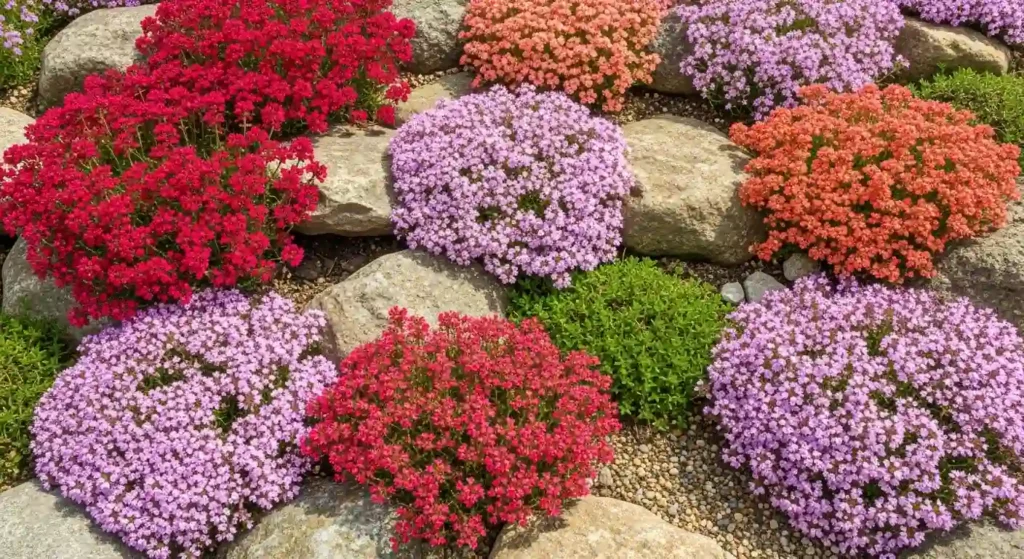
Several excellent varieties are worth knowing about. Each offers something a little different for your garden:
- ‘Coccineus’ (Thymus praecox ‘Coccineus’) The most popular cultivar, producing dense mats with vivid crimson-red flowers in summer. Classic, reliable, and widely available.
- ‘Elfin’ — An extremely compact, slow-growing form that stays under 1 inch tall. Perfect for planting between stepping stones or in troughs.
- ‘Minus’ (Thymus serpyllum ‘Minus’) Forms tight, cushion-like mounds of tiny leaves with soft pink flowers. Excellent for rock garden edges.
- ‘Pink Chintz’ — A woolly-textured variety with pale salmon-pink flowers. Slightly more tolerant of heavier soils than other types.
- ‘Magic Carpet’ — A colorful mix producing blooms in pink, red, and lavender. Spreads quickly and puts on a vivid summer show.
Pruning
Prune red creeping thyme right after the flowers fade, usually in mid-to-late summer. This is the key timing — cutting it back too early removes the blooms, while skipping pruning altogether leads to woody, bare patches at the center. Focus on removing spent flower stems and any dead or woody growth from the base.
Use sharp, clean garden scissors or pruning shears to trim back the entire plant by about one-third of its height. This keeps the mat dense and encourages a fresh flush of foliage. Similar to how French lavender benefits from post-bloom pruning, red creeping thyme responds very well to this annual trim it helps prevent the center from dying out over time.
Propagating Red Creeping Thyme
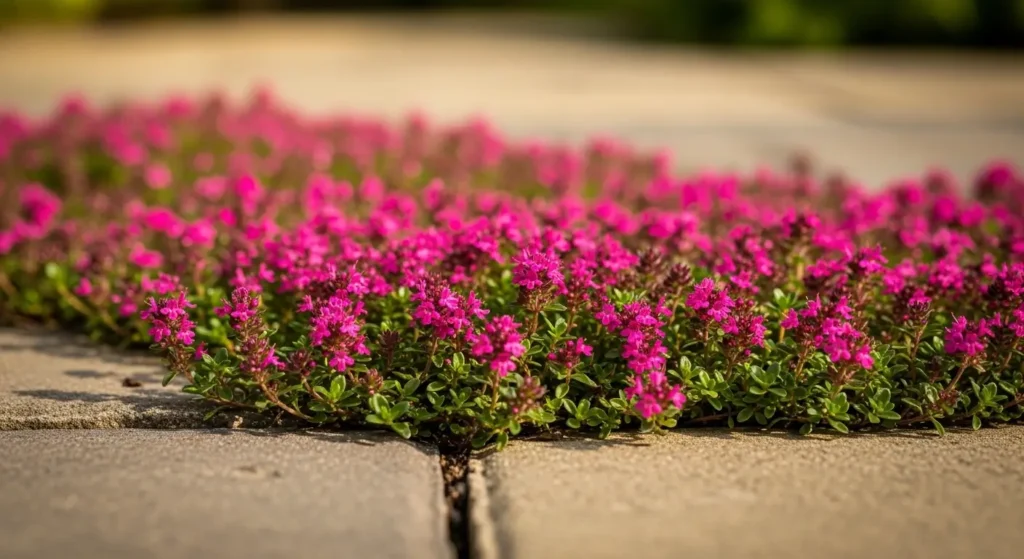
The best time to propagate red creeping thyme is in spring or early summer when the plant is actively growing. You can use stem cuttings, division, or layering all three methods work reliably.
Propagating by Stem Cuttings
Stem cuttings are the most popular method for red creeping thyme and give fast, predictable results.
Materials needed:
- Sharp, clean pruning snips or scissors
- Small pots filled with a mix of perlite and potting soil (50:50)
- Rooting hormone powder (optional but helpful)
- Clear plastic bag or humidity dome
Steps:
Step 1: In late spring or early summer, select a healthy, non-flowering stem about 3–4 inches long. Cut just below a set of leaves using clean, sharp scissors to avoid crushing the stem.
Step 2: Strip the lower leaves from the bottom half of the cutting, leaving 2–3 sets of leaves at the top. Dip the cut end lightly in rooting hormone powder if using.
Step 3: Insert the cutting about 1 inch deep into moist perlite-soil mix. Firm the medium gently around the base so the cutting stands upright without support.
Step 4: Cover the pot loosely with a plastic bag or humidity dome to retain moisture. Place in bright, indirect light direct sun will overheat cuttings before roots form. Keep the medium lightly moist but not soggy.
Roots typically develop within 3–5 weeks. Once you see new growth, remove the humidity cover and gradually move the young red creeping thyme plant into full sun over 7–10 days before transplanting outdoors.
Propagating by Division
Division is the easiest way to propagate an established plant. In early spring, simply dig up a clump of red creeping thyme with a garden fork and pull or cut it into sections, each with roots attached. Replant the divisions immediately at the same depth they were growing, water well, and they’ll establish quickly.
Propagating by Layering
Layering works naturally with red creeping thyme because its stems root easily when in contact with moist soil. Pin a low-growing stem to the ground with a U-shaped stake or a rock, cover the middle section lightly with soil, and keep it moist. Within 4–6 weeks, roots will form at the contact point. Simply cut the stem from the parent plant and transplant the new section.
Planting and Transplanting Red Creeping Thyme
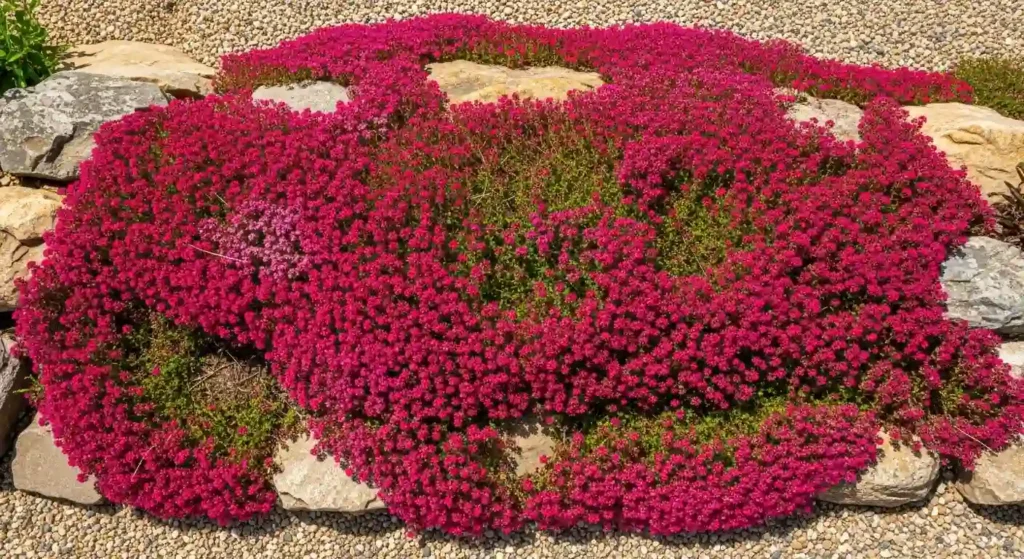
Plant red creeping thyme in spring after the last frost, or in early fall at least 6 weeks before the first frost. Space plants 12–18 inches apart they’ll fill in the gaps within one growing season. Fall planting works well in zones 6 and warmer, giving roots time to establish before winter.
Dig a hole just as deep as the root ball and slightly wider. Set the plant so the crown sits at or just above soil level planting too deep can cause crown rot. Backfill with the original soil (amended with grit if needed), firm gently, and water well.
Divide and transplant established clumps every 3–4 years in early spring to refresh the plant and prevent die-out in the center. This perennial can spread aggressively in ideal conditions, so division also helps keep it in bounds. Similar ground cover perennials like creeping myrtle benefit from the same regular division schedule.
Common Pests and Diseases
Like most garden plants, red creeping thyme can occasionally face pest or disease issues. Fortunately, problems are rare in well-sited plants with good drainage. Here’s what to watch for:
Aphids
Look for clusters of tiny green or black insects on new growth. Treat with a strong blast of water or apply insecticidal soap spray directly on affected stems.
Spider Mites
Fine webbing and stippled, discolored leaves indicate spider mites. Treat with neem oil spray, focusing on the undersides of leaves where mites cluster.
Powdery Mildew
A white powdery coating on leaves signals this fungal disease, usually triggered by poor air circulation or high humidity. Remove affected foliage and consult Penn State Extension’s integrated pest management resources for organic and chemical treatment options.
Root Rot
Soft, dark roots and a wilting plant despite moist soil point to root rot. Improve drainage immediately and remove all affected sections. Prevention is far easier than treatment.
Caterpillars
Small holes or ragged leaf edges may indicate caterpillar feeding. Hand-pick them off or treat with Bacillus thuringiensis (Bt) for a natural, targeted solution.
Common Problems
Here’s how to troubleshoot common issues:
Poor or No Blooms
Almost always caused by insufficient sun even partial shade kills blooms. Over-fertilizing with nitrogen and pruning too early are also common culprits. Move to a sunnier spot, ease up on feeding, and prune only after flowering. For similar issues, see our liatris care guide.
Yellow or Browning Leaves
Overwatering and poor drainage are the top causes soggy soil suffocates roots fast. Iron deficiency in alkaline soils can also trigger yellowing. Check drainage first, reduce watering, and apply balanced fertilizer sparingly. Per USDA Plant Hardiness Zone data, growing in the correct zone also prevents stress-related discoloration.
Wilting or Drooping
A wilting plant in dry soil is usually underwatered give it a deep soak and it should recover within hours. However, wilting in moist soil points to root rot from overwatering, or transplant shock after recent planting. Newly planted red creeping thyme may droop briefly as it adjusts; this is normal and usually resolves within a week.
Leggy or Sparse Growth
Leggy, open growth nearly always means not enough sunlight. Move the plant to a brighter location as your first step. Over-fertilizing can also cause floppy, loose stems that don’t form a tight mat. Cut back leggy stems by one-third and improve light levels. This same issue affects many sun-loving perennials our iris flower care guide covers similar solutions for plants grown in insufficient light.
Frost Damage
Red creeping thyme is cold-hardy, but a late spring frost can brown or blacken tender new growth. Simply trim away the damaged sections the plant will push out fresh growth quickly once temperatures stabilize above freezing.
FAQ
What are the downsides of red creeping thyme?
Red creeping thyme spreads aggressively in ideal conditions and may need dividing every few years. It also does poorly in shade, clay soils, or areas with poor drainage.
Does red creeping thyme come back each year?
Yes it’s a hardy perennial in zones 4–9. It dies back slightly in winter but reliably returns each spring with fresh new growth and blooms.
Is red creeping thyme poisonous to dogs?
No, red creeping thyme is non-toxic to dogs and cats. It’s generally considered a pet-safe plant, making it a great ground cover for family gardens.
Will red creeping thyme grow in Florida?
Red creeping thyme can grow in northern Florida (zone 9) but struggles in the extreme heat and humidity of central and south Florida. Good drainage is critical there.