
In This Article
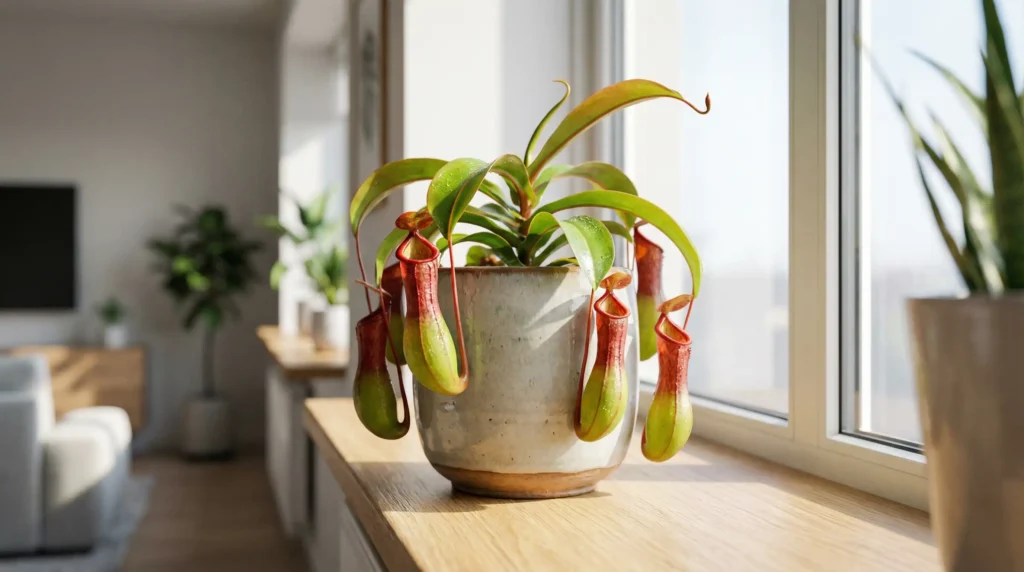
The pitcher plant (Nepenthes & Sarracenia) is a jaw-dropping carnivorous plant that traps and digests insects for nutrients. Native to bogs across Southeast Asia and North America, it evolved to eat bugs instead of relying on soil. Pitcher plant care is easier than you’d think this guide covers everything!
Pitcher Plant Care Card
| Common Name | Pitcher Plant |
| Botanical Name | Nepenthes spp. / Sarracenia spp. |
| Family | Nepenthaceae / Sarraceniaceae |
| Plant Type | Carnivorous perennial |
| Mature Size | 6 in – 3 ft tall, depending on species |
| Sun Exposure | Bright direct to bright indirect light |
| Soil Type | Poor, well-draining, acidic mix (peat/perlite) |
| Soil pH | 4.0 – 5.5 |
| Hardiness Zones | USDA Zones 6–11 (varies by species) |
| Native Area | Southeast Asia, North America, Australia |
| Toxicity | Non-toxic to humans and pets |
Pitcher Plant Care
Pitcher plants are moderate-care plants not the easiest houseplant, but far from the hardest once you nail the basics.
The sections below cover everything: light, soil, water, humidity, fertilizer, and more. You’ll love how rewarding this plant can be!
Light
Pitcher plants love bright light. Tropical Nepenthes species do best in bright indirect light, while North American Sarracenia varieties actually prefer several hours of direct sun each day.
Put your pitcher plant near a south- or east-facing window for the best results. Too little light and the pitchers will stop forming the plant basically gives up on hunting. Too much harsh afternoon sun can scorch the leaves of indoor Nepenthes.
A minimum of 4–6 hours of bright light daily keeps most species happy. If natural light is limited, a grow light works great.
Soil
This is where pitcher plants differ from almost every other houseplant they need poor, acidic soil with zero added fertilizers. Regular potting mix will actually kill them.
A classic DIY mix is 1:1 peat moss and perlite, or pure long-fiber sphagnum moss. Both drain well and stay acidic. According to University of Florida IFAS Extension’s soil drainage guidelines, well-draining, low-nutrient media is essential for plants adapted to bog conditions.
Water
Watering a pitcher plant is different from any other plant you own. They need consistently moist soil but are extremely sensitive to the minerals in tap water.
Always use distilled water, rainwater, or reverse osmosis water. Tap water contains minerals that will damage roots and eventually kill the plant. The tray method works best — sit the pot in a tray with 1–2 inches of water and let the plant drink from the bottom.
Keep the soil consistently moist but not waterlogged. In winter, reduce watering slightly but never let it dry out completely. Similar watering care applies to calathea plants, another moisture-loving species that also hates tap water.
Temperature and Humidity
Tropical Nepenthes prefer temperatures between 60–90°F (15–32°C) and high humidity of 50–80%. North American Sarracenia are tougher and can handle cold winters outdoors.
Indoor pitcher plants need at least 50% humidity to keep pitchers healthy. Keep them away from heating vents, air conditioners, and drafty windows. A pebble tray with water near the plant helps maintain humidity without overwatering.
Fertilizer
Here’s the thing pitcher plants get most of their nutrients from insects, so fertilizing is rarely needed. If you want to feed yours, use a diluted orchid fertilizer at 1/4 strength every 4–6 weeks during summer only. Skip fall and winter entirely. You can also drop a small insect into a pitcher occasionally the plant will love it! According to Penn State Extension’s plant fertilization guide, less is more for carnivorous plants.
Types of Pitcher Plant
There are hundreds of pitcher plant species and cultivars. Here are some popular ones to know:
- Nepenthes alata A popular tropical variety with elongated green pitchers. Hardy for beginners and grows well indoors in bright indirect light.
- Nepenthes ventricosa Known for fat, wide pitchers with a red-streaked rim. Very adaptable and one of the easiest Nepenthes to grow.
- Sarracenia purpurea The purple pitcher plant, native to North America. More cold-tolerant and perfect for outdoor bog gardens in temperate climates.
- Sarracenia leucophylla Tall, dramatic white-top pitchers with gorgeous red veining. A showstopper in any collection.
- Heliamphora Tropical sun pitchers from South America. Less common but stunning, with simple open-topped cups instead of lids.
Pruning
Pitcher plants benefit from light, regular pruning to stay tidy and healthy. Remove dead or dying pitchers by cutting the stem near the base this redirects energy to new growth.
Prune in late winter or early spring before the growing season kicks off. Use clean, sharp scissors or pruning shears. Don’t over-prune you want to keep as many healthy pitchers as possible since they’re actively catching food!
Propagating Pitcher Plant
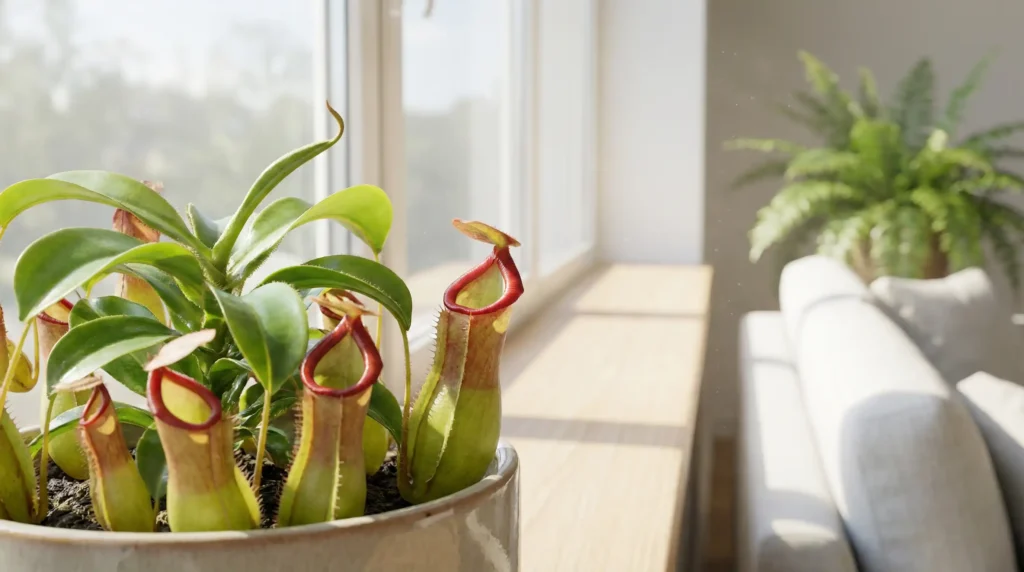
The best time to propagate a pitcher plant is during spring and summer when growth is most active. Division and stem cuttings are the two most reliable methods.
Propagating by Division
Division is the easiest way to propagate pitcher plants, especially for clumping Sarracenia species that produce multiple crowns over time.
Materials needed:
- Sharp, sterile knife or scissors
- New pots with drainage holes
- Fresh peat/perlite mix or sphagnum moss
- Distilled water
Steps:
- Step 1: Carefully remove the plant from its pot and gently shake off the soil to expose the root system.
- Step 2: Identify natural separation points between crowns and use a sterile knife to divide them, making sure each section has roots attached.
- Step 3: Pot each division in fresh, moist carnivorous plant mix and water well with distilled water.
- Step 4: Place in a humid, bright location and keep soil consistently moist. New growth should appear within 4–8 weeks.
This method also works well for arrowhead plants, another tropical species that responds great to division propagation.
Propagating by Stem Cuttings
Stem cuttings work best for tropical pitcher plants like Nepenthes. It takes more patience but is very rewarding.
Steps:
- Step 1: Cut a healthy stem with at least 2–3 nodes using sterile scissors. Remove the lower leaves but keep the top 2.
- Step 2: Dip the cut end in rooting hormone and plant in a 1:1 mix of peat and perlite.
- Step 3: Enclose the cutting in a clear plastic bag or humidity dome to maintain high moisture. Roots typically form in 6–10 weeks.
Potting and Repotting Pitcher Plant
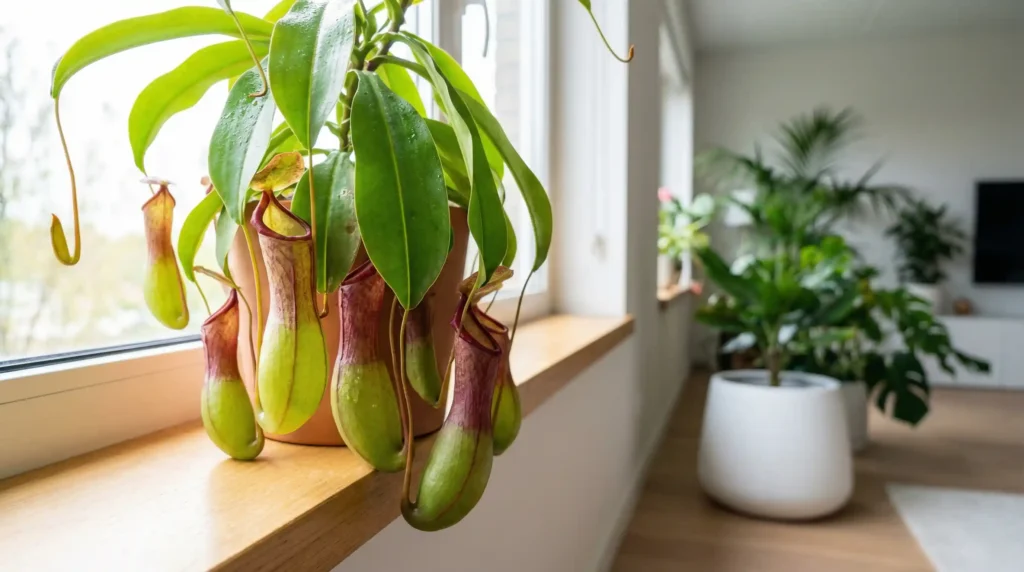
Repot your pitcher plant every 1–2 years, or when you see roots peeking out of the drainage holes or growth slowing noticeably. Spring is the ideal time.
Choose a pot that’s only 1–2 inches larger than the current one too large a pot can hold excess moisture and cause root rot. Plastic pots work better than terracotta, which can leach minerals into the acidic soil.
When repotting, never add fertilizer or compost to the fresh mix. Stick with pure peat/perlite or sphagnum moss and water in with distilled water to settle the roots.
Common Pests and Diseases
Like most houseplants, pitcher plants can occasionally attract pests, though their bug-eating habits offer some natural protection. Here’s what to watch for:
Spider Mites
Look for fine webbing and yellowing leaves. Treat with a neem oil spray or wipe leaves with a damp cloth to remove mites. Increase humidity to prevent reinfestation. According to University of California IPM guidelines, early detection is key.
Mealybugs
White cottony clusters usually appear at leaf joints. Remove with rubbing alcohol on a cotton swab, then follow up with diluted insecticidal soap. Repeat weekly until gone.
Scale Insects
Look for brown, shell-like bumps along stems. Scrape off manually and treat with neem oil or horticultural oil spray. Persistent infestations may need repeated treatment over several weeks.
Aphids
Small green or black insects clustered on new growth. Blast off with water, then apply insecticidal soap. These reproduce quickly, so act fast at the first sign.
Fungus Gnats
These tiny flies love wet, peaty soil. Let the top layer dry slightly between waterings and use yellow sticky traps to catch adults. Bottom watering helps too.
Common Problems with Pitcher Plant
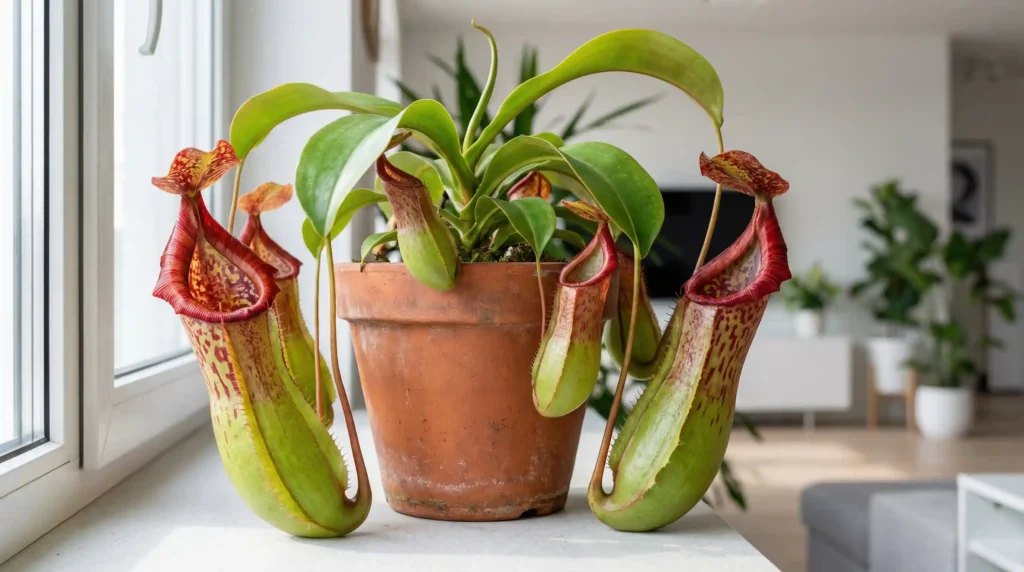
Here’s how to troubleshoot common issues:
Yellow Leaves
Yellow leaves are common and usually not an emergency. Overwatering is the top culprit if soil stays soggy, roots suffocate and leaves yellow. Check that your tray isn’t keeping water level too high.
A nutrient deficiency can also cause yellowing, though this is rare in properly growing plants. Occasionally, older leaves simply yellow and die naturally as the plant redirects energy to new pitchers. If yellowing is widespread, check your water source minerals in tap water cause major stress. Similar issues affect rubber plants, which also yellow from overwatering.
Brown Leaf Tips
Low humidity is almost always the cause of brown tips. Pitcher plants need 50%+ humidity indoors. If humidity is fine, check your water tap water minerals burn leaf tips over time.
Underwatering can also cause crispy, browning edges. Make sure soil stays consistently moist and your plant isn’t sitting in a dry tray. Switch to distilled or rainwater if you haven’t already.
Drooping or Wilting Leaves
Drooping usually signals a watering issue. Underwatering causes dramatic wilting if the soil is bone dry, water immediately with distilled water and the plant usually bounces back fast.
Overwatering can also cause wilting if roots begin to rot. Check soil moisture carefully. These droop symptoms also appear in goldfish plants, another species sensitive to inconsistent watering.
Leggy Growth or No Pitchers Forming
If your plant is producing leaves but no pitchers are forming, insufficient light is almost always to blame. Move to a brighter spot immediately.
Leggy, stretched growth also signals the plant is reaching for more light. Prune back leggy stems and place closer to your light source. A grow light can make a huge difference in winter months.
FAQ
How hard is it to keep a pitcher plant alive?
Pitcher plants are moderate care once you master watering with distilled water and providing bright light. Beginners can succeed easily.
What if I put my finger in a pitcher plant?
Nothing dangerous happens the digestive fluid is very weak. The pitcher may close slightly, but it cannot harm human skin.
How do you take care of a pitcher plant?
Use distilled water, bright light, and acidic soil. Avoid tap water, regular potting mix, and fertilizers. High humidity keeps pitchers healthy.
Do pitcher plants like sun or shade?
Most pitcher plants prefer bright light Nepenthes likes indirect light indoors, while Sarracenia thrives with several hours of direct sun daily.