
In This Article
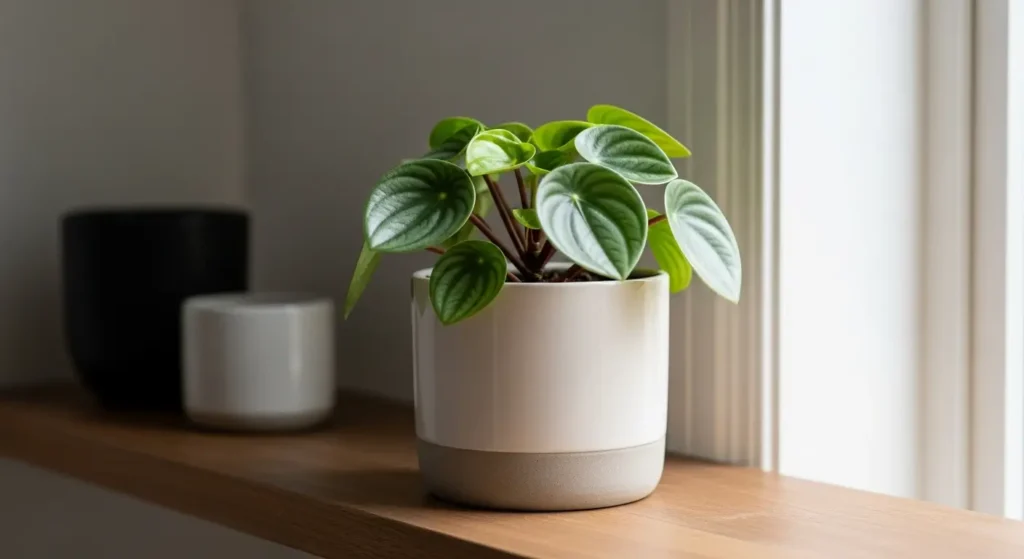
The peperomia plant is one of the most charming houseplants you’ll ever grow. With its thick, glossy leaves and compact growth habit, this tropical beauty fits perfectly on desks, shelves, or windowsills. Native to Central and South America, Peperomia obtusifolia (also called baby rubber plant) is a true beginner’s dream. Honestly, if you’ve struggled with other indoor plants, this one’s incredibly forgiving. It’s low-maintenance, adapts well to indoor conditions, and doesn’t demand much attention to thrive.
Peperomia Plant Care Card
| Plant Information | Details |
|---|---|
| Common Name | Peperomia, Baby Rubber Plant |
| Botanical Name | Peperomia obtusifolia |
| Family | Piperaceae |
| Plant Type | Perennial, tropical |
| Mature Size | 6-12 inches tall, 8-12 inches wide |
| Sun Exposure | Bright indirect light |
| Soil Type | Well-draining, peat-based |
| Soil pH | 6.0-6.6 (slightly acidic) |
| Hardiness Zones | 10-12 (USDA) |
| Native Area | Central and South America |
| Toxicity | Non-toxic to pets and humans |
Peperomia Plant Care
The peperomia plant is a relatively low-maintenance houseplant that adapts well to indoor conditions. Here’s everything you need to know about light, water, soil, and more to keep it thriving. With just a little attention, you’ll have a healthy, happy plant all year round.
Light
Peperomias love bright, indirect light but can tolerate lower light conditions better than most houseplants. Place yours near an east or north-facing window where it gets plenty of filtered sunlight. Too much direct sun will scorch those beautiful leaves, turning them pale or crispy. On the other hand, too little light makes the peperomia plant grow leggy and lose its compact shape.
If you notice your plant stretching toward the light source, it’s asking for a brighter spot. A few feet back from a south or west-facing window works great too. Just avoid harsh afternoon rays that can damage the foliage.
Soil
This plant needs well-draining soil that holds some moisture but never gets waterlogged. According to the University of Florida IFAS Extension, a peat-based potting mix with added perlite or orchid bark works perfectly. The extra drainage prevents root rot, which is the number one killer of peperomias.
You can also make your own mix using a 2:1 ratio of peat moss to perlite. Additionally, adding a bit of coarse sand improves aeration and drainage even more.
Water
Water your peperomia plant when the top 2-3 inches of soil feel dry to the touch. Stick your finger into the soil before watering—if it feels moist, wait another day or two. These plants have semi-succulent leaves that store water, so they’re forgiving if you forget to water occasionally.
Overwatering is more dangerous than underwatering for this plant. Yellow, mushy leaves signal too much water, while wrinkled, drooping leaves mean the plant is thirsty. During spring and summer, you’ll water more frequently—roughly every 7-10 days. In fall and winter, cut back to every 2-3 weeks as growth slows down.
Temperature and Humidity
Peperomias prefer temperatures between 65-75°F (18-24°C), which is typical for most homes. They tolerate household humidity levels just fine, though they’ll appreciate a bit more moisture during dry winter months. Keep your plant away from cold drafts, heating vents, and air conditioning units that cause sudden temperature swings.
If you notice brown leaf edges, try misting the plant occasionally or placing it on a pebble tray with water. However, don’t stress too much—this plant isn’t as humidity-dependent as other tropical species.
Fertilizer
Feed your peperomia plant with a balanced liquid fertilizer diluted to half strength every 2-4 weeks during spring and summer. Use a formula like 10-10-10 or 20-20-20. Stop fertilizing in fall and winter when the plant’s growth naturally slows down. Too much fertilizer causes salt buildup in the soil and burns the roots.
Types of Peperomia Plant
There are over 1,000 species of Peperomia, but these popular varieties are perfect for indoor growing.
Peperomia Obtusifolia
This is the classic baby rubber plant with thick, glossy green leaves. It’s the most common variety and incredibly easy to care for. Some cultivars feature creamy white or yellow variegation along the leaf edges, adding extra visual interest to any space.
Peperomia Caperata
Also called ripple peperomia, this variety has deeply textured, heart-shaped leaves. The foliage comes in shades of dark green, burgundy, or silver. It produces white flower spikes that look like tiny rat tails rising above the leaves in summer.
Peperomia Argyreia
Known as watermelon peperomia, this stunning plant features silver stripes on dark green leaves that resemble watermelon rinds. It’s slightly more finicky than other varieties but worth the extra effort for its unique appearance.
Peperomia Verticillata
This trailing variety has small, round leaves arranged in whorls along cascading stems. It’s perfect for hanging baskets or tall plant stands where the stems can drape gracefully over the edges.
Propagating Peperomia Plant
The best time to propagate your peperomia plant is during spring and summer when growth is most active.
Propagating by Stem Cuttings
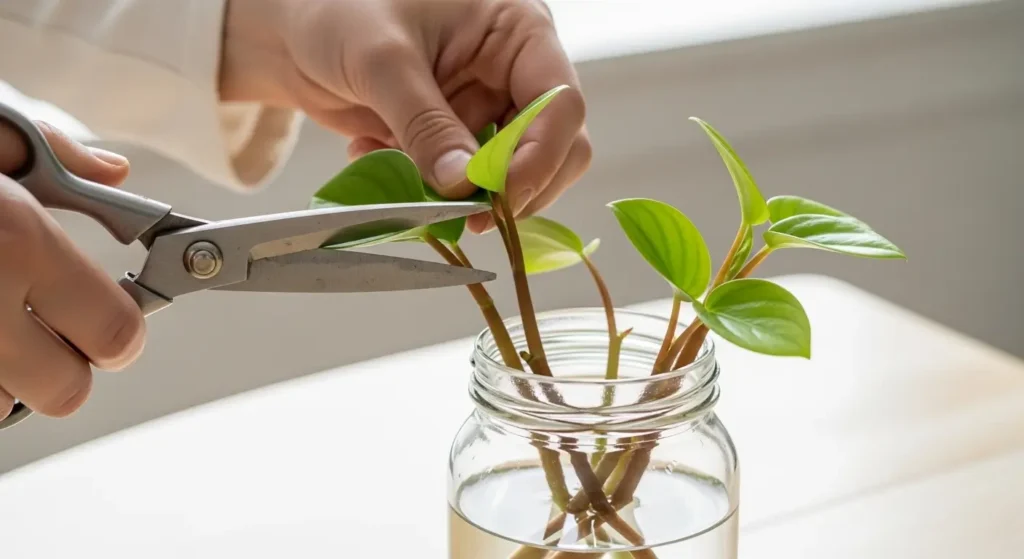
Stem cutting is the easiest and most reliable method for peperomia propagation.
Materials needed:
- Clean, sharp scissors or pruning shears
- Small pot with drainage holes
- Well-draining potting mix
- Plastic bag or humidity dome (optional)
Step-by-step instructions:
Step 1: Select a healthy stem with at least 2-3 leaves and make a clean cut just below a node where leaves attach to the stem.
Step 2: Remove the bottom leaves, leaving only the top 1-2 leaves on the cutting to reduce moisture loss.
Step 3: Plant the cutting about 1 inch deep in moist potting soil and gently firm the soil around it.
Step 4: Place the pot in bright, indirect light and keep the soil lightly moist but not soggy. Roots typically develop within 3-4 weeks, and you’ll see new growth starting soon after.
Propagating by Leaf Cuttings
You can also grow new peperomia plants from individual leaves, though this method takes longer.
Step 1: Choose a healthy, mature leaf and cut it with a short piece of the petiole (leaf stem) attached.
Step 2: Insert the petiole into moist potting mix, burying about half an inch of the stem.
Step 3: Keep the soil consistently moist and maintain high humidity by covering with a clear plastic bag. New plantlets will emerge from the base of the leaf in 6-8 weeks.
Potting and Repotting Peperomia Plant
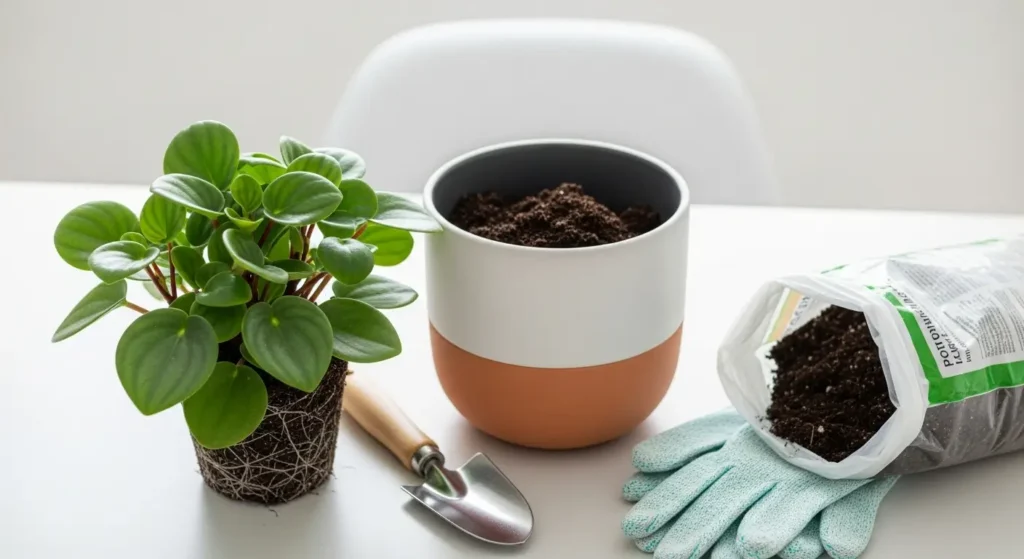
Peperomias are slow growers and don’t need frequent repotting. Repot every 2-3 years or when you see roots growing out of the drainage holes. The plant may also stop growing or dry out faster than usual when it’s rootbound.
Choose a pot that’s only 1-2 inches larger in diameter than the current one. These plants actually prefer being slightly rootbound and can suffer in pots that are too large. Always make sure your new pot has drainage holes at the bottom.
When repotting, gently loosen the roots and remove old soil before placing the plant in fresh potting mix. Water thoroughly after repotting and keep it in a shaded spot for a few days while it adjusts.
Common Pests and Diseases
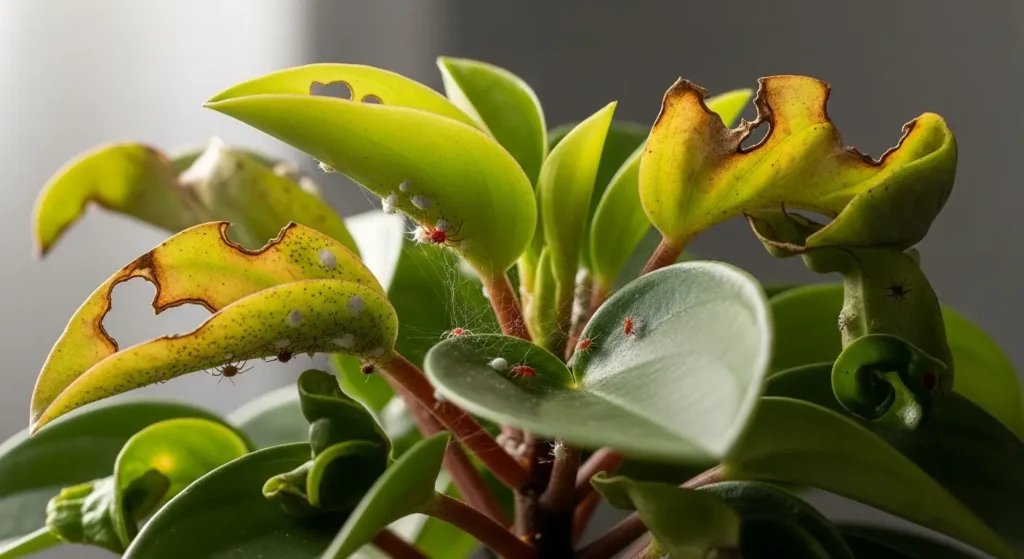
Like most houseplants, the peperomia plant can occasionally attract pests, though it’s generally quite resilient.
Spider Mites
Look for tiny webbing between leaves and small dots on the undersides. The leaves may appear stippled or dusty. Treat with insecticidal soap or neem oil spray, making sure to coat all leaf surfaces thoroughly for best results.
Mealybugs
These white, cottony insects cluster in leaf axils and along stems. They suck plant sap, causing yellowing and stunted growth. Remove them with rubbing alcohol on a cotton swab or spray with neem oil weekly until gone.
Scale Insects
Scale looks like small brown or tan bumps stuck to stems and leaves. They’re actually insects with hard protective shells. Scrape them off with your fingernail or a soft brush, then treat the plant with horticultural oil to prevent reinfestation.
Aphids
These tiny green, black, or white bugs congregate on new growth and flower spikes. They cause distorted leaves and sticky honeydew residue. Spray them off with water or use insecticidal soap for heavier infestations.
Common Problems with Peperomia Plant
Here’s how to troubleshoot common issues with your peperomia plant:
Yellow Leaves / Yellowing Leaves
Yellow leaves are usually caused by overwatering, which leads to root rot. The peperomia plant stores water in its leaves, so it doesn’t need frequent watering like other houseplants. Check the soil moisture before watering and make sure your pot has proper drainage. Nutrient deficiency can also cause yellowing, especially in older leaves. Feed regularly during the growing season with diluted liquid fertilizer. Sometimes yellow leaves are just natural aging—older bottom leaves will yellow and drop off as new growth appears at the top.
Brown Leaves / Brown Leaf Tips
Brown leaf tips typically signal low humidity or water quality issues. If you’re using tap water with high chlorine or fluoride content, switch to filtered or distilled water. Underwatering can also cause brown, crispy edges as the plant draws moisture from leaf tips first. Similar to what we discussed in our guide on spider plant care, proper watering is essential. Increase watering frequency slightly and consider misting the plant during dry winter months for better results.
Drooping or Wilting Leaves
Wilting leaves usually mean watering problems—either too much or too little. If the soil is bone dry, give your plant a thorough drink and it should perk up within a few hours. However, if the soil is wet and leaves are still drooping, you’re overwatering. Let the soil dry out completely before watering again. Check the roots for rot and repot if necessary into fresh, well-draining soil.
Leggy Growth / Sparse Foliage
Insufficient light causes leggy, stretched-out growth with long spaces between leaves. Move your peperomia plant to a brighter location with more indirect sunlight. If you’re dealing with similar issues, snake plants also require adequate light for compact growth. You can also prune back leggy stems to encourage bushier growth from the base.
Leaf Drop / Falling Leaves
Sudden leaf drop often happens due to temperature stress, cold drafts, or sudden changes in environment. Keep your plant away from cold windows in winter and heating vents year-round. Overwatering can also cause leaves to fall off before turning yellow. Unlike croton plants which are more sensitive to environmental changes, peperomias usually recover quickly once conditions improve.
FAQ
How do I care for a peperomia plant?
Provide bright indirect light and water sparingly when soil dries.
Is peperomia a good indoor plant?
Yes, it’s an excellent low-maintenance choice for beginners.
Is peperomia toxic to cats?
No, peperomias are completely safe for cats and dogs.
Does peperomia purify air?
It provides minimal air purification like most houseplants do.
6 thoughts on “Peperomia Plant: Complete Care Guide for Beginners”
Comments are closed.