
In This Article
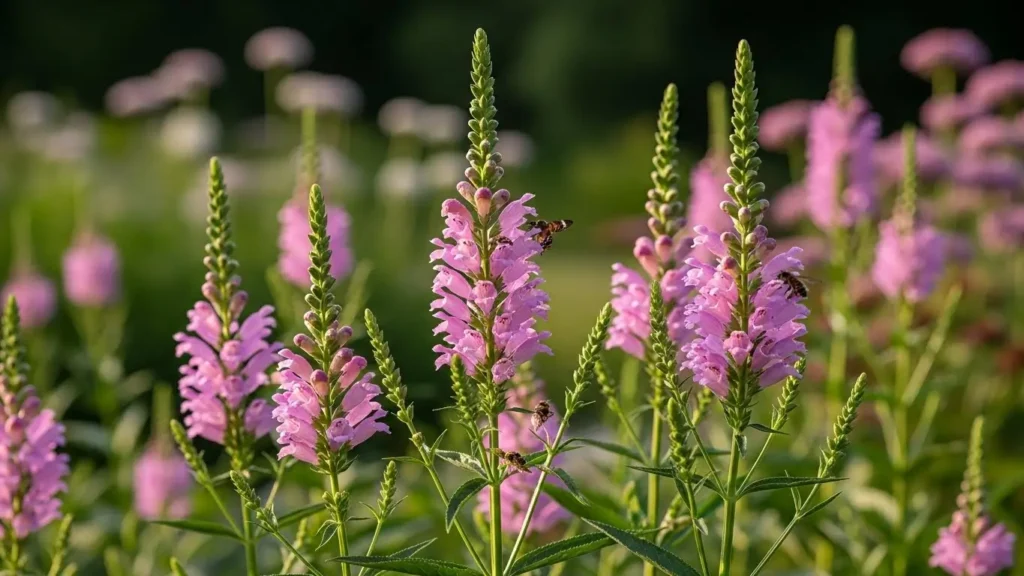
The obedient plant (Physostegia virginiana) is a stunning native perennial with tall spikes of pink-to-purple blooms. Its quirky name reflects a unique trait bend individual flowers, and they stay put like they’re hinged. Native to eastern and central North America, this mint-family member thrives in zones 3-9, growing 2-4 feet tall while attracting hummingbirds and butterflies.
Obedient Plant Care Card
| Attribute | Details |
|---|---|
| Common Name | Obedient plant, false dragonhead |
| Botanical Name | Physostegia virginiana |
| Family | Lamiaceae (mint family) |
| Plant Type | Herbaceous perennial |
| Mature Size | 2-4 feet tall, 2-3 feet wide |
| Sun Exposure | Full sun to partial shade |
| Soil Type | Moist, well-drained, adaptable |
| Soil pH | 5.5-7.0 (slightly acidic to neutral) |
| Hardiness Zones | 3-9 (USDA) |
| Native Area | Eastern and central North America |
| Bloom Time | Mid-summer to fall (July-October) |
| Toxicity | Non-toxic to pets and humans |
Obedient Plant Care
The obedient plant thrives with minimal care once established in the right conditions. Here’s what you need to know about sun, soil, water, and maintenance to keep this perennial blooming beautifully. With proper placement in moist soil and full sun, this plant practically cares for itself.
Light
Obedient plant thrives in full sun (6+ hours daily), producing abundant blooms and sturdy stems. In hot southern climates, afternoon shade prevents stress. Insufficient light causes fewer flowers and leggy growth. South or east-facing beds work best. Partial shade slows aggressive spreading, but excessive shade reduces flowering, like snake plant varieties in low light.
Soil
Obedient plant tolerates clay, loam, and sandy soils with decent drainage, handling wet conditions well. It prefers pH 5.5-7.0 and humus-rich soil. Amend poor soil with 2-3 inches of compost before planting. According to Penn State Extension, organic matter improves drainage and moisture retention, helping maintain consistent moisture levels.
Water
Water newly planted obedient plants regularly (1 inch weekly) until established. Check soil moisture 2 inches deep. Once established, it’s drought-tolerant, needing water only during extended dry periods. Increase watering in hot summer; reduce in fall/winter dormancy. Underwatering causes wilting; overwatering causes yellowing and root rot. Occasional neglect beats constant overwatering.
Temperature and Humidity
Obedient plant thrives in zones 3-9, tolerating temperatures from -40°F to 90°F with adequate moisture. Humidity doesn’t affect performance. In zones 3-4, apply 2-3 inches of mulch after ground freezes. Stems die back winter but return spring. Hot temperatures plus rich soil cause flopping avoid over-fertilizing in warm climates.
Fertilizer
Feed obedient plant sparingly with a balanced 10-10-10 fertilizer once in early spring as new growth emerges. Apply according to package directions, spreading granules around the base of plants and watering thoroughly. Avoid over-fertilizing, as excessive nutrients cause weak, floppy stems and reduce flowering. In fact, plants grown in moderately fertile soil rarely need additional feeding beyond an annual spring application. Stop fertilizing by mid-summer to allow plants to harden off before winter.
Types of Obedient Plant
Several cultivars offer different colors, sizes, and growth habits compared to the species plant.
• ‘Miss Manners’: This patented white-flowering cultivar grows 24-30 inches tall and spreads far less aggressively than the species. It forms neat clumps with sturdy stems that resist flopping, blooming from June through September with pure white snapdragon-like flowers.
• ‘Vivid’: A compact pink-flowered variety reaching just 18-24 inches tall with bright rose-pink blooms. It’s one of the shortest cultivars available and works beautifully in front borders or containers.
• ‘Summer Snow’: Growing 30-36 inches tall, this cultivar produces masses of white flowers throughout summer and early fall. It maintains a slightly more restrained spreading habit than wild species plants.
• ‘Bouquet Rose’: This variety features deep rose-pink flowers on 3-4 foot stems, blooming prolifically from July through September. The vibrant color makes it a standout in perennial borders alongside pink peonies and other summer bloomers.
Pruning
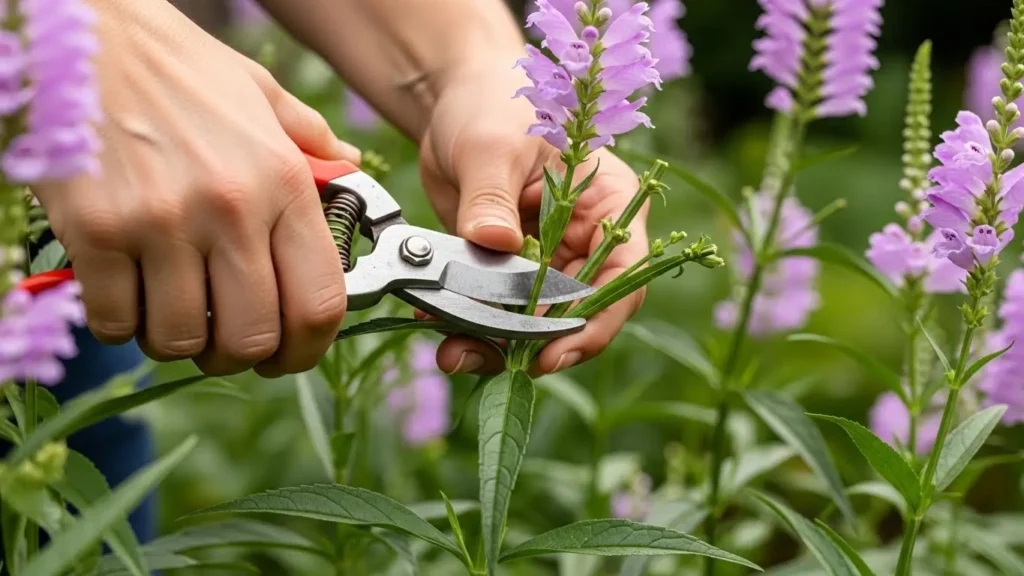
Prune obedient plant in late fall or early spring, cutting stems to 3-4 inches above ground. Deadhead spent flowers for more blooms and less self-seeding. Pinch back stems by one-third at 8-10 inches for bushier growth. Divide rhizomes in spring to control spreading. Cut tall stems by half in early June to prevent flopping.
Propagating Obedient Plant
The best propagation time is spring or early fall when plants are actively growing and weather conditions are mild.
Propagating by Division
Division is the easiest and most reliable method for propagating obedient plant, and it helps control the plant’s spreading habit. This technique works best in early spring as new shoots emerge or in early fall about 6 weeks before the first frost.
Materials needed:
- Sharp spade or garden fork
- Pruning shears
- Compost or aged manure
- Water source
Step 1: Water the plant thoroughly the day before dividing to make digging easier and reduce transplant shock.
Step 2: Dig around the plant clump about 6 inches from the base, lifting the entire root ball from the ground. You’ll notice the shallow rhizomes that spread horizontally underground.
Step 3: Use your hands or a sharp spade to separate the clump into sections, ensuring each division has 3-5 shoots and healthy roots attached. Discard any dead or damaged portions.
Step 4: Replant divisions immediately at the same depth they were growing previously, spacing them 18-24 inches apart. Water thoroughly and keep soil consistently moist for the first few weeks until established.
Divisions typically establish quickly and may bloom the same season if divided in spring.
Propagating by Stem Cuttings
Stem cuttings taken in early summer root readily and produce new plants by fall.
Materials needed:
- Sharp, sterilized scissors
- Small pots with drainage
- Well-draining potting mix
- Rooting hormone (optional)
- Plastic bag or humidity dome
Step 1: Take 4-6 inch cuttings from healthy, non-flowering stems in early morning when plants are most hydrated. Make cuts just below a leaf node.
Step 2: Remove leaves from the bottom half of each cutting and dip the cut end in rooting hormone if desired. This step improves success rates but isn’t strictly necessary.
Step 3: Insert cuttings 2 inches deep into moistened potting mix, firming soil around the base. Place pots in bright, indirect light and cover with a plastic bag to maintain humidity.
Step 4: Keep the potting mix consistently moist but not waterlogged, misting cuttings daily. Remove the plastic bag once new growth appears in 2-3 weeks, indicating successful rooting.
Transplant rooted cuttings to the garden in fall or the following spring, similar to propagating French lavender and other perennials.
Planting and Transplanting Obedient Plant
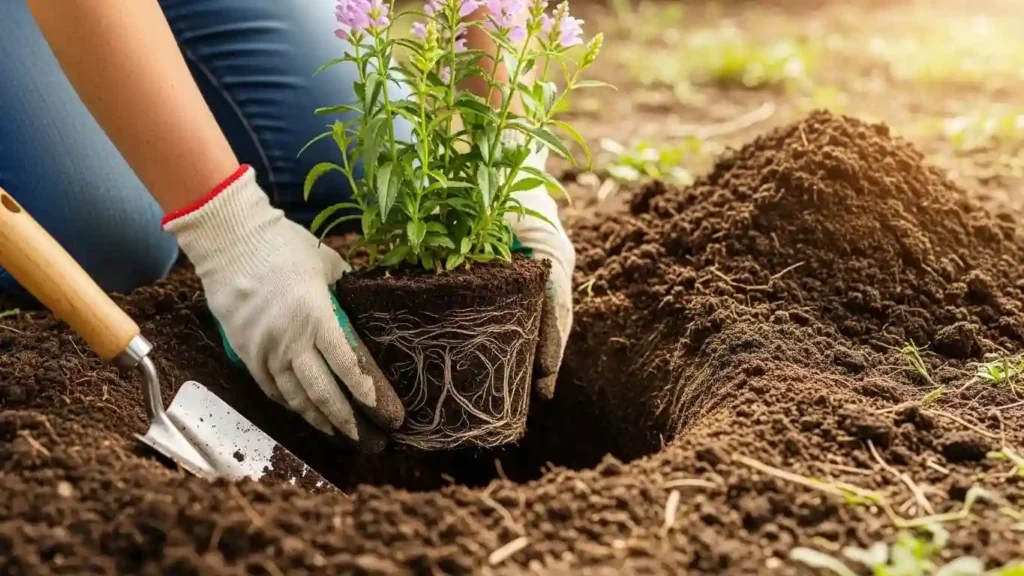
Plant obedient plant in spring after last frost (60°F+ soil) or early fall, 6-8 weeks before first frost. Space 18-24 inches apart. Dig holes twice as wide as root ball, mix in compost, and plant at nursery depth. According to Missouri Botanical Garden, proper depth is critical. Backfill, firm gently, and water thoroughly.
Transplant or divide established clumps every 2-3 years in spring to control spreading and rejuvenate plants. Simply dig up clumps, divide into sections, and replant divisions in new locations. Furthermore, regular division prevents the center of old clumps from dying out and maintains vigorous flowering.
Common Pests and Diseases
Like most garden plants, obedient plant can occasionally face pest or disease issues, though it’s generally quite resilient.
Aphids
Look for clusters of small, soft-bodied insects on new growth and flower buds that cause leaves to curl or yellow. Treat with a strong spray of water to dislodge aphids, or apply insecticidal soap or neem oil for heavier infestations, repeating applications every 5-7 days.
Spider Mites
These tiny pests create fine webbing on leaf undersides and cause stippled, yellowing foliage during hot, dry weather. Increase humidity around plants with regular watering and spray affected foliage with water. For severe cases, apply horticultural oil according to University of California guidelines for effective control.
Rust
Orange or brown pustules appear on leaf undersides, eventually causing leaves to yellow and drop prematurely. Remove and destroy infected foliage immediately, avoid overhead watering, and improve air circulation by thinning crowded plants. Apply fungicides containing sulfur if the problem persists.
Root Rot
Waterlogged soil causes roots to turn brown and mushy, leading to wilting and plant collapse. Improve drainage before replanting, reduce watering frequency, and avoid planting in low-lying areas where water collects. Severely affected plants should be removed entirely to prevent spread.
Common Problems with Obedient Plant
Here’s how to troubleshoot common issues:
Poor or No Blooms
Poor blooming usually stems from insufficient sunlight obedient plant needs 6+ hours of direct sun. Excessive nitrogen fertilizer promotes foliage over blooms, so reduce feeding. Late spring pruning or dividing removes flower buds. Fix by relocating to sunnier spots and cutting back fertilizer. Well-placed plants in full sun bloom reliably without fertilizer.
Yellow or Browning Leaves
Yellowing foliage indicates overwatering or poor drainage check for soggy soil and improve drainage with compost or relocation. Nitrogen deficiency yellows older leaves while new growth stays green. Browning tips result from inconsistent watering or salt buildup. Water deeply but less frequently, letting soil dry slightly between waterings. Apply balanced fertilizer if deficient.
Wilting or Drooping
Sudden wilting usually means plants need water, especially during hot weather or when grown in full sun and sandy soil. Check soil moisture and water deeply if the top 2 inches feel dry. However, wilting can also occur after transplanting as roots adjust to their new location—this transplant shock resolves within a few days with consistent watering. Extreme heat stress causes temporary midday wilting even in adequately watered plants.
Leggy or Sparse Growth
Insufficient light is the primary cause of tall, weak stems with sparse foliage and few flowers. Obedient plant stretches toward available light in shady conditions, producing leggy growth that often flops over. Over-fertilizing, particularly with high-nitrogen products, also promotes rapid, weak growth. Move plants to locations receiving at least 6 hours of direct sunlight and avoid feeding with nitrogen-rich fertilizers.
Aggressive Spreading
The species plant spreads rapidly through underground rhizomes and self-seeding, potentially overtaking nearby plants if left unchecked. Divide clumps annually in spring and remove unwanted shoots as they appear the shallow roots pull out easily when soil is moist. Deadhead spent flowers before seeds mature to prevent self-seeding throughout the garden. Alternatively, plant less aggressive cultivars like ‘Miss Manners’ that spread minimally. Installing physical barriers like edging or growing plants in containers also controls spread effectively, similar to managing wandering jew plant and other vigorous spreaders.
FAQ
Is an obedient plant invasive?
The species plant spreads aggressively through rhizomes and self-seeding, though it’s native to North America. Cultivars like ‘Miss Manners’ are less invasive and form neat clumps. Divide annually to control spreading effectively.
Do obedient plants need full sun?
Obedient plants grow best in full sun with at least six hours of direct sunlight daily for maximum flowering. They tolerate partial shade but produce fewer blooms and weaker stems. Full sun promotes best flowering performance.
How do obedient plants spread?
Obedient plants spread through underground rhizomes (horizontal stems) and by self-seeding when flowers go to seed. The shallow rhizomes make unwanted plants easy to pull out and control. Division every few years controls spread effectively.
Why is it called an obedient plant?
Individual flowers stay in whatever position you bend them to, as if hinged on the stem like movable parts. This unique characteristic gives the plant its common name and makes it fascinating for children. Flowers remain obediently in their new position temporarily.