
In This Article
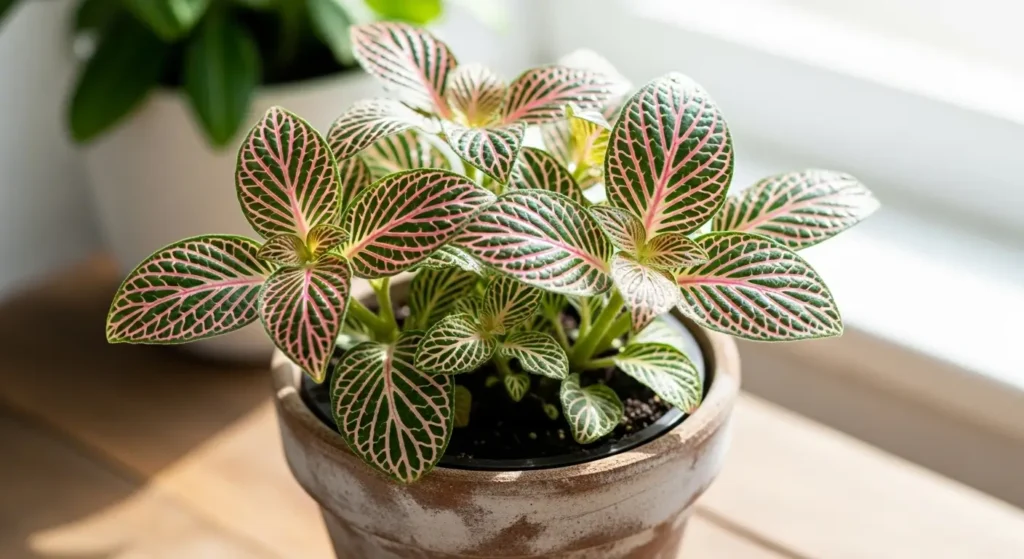
The nerve plant (Fittonia albivenis) is a stunning tropical houseplant native to South America’s rainforests. Its boldly veined leaves, white, pink, or red, look like living artwork. It’s considered moderate difficulty, mostly because it loves humidity. But once you get the hang of it, nerve plant care is genuinely rewarding.
Plant Care Card
| Field | Details |
|---|---|
| Common Name | Nerve Plant, Mosaic Plant |
| Botanical Name | Fittonia albivenis |
| Family | Acanthaceae |
| Plant Type | Tropical perennial |
| Mature Size | 3–6 inches tall × 12–18 inches wide |
| Sun Exposure | Bright indirect light |
| Soil Type | Well-draining, moisture-retentive |
| Soil pH | 6.0–7.0 |
| Hardiness Zones | USDA Zones 11–12 (houseplant elsewhere) |
| Native Area | South America (Peru, Bolivia) |
| Toxicity | Non-toxic to cats, dogs, and humans |
Nerve Plant Care
The nerve plant sits in the moderate-care category, it needs a bit more attention than a snake plant, but it’s far from fussy once you nail down the basics. The sections below walk you through everything: light, soil, watering, propagation, and common problems. You’ve got this!
Light
Bright, indirect light is what the nerve plant craves most. Think of the dappled shade beneath a rainforest canopy, that’s its happy place. An east- or north-facing windowsill is ideal, where it gets gentle morning light without any harsh afternoon rays.
Too much direct sun will scorch those gorgeous patterned leaves quickly. On the flip side, too little light causes slow growth and fading leaf patterns. If your home is on the darker side, a grow light placed 12–18 inches away works great as a supplement. Keep things bright but gentle, and you’ll be rewarded with vibrant color.
Soil
The nerve plant needs a well-draining but moisture-retentive potting mix, one that holds enough water to keep roots satisfied without becoming soggy. A reliable DIY mix is 1 part peat moss, 1 part perlite, and 1 part standard potting soil, which balances moisture retention and drainage nicely.
Drainage holes in the pot are non-negotiable. As the University of Illinois Extension explains in their container drainage guide, drainage holes allow excess water to escape and keep enough air around the roots, without this, root rot becomes almost inevitable for tropical plants.
Water
Consistent moisture is the key with nerve plants. Check the top inch of soil, if it’s dry to the touch, it’s time to water. This plant won’t tolerate drought; it wilts dramatically and fast when thirsty.
Overwatering is equally risky, though. Yellowing leaves and mushy stems are the classic warning signs. In spring and summer, you’ll likely water every 4–5 days. In cooler months, scale back since growth slows considerably.
The University of Minnesota Extension notes in their houseplant watering guide that overwatering, not underwatering is the leading cause of houseplant death, making it worth checking your soil before reaching for the watering can. The goldfish plant has very similar watering needs another humidity-loving tropical that thrives with consistently moist (but never waterlogged) soil.
Temperature and Humidity
Nerve plants are comfortable between 60–80°F (16–27°C). Keep them far from cold drafts, air conditioning vents, and heating radiators any sudden temperature extreme stresses the plant fast.
Humidity is where this plant really shows its tropical roots. It prefers 50–70% relative humidity, which is higher than most homes naturally provide. Grouping it with other plants, setting the pot on a pebble tray filled with water, or running a small humidifier nearby all help significantly. Average household humidity is survivable, but expect some brown leaf tips as a mild protest.
Fertilizer
Feed your nerve plant with a balanced liquid fertilizer (10-10-10) diluted to half strength every 3–4 weeks during spring and summer. Stop fertilizing in fall and winter the plant is resting and doesn’t need the extra nutrients. Over-fertilizing can cause salt buildup and root burn, so when in doubt, use less.
Types of Nerve Plants
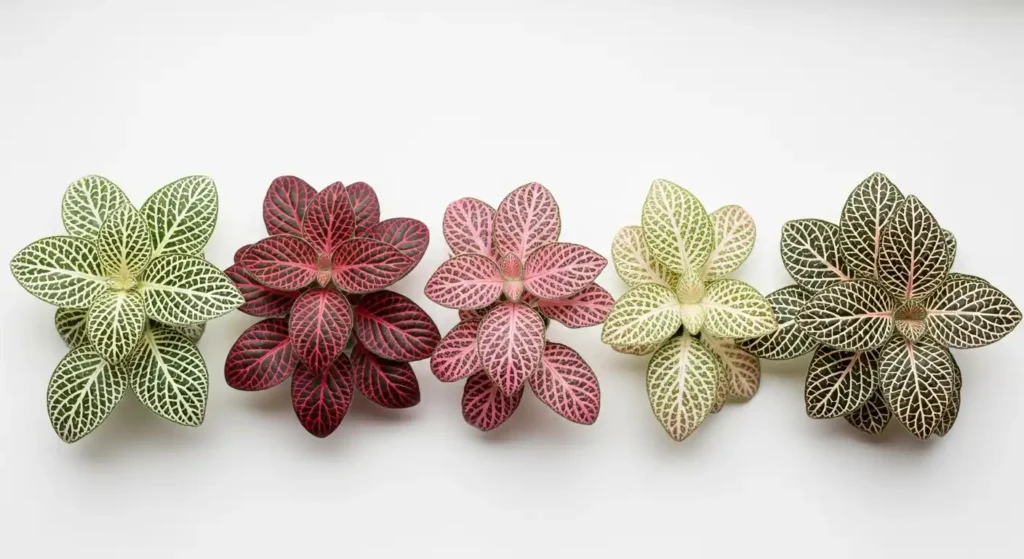
There are several beautiful nerve plant varieties worth knowing about. Here’s a quick look at the most popular ones:
- Fittonia albivenis ‘Verschaffeltii’ The bold red-veined classic. Deep green leaves striped with vivid crimson veins; one of the most dramatic options and widely available.
- Fittonia albivenis ‘Argyroneura’ White or silver veins on rich green leaves. Compact and popular for terrariums; tends to be slightly more tolerant of lower humidity.
- Fittonia ‘Pink Star’ Bright bubblegum-pink veins on small, rounded leaves. A showstopper variety that plant collectors genuinely love.
- Fittonia ‘White Anne’ Nearly white leaves bordered by green edges, giving it an elegant, almost translucent look. Needs slightly brighter light to maintain its pale coloring.
- Fittonia ‘Skeleton’ Extremely fine, lace-like veining that creates an intricate pattern across dark leaves. Rare and highly sought after by collectors.
Propagating Nerve Plants
The best time to propagate nerve plants is spring through early summer, when the plant is actively growing and roots establish the fastest.
Propagating by Stem Cuttings
Stem cuttings are the go-to method simple, reliable, and nearly foolproof.
Materials needed:
- Clean, sharp scissors or pruning shears
- Small pot filled with moist potting mix
- Clear plastic bag or humidity dome
- Optional: rooting hormone powder
Steps:
- Take your cutting. Snip a 2–3 inch stem with at least 2 leaf nodes, cutting just below a node. Strip the lower leaves off to expose the bare stem.
- Apply rooting hormone (optional). Dip the cut end lightly in rooting hormone powder if you have it. Shake off any excess before planting.
- Plant and cover. Insert the stem into the moist potting mix and cover the whole setup with a clear plastic bag to trap humidity. Place it in bright indirect light.
- Wait for roots. New roots typically form within 2–4 weeks. You’ll know it’s working when you spot fresh leaf growth emerging from the cutting.
This same stem-cutting method works equally well for the Swedish ivy plant, another trailing tropical houseplant that roots quickly in similar humid conditions.
Propagating by Division
Division is a great option when it’s already time to repot your nerve plant you basically get bonus plants for free.
- Gently remove the plant from its pot and brush away excess soil from the roots.
- Pull apart or carefully cut the root ball into two or more sections, ensuring each section has several healthy stems and roots attached.
- Pot each division into fresh, moist potting mix and water lightly.
- Roots settle in within 1–2 weeks, and new growth follows shortly after.
Potting and Repotting
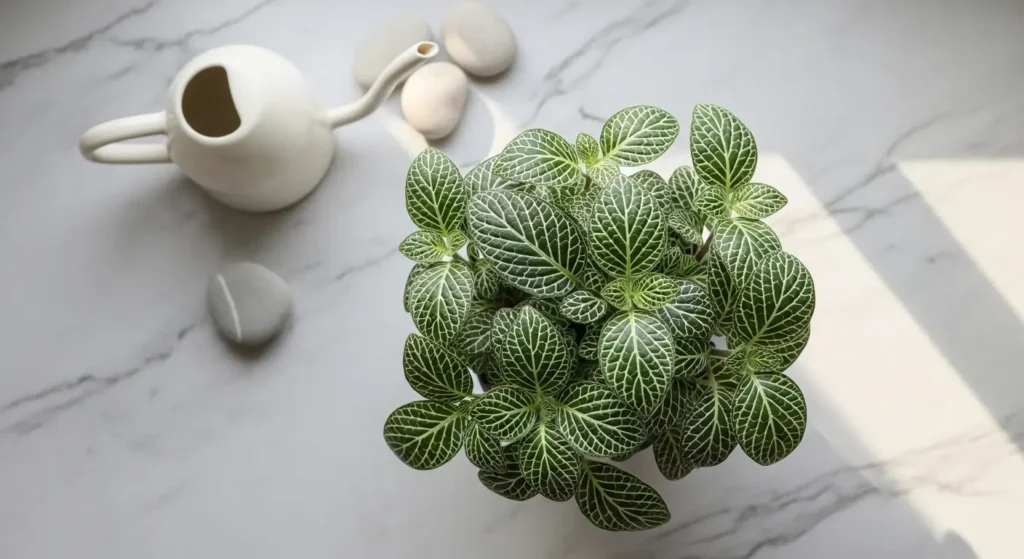
Plan to repot your nerve plant every 1–2 years, or sooner if you see roots circling the drainage holes or poking out the bottom. Spring is the best time for this.
Choose a pot 1–2 inches wider than the current one. Going too large means excess soil holds moisture too long, raising the risk of root rot. Always pick a pot with drainage holes this is non-negotiable for a nerve plant.
To repot, loosen the root ball gently, shake off old soil, and place the plant into fresh potting mix. Water thoroughly, then keep it out of direct sun for about a week while it adjusts to its new home.
Common Pests and Diseases
Like most houseplants, the nerve plant can pick up a few pests from time to time. Here’s what to watch for and how to deal with them.
Spider Mites
Look for fine webbing on the undersides of leaves and tiny moving specks. Wipe leaves with a damp cloth and spray with neem oil or insecticidal soap weekly until gone.
Mealybugs
White, cottony clusters appear in leaf joints and along stems. Dab each cluster with a cotton swab soaked in rubbing alcohol, then follow up with a neem oil spray.
Scale Insects
Brown, waxy bumps on stems and leaves that don’t move. Scrape them off with a soft toothbrush and treat with horticultural oil.
Aphids
Tiny green or black insects clustering on new growth. A strong blast of water knocks most off; insecticidal soap handles persistent infestations well.
Fungus Gnats
Small flies hovering near the soil indicate larvae feeding on roots. Let the top inch dry out between waterings to discourage them. Oklahoma State University Extension’s houseplant pest management guide advises against treating with pesticides unless clearly necessary sticky traps and dry-soil conditions usually do the job.
Common Problems
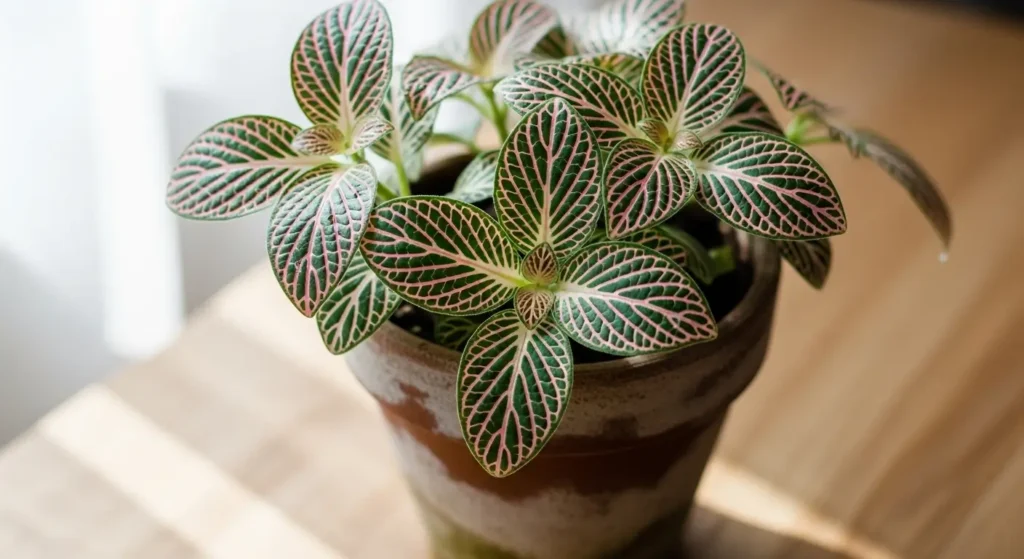
Here’s how to troubleshoot common issues:
Yellow Leaves
Yellowing leaves are the nerve plant’s most common complaint. Overwatering is the top suspect soggy soil suffocates roots and triggers yellowing fast. A nutrient deficiency can also be the cause, especially if you haven’t fertilized in several months. Sometimes it’s simply natural aging older leaves at the base yellow and drop off, which is completely normal. Start by checking your watering routine, then consider a diluted fertilizer dose if the soil moisture seems fine. The swiss cheese plant faces the exact same yellow-leaf drama for the same reasons.
Brown Leaf Tips
Brown tips almost always point to low humidity this plant simply wants more moisture in the air than most homes provide. Water quality is another culprit; high fluoride or chlorine in tap water causes tip burn on sensitive tropical plants. Switching to filtered or rainwater can make a real difference. Underwatering can also produce brown tips, so always check soil moisture before jumping to conclusions.
Drooping or Wilting Leaves
Drooping is the nerve plant’s classic drama move and usually comes down to watering. An underwatered plant wilts from thirst; an overwatered one wilts because damaged roots can’t take up water anymore. Check the soil first bone dry means water immediately, soaking wet means let it dry out. The umbrella plant behaves the same way when watering goes off balance.
Leggy Growth / Sparse Foliage
Long, stretched stems with widely spaced leaves almost always signal insufficient light. Move the nerve plant closer to a window or add a grow light. Prune leggy stems back by half to encourage the plant to push out bushier growth from the base.
FAQ
How do you take care of a nerve plant?
Keep your nerve plant in bright indirect light, consistently moist soil, and high humidity. Fertilize every three to four weeks during the growing season.
What are the benefits of the nerve plant?
Nerve plants add vivid color to indoor spaces, are non-toxic to pets, and thrive in terrariums, making them ideal for creative or compact displays.
Do nerve plants like sun or shade?
Nerve plants prefer bright indirect light or partial shade. Direct sun scorches the leaves; too much shade causes faded patterns and stunted growth.
Does a nerve plant like to be misted?
Yes! Misting boosts humidity, which nerve plants love. Avoid misting late in the day, though, as wet leaves overnight can invite fungal issues.