
In This Article
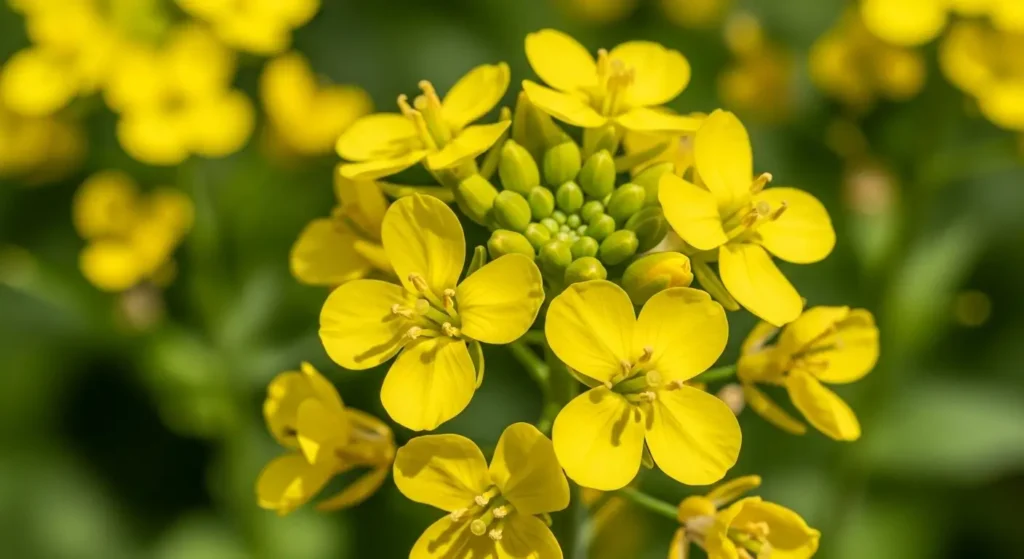
The mustard tree (Salvadora persica), also called the toothbrush tree, is a sprawling evergreen shrub with pale yellow-green flowers, fleshy oval leaves, and tiny red berries. Native to Africa, the Middle East, and South Asia, it thrives in USDA zones 10–12 and is drought-tolerant once established.
Plant Care Card
| Detail | Info |
|---|---|
| Common Name | Mustard tree, toothbrush tree, arak tree |
| Botanical Name | Salvadora persica |
| Family | Salvadoraceae |
| Plant Type | Evergreen shrub/tree |
| Mature Size | 10–25 ft tall x 10–20 ft wide |
| Sun Exposure | Full sun |
| Soil Type | Sandy, well-draining, rocky, or loamy |
| Soil pH | 6.5–8.5 (slightly acidic to alkaline) |
| Hardiness Zones | USDA Zones 10–12 |
| Native Area | Africa, Middle East, South Asia |
| Bloom Time | Winter to spring |
| Toxicity | Non-toxic to humans; mildly irritating to some pets |
Mustard Tree Care
The mustard tree thrives with minimal care once established in the right warm, sunny conditions. Here’s what you need to know about sun, soil, water, and maintenance. With proper placement and good drainage, this garden plant practically cares for itself.
Light
The mustard tree needs full sun at least 6–8 hours of direct sunlight daily. Without enough light, it grows leggy with sparse foliage and fewer blooms. Plant in a south- or west-facing spot for maximum exposure. Similar to French lavender, it thrives in the sunniest garden spot.
Soil
The mustard tree thrives in sandy, rocky, or well-draining loamy soil with a pH of 6.5–8.5. Drainage is critical clay and waterlogged soils cause root problems. As UF/IFAS Extension notes, well-draining soil is essential for warm-climate trees. Amend poor soil with 2 parts garden soil : 1 part sand : 1 part perlite.
Water
Water every 7–10 days during the growing season, letting the soil dry partially between waterings. Check moisture by pushing a finger 2–3 inches deep. In winter, reduce to every 2–3 weeks. Newly planted trees need watering every 4–5 days for the first few months.
Watch for overwatering signs: yellowing leaves, soft stems near the base, or a musty soil smell. Underwatering shows up as wilting and dry, crispy leaf edges. Once established, the mustard tree handles dry spells better than most garden trees.
Temperature and Humidity
The mustard tree thrives between 65°F and 105°F (18°C–40°C) and handles intense heat well. Frost is the real enemy avoid growing it outdoors below zone 10. In borderline zones, mulch heavily and cover with frost cloth near freezing. Low humidity suits this tree perfectly
Fertilizer
Feed your mustard tree with a balanced slow-release fertilizer (10-10-10) once at the start of spring and again in early summer. Monthly feeding with a diluted liquid fertilizer also works well during the active growing season. Reduce feeding in fall and stop entirely in winter when the tree slows down. This shrub-like tree doesn’t need heavy feeding to thrive.
Types of Mustard Tree
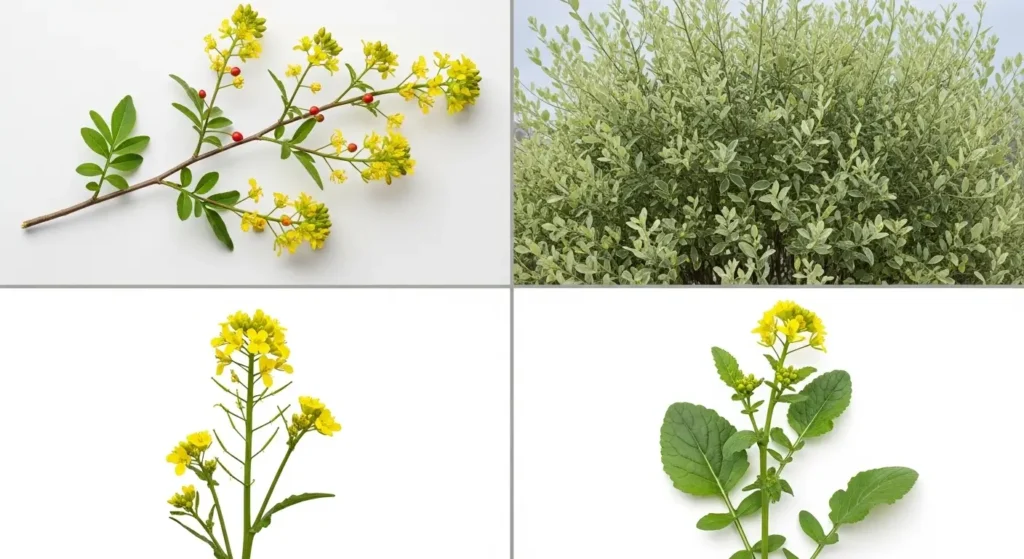
There are a few notable species and related plants often grouped under the “mustard tree” common name. Here’s a quick breakdown:
- Salvadora persica (True mustard tree/toothbrush tree): The most widely recognized species, with small yellow-green flowers and edible berries. Native to Africa and South Asia.
- Salvadora oleoides (Indian toothbrush tree): A slightly larger species native to India and Pakistan, with similar care needs and broader drought tolerance.
- Brassica nigra (Black mustard plant): Often mistakenly called a mustard tree when it grows tall in warm conditions. It’s actually an annual herb that can reach 6–8 feet.
- Brassica oleracea forms: Several mustard-family crops are sometimes called small mustard trees in culinary and folk traditions, though they are true shrubs or annuals.
Pruning
Prune your mustard tree in late winter or early spring before the new growth flush begins. Focus on removing dead branches, crossing limbs, and any leggy growth that makes the tree look unruly. Light pruning after the blooming period in spring helps maintain a nice, compact shape.
Use clean, sharp pruning shears or loppers for smaller branches, and a pruning saw for anything thicker than 1 inch. Sanitize your tools between cuts to prevent spreading any disease. Regular pruning encourages a more dense, attractive canopy, improves air circulation, and keeps this shrubby tree from sprawling too aggressively into neighboring garden beds. Similar to how Texas sage responds to a good trim, the mustard tree bounces back quickly and often looks better than ever.
Propagating Mustard Tree
The best time to propagate a mustard tree is in spring or early summer when the plant is actively growing. You have two reliable methods: stem cuttings and seeds.
Propagating by Stem Cuttings
Stem cuttings are the faster, more reliable method for the mustard tree. Here’s what you’ll need and how to do it:
Materials needed:
- Sharp, clean pruning shears
- Rooting hormone powder or gel
- Small pots filled with a mix of coarse sand and perlite (50/50)
- Plastic bag or humidity dome
Step 1: In late spring, select a healthy, semi-hardwood stem about 4–6 inches long with at least two leaf nodes. Cut just below a node at a 45-degree angle.
Step 2: Remove the lower leaves, leaving only 2–3 leaves at the tip. Dip the cut end in rooting hormone powder and tap off any excess.
Step 3: Insert the cutting about 1.5 inches deep into your prepared sand-perlite mix. Water lightly and cover with a plastic bag or humidity dome to retain moisture.
Step 4: Place the pot in a warm spot with bright, indirect light — avoid direct sun at this stage. Check every few days and mist if the medium starts to dry out.
Roots typically develop within 4–8 weeks. Once you see new leaf growth, your mustard tree cutting has rooted successfully and can be moved to a sunnier location.
Propagating from Seeds
The mustard tree can also be grown from seeds, which is a great option if you want to raise multiple plants. Collect ripe berries in late spring, remove the flesh, and rinse the seeds clean. Sow seeds in a well-draining, sandy seed-starting mix at a depth of ¼ inch.
Keep the seed tray in a warm location (75°F–85°F) and water lightly every few days. Germination typically takes 2–4 weeks. Seedling mustard trees grow slowly at first but pick up speed once established.
Planting and Transplanting Mustard Tree
The best time to plant a mustard tree outdoors is in spring after the last frost date, when the soil has warmed and temperatures are consistently above 60°F. Space multiple trees 10–15 feet apart to allow for their spreading canopy and root system.
Dig a hole twice as wide and just as deep as the root ball. Place the tree so the top of the root ball sits level with or slightly above the surrounding soil. Backfill with your amended, well-draining mix, firm gently, and water in well. Mulch the base with 2–3 inches of wood chips, keeping mulch away from the trunk.
Transplant established mustard trees in early spring if needed. Younger trees (under 3 years) handle transplanting much better than mature specimens. Water generously for the first few weeks after transplanting to reduce shock.
Common Pests and Diseases
Like most garden plants, the mustard tree can occasionally face pest or disease issues, though it is generally quite resilient.
Aphids
Look for clusters of tiny, soft-bodied insects on new growth and undersides of leaves. Treat with a strong jet of water or an insecticidal soap spray applied every 5–7 days.
Spider Mites
Check for fine webbing and tiny dots on leaf surfaces, especially during hot, dry spells. Treat with neem oil spray or University of California IPM-recommended miticides.
Powdery Mildew
Look for a white, powdery coating on leaves, usually appearing in humid conditions with poor airflow. Treat with a diluted baking soda solution or a sulfur-based fungicide, and improve air circulation around the plant.
Root Rot
Signs include soft, brown roots and wilting despite moist soil. Treat by improving drainage immediately, reducing watering, and removing affected roots before repotting or replanting.
Caterpillars / Leaf Miners
Look for irregular trails or chewed edges on leaves. Remove by hand or apply a Bacillus thuringiensis (Bt) spray, which is effective and non-toxic to wildlife.
Common Problems with Mustard Tree
Here’s how to troubleshoot common issues:
Poor or No Blooms
The top causes are insufficient sun (under 6–8 hours daily), over-fertilizing with nitrogen (switch to a bloom-booster), and improper pruning timing cutting in late summer removes developing buds. Always prune right after blooming ends. Dianthus plants share this same pruning-timing sensitivity.
Yellow or Browning Leaves
Yellow leaves usually signal overwatering roots suffocate in wet soil. Poor drainage makes it worse, so check that soil drains freely after watering. Nutrient deficiency (iron or magnesium) causes yellowing between veins; a balanced fertilizer helps. Browning tips point to salt buildup flush with a deep, slow watering.
Wilting or Drooping
Wilting is usually a quick fix. Underwatering during a heat wave is the most frequent cause water deeply and the tree typically bounces back within a day. Transplant shock is normal after moving a tree and should resolve within 2–4 weeks with regular watering. In extreme summer heat, some mid-afternoon wilting is normal even in a well-watered tree.
Leggy or Sparse Growth
Leggy, stretched-out branches are a classic sign of insufficient light. Move the tree to a sunnier spot or remove any overhead obstructions. Over-fertilizing with nitrogen can also push long, weak stems that look sparse. Prune leggy branches back to a healthy outward-facing bud and improve sun exposure for the best results. For a comparison of how similar pruning-responsive shrubs handle this issue, check out our guide to bougainvillea care.
Slow Growth
Slow growth in a mustard tree is often linked to poor soil drainage or insufficient heat. This tree is native to hot, semi-arid climates and simply won’t put on much growth in cool or shaded conditions. According to the USDA Plant Database, optimal growth occurs in zones 10–12 with consistent warmth. Make sure your tree is in the warmest, sunniest microclimate in your garden.
FAQ
What is special about a mustard tree?
The mustard tree (Salvadora persica) is famous for its cultural and historical significance, edible berries, and use in traditional medicine as a natural toothbrush across many cultures.
Is there a difference between a mustard plant and a mustard tree?
Yes mustard plants are annual herbs in the Brassica family. The mustard tree (Salvadora persica) is a separate, unrelated woody tree species.
How big do mustard trees actually get?
Mature mustard trees typically reach 10–25 feet tall and 10–20 feet wide, depending on climate, soil conditions, and pruning frequency.
Do mustard trees grow in the US?
Yes, mustard trees grow in USDA zones 10–12, which includes parts of southern Florida, Hawaii, and the warmest areas of California and Arizona.