
In This Article
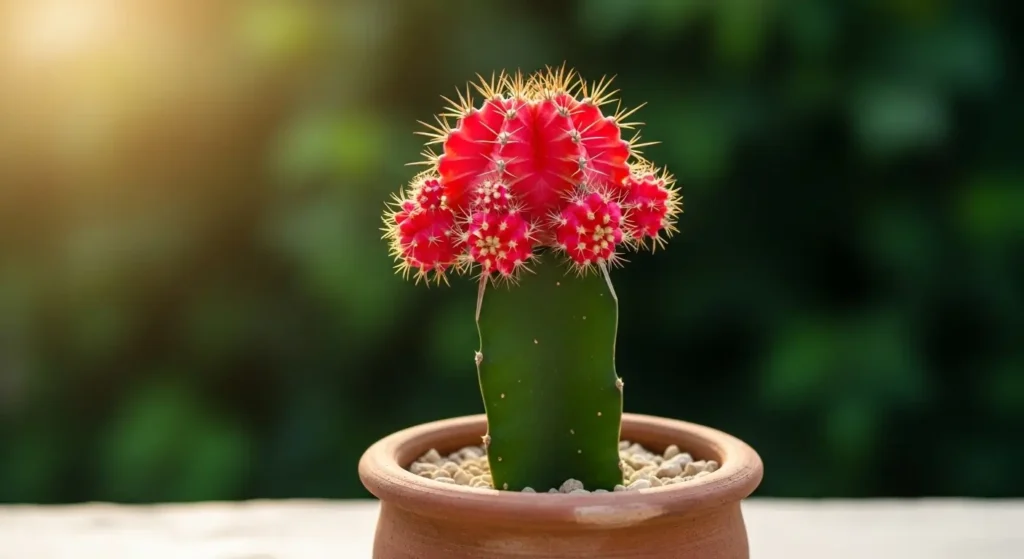
The moon cactus (Gymnocalycium mihanovichii) is one of the most eye-catching plants you can add to your home. Honestly, it’s hard to walk past one without stopping to look twice. These little guys sport brilliant tops in hot pink, red, orange, or yellow a stark contrast against their green cactus base. Native to South America (mainly Paraguay and Argentina), the moon cactus is actually two cacti grafted together as one. Care difficulty? Easy. They’re nearly indestructible if you follow a few simple rules.
Moon Cactus Care Card
| Detail | Info |
|---|---|
| Common Name | Moon Cactus, Ruby Ball Cactus, Hibotan Cactus |
| Botanical Name | Gymnocalycium mihanovichii |
| Family | Cactaceae |
| Plant Type | Perennial succulent (grafted) |
| Mature Size | 4–8 inches tall, 1–2 inches wide |
| Sun Exposure | Bright indirect light |
| Soil Type | Well-draining, sandy/gritty cactus mix |
| Soil pH | 6.0–7.0 |
| Hardiness Zones | USDA Zones 11–12 (best grown indoors) |
| Native Area | South America (Paraguay, Argentina) |
| Toxicity | Non-toxic to pets and humans |
Moon Cactus Care
Moon cactus care is beginner-friendly these plants thrive on a little neglect. The sections below cover everything from light and soil to watering and fertilizing. Don’t worry, you’ve totally got this.
Light
Moon cactus loves bright, indirect light for most of the day. A south- or east-facing windowsill is ideal. That said, avoid placing it in direct afternoon sun those vivid tops can actually scorch and fade.
Too little light causes slow, weak growth and can make the graft connection weaker over time. If your plant looks pale or starts leaning toward the window, it’s asking for a brighter spot. About 4–6 hours of filtered light daily keeps it happy.
Soil
This plant needs fast-draining, gritty soil to stay healthy. A commercial cactus and succulent mix works great right out of the bag. For even better drainage, try a DIY mix of 1 part cactus soil : 1 part perlite it makes a real difference.
Poor drainage is the number-one killer of moon cacti. Soggy soil leads to root rot fast. According to University of Florida IFAS Extension’s guide on container media, well-draining mixes are critical for preventing waterlogged roots in container plants.
Water
Water sparingly less is always more with moon cactus. During spring and summer, water when the top 2–3 inches of soil feel completely dry. In fall and winter, cut back to once a month or even less.
Always water deeply, then let the pot drain fully. Never let it sit in standing water. Overwatering shows up as a mushy base or yellowing at the graft. Underwatering looks like a shriveled or slightly wrinkled top.
Similar minimal watering applies to the golden barrel cactus, another drought-tolerant cactus that thrives on the “less is more” approach.
Temperature and Humidity
Moon cactus prefers temperatures between 65°F and 80°F (18°C–27°C). It can tolerate average household humidity without complaint, making it a great indoor plant year-round.
However, keep it away from cold drafts, air conditioning vents, and heaters. Temperatures below 50°F can stress or damage the plant. Luckily, most homes stay comfortably within its happy range.
Fertilizer
Feed with a balanced liquid cactus fertilizer (10-10-10) diluted to half strength, once a month during spring and summer. Skip fertilizing entirely in fall and winter when the plant rests. Overfeeding can damage the shallow root system, so less is more here too. The University of Minnesota Extension’s guide on fertilizing houseplants recommends always fertilizing less rather than more for container plants with limited root space.
Types of Moon Cactus
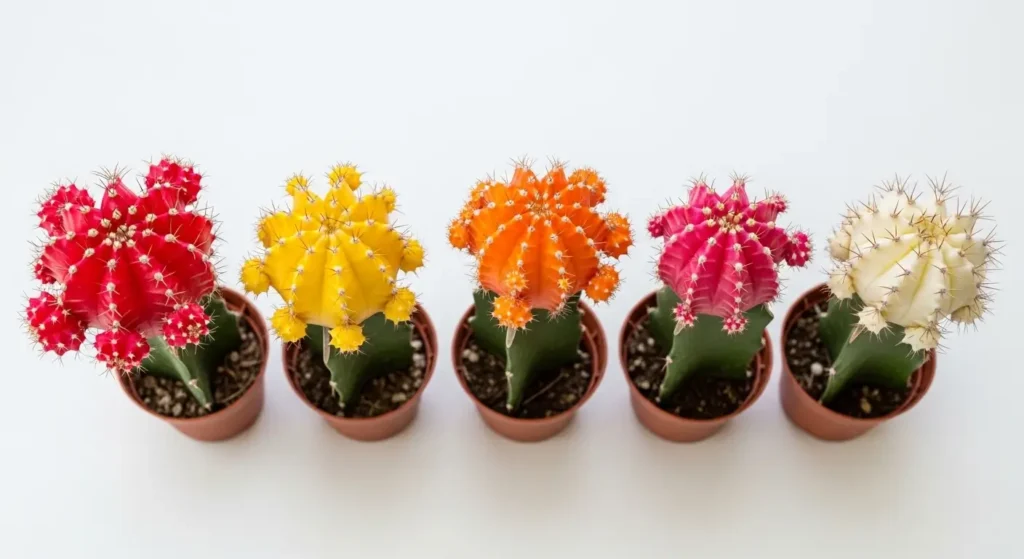
There are several popular varieties of moon cactus worth knowing. Each one is just as easy to care for.
- Red Moon Cactus (G. mihanovichii ‘Red’) — The most classic variety. Vivid crimson top, very common in garden centers.
- Yellow Moon Cactus (G. mihanovichii ‘Yellow’) — Bright golden-yellow mutant top. Striking against a green grafting stock.
- Orange Moon Cactus (G. mihanovichii ‘Orange’) — Warm orange tones that look amazing in a sunny window.
- Pink Moon Cactus (G. mihanovichii ‘Pink’) — Hot pink to pale rose tones; one of the most popular varieties sold.
- White Moon Cactus (G. mihanovichii ‘White’) — Rare and subtle, with a creamy white or very pale yellow top.
Pruning
Moon cactus doesn’t need regular pruning, but it does need occasional maintenance. If the colorful top starts looking shriveled, damaged, or detached at the graft point, you can remove it cleanly.
Use a clean, sharp knife to cut right at the graft union. This lets you attempt regrafting onto a fresh rootstock. Remove any dead or rotting sections right away to prevent spread. That’s really all the pruning this plant ever needs.
Propagating Moon Cactus
The best time to propagate moon cactus is during spring or early summer when the plants are actively growing. Because of its grafted nature, this plant requires a slightly different approach than most succulents.
Propagating by Grafting
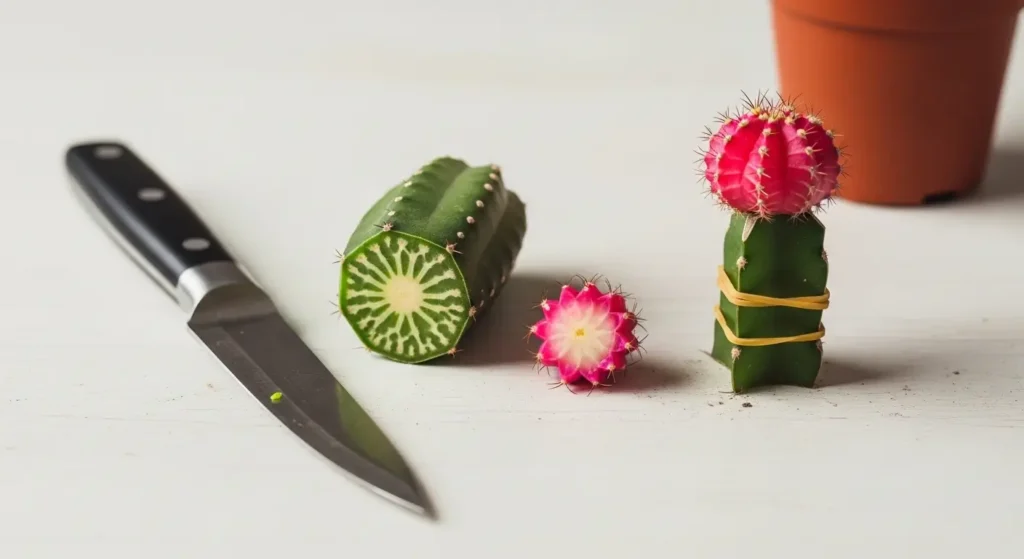
Grafting is the primary and honestly, only really effective method for propagating moon cactus. Here’s what you need and how to do it.
Materials needed:
- Sharp, clean knife or razor blade
- Rubbing alcohol (to sterilize)
- Healthy rootstock cactus (like Hylocereus undatus or a columnar cactus)
- Rubber bands or grafting tape
Step 1: Sterilize your knife with rubbing alcohol. Make a clean horizontal cut through the top of your rootstock cactus, removing about 1 inch from the top.
Step 2: Immediately cut the moon cactus top (Gymnocalycium scion) from its existing rootstock at the graft point. Work quickly both cut surfaces need to stay fresh.
Step 3: Press the scion cut-side down firmly onto the rootstock cut surface. Line up the vascular rings (the inner circles) as closely as possible this is key for a successful graft.
Step 4: Secure with rubber bands or grafting tape running over the top and under the pot. Keep the plant in a warm spot out of direct sun for 2–4 weeks while the graft heals.
You should see new growth or firm attachment within a month. This propagation method works similarly for echeveria agavoides, another succulent where vegetative cutting techniques require careful handling.
Propagating by Offsets
Occasionally, moon cactus produces small offsets (pups) at the base of the scion. These can be removed and regrafted. Simply twist or cut them off, let the cut dry for a day, then graft onto fresh rootstock following the steps above. Success rates are lower than fresh grafting, but it’s worth a try.
Potting and Repotting
Repot your moon cactus every 2–3 years, or when you see roots escaping from the drainage holes. Because this plant stays small, it rarely needs a dramatically larger pot. Move up just 1 inch in diameter at a time.
Choose a terra cotta or unglazed ceramic pot with drainage holes these materials wick away excess moisture naturally. When repotting, let the plant sit unwatered for a week before and after to reduce stress on the roots.
The best time to repot is in early spring. Use fresh cactus mix, gently loosen old roots, and settle the plant in at the same depth as before.
Common Pests and Diseases
Like most cacti, moon cactus can occasionally attract pests especially when overwatered or kept in low airflow conditions.
Spider Mites
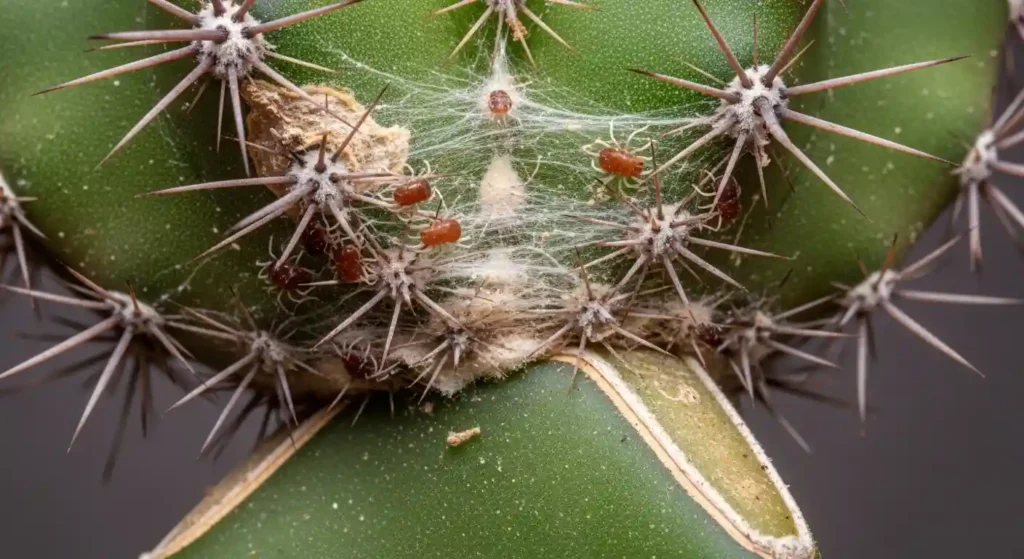
Look for fine webbing and tiny dots on the scion. Treat with a diluted neem oil spray or wipe the affected area with a damp cloth.
Mealybugs
Check for white cottony clusters at the graft joint or base. Dab them off with a cotton swab dipped in rubbing alcohol.
Scale Insects
Watch for small brown bumps on the rootstock stem. Remove manually with a toothpick, then treat with neem oil.
Aphids
Small green or black insects may cluster near new growth. A strong water spray or insecticidal soap handles them quickly.
Fungus Gnats
Tiny flies hovering around the soil signal overwatering. Allow the soil to dry out fully and add a layer of sand on top to deter them.
According to Penn State Extension’s integrated pest management guide, early identification and consistent monitoring are the most effective tools for managing houseplant pests.
Common Problems
Here’s how to troubleshoot common moon cactus issues:
Yellow Leaves / Yellowing Top
Yellowing at the scion is one of the more common issues. Overwatering is the top culprit it causes the rootstock to rot, cutting off nutrients to the top. A nutrient deficiency from infrequent fertilizing can also cause fading. Sometimes, it’s just natural aging as the grafted top reaches the end of its lifespan. Fix it by dialing back water, fertilizing once a month in summer, or regrafting onto fresh rootstock. Similar yellowing problems occur in kalanchoe when overwatering disrupts nutrient uptake.
Brown Spots / Browning Top
Brown patches on the scion usually signal sunburn from direct afternoon sun. Low humidity combined with heat can cause dry, brown edges too. Switch to bright indirect light and move the plant away from hot windows. Water quality can also play a role use filtered or distilled water if your tap water is heavily chlorinated.
Drooping or Wilting
A drooping or wobbly top almost always means the graft is failing. This can happen from too much moisture at the graft joint, old age, or physical damage. Underwatering can also cause a shriveled, deflated look to the scion. Act fast by regrafting if the connection has loosened. Drooping issues due to watering stress also commonly appear in peperomia plants when their roots can’t uptake moisture properly.
Leggy or Stretched Rootstock
If the green cactus base starts growing tall and thin, it’s not getting enough light. Move it to a brighter spot with more indirect sunlight. You can also trim the rootstock, though it’s easier to simply find a better window placement first. This same light-deficiency problem is common with nerve plant care, where low light quickly leads to weak, stretched growth.
FAQ
How do you take care of a moon cactus?
Place in bright indirect light, water only when the top two inches of soil are dry, and avoid overwatering. Fertilize monthly in summer.
Are moon cactus natural?
No moon cactus is a grafted plant. The colorful top lacks chlorophyll and cannot survive alone without a green rootstock.
How long will a moon cactus live?
Typically three to four years, though with regrafting onto fresh rootstock, you can extend its life significantly longer.
Can moon cactus grow without grafting?
No, it cannot survive long-term without grafting. The colored scion lacks chlorophyll and depends entirely on the rootstock for nutrients.