
In This Article
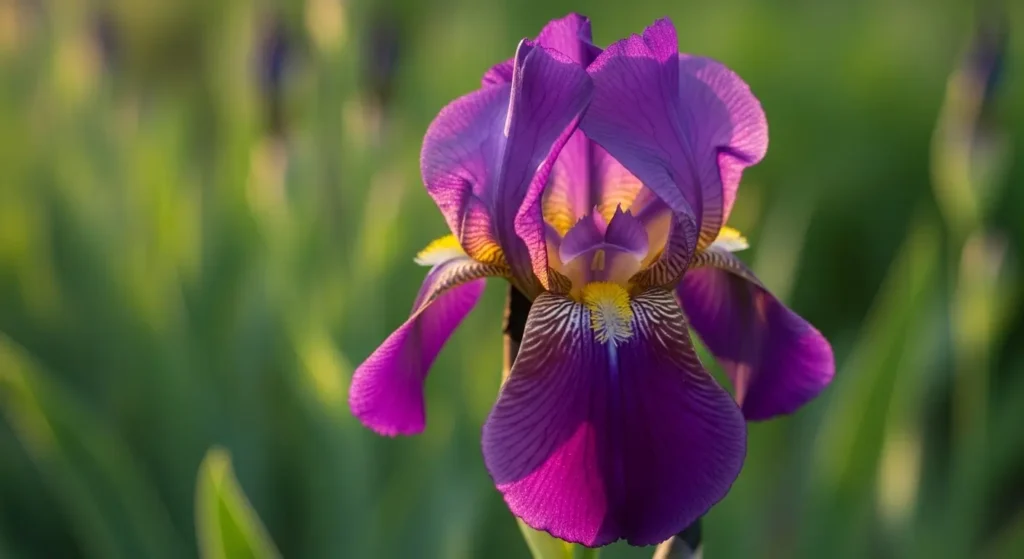
The iris flower (Iris germanica) is a beloved garden perennial native to Europe and Central Asia. It produces stunning blooms in purple, yellow, white, and blue, with bold sword-like foliage. Hardy in USDA zones 3–9, irises are easy to moderate in care perfect for any gardener.
| Common Name | Iris, Bearded Iris, Flag Iris |
|---|---|
| Botanical Name | Iris germanica |
| Family | Iridaceae |
| Plant Type | Perennial |
| Mature Size | 2–4 ft tall × 1–2 ft wide |
| Sun Exposure | Full sun |
| Soil Type | Well-draining, sandy to loamy |
| Soil pH | 6.8–7.0 (slightly acidic to neutral) |
| Hardiness Zones | USDA 3–9 |
| Native Area | Europe, Mediterranean, Central Asia |
| Bloom Time | Late spring to early summer |
| Toxicity | Toxic to dogs, cats, and horses if ingested |
Iris Flower Care
The iris flower is a rewarding perennial that thrives with minimal fuss once it’s settled in the right spot. Here’s what you need to know about sun, soil, water, and maintenance. With proper placement, this plant practically cares for itself.
Light
Irises thrive in full sun, needing at least 6 hours of direct sunlight daily. Plant them in south- or west-facing beds for optimal light exposure. Avoid shade from trees or shrubs. While afternoon shade is tolerable in intense heat, morning sun is essential for healthy growth and vibrant spring blooms.
Soil
Irises need well-draining, loamy soil with a pH of 6.8–7.0. Poor drainage causes rhizome rot, their top killer (university horticulture extension programs). Amend heavy clay with sand and compost. Avoid waterlogged spots raised beds work well. Good drainage isn’t optional; it’s essential for healthy irises.
Water
Water newly planted irises once or twice weekly until established. Mature plants are drought-tolerant check soil between waterings and let it dry out. In summer, water deeply once a week; reduce in fall and winter. Mushy rhizomes signal overwatering; brown, crispy tips mean underwatering. Adjust accordingly for quick recovery.
Temperature and Humidity
Iris flowers handle a wide temperature range, from freezing winters in zone 3 to the hot summers of zone 9. They actually need a cold dormancy period each year to bloom well the following spring, so harsh winters are nothing to worry about. Most bearded iris varieties are impressively cold-hardy.
In regions with late spring frosts, a light layer of mulch around the base but never over the rhizomes — offers helpful protection. Irises generally dislike high humidity, which encourages fungal disease. Good air circulation around your plants goes a long way toward keeping them healthy.
Fertilizer
Feed your iris flower with a low-nitrogen, balanced fertilizer (such as 5-10-10) in early spring as new growth appears. Apply again right after blooming to support the rhizomes heading into summer. Avoid high-nitrogen formulas, which push leafy growth at the expense of flowers. Stop fertilizing entirely by midsummer.
Types of Iris Flower
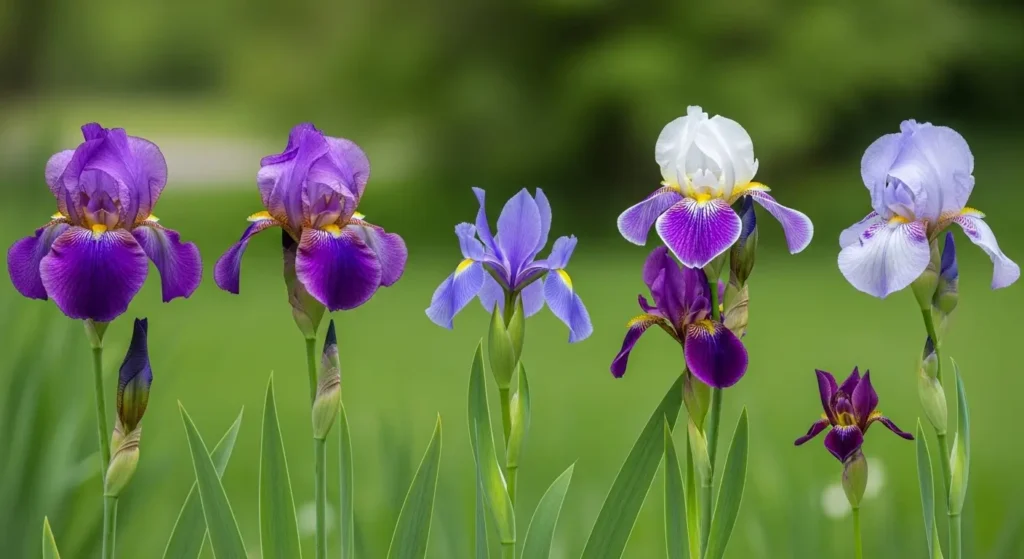
There are hundreds of iris species and cultivars worth growing. Here are some of the most popular:
- Bearded Iris (Iris germanica) – The classic garden iris with ruffled, fragrant blooms and fuzzy “beards” on the falls. Available in virtually every color.
- Siberian Iris (Iris sibirica) – Slender, elegant blooms in purple, blue, and white. More tolerant of moist soil than bearded types.
- Japanese Iris (Iris ensata) – Large, flat blooms in purple and white. Loves moisture and slightly acidic soil.
- Dutch Iris (Iris × hollandica) – Grown from bulbs similar to crocus flowers, these produce elegant blooms in blue, yellow, and white during late spring.
- Louisiana Iris – A hybrid group that thrives in wet conditions and warm climates. Stunning in water gardens.
- Dwarf Bearded Iris (Iris pumila) – A compact variety topping out at just 8 inches tall, perfect for borders and rock gardens.
Pruning
Prune your iris flower right after the blooms fade in late spring or early summer. Remove spent flower stalks by cutting them down to the base this keeps the plant tidy and prevents seed formation, which drains energy away from the rhizomes. Don’t cut back the foliage at this stage, though, as the leaves are still photosynthesizing and storing energy for next year.
In late summer or fall, trim the fan-shaped foliage down to about 6 inches in an inverted “V” shape. This is especially important where iris borer is common, as it removes overwintering eggs from old leaf tissue. Use clean, sharp shears and wipe the blades with rubbing alcohol between plants to avoid spreading disease.
Propagating Iris Flower
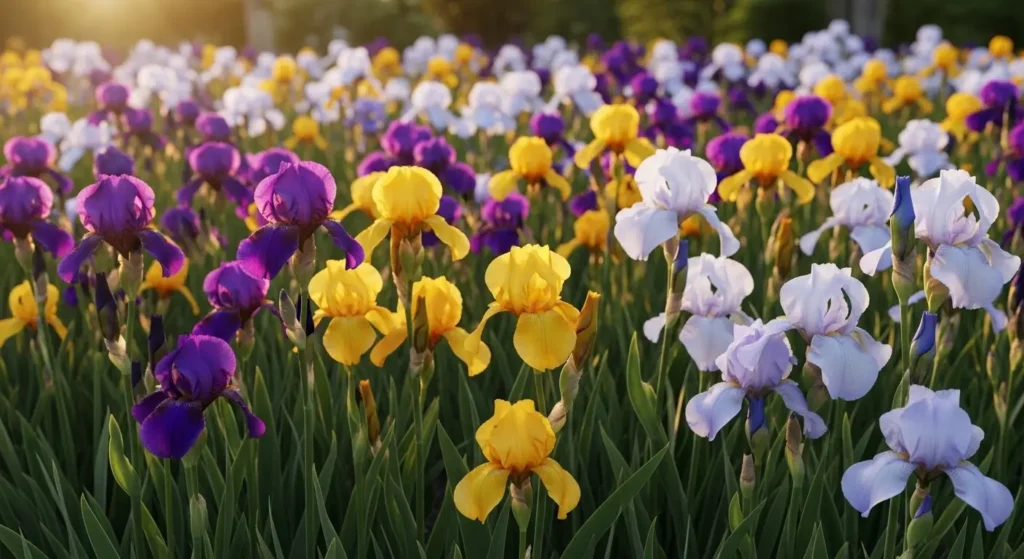
The best time to propagate iris flowers is late summer, about 4–6 weeks after blooming ends. This timing gives newly divided rhizomes enough time to anchor before winter. Division is by far the most popular and reliable method for home gardeners — and it’s genuinely satisfying.
Propagating by Division
Division keeps your iris flower healthy, prevents overcrowding, and gives you free plants to share with friends.
Materials needed:
- Sharp garden knife or spade
- Garden fork
- Gloves
- Well-draining soil or compost amendment
Step 1: Use a garden fork to carefully lift the entire clump from the ground, working from the outer edges inward to avoid slicing through the rhizomes.
Step 2: Shake off excess soil and lay the clump on a flat surface. Identify healthy rhizomes — each one should feel firm and plump, never soft or hollow.
Step 3: Use a sharp, clean knife to separate individual rhizomes. Each division should include at least one fan of leaves and a thumb-sized, firm rhizome. Discard any sections that look rotted, darkened, or show signs of iris borer damage.
Step 4: Trim each leaf fan down to 4–6 inches tall to reduce moisture loss during re-establishment. Replant immediately at the correct shallow depth, spacing each division 12–18 inches apart.
Newly divided iris flowers typically bloom again within one to two growing seasons. For guidance on division timing for other garden perennials, check out our care guide for liatris, which follows a very similar schedule.
Propagating from Seeds
Growing iris flowers from seed is possible but requires patience — expect to wait two to three years before seeing your first bloom. Collect ripe seed pods in late summer and store seeds in a cool, dry location until fall. According to NC State Extension, cold stratification over winter significantly improves germination rates the following spring. Sow seeds directly in a prepared outdoor bed or in trays, covering them lightly with soil. Seed-grown plants will not always match the parent plant’s flower color.
Planting and Transplanting Iris Flower
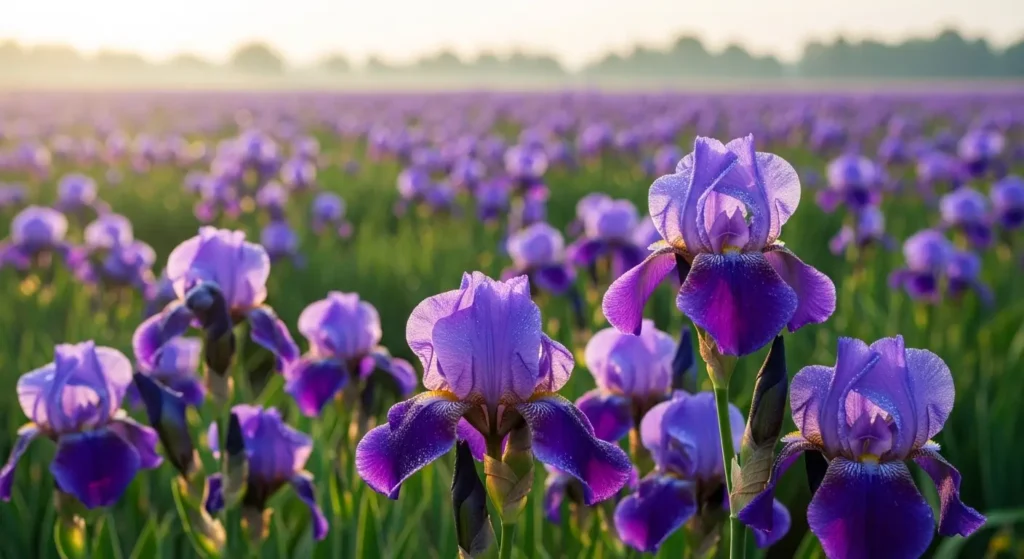
Plant iris flowers in late summer to early fall, ideally 6–8 weeks before your first hard frost. This timing lets rhizomes settle in before winter arrives. Space plants 12–18 inches apart to allow proper airflow and room for natural clump expansion similar spacing to what you’d use for asiatic lilies and other mid-border perennials.
Set rhizomes at or just barely at the soil surface never bury them deeply. The top of the rhizome should be visible or level with the soil line. Planting too deep is one of the most common mistakes gardeners make and directly causes blooming failure.
Divide and transplant established clumps every 3–5 years once they become crowded. Crowded clumps bloom poorly and become more vulnerable to disease.
Common Pests and Diseases
Like most garden plants, iris flowers can occasionally face pest or disease challenges. Catching problems early makes treatment much easier.
Iris Borer
Look for ragged, water-soaked streaks on leaves in early spring. Remove and destroy affected foliage immediately; apply appropriate insecticides in early spring to stop larvae before they burrow into rhizomes.
Aphids
Look for clusters of tiny soft insects on new growth and flower buds. Treat with a strong blast of water or weekly neem oil spray until the colony is gone.
Spider Mites
Look for fine webbing on leaves and dull, stippled foliage, especially during hot and dry spells. Treat with insecticidal soap or neem oil, and increase watering to reduce plant stress.
Powdery Mildew
Look for a white, powdery coating spreading across leaf surfaces in humid weather. Improve air circulation and apply a sulfur-based fungicide if the problem persists.
Root Rot
Look for soft, foul-smelling rhizomes paired with yellowing lower foliage. Dig up affected plants, cut away all rotted tissue, and replant in better-draining soil.
Common Problems with Iris Flower
Here’s how to troubleshoot common issues:
Poor or No Blooms
Irises need 6+ hours of direct sun and shallow planting rhizomes must sit at or just above soil. Divide clumps every 3–5 years to prevent overcrowding. Avoid high-nitrogen fertilizers. For similar issues, see our calla lily care guide.
Yellow or Browning Leaves
Yellow base leaves signal overwatering or poor drainage causing rhizome rot improve drainage and reduce watering. Brown, crispy tips mean underwatering or heat stress. Nutrient deficiency may cause overall yellowing; use a soil test from your local USDA cooperative extension service.
Wilting or Drooping
Wilting is most often caused by underwatering during summer heat waves. Water deeply and your iris flower should perk back up within a day or two. However, if the plant was recently divided or transplanted, some drooping is completely normal transplant shock keep the soil lightly moist and be patient. Soft rot caused by iris borer damage can also produce wilting; dig up the plant and examine the rhizomes if watering doesn’t help.
Leggy or Sparse Growth
Leggy, floppy foliage almost always signals insufficient light relocate your iris to a sunnier spot for stronger stems and better blooms. Avoid nitrogen-heavy fertilizers, which fuel weak vegetative growth. In full sun, an overcrowded clump is likely the cause; divide it for improvement next season.
Frost Damage
Late spring frosts can damage emerging buds and tender new foliage. If a late freeze is forecast, cover your plants overnight with a light frost cloth or old bedsheet. Frost-damaged tissue looks mushy and discolored but is rarely fatal trim away affected growth and the iris flower will continue growing normally. You can check your regional frost dates using the USDA Plant Hardiness Zone Map.
FAQ
What do iris flowers symbolize?
Iris flowers symbolize wisdom, courage, and deep admiration. In Greek mythology, Iris was the goddess of the rainbow, inspiring the flower’s rich symbolic legacy.
Do irises need sun or shade?
Irises need full sun, at least six hours of direct light daily. Less sun leads to poor blooming, weak stems, and leggy growth.
Why is yellow iris illegal?
Yellow iris (Iris pseudacorus) is invasive in many U.S. states. It spreads aggressively in wetlands, displacing native plant species and disrupting ecosystems.
Do irises come back every year?
Yes, irises are true perennials that return every year. They multiply over time and perform best when divided every three to five years.