
In This Article
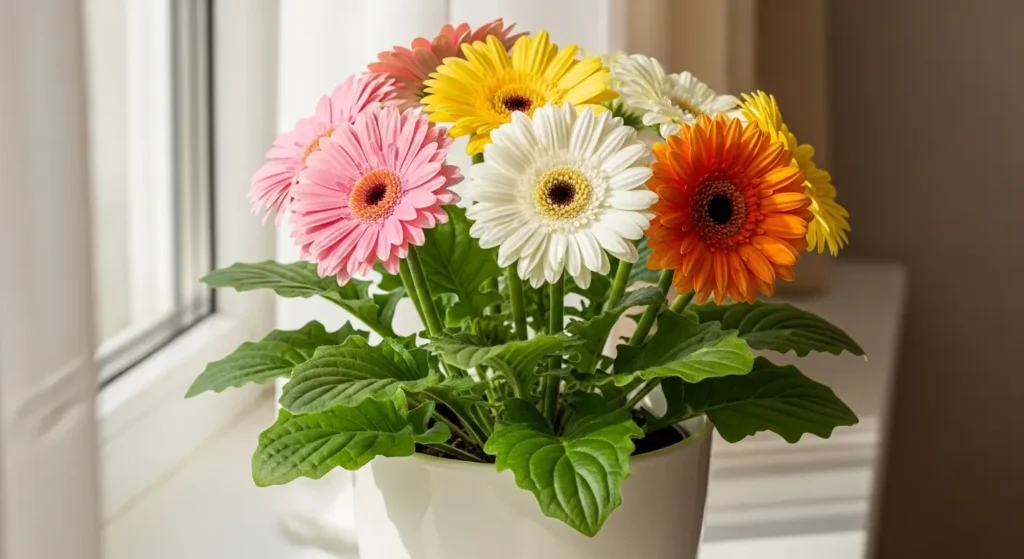
The gerbera daisy (Gerbera jamesonii) is hard to ignore oversized, velvety blooms in every shade from soft cream to fiery red. Native to South Africa, this cheerful perennial is a true garden superstar. Gerbera daisy care sits in the moderate range, but honestly, a few solid tips is all you need.
Plant Care Card
| Field | Details |
|---|---|
| Common Name | Gerbera Daisy, Transvaal Daisy |
| Botanical Name | Gerbera jamesonii |
| Family | Asteraceae |
| Plant Type | Tender perennial |
| Mature Size | 10–18 inches tall, 10–12 inches wide |
| Sun Exposure | Full sun to bright indirect light |
| Soil Type | Well-draining, fertile loam |
| Soil pH | 5.5–6.5 |
| Hardiness Zones | USDA Zones 8–11 |
| Native Area | South Africa |
| Toxicity | Non-toxic to cats and dogs |
Gerbera Daisy Care
Gerbera daisies are moderate-care plants that reward a little attention with months of stunning blooms. The sections below cover everything from light and soil to watering and propagation. You’ve got this these flowers are worth the small learning curve!
Light
Gerbera daisies love bright light. Outdoors, give them a spot with at least 6 hours of full sun daily morning sun with some afternoon shade works especially well in hotter climates. Indoors, a south- or west-facing window is your best bet.
Too little light and your plant will get leggy with fewer blooms. Too much harsh afternoon sun in summer can scorch the leaves. That sweet spot of bright, slightly filtered light? That’s where gerbera daisies truly shine.
Soil
Gerbera daisies need well-draining, fertile soil to stay happy. A loamy mix with good organic matter works great. If you’re planting in pots, a standard potting mix lightened with 1 part perlite to 2 parts potting soil does the trick nicely.
Good drainage is non-negotiable. Soggy roots are the fastest way to lose a gerbera. According to University of Florida IFAS Extension’s guide on drainage for container plants, proper soil drainage is one of the most critical factors in preventing root rot and keeping plants healthy long-term.
Water
Gerbera daisies like consistent moisture but absolutely hate sitting in wet soil. Water when the top 2 inches of soil feel dry that’s your cue to give them a good drink. Water deeply, then let the excess drain out fully.
In summer, you may need to water 2–3 times per week. In winter, back off significantly and water only every 10–14 days. Similar watering habits apply to tiger lily plant care, another sun-loving bloomer that needs consistent moisture without waterlogged roots.
Yellowing leaves often signal overwatering, while droopy, dry-feeling foliage usually means it’s thirsty. Always check the soil before watering don’t just go by schedule.
Temperature and Humidity
Gerbera daisies prefer temperatures between 65–75°F (18–24°C). They can handle mild dips but struggle below 40°F. Keep them away from cold drafts near windows or air conditioning vents in summer.
Humidity-wise, average household levels (40–60%) work fine. They’re not as fussy about humidity as many tropical houseplants. Just avoid placing them near heating vents, which can dry out the air too quickly and stress the plant.
Fertilizer
Feed your gerbera daisy a balanced liquid fertilizer (10-10-10) every 2–3 weeks during spring and summer. Stop fertilizing in fall and winter when growth naturally slows. Avoid over-fertilizing, as too much nitrogen produces lots of leaves but fewer flowers and we’re here for the blooms! Penn State Extension has a helpful guide on fertilizing flowering plants if you want to go deeper.
Types of Gerbera Daisy
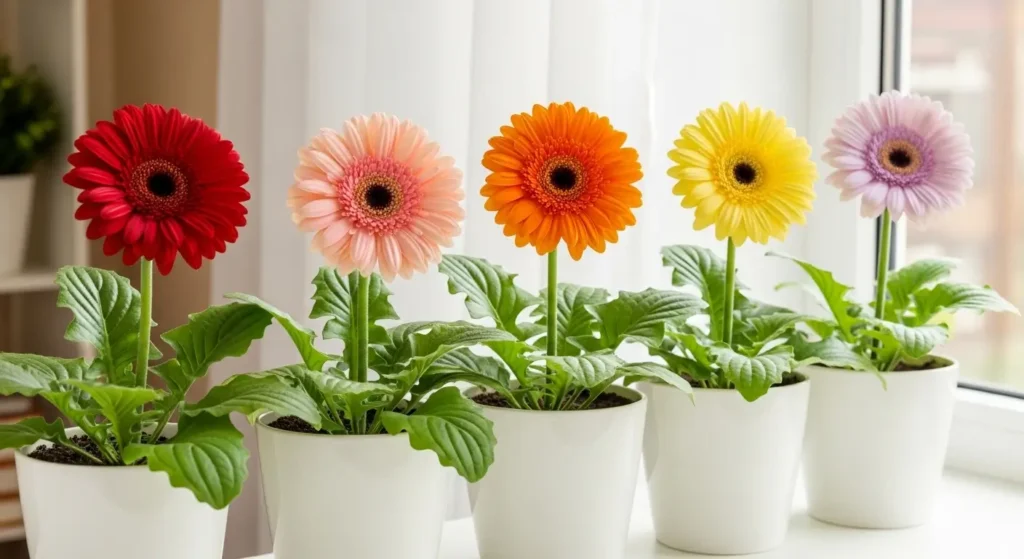
There are dozens of gorgeous gerbera varieties to choose from. Here are some popular ones:
- ‘California Giant’ (Gerbera jamesonii hybrid) – Large, 4–5 inch blooms in mixed warm tones. A classic choice for cutting gardens with long, strong stems.
- ‘Garvinea Sweet Glow’ – Peachy-pink double blooms. Exceptionally heat-tolerant and long-blooming, great for hot-summer gardens.
- ‘Revolution Bicolor Red Tip Yellow’ – Striking bicolor petals with red tips fading to yellow. Compact and ideal for containers or borders.
- ‘Durora Salmon’ – Soft salmon-pink flowers with a dark center. One of the most popular gerbera daisy varieties for indoor growing.
- ‘Terra Nova Pastels Mix’ – A blend of soft lavender, cream, and blush tones. Perfect for cottage-style gardens and mixed flower beds.
Pruning
Deadheading removing spent blooms is the most important pruning task for gerbera daisies. Snip faded flowers right at the base of the stem to encourage new blooms to form. Do this regularly throughout the growing season.
In fall, trim back any dead or damaged leaves to keep the plant tidy and improve airflow. A clean pair of sharp scissors or pruning shears is all you need.
Propagating Gerbera Daisy
The best time to propagate gerbera daisies is in spring or early summer when the plant is actively growing. You’ve got two reliable methods: division and stem cuttings.
Propagating by Division
Division is the easiest and most reliable way to multiply your gerbera daisy collection. It also helps rejuvenate older plants that have become crowded.
Materials needed:
- Sharp garden knife or trowel
- Fresh well-draining potting mix
- New pots with drainage holes
- Watering can
Steps:
- Carefully remove the gerbera daisy from its pot or garden bed. Shake off excess soil to get a clear view of the root clumps.
- Identify natural divisions in the crown—look for separate clusters of leaves and roots. Use a clean, sharp knife to cut through the root ball, making sure each section has healthy roots and at least 2–3 leaves.
- Pot each division individually in fresh, well-draining soil mix. Plant at the same depth as before, keeping the crown just above soil level.
- Water lightly and place in bright indirect light for 1–2 weeks while the plant settles. Gradually move to full sun conditions.
New growth should appear within 3–4 weeks. This propagation method also works beautifully for calathea plants, which respond well to spring division too.
Propagating by Stem Cuttings
Stem cuttings work well for gerbera daisies, though they require a bit more patience than division.
- Cut a healthy side shoot about 3–4 inches long, just below a leaf node. Remove the lower leaves, leaving 2–3 at the top.
- Dip the cut end in rooting hormone powder and insert it into a small pot filled with moist perlite or seed-starting mix.
- Cover loosely with a clear plastic bag to hold humidity. Place in bright indirect light and keep the medium barely moist.
- Check for roots after 3–4 weeks by gently tugging resistance means rooting has begun. Remove the bag and move to normal care conditions.
Potting and Repotting Gerbera Daisy
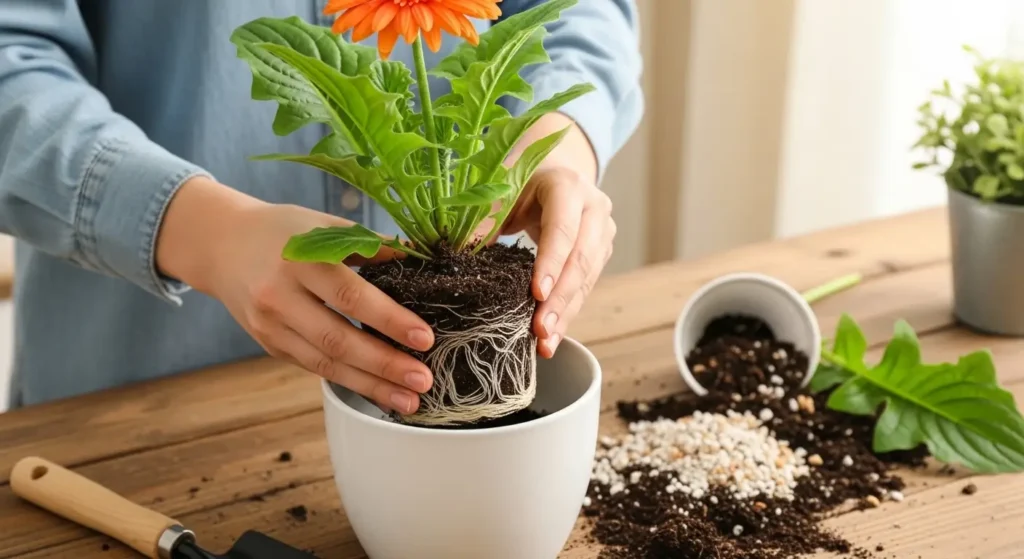
Gerbera daisies like being slightly root-bound, so don’t rush to repot. Repot your gerbera daisy every 2–3 years or when you see roots creeping out of the drainage holes or growth noticeably slowing down.
Choose a new pot only 1–2 inches larger in diameter. Going too big leads to excess moisture retention, which increases root rot risk. Always use fresh, well-draining potting mix and make sure drainage holes are clear.
Gently tease the roots apart if they’re tightly coiled. Set the plant at the same depth as before never bury the crown, as this can cause crown rot.
Common Pests and Diseases
Like most flowering plants, gerbera daisies can attract a few unwanted visitors. Regular inspection makes a big difference in catching problems early.
Spider Mites
Look for fine webbing and tiny dots on leaves. Treat with neem oil spray or rinse leaves with a strong stream of water weekly until resolved.
Mealybugs
White cottony clusters hide in leaf joints and stems. Remove with a cotton swab dipped in rubbing alcohol, then follow up with insecticidal soap spray.
Aphids
Small green or black clusters appear on new growth and buds. Blast them off with water or spray with diluted neem oil. They’re annoying but manageable.
Fungus Gnats
Tiny flies hovering around the soil signal overwatering. Let the soil dry out more between waterings and use yellow sticky traps to catch adults.
For a complete overview of managing these pests naturally, UC IPM’s guide on common houseplant pests is an excellent resource with both organic and conventional treatment options.
Common Problems with Gerbera Daisy
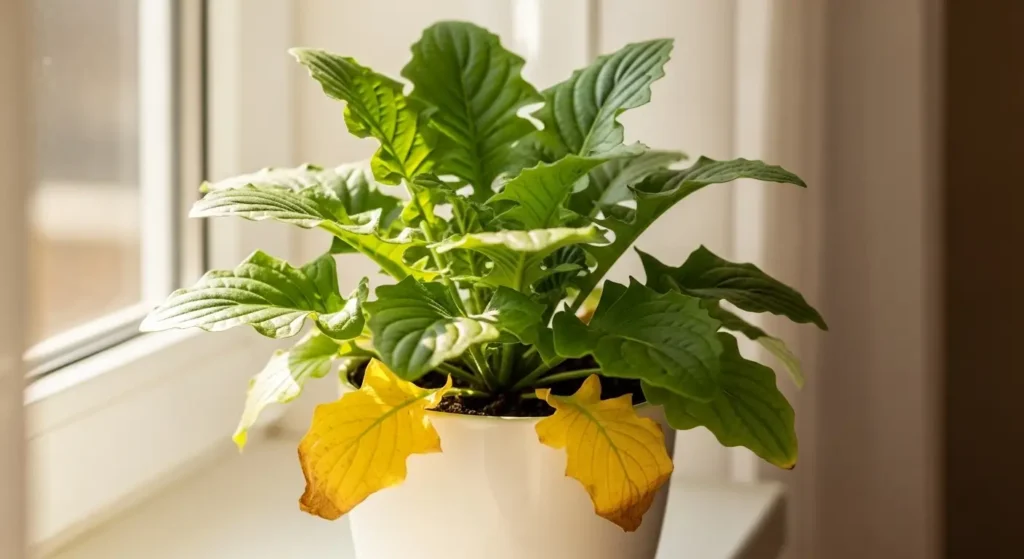
Here’s how to troubleshoot common gerbera daisy issues:
Yellow Leaves
Yellow leaves are frustrating, but they’re telling you something. Overwatering is the top culprit check that roots aren’t sitting in soggy soil and improve drainage if needed. A nutrient deficiency (especially iron or nitrogen) can cause yellowing on newer leaves, so try a balanced liquid feed. Sometimes it’s just natural aging of older lower leaves, which is totally normal. These same issues show up with nerve plant care when watering habits are off.
Brown Leaf Tips
Brown tips on your gerbera daisy usually mean low humidity or inconsistent watering. Tap water high in fluoride can also burn leaf edges over time try switching to filtered or rainwater. Misting the air around the plant (not the blooms directly) helps maintain better moisture levels.
Drooping or Wilting Leaves
Wilting leaves almost always point to a watering issue. Check the soil first if it’s bone dry, water thoroughly right away. If it’s wet and soggy, you’re overwatering and root rot may be starting. This kind of drooping also affects dendrobium orchids when watering is inconsistent, so regular soil checks help both plants stay perky.
Leggy Growth / Sparse Foliage
Stretchy, sparse growth with fewer blooms almost always means not enough light. Move your gerbera daisy to a brighter spot with more direct sun. Trim back leggy stems to encourage compact, bushier growth similar light-related legginess is a known issue for arrowhead plant care too.
FAQ
Do gerbera daisies come back every year?
In USDA Zones 8–11, gerbera daisies return as perennials annually. In colder zones, they’re grown as annuals or overwintered indoors successfully.
Do gerbera daisies need full sun or shade?
Gerbera daisies thrive in full sun to bright indirect light, needing at least six daily hours. Afternoon shade helps in very hot climates.
Do gerbera daisies do better in pots or in the ground?
Both work well. Pots offer easier drainage control; ground planting suits larger landscapes. Either way, excellent drainage is essential for healthy plants.
Can you keep gerbera daisy as a houseplant?
Yes! Place them near your sunniest window. They need very bright indoor light to bloom consistently a south-facing window works best.