
In This Article
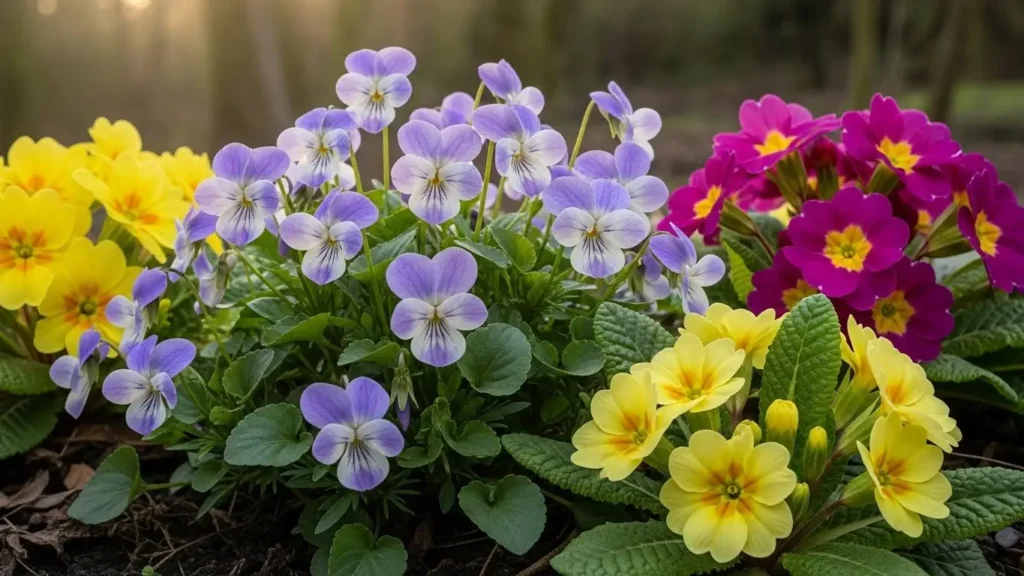
The February birth flower includes the delicate violet and cheerful primrose, both heralding early spring with vibrant blooms. These perennials feature heart-shaped leaves and colorful petals in purple, yellow, pink, and white. The February birth flower thrives in USDA zones 3-9, symbolizing faithfulness, humility, and spring’s return.
Plant Care Card
| Attribute | Violet | Primrose |
|---|---|---|
| Common Name | Violet, Sweet Violet | Primrose, English Primrose |
| Botanical Name | Viola odorata | Primula vulgaris |
| Family | Violaceae | Primulaceae |
| Plant Type | Herbaceous perennial | Herbaceous perennial |
| Mature Size | 4-8 inches tall, 8-12 inches wide | 6-8 inches tall, 8-10 inches wide |
| Sun Exposure | Partial shade to full shade | Partial shade |
| Soil Type | Moist, well-draining, rich | Moist, well-draining, humus-rich |
| Soil pH | 6.0-7.5 (slightly acidic to neutral) | 6.0-7.0 (slightly acidic to neutral) |
| Hardiness Zones | 3-9 | 4-8 |
| Native Area | Europe, Asia | Europe, Western Asia |
| Bloom Time | Late winter to early spring | Late winter to mid-spring |
| Toxicity | Non-toxic to pets and humans | Mildly toxic to pets if ingested |
February Birth Flower Care
Both violets and primroses thrive with minimal intervention once established in cool, shaded garden spots. Here’s what you need to know about providing proper light, moisture, soil conditions, and seasonal maintenance. With the right placement and consistent watering during their blooming period, these February birth flower plants practically care for themselves.
Light
The February birth flower prefers partial shade with 3-4 hours of morning light daily for abundant blooms. According to North Carolina State University Extension, violets appreciate filtered woodland conditions. Plant under deciduous trees or north-facing foundations with afternoon shade protection for best results.
Soil
Both species demand rich, well-draining soil to prevent root rot during wet seasons. Loamy or sandy soil amended with compost provides ideal moisture balance. Mix 2-3 inches of compost before planting. Maintain slightly acidic pH between 6.0-7.5. Avoid heavy clay that stays waterlogged.
Water
Water regularly to keep soil consistently moist but never soggy throughout the growing season. Check moisture 1-2 inches deep water every 3-5 days during active growth. Reduce frequency once summer heat arrives and plants enter semi-dormancy. Yellowing leaves signal underwatering, while mushy crowns indicate overwatering problems.
Temperature and Humidity
Both species thrive in cool temperatures between 45-65°F, perfect for early spring gardens. Violets tolerate cold to -30°F while primroses survive to -20°F with mulch protection. They struggle when temperatures exceed 75°F, often going dormant. Apply 2-3 inches of mulch to moderate soil temperature and retain moisture.
Fertilizer
Feed with balanced 10-10-10 fertilizer or compost tea monthly during active growth. Apply in early spring when new growth emerges and after blooming finishes. Avoid high-nitrogen formulas. Stop fertilizing by midsummer when plants prepare for dormancy.
Types of February Birth Flower
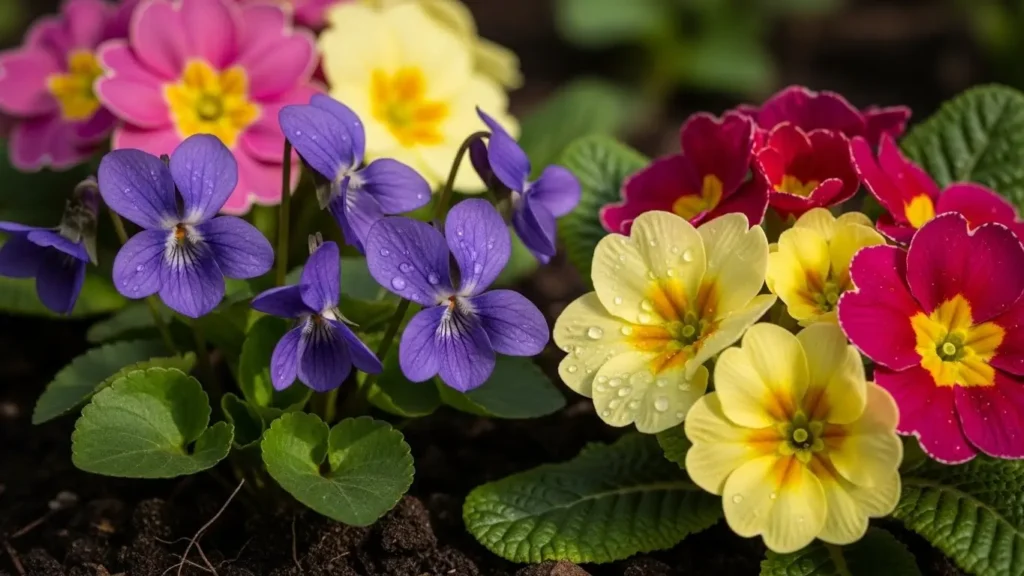
While the common violet and English primrose are traditional February birth flower choices, several lovely varieties offer different colors and characteristics. Here are popular cultivars worth considering for your garden:
Sweet Violet (Viola odorata) produces intensely fragrant purple or white flowers on 4-6 inch stems from late winter onward. This classic February birth flower variety self-seeds readily and spreads through underground runners, creating natural drifts under trees. The heart-shaped leaves remain evergreen in mild climates, providing year-round ground cover interest throughout your landscape.
Primrose ‘Wanda’ (Primula vulgaris ‘Wanda’) displays vibrant magenta-purple flowers with bright yellow centers on sturdy 6-inch stems. This award-winning cultivar blooms prolifically from late winter through mid-spring and tolerates slightly more sun than species primroses. Bronze-tinged foliage adds extra ornamental appeal even when this February birth flower isn’t flowering.
Drumstick Primrose (Primula denticulata) produces unique globe-shaped flower clusters in purple, pink, or white atop 10-12 inch stalks. Blooming slightly later than English primrose, this species extends the February birth flower display into April. The compact rosettes of textured leaves create attractive ground cover in partially shaded gardens.
Polyanthus Primrose (Primula × polyantha) offers the widest color range, including red, orange, yellow, pink, purple, and bicolors with contrasting eyes. These hybrid primroses bloom abundantly from late winter through late spring with proper deadheading. They’re slightly less cold-hardy than English primrose, succeeding best in zones 5-8 for reliable performance.
Pruning
Minimal pruning is needed mainly removing spent blooms and damaged foliage. Deadhead throughout the blooming season by pinching faded flowers at their base to encourage continuous blooming. Trim yellowed leaves in early spring using clean scissors. After blooming ends, shear primrose foliage by one-third to promote compact growth.
Propagating February Birth Flower
The best time for propagating these perennials is early spring after blooming finishes or early fall when temperatures cool. Both violets and primroses propagate readily through division, while violets also spread naturally through runners. Propagating your February birth flower ensures you’ll have plenty of plants to expand your display.
Propagating by Division
Division works wonderfully for the February birth flower, producing multiple plants quickly while rejuvenating older clumps. This method succeeds best in early spring or early autumn when plants aren’t actively blooming and temperatures stay moderate.
Materials needed:
- Sharp garden spade or knife
- Garden fork
- Compost or aged manure
- Watering can
Step 1: Dig up the entire clump carefully using a garden fork, preserving as many roots as possible. Work 4-6 inches away from the plant’s base to avoid damaging the root system. Shake off excess soil so you can clearly see the natural divisions where roots separate on your February birth flower.
Step 2: Pull or cut the clump into sections, ensuring each division has 3-5 healthy crowns and a good root system attached. For violets, separate individual rosettes with their attached runners. Primroses naturally form multiple crowns that pull apart easily with gentle pressure, making division straightforward.
Step 3: Replant divisions immediately at the same depth they were growing previously, spacing them 8-12 inches apart in prepared soil. Water thoroughly to settle soil around roots and eliminate air pockets. Keep soil consistently moist for the first 2-3 weeks while new roots establish on your February birth flower divisions.
Step 4: Apply a 2-inch layer of compost around newly planted divisions to conserve moisture and provide gentle nutrition. Most divisions establish within 4-6 weeks and bloom the following season, with violets sometimes producing flowers within months of division.
Propagating from Runners
Violet plants naturally produce runners that root where they touch the soil, making February birth flower propagation almost effortless. This method works best during the active growing season from spring through early fall.
Materials needed:
- Small pot with drainage holes
- Potting mix
- U-shaped wire pins or small stones
- Scissors
Step 1: Identify healthy runners extending from the mother plant with small plantlets developing at their tips. Choose runners with visible root nodes or tiny roots already forming where the runner touches soil.
Step 2: Pin the runner to the soil surface using wire pins or weigh it down with small stones, ensuring the plantlet makes good contact with moist soil. You can also place a small pot filled with potting mix next to the mother plant and pin the runner directly into it.
Step 3: Keep the area consistently moist for 3-4 weeks while roots develop at the pinned node. Once the new plantlet shows vigorous growth and resists gentle tugging, cut the runner connecting it to the mother plant. Transplant potted runners or carefully dig up soil-rooted plantlets with their root systems intact for new February birth flower displays.
Propagating from Seeds
Seeds take longer than division but work well. Sow in late summer directly in garden beds, barely covering with soil. Seeds need cold stratification over winter to germinate. Germination occurs sporadically at 60-65°F in spring. Seedlings bloom in their second year.
Planting and Transplanting February Birth Flower
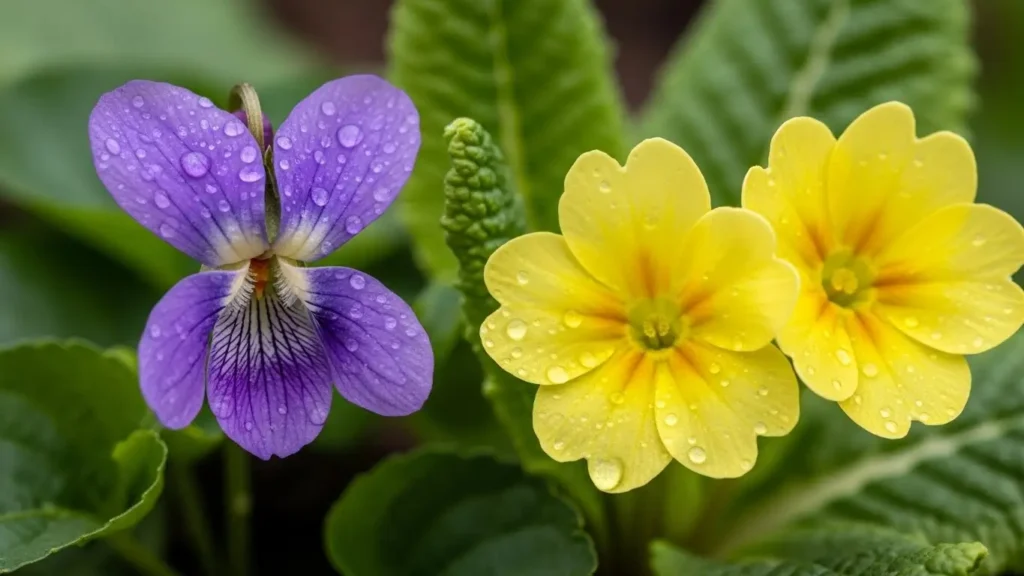
Plant in early spring after the last frost or early fall 6-8 weeks before freeze. Space violets 8-10 inches apart and primroses 6-8 inches apart. According to the USDA Natural Resources Conservation Service, plant with crowns at soil level. Divide established clumps every 3-4 years when centers die out or flowering decreases noticeably.
Common Pests and Diseases
Like most garden plants, the February birth flower can occasionally face pest or disease issues, though problems are generally minor with proper care.
Aphids
Look for clusters of tiny green, black, or brown insects on new growth and flower buds causing distorted leaves. Treat with insecticidal soap spray or blast them off with a strong water stream, repeating every 5-7 days until gone.
Slugs and Snails
Watch for irregular holes in leaves and silvery slime trails around plants, especially during damp spring weather. Control by handpicking at night, setting out beer traps, or applying iron phosphate bait around plants according to package directions.
Powdery Mildew
White, powdery coating on leaves indicates this fungal disease, typically occurring in humid conditions with poor air circulation. Improve spacing between plants, water at soil level rather than overhead, and apply neem oil or sulfur-based fungicide if needed.
Crown Rot
Mushy, blackened crowns and collapsed plants signal this serious fungal problem caused by overwatering or poor drainage. Remove affected plants immediately, improve soil drainage with compost and sand, and avoid planting in the same spot for one season.
Spider Mites
Tiny webs between leaves and stippled, yellowing foliage indicate spider mite infestation, especially during hot, dry periods. Increase humidity around plants, spray undersides of leaves with water daily, or apply horticultural oil according to label instructions for severe cases.
Common Problems with February Birth Flower
Here’s how to troubleshoot common issues:
Poor or No Blooms
Insufficient light is the primary culprit both need 3-4 hours of morning sun. Excessive nitrogen fertilizer promotes leafy growth over buds. Overcrowded clumps exhaust nutrients, requiring division every 3-4 years. Similar to Annabelle hydrangea, proper light balance ensures abundant blooms.
Yellow or Browning Leaves
Yellowing signals overwatering or poor drainage creating waterlogged conditions. Nutrient deficiency also causes yellowing. Brown leaf tips indicate underwatering. Apply 2-inch compost layer annually to improve drainage and nutrient content.
Wilting or Drooping
Sudden wilting means insufficient water during hot weather. Water deeply when top inch feels dry. Transplant shock causes temporary drooping, recovering within 1-2 weeks. Provide afternoon shade during heat waves.
Leggy or Sparse Growth
Insufficient light causes stretching toward sun, creating weak, elongated stems with sparse foliage. Overfertilizing with high-nitrogen products also produces leggy growth. Prune back stems by one-third and relocate to brighter spots. Like snake plant varieties, proper light ensures best performance.
Frost Damage
Late spring freezes blacken flowers and damage new growth. Cover plants with row covers or evergreen boughs when frosts threaten. Most damage is cosmetic—trim blackened foliage and new growth appears within 2-3 weeks.
Leaf Spots or Discoloration
Circular brown or black spots indicate fungal leaf spot diseases during wet weather. Remove affected leaves, avoid overhead watering, and thin overcrowded plantings. Purple discoloration signals phosphorus deficiency, correctable with bone meal. For managing fungal issues, check our Boston ferns article.
FAQ
What is the birth flower of February?
February has two birth flowers: the sweet violet (Viola odorata) and the primrose (Primula vulgaris). Both symbolize love, faithfulness, humility, and the promise of spring’s return after winter’s dormancy.
Why does February have two flowers?
Different cultures historically associated various flowers with February, leading to multiple birth flower traditions worldwide. The Victorian language of flowers recognized both violets and primroses as February symbols representing modesty and young love.
Are violets and primroses perennials that return yearly?
Yes, both are hardy perennials in zones 3-9 that return reliably each spring with minimal care. They may self-seed or spread through runners, creating larger displays over time in woodland gardens.
Can February birth flowers grow in containers?
Absolutely both violets and primroses thrive in containers with drainage holes and quality potting mix. Place pots in partial shade and water more frequently than in-ground plants for successful container cultivation.