
In This Article
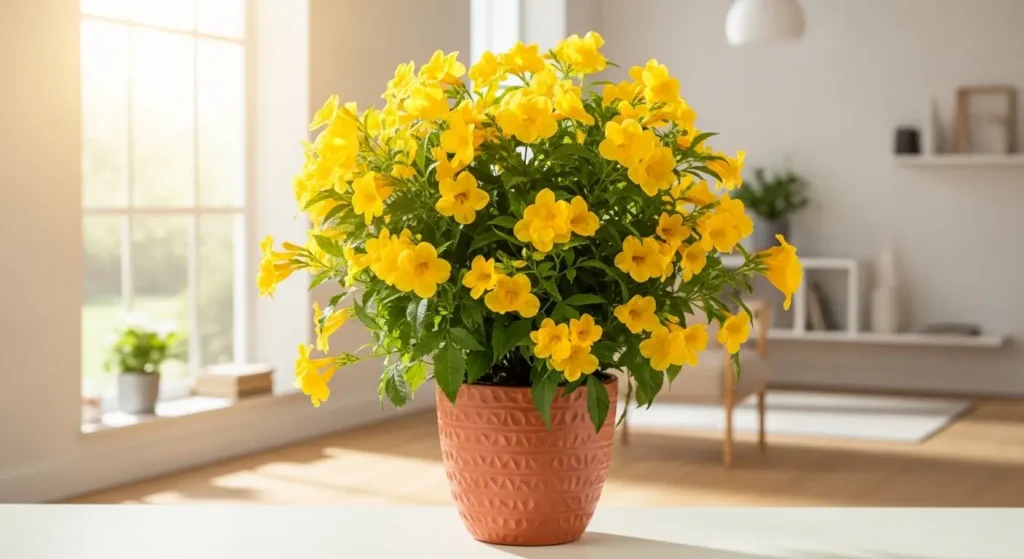
The esperanza plant (Tecoma stans) also called yellow bells is a sun-loving shrub bursting with trumpet-shaped yellow flowers all season long. Native to the Americas, it thrives in heat and drought. Honestly, it’s hard to beat for low-maintenance color.
Plant Care Card
| Detail | Info |
|---|---|
| Common Name | Esperanza, Yellow Bells, Yellow Elder |
| Botanical Name | Tecoma stans |
| Family | Bignoniaceae |
| Plant Type | Perennial shrub (evergreen in warm climates) |
| Mature Size | 3–6 ft tall x 3–5 ft wide (up to 20 ft in ideal conditions) |
| Sun Exposure | Full sun |
| Soil Type | Well-draining, sandy or loamy |
| Soil pH | 6.0–8.0 |
| Hardiness Zones | USDA Zones 8–11 |
| Native Area | Southern U.S., Central and South America |
| Toxicity | Mildly toxic to pets and humans if ingested |
Esperanza Plant Care
The esperanza plant is surprisingly low-maintenance once it’s established it’s basically a sun lover that thrives on neglect. The sections below cover everything you need to know, from light and soil to watering and propagation. Trust me, you’ll love how simple this plant is to care for.
Light
Esperanza absolutely loves full sun aim for at least 6–8 hours daily. The more sun it gets, the more it blooms. Place it in a south- or west-facing spot.
Too little light means fewer flowers and leggier growth. A sunny patio works great for containers. Don’t settle for shade.
Soil
Esperanza thrives in well-draining soil it hates soggy conditions. A sandy or loamy mix works perfectly. For heavy clay, amend before planting with a mix of 2 parts soil, 1 part sand, 1 part perlite. According to the University of Florida IFAS Extension, good drainage is critical for heat-tolerant shrubs.
Water
Water esperanza deeply but infrequently once the top 2–3 inches of soil feel dry. During the growing season, that’s roughly once a week. Overwatering causes yellowing leaves and root rot; underwatering leads to wilting. Similar needs apply to bougainvillea. Reduce watering significantly in fall and winter.
Temperature and Humidity
Esperanza is a true heat lover it performs best between 65°F and 95°F (18°C–35°C). It tolerates brief dips down to around 25°F (-4°C) but may die back to the ground in hard freezes. In USDA zones 8–9, it often regrows from the roots in spring.
Humidity isn’t a concern for this plant. It grows happily in dry climates and doesn’t need misting or extra moisture in the air. However, keep it away from cold drafts and AC vents if grown near a structure. Consistent warmth and sunshine are all it really needs.
Fertilizer
Feed with a balanced slow-release fertilizer (10-10-10) in early spring when new growth begins. Repeat every 4–6 weeks through summer. According to Penn State Extension’s guidelines on fertilizing outdoor shrubs, feeding during the active growing season supports stronger blooms without pushing excessive leafy growth. Stop fertilizing entirely in fall and winter the plant is resting.
Types of Esperanza Plant
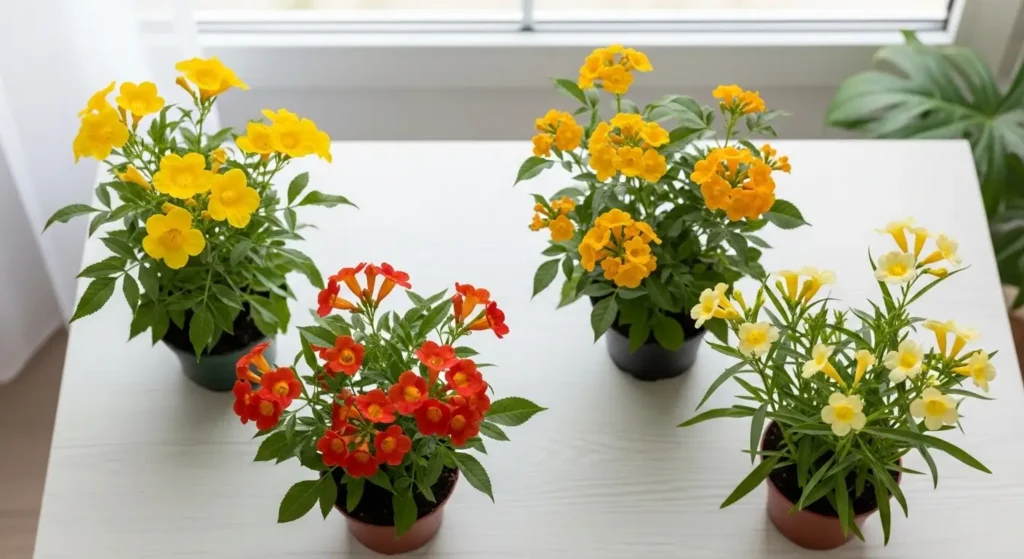
There are several notable varieties of the esperanza plant worth knowing about.
- Tecoma stans var. stans — The classic species with bright yellow trumpet flowers. Grows vigorously in warm climates and can reach 20 feet in ideal conditions.
- ‘Gold Star’ Esperanza (Tecoma stans ‘Gold Star’) — A popular compact cultivar, typically 3–5 ft tall. Heavy bloomer with deep golden-yellow flowers all summer long.
- ‘Crimson Flare’ Esperanza (Tecoma × ‘Crimson Flare’) — A hybrid with striking orange-red trumpet flowers instead of yellow. Equally heat-tolerant and drought-hardy.
- Tecoma stans var. angustata — A narrower-leafed variety native to Texas. Slightly more cold-hardy than the standard species, making it a solid pick for zone 8 gardeners.
Pruning
Prune your esperanza plant in late winter or very early spring, just before new growth begins. Remove any dead or frost-damaged branches first. Then trim back leggy stems by about one-third to encourage bushy, compact growth and more blooms.
During the growing season, deadheading spent flowers isn’t necessary but can encourage a tidier appearance. Use clean, sharp pruning shears. Don’t be shy about cutting this plant bounces back fast and blooms more heavily after a good trim.
Propagating Esperanza Plant
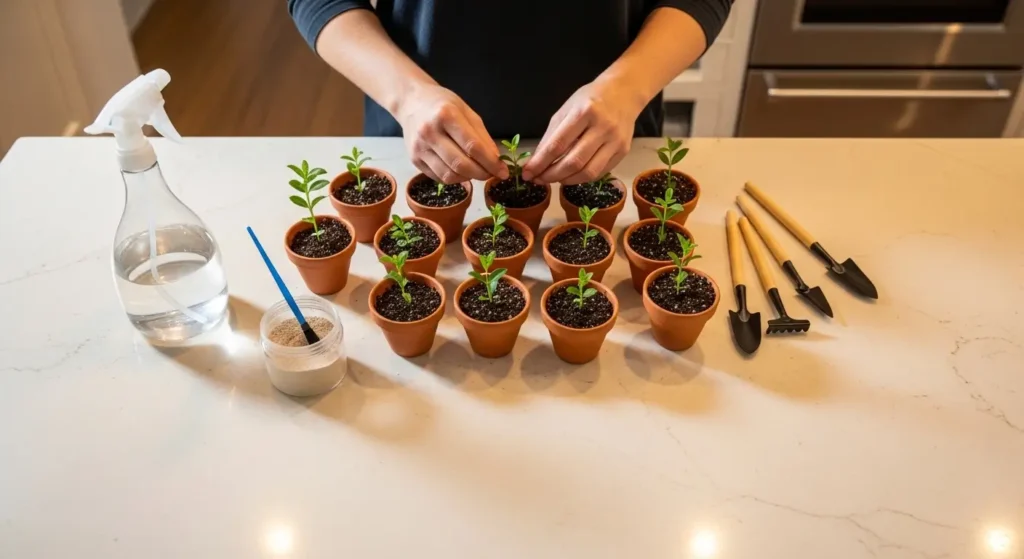
The best time to propagate esperanza is during spring and summer when the plant is actively growing. You can use stem cuttings or seeds stem cuttings are faster and more reliable.
Propagating by Stem Cuttings
Stem cuttings are the most popular method for propagating the esperanza plant and give you the fastest results.
Materials needed:
- Sharp, clean pruning shears or scissors
- 4-inch pot with drainage holes
- Well-draining potting mix (or 50/50 perlite and potting soil)
- Rooting hormone powder (optional but helpful)
- Plastic bag or humidity dome
Steps:
Step 1: Take a 4–6 inch cutting from a healthy, non-flowering stem. Cut just below a leaf node at a 45-degree angle. Remove all lower leaves, leaving only 2–3 at the tip.
Step 2: Dip the cut end in rooting hormone powder, tapping off any excess. This step isn’t required but speeds up rooting significantly for the esperanza plant.
Step 3: Insert the cutting about 1–2 inches deep into your pre-moistened potting mix. Firm the mix around the base so it stands upright without support.
Step 4: Cover loosely with a plastic bag or humidity dome to trap moisture. Place in bright indirect light and keep the mix just barely moist — not wet. Roots typically develop in 3–5 weeks.
This same method works well for dipladenia, another sun-loving tropical shrub that roots readily from cuttings.
Propagating by Seed
Seeds are another option and quite easy to try.
Steps:
- Step 1: Collect dry seed pods in fall or purchase seeds from a supplier.
- Step 2: Sow seeds ¼ inch deep in moist seed-starting mix. Keep at 70–75°F.
- Step 3: Seeds typically germinate in 2–3 weeks. Once seedlings have 2–3 true leaves, transplant to individual pots.
- Step 4: Move outdoors after the last frost date.
Potting and Repotting
When to Repot
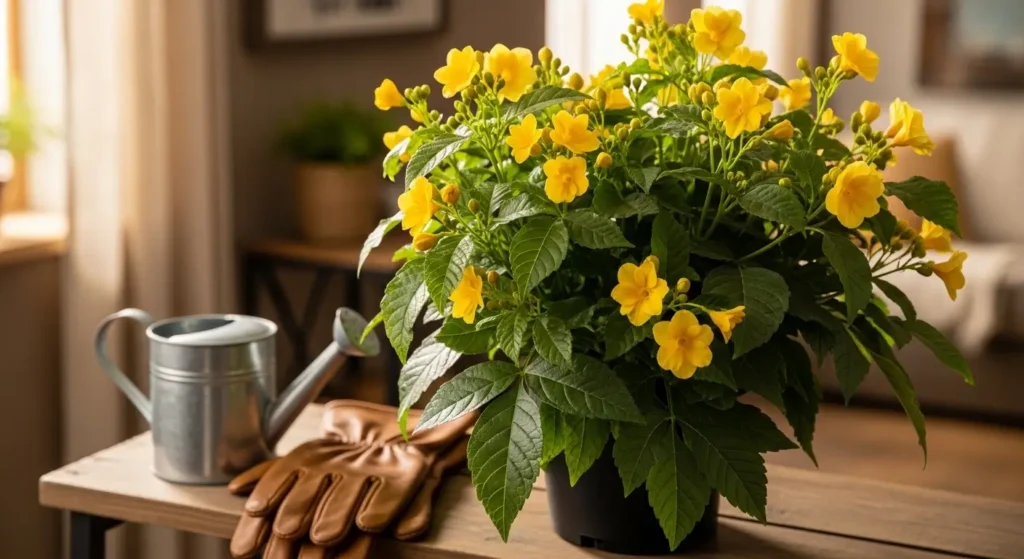
Repot your esperanza plant every 1–2 years, or when you see roots circling the bottom of the pot or poking out of drainage holes. Spring is the best time to repot — the plant bounces back fastest during active growth.
How to Repot
Choose a new container that’s 2–3 inches larger in diameter. Make sure it has good drainage holes — this is non-negotiable for esperanza. Fill the bottom with fresh, well-draining potting mix. Gently loosen the root ball, remove any dead or mushy roots, and settle the plant at the same depth it was before. Water thoroughly after repotting.
Common Pests and Diseases
Like most outdoor shrubs, the esperanza plant can occasionally attract a few unwanted visitors. Regular checks make a big difference.
Spider Mites
Look for fine webbing and stippled, pale leaves. Treat with a strong spray of water or apply neem oil solution, repeating weekly until clear.
Mealybugs
White, cottony clusters appear at leaf joints and stem bases. Remove by hand with rubbing alcohol on a cotton swab, then apply insecticidal soap.
Scale Insects
Brown, shell-like bumps cling to stems. Scrape off with a soft brush and treat with horticultural oil to smother remaining insects.
Aphids
Small clusters of green or black insects gather on new growth. Knock them off with a water blast or use insecticidal soap spray. According to the University of California IPM Program’s guide on managing common garden pests, early detection and consistent treatment prevent serious infestations.
Fungus Gnats
Tiny flies hovering near soil indicate overwatering. Let soil dry out more between waterings and use sticky yellow traps near the base.
Common Problems with Esperanza Plant
Here’s how to troubleshoot common issues:
Yellow Leaves
Overwatering is the top culprit soggy soil suffocates roots and causes fast yellowing. Check drainage and reduce watering immediately. Nutrient deficiency (nitrogen or iron) also triggers yellowing in sandy soils try a balanced fertilizer. Older leaves naturally yellow with age. Similar issues affect Texas sage in poor-draining spots.
Brown Leaf Tips
Brown tips usually signal low humidity or inconsistent watering. In very dry climates or near heat vents, leaf tips crisp up quickly. Make sure you’re watering deeply enough and check that the root zone isn’t completely dried out. Fluoride or salt buildup in the soil from tap water can also cause tip burn flushing the soil occasionally helps.
Drooping or Wilting Leaves
Wilting leaves point to a watering problem in either direction. Underwatered plants wilt and the soil feels bone dry. Overwatered plants wilt too but the soil feels wet and stems may feel soft. Check the soil moisture first before reaching for the watering can. These same symptoms pop up in French lavender when drainage is poor.
Leggy Growth / Sparse Foliage
If your esperanza is stretching out with long gaps between leaves, it’s not getting enough direct sun. Move it to a sunnier location immediately. A good pruning in late winter will also encourage bushy, dense regrowth don’t skip that step.
FAQ
Is Esperanza fast growing?
Yes, esperanza is a fast grower. In warm climates with full sun, it can add 2–3 feet of growth per season. Ideal conditions speed things up considerably.
Is Esperanza a tree or bush?
Esperanza is typically grown as a woody shrub, though in frost-free zones it can grow into a small tree reaching up to 20 feet tall.
Where is the best place to plant Esperanza?
Plant esperanza in full sun with well-draining soil. A south- or west-facing garden bed with reflected heat from walls or pavement is perfect.
What is the Esperanza plant good for?
The esperanza plant attracts hummingbirds and butterflies, provides long-season color, and works great as a drought-tolerant hedge or specimen shrub in hot climates.