
Table of Contents
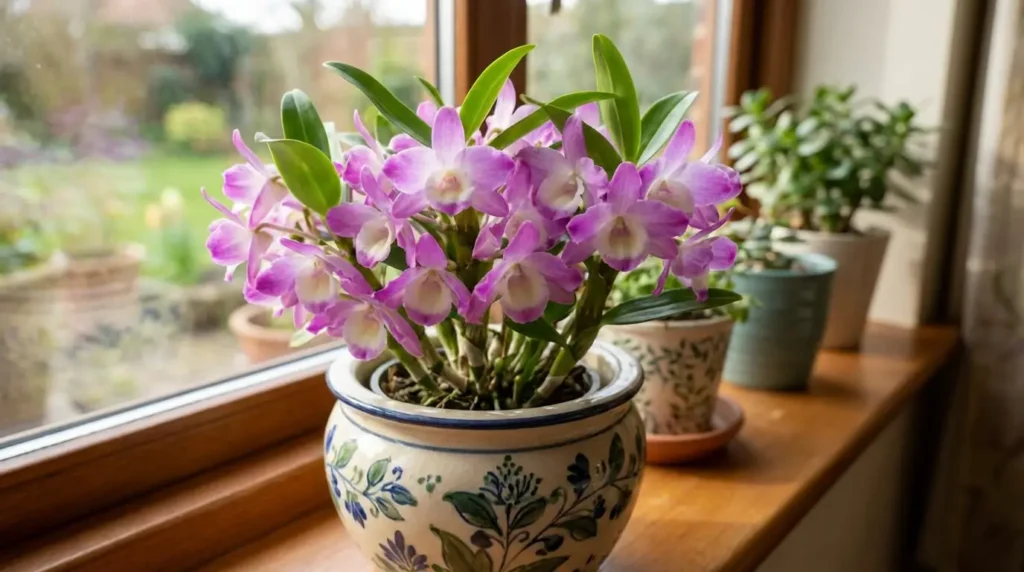
If you’ve ever spotted a dendrobium orchid at a garden center and thought “too fancy for me” think again. Native to Southeast Asia, these stunning tropical plants produce cascading flowers in white, purple, and pink. Care difficulty? Moderate, but totally manageable once you know the basics.
Plant Care Card
| Detail | Info |
|---|---|
| Common Name | Dendrobium Orchid |
| Botanical Name | Dendrobium spp. |
| Family | Orchidaceae |
| Plant Type | Epiphytic perennial |
| Mature Size | 6 in – 4 ft tall depending on variety |
| Sun Exposure | Bright indirect light |
| Soil Type | Well-draining orchid bark mix |
| Soil pH | 5.5 – 6.5 |
| Hardiness Zones | USDA Zones 10–12 (indoors elsewhere) |
| Native Area | Southeast Asia, Australia, Pacific Islands |
| Toxicity | Non-toxic to humans; mildly toxic to cats and dogs |
Dendrobium Orchid Care
Dendrobium orchid care is moderate not the easiest, but definitely not the hardest houseplant you’ll ever grow. The sections below cover everything from light and soil to watering, humidity, and feeding. You’ve got this!
Light
Dendrobium orchids love bright indirect light think a spot near an east- or south-facing window with a sheer curtain. They need more light than most houseplants, so don’t tuck them in a dark corner.
Too much direct sun will scorch the leaves and turn them yellow. Too little light, on the other hand, means fewer (or zero) blooms. A good rule of thumb: if you can comfortably read a book in that spot, your dendrobium will probably be happy.
Soil
These plants are epiphytes, meaning they grow on trees in the wild so regular potting soil is a big no. Go for a chunky orchid bark mix that drains fast and lets air reach the roots.
A simple DIY mix works great: try a ratio of 2 parts orchid bark : 1 part perlite. This keeps roots airy and prevents the soggy conditions that cause rot. According to the University of Florida IFAS Extension’s guide on growing media, good drainage is one of the most critical factors in healthy root development for epiphytic plants.
Water
Water your dendrobium orchid every 7–10 days during the growing season, and let the top 2 inches of bark dry out between waterings. These plants hate sitting in soggy mix, so always empty the saucer after watering.
In fall and winter, cut back to watering every 2–3 weeks. This rest period actually helps trigger blooming. Signs of overwatering include yellowing pseudobulbs and mushy roots; underwatered plants will show wrinkled, shriveled pseudobulbs.
Similar watering principles apply to goldfish plant care, another tropical bloomer that prefers a dry-down period between drinks.
Temperature and Humidity
Dendrobium orchids prefer daytime temperatures of 65–85°F (18–29°C) and nighttime temps around 55–65°F. That cooler night temperature especially in fall helps trigger flowering. Pretty cool trick, right?
Humidity should sit around 50–70%. Most homes run drier than that, so a pebble tray with water or a small humidifier near your plant helps a lot. Keep dendrobiums away from heating vents, air conditioners, and drafty windows they don’t like sudden temperature swings.
Fertilizer
Feed your dendrobium with a balanced liquid orchid fertilizer (20-20-20) diluted to half strength every 2–3 weeks during spring and summer. Reduce feeding to once a month in fall, and stop completely in winter to allow the plant to rest before blooming.
Types of Dendrobium Orchid
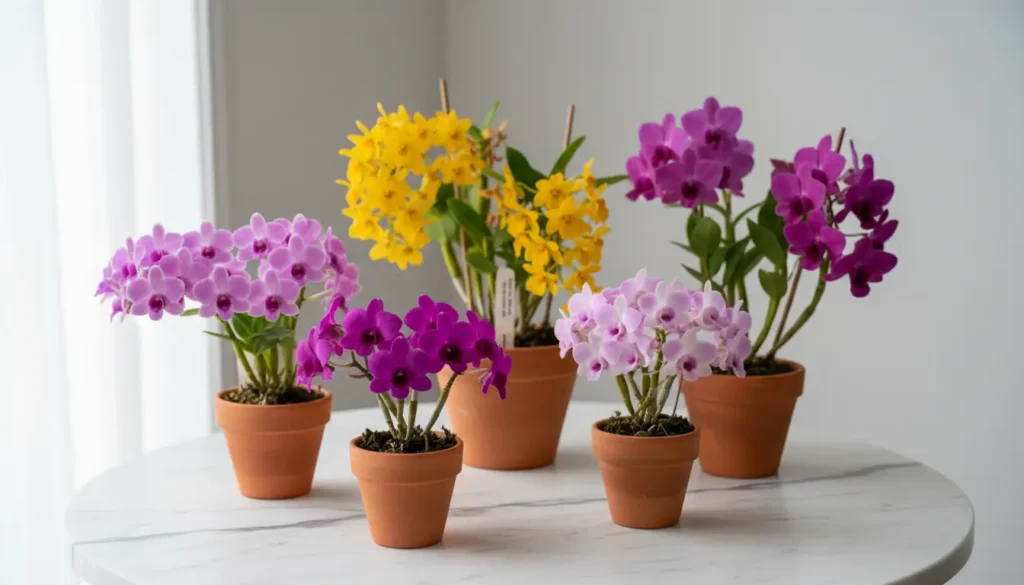
There are hundreds of dendrobium varieties — here are a few standouts worth knowing:
- Dendrobium nobile (Dendrobium nobile) — The classic. Fragrant flowers in pink, white, and purple. Needs a cool, dry rest in winter to bloom reliably.
- Dendrobium phalaenopsis (Dendrobium bigibbum) — Long-lasting blooms that resemble Phalaenopsis orchids. Great for beginners who want showy flowers.
- Dendrobium aggregatum (Dendrobium lindleyi) — Compact grower with cheerful golden-yellow flower clusters. Blooms in spring.
- Dendrobium kingianum (Dendrobium kingianum) — Hardy, compact, and very free-flowering. A great starter dendrobium, especially for cooler climates.
- Dendrobium anosmum (Dendrobium anosmum) — Stunning purple-pink flowers with a raspberry scent. A real showstopper during bloom season.
Propagating Dendrobium Orchid
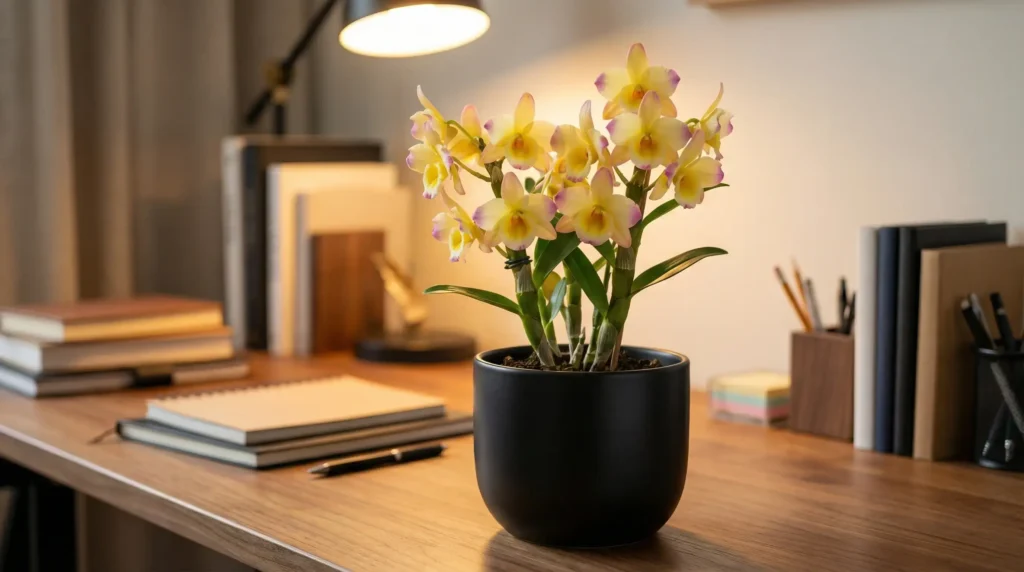
The best time to propagate a dendrobium orchid is during spring or early summer, when the plant is actively growing. Two reliable methods work really well: keiki propagation and back-bulb division.
Propagating by Keiki
Keikis (Hawaiian for “baby”) are tiny plantlets that sometimes sprout naturally from the nodes on older canes. This is hands-down the easiest way to get a new dendrobium orchid.
Materials needed:
- Sterilized scissors or pruning shears
- Small pot (3–4 inches)
- Orchid bark mix
- Rooting hormone (optional)
Steps:
Step 1: Wait until the keiki has developed at least 2–3 roots that are 1–2 inches long. Don’t rush this roots matter more than leaves here.
Step 2: Use sterilized scissors to cut the keiki away from the parent cane, leaving a small stub on both sides to avoid damaging either plant.
Step 3: Dip the roots lightly in rooting hormone if you have it, then place the keiki in a small pot filled with fresh orchid bark mix.
Step 4: Water lightly and place in a warm, bright spot with high humidity. A clear plastic bag loosely over the pot can help retain moisture for the first week.
Expect roots to settle and new growth to appear within 4–8 weeks. Just like with arrowhead plant propagation, patience is your best tool here.
Propagating by Back-Bulb Division
If your dendrobium has old, leafless canes (called back-bulbs), don’t toss them they can grow into new plants!
Step 1: Remove 2–3 healthy-looking back-bulbs from the base of the plant using sterilized shears.
Step 2: Place them horizontally on top of moist sphagnum moss in a tray or shallow container.
Step 3: Keep warm and humid a loosely covered propagation tray works great. New shoots should emerge within 6–10 weeks.
Potting and Repotting
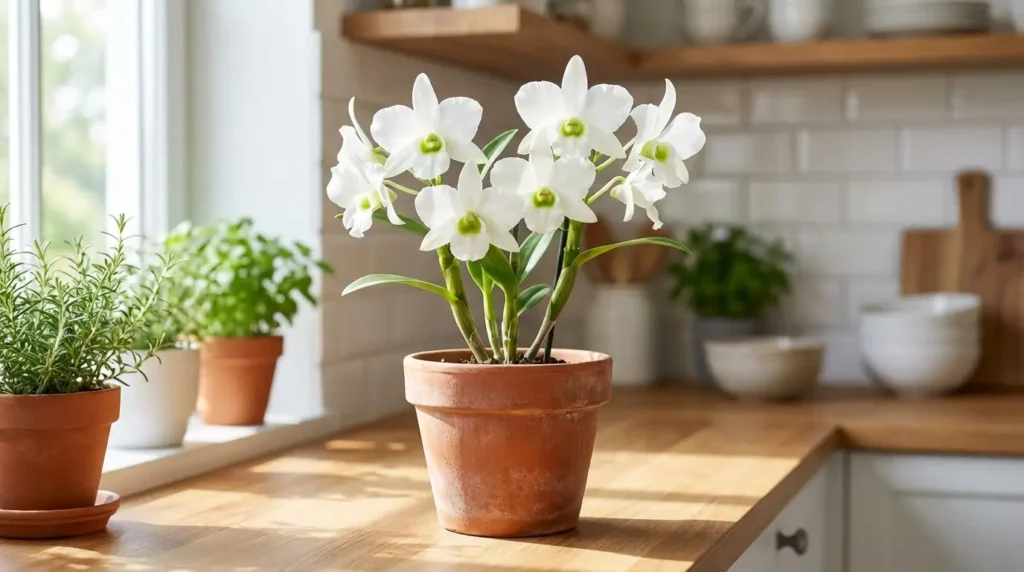
Repot your dendrobium orchid every 2 years, or whenever you see roots escaping from the drainage holes or the bark breaking down into a mushy, compacted mess. Spring is the best time to repot, right as new growth begins.
Choose a pot that’s only 1–2 inches larger than the current one. These plants actually bloom better when slightly root-bound, so don’t jump to a huge pot. Terracotta or clear plastic pots both work great the clear ones let you monitor root health easily.
Remove old bark, trim any dead or rotted roots, and place the plant in fresh orchid mix. Water sparingly for the first two weeks while roots adjust.
Common Pests and Diseases
Like most houseplants, dendrobium orchids can occasionally attract a few unwanted visitors. Check your plant regularly early detection makes treatment much easier.
Spider Mites
Look for fine webbing and tiny dots on leaves. Treat with a neem oil spray or insecticidal soap, repeating weekly until clear.
Mealybugs
White cottony clusters appear in leaf joints and along stems. Dab with a cotton swab dipped in rubbing alcohol, or spray with diluted neem oil.
Scale Insects
Brown, shell-like bumps stick to canes and leaves. Scrape off with a soft toothbrush, then treat with horticultural oil.
Aphids
Small green or black bugs cluster on new growth. Knock them off with a strong water spray, then follow up with insecticidal soap.
Fungus Gnats
Tiny flies hovering around the bark indicate larvae in the mix. Let the bark dry out more between waterings and use sticky traps to catch adults.
According to Penn State Extension’s integrated pest management guide, regular inspection and early treatment are the most effective ways to keep houseplant pests under control.
Common Problems
Here’s how to troubleshoot common issues:
Yellow Leaves
Yellow leaves are the most common complaint with dendrobium orchids, and honestly, it can mean a few different things. Overwatering is the top cause soggy bark suffocates roots and leads to yellowing pseudobulbs. A nutrient deficiency (especially nitrogen) can also turn older leaves pale yellow. Finally, some yellowing of the oldest leaves is just natural aging and nothing to worry about. Check your watering routine first, and if that’s fine, consider feeding more regularly. Similar yellowing issues crop up with calathea plant care when watering is off.
Brown Leaf Tips
Brown tips are usually a humidity or water quality issue. Low humidity is the most common culprit dendrobiums love moisture in the air. Tap water with high fluoride or chlorine can also burn leaf tips over time; try switching to filtered or rainwater. Mild underwatering can cause browning too. Increase humidity, adjust your water source, and trim the brown tips with clean scissors to keep things tidy.
Drooping or Wilting Leaves
Droopy, soft leaves usually point to a watering problem either too much or too little. Overwatered roots can’t take up water properly, so the plant wilts even in wet soil. Underwatered plants simply run dry. Check the roots: mushy brown roots mean overwatering; dry, white roots mean it’s thirsty. Adjust accordingly and your plant should perk back up within a few days. This same issue pops up with rubber plant care when watering goes off track.
Leggy Growth / Sparse Foliage
Long, stretched canes with few leaves usually mean the plant isn’t getting enough light. Move it closer to a bright window an east- or south-facing spot works best. You can also trim overly leggy canes back after blooming to encourage new, bushier growth from the base.
FAQ
How do you take care of a Dendrobium orchid?
Place in bright indirect light, water every 7–10 days, and feed with diluted orchid fertilizer every 2–3 weeks during the growing season.
How often do Dendrobium orchids bloom?
Most dendrobium orchids bloom once or twice per year, typically in spring. A cool, dry rest period in fall encourages flowering.
Is Dendrobium an indoor plant?
Yes! Dendrobium orchids grow well indoors near a bright window. They thrive in typical household conditions with added humidity.
Do Dendrobium orchids like sun or shade?
They prefer bright indirect light not harsh direct sun. A sheer-curtained east or south window is the sweet spot for healthy growth.