
In This Article
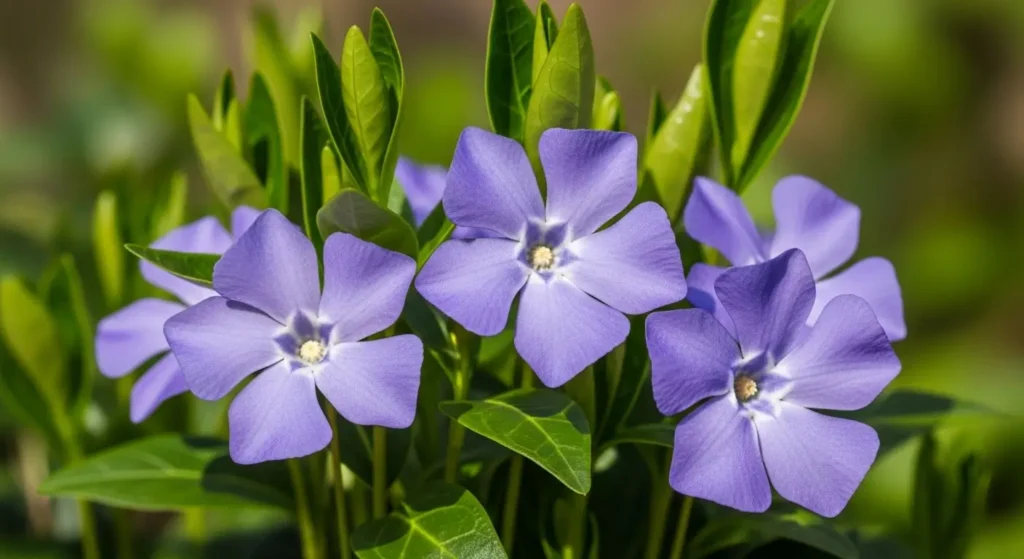
Creeping myrtle (Vinca minor), also known as periwinkle, is a low-growing perennial ground cover native to Europe. It forms a dense, weed-suppressing carpet of glossy green leaves and lavender-blue spring flowers. Hardy in zones 4–9, this easy-care trailing plant thrives in shaded spots where other plants struggle.
Plant Care Card
| Field | Details |
|---|---|
| Common Name | Creeping myrtle, periwinkle, lesser periwinkle |
| Botanical Name | Vinca minor |
| Family | Apocynaceae |
| Plant Type | Perennial ground cover |
| Mature Size | 3–6 inches tall x 18–24 inches wide |
| Sun Exposure | Full sun to full shade |
| Soil Type | Well-draining, loamy or sandy |
| Soil pH | 6.0–8.0 (slightly acidic to alkaline) |
| Hardiness Zones | 4–9 (USDA) |
| Native Area | Central and southern Europe |
| Bloom Time | Spring (March–May); occasional reblooms |
| Toxicity | Toxic to dogs, cats, and horses |
Creeping Myrtle Care
Creeping myrtle is one of the most forgiving ground covers you can plant in your garden. Here’s what you need to know about sun, soil, water, and basic maintenance. With the right placement, this plant practically takes care of itself.
Light
Creeping myrtle thrives in full sun to full shade, making it perfect for tricky spots under trees. For the best blooms, aim for 3–6 hours of dappled light daily. In hotter climates, afternoon shade is beneficial. If you’re filling a shaded border, monkey grass is another excellent shade-tolerant ground cover worth considering.
Soil
Creeping myrtle prefers well-draining, loamy or sandy soil with a pH of 6.0–8.0 waterlogged roots are its biggest enemy. For heavy clay soils, the University of Florida IFAS Extension recommends amending with compost and coarse sand. Avoid low-lying areas with standing water, as this perennial naturally thrives even in poor, rocky soils.
Water
Water newly planted creeping myrtle once or twice per week until established. After that, it’s notably drought-tolerant and relies mostly on natural rainfall. In summer, water during extended dry spells; reduce in winter as the plant slows down. Yellowing leaves signal overwatering; brown, dry edges mean it needs more water.
Temperature and Humidity
Creeping myrtle thrives between 50°F and 80°F and is cold-hardy down to -20°F in zone 4 no winter protection needed in most regions. In zones 8–9, summer heat is the bigger concern. A 2-inch mulch layer helps regulate soil temperature and retain moisture year-round.
Fertilizer
Creeping myrtle grows well without heavy feeding. Apply a balanced slow-release granular fertilizer (10-10-10) once in early spring as new growth appears. Avoid fertilizing in late summer or fall, as this encourages tender new growth that can be damaged by early frosts. In nutrient-rich soils, fertilizer may not be needed at all.
Types of Creeping Myrtle
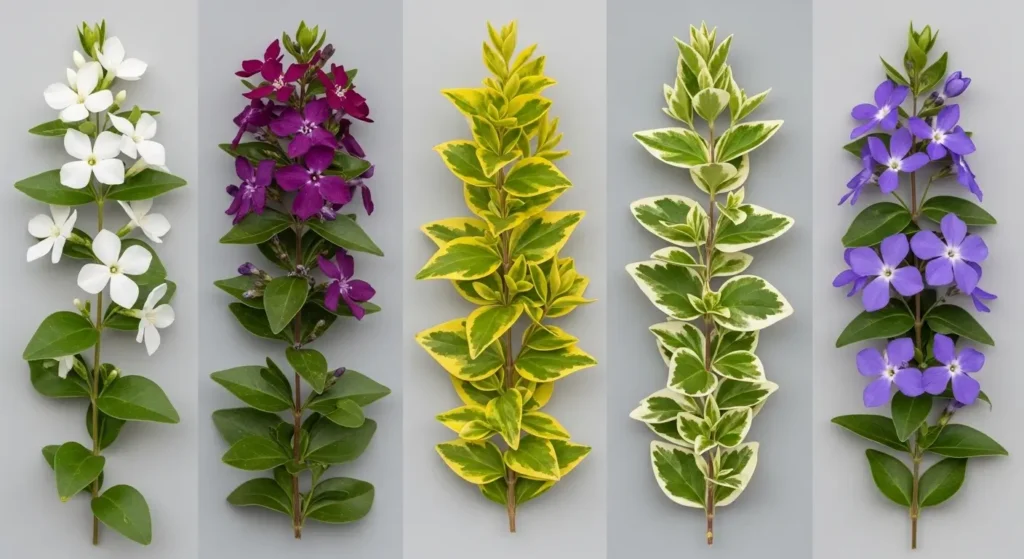
Several named cultivars offer interesting variations in flower color and foliage. Here are some popular picks for the garden:
- ‘Alba’ (Vinca minor ‘Alba’): A white-flowered variety with the same dark glossy leaves. A clean, elegant look that brightens shaded spots beautifully.
- ‘Atropurpurea’ (Vinca minor ‘Atropurpurea’): Deep plum-purple blooms that stand out vividly against the dark foliage. Exceptionally striking in spring.
- ‘Illumination’ (Vinca minor ‘Illumination’): Bright gold-and-green variegated leaves with lavender-blue flowers. One of the most eye-catching options for adding color to shade gardens.
- ‘Ralph Shugert’ (Vinca minor ‘Ralph Shugert’): White-edged leaves with purple-blue flowers. A great choice if you want variegated foliage without sacrificing bloom color.
- ‘Gertrude Jekyll’ (Vinca minor ‘Gertrude Jekyll’): A compact, slow-spreading form with white flowers. Ideal for smaller spaces where aggressive spread is a concern.
Pruning
Prune creeping myrtle in early spring or right after the main bloom in late April or May. Cut stems back by one-third to encourage bushier growth and a second flush of blooms. Regular trimming prevents an unmanageable mat. Our Swedish ivy care guide covers the same post-bloom pruning approach.
Propagating Creeping Myrtle
The best time to propagate creeping myrtle is spring through early summer, when the plant is actively growing and stems are full of energy. This perennial is one of the easiest plants to propagate you have several reliable methods to choose from.
Propagating by Stem Cuttings
Stem cuttings are the fastest and most reliable way to multiply your creeping myrtle. This method works best from late spring through midsummer.
Materials needed:
- Sharp, clean pruning shears
- Small pots or seedling trays
- Moist, well-draining potting mix
- Rooting hormone (optional but helpful)
Steps:
- Select a healthy stem that is 4–6 inches long with at least two sets of leaves. Cut just below a leaf node using clean shears.
- Strip the lower leaves from the bottom half of the cutting, leaving 2–3 leaves at the top to support photosynthesis.
- Dip the cut end in rooting hormone powder, then insert it about 2 inches deep into moist potting mix. Firm the soil around the base.
- Place the pot in a warm spot with bright, indirect light. Keep the soil consistently moist but not soggy. Cover loosely with a plastic bag to retain humidity.
Roots typically form within 3–5 weeks. Once cuttings show new leaf growth, you can transplant them into the garden.
Propagating by Division
Division works best in early spring or fall. Dig up a clump with a garden fork, cut it into sections with healthy roots, and replant immediately at the same depth. Keep soil moist for two weeks divisions fill in new areas within one season. Other spreading perennials like foxtail fern respond just as well.
Propagating by Layering
Creeping myrtle actually layers itself naturally as its long stems touch the ground and root at the nodes. To speed this up, pin a low-growing stem to the soil using a U-shaped garden staple, leaving the tip exposed. Keep the area moist, and within 4–6 weeks, roots will form at the pinned node. Cut the stem from the parent plant, wait another week or two, then dig up the rooted section and transplant it.
Planting and Transplanting Creeping Myrtle
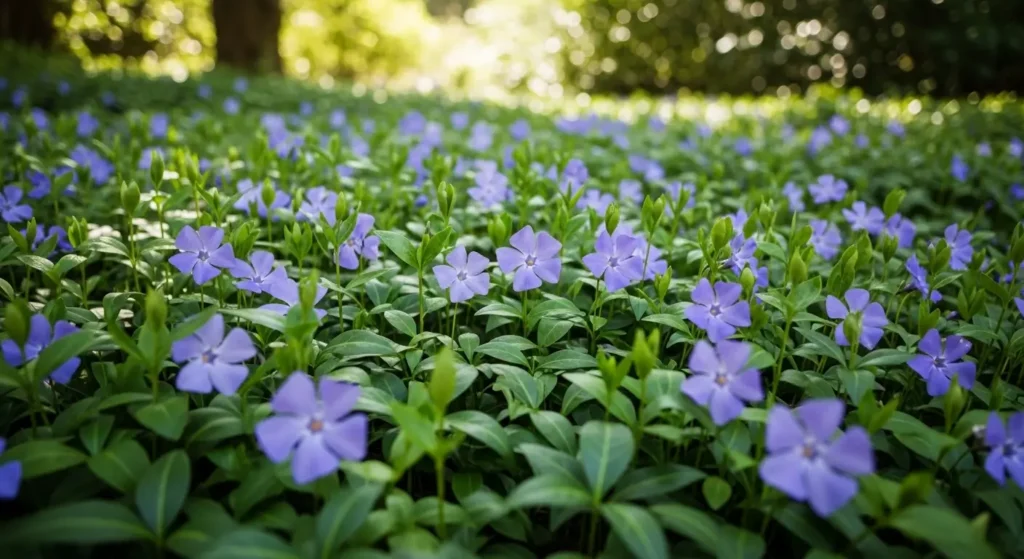
Spring and early fall are the best times to plant creeping myrtle outdoors. Space plants 12–18 inches apart they spread quickly and will fill in gaps within a single growing season. In very shaded spots, plant slightly closer together (10–12 inches) for faster coverage.
Dig a hole slightly wider than the root ball and at the same depth. Set the plant in place, backfill with the original soil, and firm gently around the base. Water thoroughly after planting. According to the USDA PLANTS Database profile for Vinca minor, this species establishes best when planted in early spring before temperatures climb above 75°F.
Transplant or divide established creeping myrtle every 3–5 years to prevent overcrowding and maintain vigorous growth. Early spring, just as new growth appears, is the ideal time for division.
Common Pests and Diseases
Like most garden plants, creeping myrtle can occasionally face pest or disease challenges. Here’s what to watch for.
Aphids
Look for clusters of small, soft-bodied insects on new stem tips. Treat with a strong blast of water or apply neem oil spray to affected areas.
Spider Mites
Check for fine webbing and stippled, dull leaves, especially in hot, dry weather. Treat with insecticidal soap or neem oil applied to the undersides of leaves.
Powdery Mildew
Watch for a white, powdery coating on leaves, particularly in humid conditions. Improve air circulation and treat with a diluted baking soda solution or a sulfur-based fungicide.
Root Rot
Soggy, yellowing plants with mushy stem bases are the telltale signs. Remove affected plants, improve drainage, and avoid overwatering going forward. Refer to the Penn State Extension IPM guide on ornamental plant diseases for more detailed treatment options.
Canker (Vinca Dieback)
Look for sudden stem collapse and brown, dead patches spreading through the mat. Remove and dispose of affected stems immediately do not compost them. Improve drainage and air circulation to prevent recurrence.
Common Problems with Creeping Myrtle
Here’s how to troubleshoot common issues with creeping myrtle:
Poor or No Blooms
Poor blooms usually mean too much shade move plants to get at least 3 hours of dappled light. Over-fertilizing with nitrogen also suppresses flowering, so switch to a phosphorus-rich feed in spring. Pruning too late removes flower buds, so always prune right after blooming. Other spring bloomers like crocus face the same timing issue.
Yellow or Browning Leaves
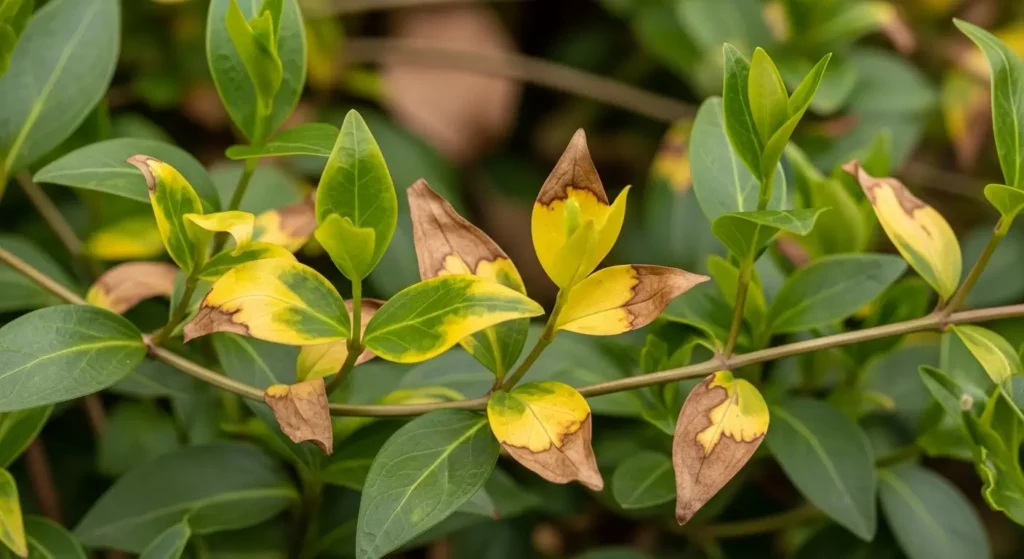
Yellowing leaves usually signal overwatering or poor drainage reduce watering and check your site stays dry after rain. Browning leaf edges point to underwatering or heat stress instead. If yellowing appears between the veins while veins stay green, suspect a nutrient deficiency. A light application of balanced fertilizer resolves this quickly.
Wilting or Drooping
Sudden wilting during a heat wave means underwatering or heat stress water deeply and add mulch. Wilting in cool, wet weather points to root rot or transplant shock instead. Check roots for mushiness and improve drainage immediately. Newly transplanted creeping myrtle often droops for a week or two before bouncing back.
Leggy or Sparse Growth
Leggy, bare stems almost always mean insufficient light. Move or thin surrounding plants to let in more sun, and cut stems back by one-third. Over-fertilizing with nitrogen also pushes weak, spindly growth. Relocate to brighter conditions and you’ll see denser growth within weeks. Tiger lily shows the exact same leggy response.
Frost Damage
In zones 4–5, late spring frosts can damage new growth that has already emerged. Frost-damaged stems turn brown and mushy. Cut damaged stems back to healthy tissue as soon as temperatures stabilize. The plant will regrow quickly once warm weather returns creeping myrtle is very cold-hardy overall and recovers well from minor frost events.
FAQ
Is creeping myrtle a good ground cover?
Yes, it’s one of the best low-maintenance ground covers available. It suppresses weeds effectively, tolerates shade, and stays green year-round with minimal care.
How invasive is creeping myrtle?
Creeping myrtle spreads moderately but is considered invasive in some Eastern U.S. states. Check local guidelines before planting near natural woodland areas.
Is creeping myrtle the same as periwinkle?
Yes, creeping myrtle and periwinkle both refer to Vinca minor. The two names are used interchangeably, though “periwinkle” also describes the flower’s blue-purple color.
What kills creeping myrtle?
Persistent herbicides containing glyphosate or triclopyr can kill it. Repeated cutting close to the ground over several seasons also weakens and eventually eliminates established patches.