
In This Article
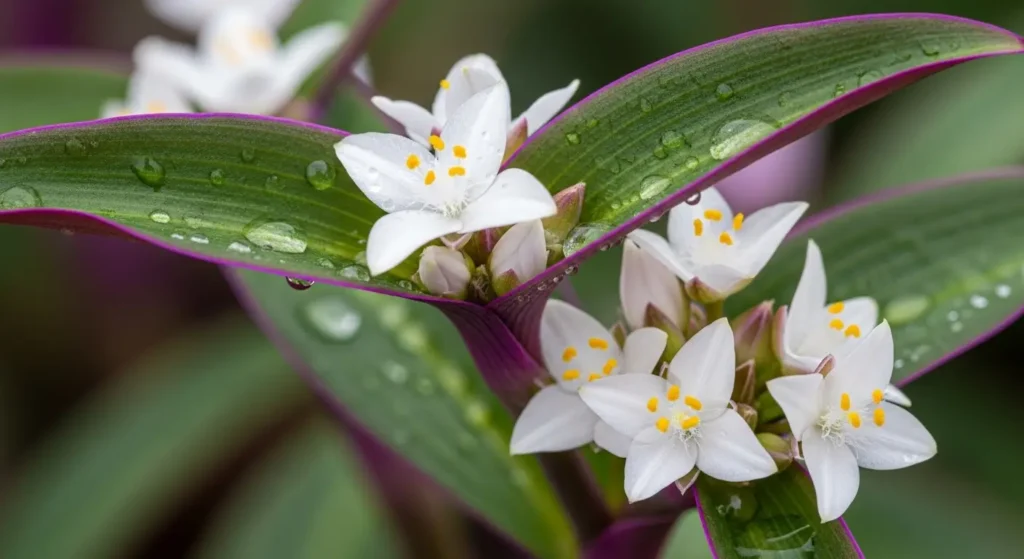
The bridal veil plant (Gibasis geniculata) is an elegant, easy-care trailing houseplant native to Mexico and Central America. Its cascading stems draped in tiny white flowers and lance-shaped leaves deep green on top, rich purple beneath create a stunning two-tone display perfect for beginners and experienced plant lovers alike.
Plant Care Card
| Detail | Info |
|---|---|
| Common Name | Bridal Veil Plant |
| Botanical Name | Gibasis geniculata |
| Family | Commelinaceae |
| Plant Type | Tropical perennial |
| Mature Size | 6–12 inches tall; trailing to 24 inches |
| Sun Exposure | Bright indirect light |
| Soil Type | Well-draining, loamy mix |
| Soil pH | 6.0–7.0 |
| Hardiness Zones | USDA Zones 9–11 outdoors; houseplant elsewhere |
| Native Area | Mexico and Central America |
| Toxicity | Non-toxic to cats and dogs |
Bridal Veil Plant Care
The bridal veil plant is considered an easy-care houseplant that does well with minimal fuss. The sections below cover everything from light and water to propagation and common problems. You’ve totally got this even if you’ve killed a plant or two before!
Light
The bridal veil plant thrives in bright indirect light. A spot near an east- or north-facing window works really well for this indoor plant. However, avoid placing it in harsh direct afternoon sun that can scorch those pretty leaves surprisingly fast.
On the flip side, too little light means fewer flowers and leggy, sparse growth. If your space doesn’t get much natural light, a grow light positioned 6–12 inches above the plant works like a charm.
Soil
This plant needs a well-draining, loamy soil mix to stay happy. Waterlogged roots are its number one enemy, so good drainage is absolutely non-negotiable. A simple DIY mix of 1 part perlite to 2 parts standard potting soil does the job beautifully.
According to Penn State Extension’s guide on houseplant growing media, adding a bit of organic matter like peat helps retain just enough moisture without suffocating roots. Always make sure your pot has drainage holes at the bottom.
Water
Water your bridal veil plant when the top 1–2 inches of soil feel dry to the touch. During spring and summer, that usually means watering every 5–7 days. In fall and winter, cut back significantly closer to once every 10–14 days.
Overwatering shows up as mushy stems or yellowing lower leaves. Underwatering causes wilting and dry, crispy leaf tips. Finding that middle ground is truly key.
Similar watering needs apply to the nerve plant, another humidity-loving trailing houseplant that prefers consistently moist but never soggy soil.
Temperature and Humidity
The bridal veil plant prefers temperatures between 60–80°F (15–27°C). It handles typical indoor conditions just fine, but keep it well away from cold drafts, air conditioning vents, and heating units.
This tropical plant also appreciates moderate to high humidity ideally 50% or above. A pebble tray filled with water or a small humidifier nearby makes a noticeable difference, especially during dry winter months.
Fertilizer
Feed your bridal veil plant with a balanced liquid fertilizer (10-10-10) diluted to half strength every 3–4 weeks during spring and summer. As noted in University of Florida IFAS Extension’s fertilization guidelines, reducing or stopping fertilization in fall and winter prevents salt buildup and root stress. Less is always more here.
Types of Bridal Veil Plant
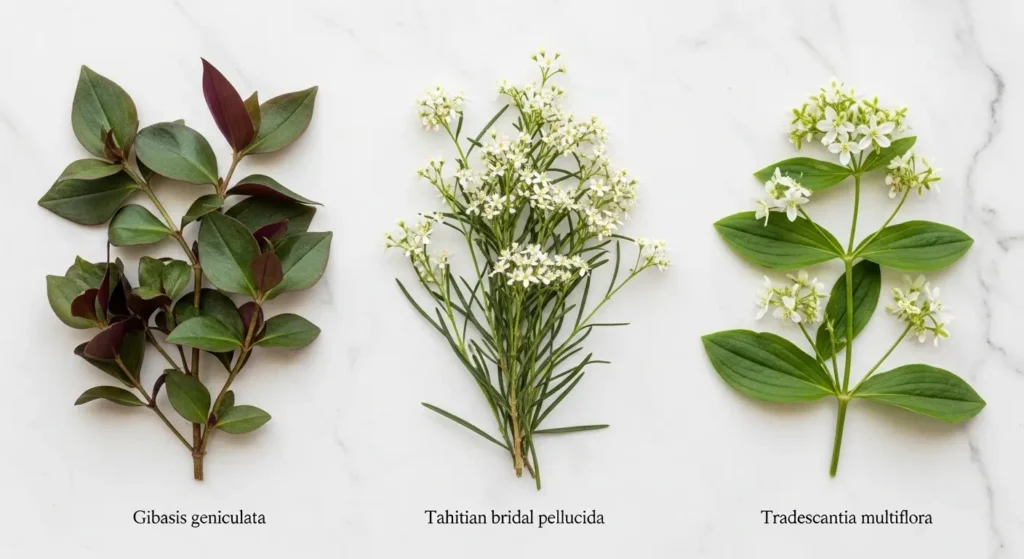
There are a few notable varieties worth knowing about. Each has its own charm, so let’s break them down.
- Gibasis geniculata — The most common variety, with deep green leaves, purple undersides, and tiny white star-shaped flowers. This is the classic trailing houseplant most people picture when they hear “bridal veil plant.”
- Tahitian Bridal Veil (Gibasis pellucida) — A popular cultivar with even more prolific blooming and a slightly more compact trailing form. It’s especially stunning in hanging baskets.
- Tradescantia multiflora — Sometimes sold under the same common name, this closely related species has similar trailing habits and delicate white blooms, though with slightly larger leaves overall.
Pruning
Pruning keeps your bridal veil plant looking full and bushy rather than stringy and bare. Trim back leggy stems in early spring using clean scissors or pruning shears.
Pinch off dead or yellowing leaves regularly throughout the year. This encourages new, denser growth and keeps the plant looking its absolute best. Don’t be shy about cutting back up to one-third of the plant if it gets too unruly.
Propagating Bridal Veil Plant
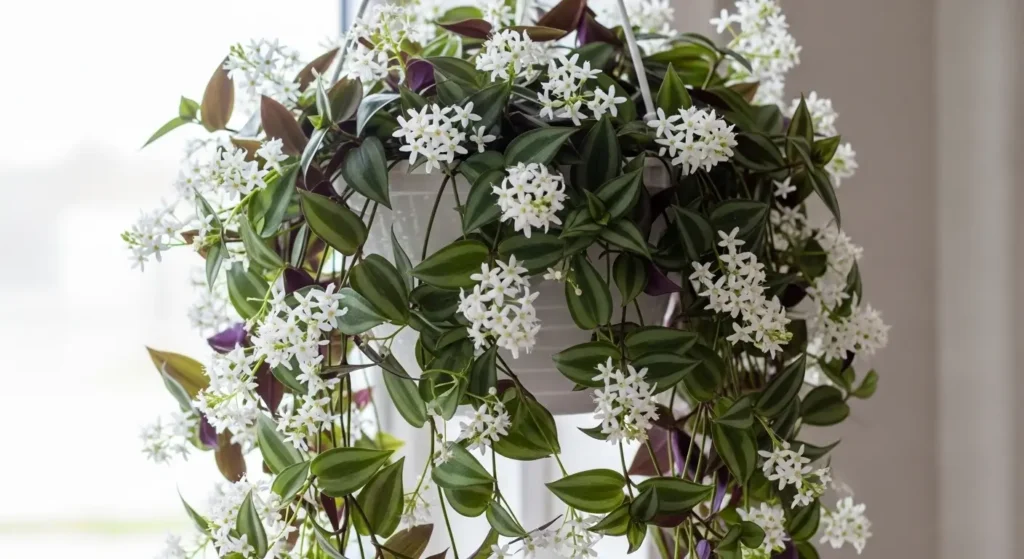
The best time to propagate your bridal veil plant is during spring or early summer when it’s actively growing. Honestly, propagation is one of the most rewarding parts of owning this plant you’ll have babies to share in no time.
Propagating by Stem Cuttings
Stem cuttings are by far the easiest and most reliable propagation method for the bridal veil plant.
Materials needed:
- Clean scissors or pruning shears
- Small pot with well-draining soil
- Water
- Optional: rooting hormone powder
Steps:
Step 1: Select a healthy stem at least 3–4 inches long with several leaf nodes. Cut just below a node using clean, sharp scissors.
Step 2: Remove the lower leaves so the bottom 1–2 inches of stem are completely bare. Leaving too many leaves on can cause the cutting to dry out before rooting.
Step 3: Insert the cutting about 1 inch deep into moist potting mix. Press the soil gently around the base to hold it upright and secure.
Step 4: Place the pot in bright indirect light and keep the soil lightly moist. Cover loosely with a clear plastic bag to retain humidity if you like.
Roots typically appear within 2–4 weeks. You’ll know it’s rooted when you feel gentle resistance if you tug the stem lightly. This propagation method works equally well for the arrowhead plant, another fast-rooting tropical houseplant that loves similar growing conditions.
Propagating by Division
Division is a great option if your bridal veil plant has grown into a large, bushy clump. Simply remove the plant from its pot and gently separate the root ball into 2–3 sections by hand. Make sure each section has both healthy roots and stems attached, then repot each division into fresh, well-draining soil.
The goldfish plant responds equally well to division, making it another beginner-friendly plant to practice this propagation method on.
Potting and Repotting Bridal Veil Plant
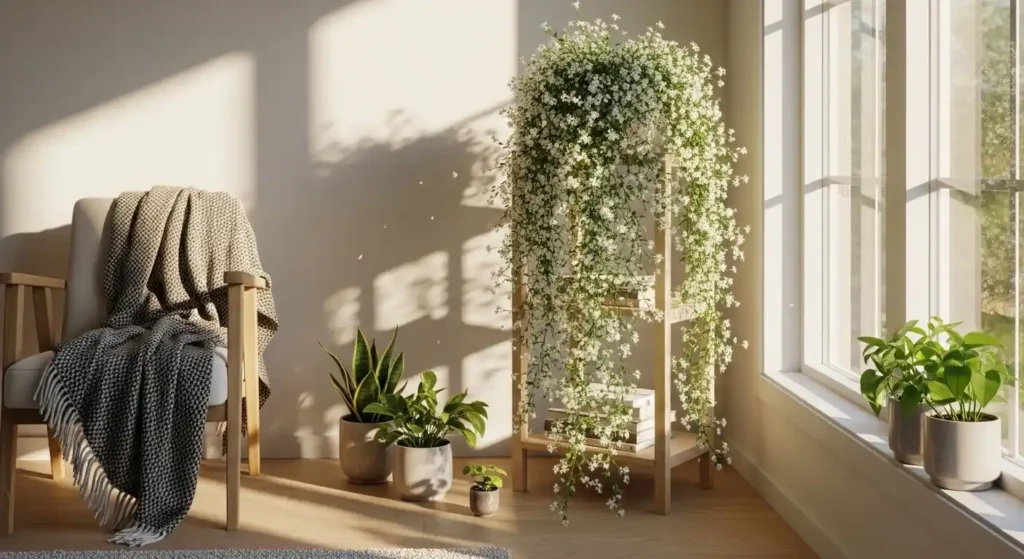
Repot your bridal veil plant every 1–2 years or whenever roots start poking out of the drainage holes. Choose a new pot that’s 1–2 inches larger than the current one going too big all at once can actually lead to overwatering problems.
When repotting, gently loosen the root ball and remove any dead or mushy roots before planting in fresh soil. Water lightly after repotting and keep the plant in indirect light for a week or so to recover. Spring is the ideal time to repot, right as the growing season picks up again.
Common Pests and Diseases
Like most houseplants, the bridal veil plant can occasionally attract unwanted visitors. Catching problems early makes all the difference here’s what to watch for.
Spider Mites
Look for fine webbing between leaves and tiny moving dots on foliage. Treat with neem oil spray or wipe leaves down with a damp cloth to remove them promptly.
Mealybugs
White cottony clusters appear near leaf joints and stems. Dab individual bugs with a cotton swab dipped in rubbing alcohol, or spray with diluted neem oil solution.
Scale Insects
Small brown bumps appear firmly attached to stems and leaves. Scrape them off gently with a soft toothbrush, then treat the plant with insecticidal soap.
Aphids
Clusters of tiny green or black insects gather on new growth. Blast them off with a strong stream of water, or use insecticidal soap to treat affected areas thoroughly.
Fungus Gnats
Tiny flies hovering around the soil signal consistently wet conditions. Let the top inch of soil dry out completely between waterings to break their lifecycle naturally.
According to the University of California Statewide IPM Program, early identification and consistent treatment are the most effective strategies for managing common houseplant pests organically.
Common Problems with Bridal Veil Plant
Here’s how to troubleshoot common issues:
Yellowing Leaves
Yellow leaves are really common and don’t always mean disaster so take a breath first. Overwatering is the most frequent culprit; check whether the soil feels soggy and adjust your watering schedule right away. A nutrient deficiency can also cause yellowing, especially if you haven’t fertilized in a while. Finally, older bottom leaves naturally yellow and drop as the plant matures that’s completely normal. Similar yellowing issues affect the calathea plant, which is equally sensitive to overwatering and humidity drops. Simply remove yellow leaves and reassess your routine.
Brown Leaf Tips
Brown tips usually point to low humidity a very easy fix with a humidifier or pebble tray nearby. Water quality can also be a factor; try switching to filtered or rainwater if you’re currently using tap water. Additionally, underwatering can dry out leaf edges over time. Trim the brown tips with clean scissors for a tidier appearance.
Drooping or Wilting Leaves
Drooping is almost always a watering issue. If the soil is bone dry, water thoroughly and the plant should perk back up within a few hours. If the soil is soggy, ease off watering immediately and check for root rot at the base. The umbrella plant shows nearly identical wilting symptoms when its watering schedule gets off track a good reminder that consistency always wins.
Leggy Growth / Sparse Foliage
Leggy, stretched-out growth is a classic sign of insufficient light. Move your bridal veil plant closer to a brighter window, and prune back the leggy stems to encourage fuller, bushier new growth going forward.
FAQ
Does a Bridal Veil Plant Need Sun or Shade?
The bridal veil plant prefers bright indirect light near a window. Avoid harsh direct sun, which scorches leaves, but never place it in deep shade.
Is a Bridal Veil a Perennial or Annual?
It’s a tropical perennial. In USDA zones 9–11 it grows outdoors year-round. Elsewhere, keep it as an indoor houseplant.
What Are Common Problems With Bridal Veil Plants?
Common bridal veil plant issues include yellowing leaves, brown tips, leggy growth, and pests like spider mites. Most problems are easy to fix.
Is a Bridal Veil an Indoor Plant?
Yes! The bridal veil plant thrives indoors in bright indirect light with moderate humidity, making it an excellent beginner-friendly houseplant choice.