
In This Article
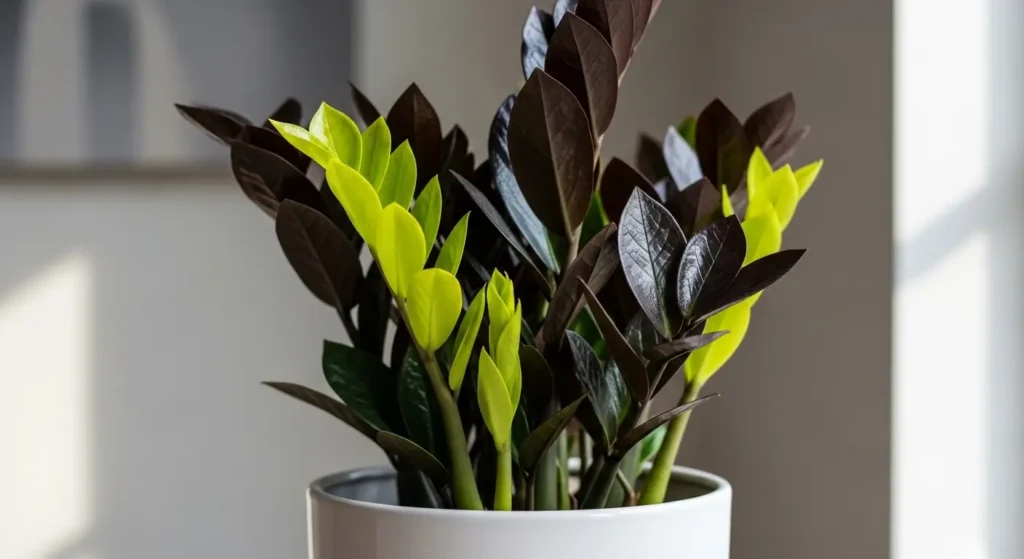
The black ZZ plant (Zamioculcas zamiifolia ‘Raven’) is one of the most dramatic houseplants you can own. Its glossy, near-black leaves emerge bright green, then slowly darken to deep purple-black. Native to Eastern Africa, this low-maintenance tropical perennial thrives in low light and forgives even the most forgetful plant parents. Difficulty level: easy.
Plant Care Card
| Detail | Info |
|---|---|
| Common Name | Black ZZ Plant, Raven ZZ Plant |
| Botanical Name | Zamioculcas zamiifolia ‘Raven’ |
| Family | Araceae |
| Plant Type | Tropical perennial |
| Mature Size | 2–3 ft tall × 2–3 ft wide |
| Sun Exposure | Low to bright indirect light |
| Soil Type | Well-draining, sandy/loamy mix |
| Soil pH | 6.0–7.0 (slightly acidic to neutral) |
| Hardiness Zones | USDA Zones 9–12 |
| Native Area | Eastern Africa |
| Toxicity | Toxic to cats, dogs, and humans if ingested |
Black ZZ Plant Care
The black ZZ plant is one of the easiest houseplants you’ll ever grow, even if you tend to forget about your plants. The sections below cover everything you need light, water, soil, temperature, and more to keep it happy. You’ve totally got this.
Light
The black ZZ plant tolerates low light to bright indirect light, but bright indirect light brings out the richest leaf color. A north- or east-facing window is ideal. Avoid direct sun it scorches and fades those dark leaves. Very low light won’t kill it, but expect slower growth.
Soil
The black ZZ plant needs well-draining soil above all else. A cactus mix or a 1:1 ratio of potting soil and perlite works perfectly. According to the University of Florida IFAS Extension’s guide on growing houseplants, proper drainage is essential for tropical plants. Always use a pot with drainage holes.
Water
Water only when the top 2–3 inches of soil are completely dry every 2–3 weeks in spring and summer, less in fall and winter. Overwatering is the #1 killer watch for yellowing leaves and mushy stems. Similar watering habits apply to the calandiva plant, another drought-tolerant houseplant.
Temperature and Humidity
The black ZZ plant thrives at 60–85°F (15–29°C) basically normal room temperature. Don’t let it drop below 45°F. Average household humidity (40–50%) is perfectly fine; no misting needed. Just keep it away from cold drafts, heating vents, and air conditioners sudden temperature swings stress this plant more than anything.
Fertilizer
Feed your black ZZ plant with a balanced liquid fertilizer (10-10-10) diluted to half strength, every 4–6 weeks during spring and summer. Skip fertilizing entirely in fall and winter. According to the University of Maryland Extension’s fertilizer guide for indoor plants, applying fertilizer at half strength prevents salt buildup and leaf tip burn which is especially important for tropical foliage.
Types of Black ZZ Plant
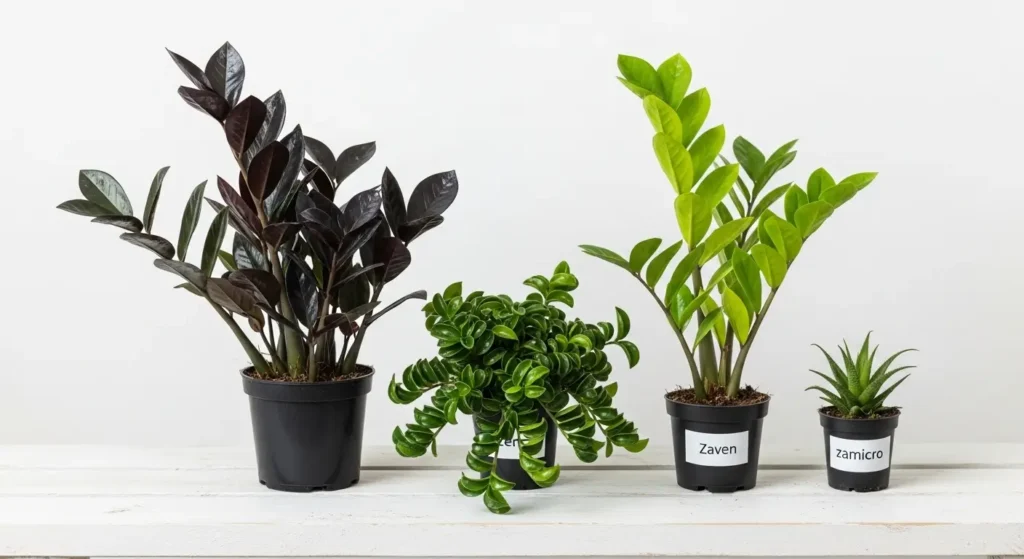
There are several Zamioculcas zamiifolia varieties worth knowing about:
- Raven ZZ (Z. zamiifolia ‘Raven’) — The most popular dark-leaf variety. Leaves emerge bright green, then gradually turn deep purple-black as they mature. This is the true black ZZ plant.
- Zenzi ZZ (Z. zamiifolia ‘Zenzi’) — A compact dwarf variety with tightly clustered, curled leaflets. Slower-growing and perfect for small spaces or desktops.
- Lucky Classic ZZ (Z. zamiifolia) — The standard green variety featuring bright, waxy green foliage. Very similar care requirements to the black ZZ plant.
- Zamicro ZZ (Z. zamiifolia ‘Zamicro’) — Another miniature variety, staying under 18 inches tall. Great for shelves and side tables.
Propagating Black ZZ Plant
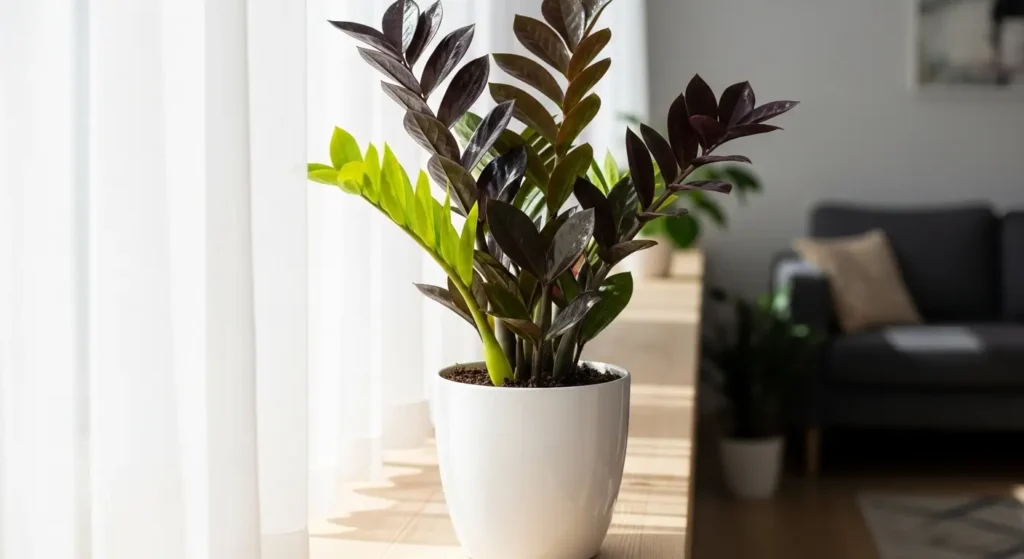
The best time to propagate is during spring and summer when the plant is actively growing. Honestly, it’s easier than you’d expect.
Propagating by Stem Cuttings
Stem cuttings are the most reliable and popular propagation method for the black ZZ plant. You’ll see roots and new growth within a few months.
Materials needed:
- Sharp, clean scissors or pruning shears
- Small pot with well-draining soil or a glass of water
- Optional: rooting hormone powder
Steps:
- Step 1: Select a healthy stem with at least 2–3 leaf pairs. Cut it at the base using clean scissors, making a diagonal cut to maximize the rooting surface area.
- Step 2: Let the cutting sit for a few hours to callous slightly. This short resting period helps prevent rot, especially if you plan to root in water.
- Step 3: Place the cutting in a glass of water or directly into moist, well-draining soil. If using water, change it every few days to keep it clean and oxygenated.
- Step 4: Put the cutting in a warm spot with bright indirect light. Roots typically appear within 4–8 weeks in water, or 8–12 weeks in soil.
This propagation method works equally well for dumb cane plants, another tropical houseplant that roots readily from stem cuttings in either water or soil.
Propagating by Leaf Cuttings
Leaf cuttings work too, though they’re a slower route. Simply snap off a healthy leaf, let it callous for a day, then push the base into moist soil at a slight angle. Expect to wait 3–4 months before tiny new rhizomes form underground. It’s a slow process, but watching those first new shoots emerge is genuinely rewarding.
Potting and Repotting
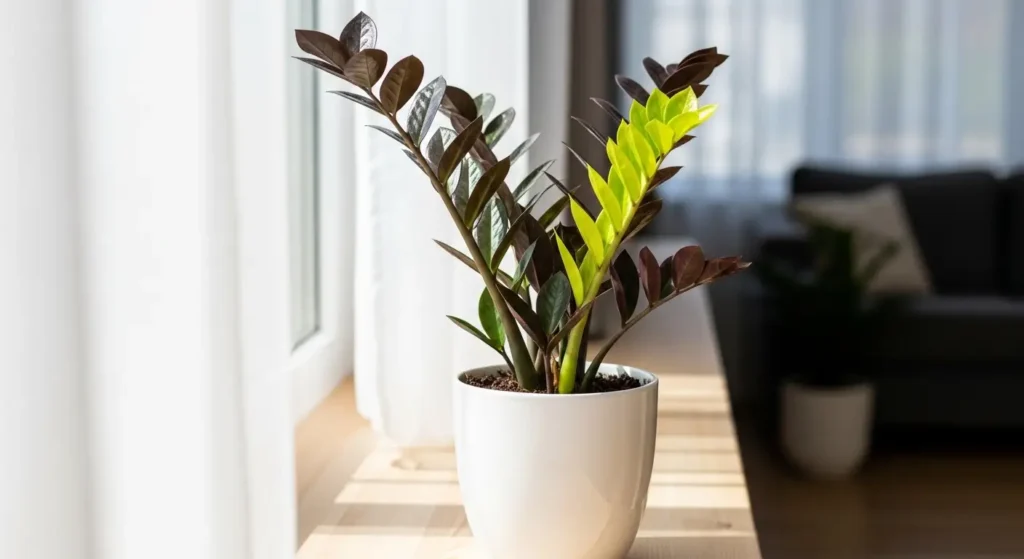
Repot your black ZZ plant every 2–3 years, or when you notice roots poking out of drainage holes or growth has noticeably slowed. This plant actually likes being slightly root-bound, so don’t rush to repot before it’s truly ready.
When it’s time, choose a new pot just 1–2 inches larger in diameter. Too large a pot holds excess moisture and can easily lead to root rot. Always use fresh, well-draining soil and a pot with drainage holes.
The best time to repot is spring or early summer. Gently shake off old soil, check the rhizomes for any soft or rotten sections, trim those off cleanly, and settle the black ZZ plant into its new home with fresh mix.
Common Pests and Diseases
Like most houseplants, the black ZZ plant can occasionally attract a few uninvited guests though it’s generally pretty resistant to pests overall.
Spider Mites
Look for fine webbing on leaf undersides and tiny moving dots. Treat with a neem oil spray or wipe leaves with a damp cloth regularly to prevent any buildup.
Mealybugs
White, cotton-like clusters appear at leaf joints or stem bases. Dab them with a cotton swab dipped in rubbing alcohol to remove them on contact.
Scale Insects
Brown, waxy bumps clinging to stems and leaves are the giveaway. Scrape them off manually and follow up with an insecticidal soap spray for any stragglers.
Aphids
Small green or black clusters gather on new growth. Rinse them off with a strong stream of water or treat with insecticidal soap solution.
Fungus Gnats
Tiny flies hovering near the soil surface signal overwatered conditions. Let the soil dry out more between waterings and use yellow sticky traps to catch adults effectively.
According to Penn State Extension’s guide on indoor plant pests and diseases, early detection and consistent plant monitoring are the best defenses against common houseplant pests. Check your plant each time you water.
Common Problems
Here’s how to troubleshoot common issues:
Yellow Leaves
Yellow leaves are pretty common, and they don’t always mean disaster. The most likely cause is overwatering ease up on watering and let the soil dry out fully. A nutrient deficiency can also cause yellowing, especially in spring after a winter without feeding; start with a diluted balanced fertilizer. Sometimes lower leaves simply yellow with age that’s completely normal. Just like with the bridal veil plant, consistent watering habits go a long way in preventing this issue before it starts.
Brown Leaf Tips
Brown tips are almost always a humidity or water quality issue. Low humidity causes tips to dry out; try placing the pot on a pebble tray filled with water to boost local moisture levels. Tap water with high fluoride or chlorine can also cause tip burn over time — switch to filtered or rainwater if brown tips keep reappearing despite otherwise good care.
Drooping or Wilting Leaves
Drooping usually means watering is off in one direction or another. Check the soil first: if it’s soggy, you’ve overwatered let it dry out and inspect roots for rot. If it’s bone dry, give it a thorough soak. Temperature stress from cold drafts can also cause sudden wilting. This same problem appears in the calla lily when grown indoors watering consistency is truly everything.
Leggy Growth / Sparse Foliage
Long, stretched-out stems with wide gaps between leaves are a clear sign your plant needs more light. Move it closer to a window with bright indirect light. You can also trim leggy stems to encourage bushier, more compact new growth from the base.
FAQ
Is a black ZZ plant rare?
The black ZZ plant was once rare and hard to find, but it’s now widely available in most garden centers and online plant shops.
Are black ZZ plants illegal?
No, black ZZ plants are completely legal to own and sell. There are no restrictions on growing or buying this houseplant anywhere.
Are black ZZ plants hard to care for?
Not at all. The black ZZ plant is one of the easiest low-maintenance houseplants you can grow, perfect for beginners.
Does the ZZ plant clean air?
Research suggests ZZ plants can filter some indoor air pollutants, though they shouldn’t replace proper ventilation in your home.