

In This Article
April birth flower traditions celebrate two beautiful spring bloomers: the cheerful daisy (Bellis perennis) and sweetly fragrant sweet pea (Lathyrus odoratus). Both April birth flowers symbolize innocence, purity, and new beginnings. These classic garden favorites bring vibrant color from mid-spring through early summer, thriving easily in most gardens.
April Birth Flower Care Card
| Characteristic | Daisy | Sweet Pea |
|---|---|---|
| Common Name | English Daisy, Common Daisy | Sweet Pea |
| Botanical Name | Bellis perennis | Lathyrus odoratus |
| Family | Asteraceae | Fabaceae |
| Plant Type | Perennial (often grown as annual) | Annual |
| Mature Size | 3-6 inches tall, 6-9 inches wide | 6-8 feet tall (climbing), 12 inches wide |
| Sun Exposure | Full sun to partial shade | Full sun |
| Soil Type | Well-draining, loamy, moist | Well-draining, rich, loamy |
| Soil pH | 6.0-7.0 (slightly acidic to neutral) | 7.0-7.5 (neutral to slightly alkaline) |
| Hardiness Zones | 3-10 (USDA) | 2-11 (grown as annual) |
| Native Area | Europe, Mediterranean | Mediterranean, Italy, Sicily |
| Bloom Time | Spring to early summer | Spring to early summer |
| Toxicity | Non-toxic to pets and humans | Toxic to pets and humans (seeds especially) |
April Birth Flower Care
Both April birth flowers thrive with straightforward care once established in suitable conditions. Here’s what you need to know about sun, soil, water, and maintenance for these spring beauties. With proper placement and attention to their basic needs, the April birth flower practically cares for itself through the blooming season.
Light
Daisies perform best in full sun to partial shade, requiring at least 4-6 hours of direct sunlight daily. Sweet peas need full sun exposure with 6-8 hours of direct light for optimal flowering and vigorous growth in your garden.
Soil
Daisies prefer well-draining, loamy soil enriched with organic matter and consistent moisture retention. Sweet peas require rich, well-draining soil with added compost for optimal growth. Both need excellent drainage to prevent root rot. According to University of Minnesota Extension, proper soil preparation ensures strong root development for spring bloomers.
Water
Water newly planted flowers every 2-3 days until established, then reduce to weekly deep watering sessions. Check soil moisture by inserting your finger 2 inches deep water when dry. Increase watering during hot spells. Overwatering causes root rot, while underwatering leads to wilting and premature flower drop.
Temperature and Humidity
Daisies tolerate temperatures from 40°F to 70°F, thriving in cool spring weather. Sweet peas prefer similar cool conditions (50°F-65°F) and often decline when summer heat arrives. According to Iowa State University Extension, these flowers perform best when planted early for cool-season blooms.
Fertilizer
Feed daisies monthly with balanced 10-10-10 fertilizer during the growing season. Sweet peas benefit from low-nitrogen, high-phosphorus fertilizer (5-10-10) applied every 3-4 weeks to encourage blooms over foliage. Apply fertilizer when the April birth flower begins active growth in spring and continue through the blooming period. Stop fertilizing as flowers fade and plants enter dormancy or decline in summer heat.
Types of April Birth Flower
Both April birth flowers offer numerous varieties for different garden styles and color preferences.
Daisy Varieties:
• English Daisy (Bellis perennis): Classic white petals with yellow centers, growing 3-6 inches tall. This true perennial self-seeds readily and naturalizes in lawns and meadows throughout cool-season climates, making it a low-maintenance choice.
• Shasta Daisy (Leucanthemum × superbum): Larger blooms reaching 2-4 inches across with pure white petals. This robust perennial grows 2-3 feet tall and produces abundant summer flowers in zones 5-9, extending the April birth flower season.
• Gerbera Daisy (Gerbera jamesonii): Bold, colorful blooms in red, pink, orange, and yellow shades. Often grown as annuals in most climates, these showy flowers reach 12-18 inches tall with 3-5 inch blooms perfect for cutting.
• African Daisy (Osteospermum): Vibrant blooms in purple, pink, white, and bicolor combinations with distinctive dark centers. This variety thrives in full sun and tolerates heat better than traditional daisies for extended blooming periods.
Sweet Pea Varieties:
• Spencer Sweet Pea: Large, ruffled blooms on vigorous climbing vines reaching 6-8 feet tall. Available in extensive color ranges including bicolors and fragrant heirloom varieties for cut flower gardens celebrating the April birth flower.
• Cupid Sweet Pea: Compact, bushy variety growing just 6-8 inches tall without climbing. Perfect for containers, borders, and small spaces where traditional vining types won’t work but you still want April birth flower charm.
• Royal Sweet Pea: Intensely fragrant, old-fashioned variety with smaller blooms but stronger perfume. This heirloom type offers exceptional scent for cutting gardens and attracts pollinators effectively throughout spring.
• Painted Lady Sweet Pea: Historic variety dating to 1737 with bicolor pink and white blooms. This beloved cultivar represents the traditional April birth flower appearance with classic fragrance and reliable performance.
Pruning April Birth Flower

Regular deadheading extends the blooming period significantly for both flowers. Remove spent daisy flowers by pinching off faded blooms just above the foliage. Cut sweet pea stems back to just above a leaf node using clean pruning shears, which encourages branching and more flower production.
Propagating April Birth Flower
The best propagation time for daisies is spring or early fall when temperatures remain cool. Sweet peas are typically grown from seed planted in early spring or late winter for April blooms that celebrate the April birth flower tradition.
Propagating Daisies by Division
Dividing established daisy clumps refreshes plants and creates new specimens for other garden areas.
Materials needed: • Sharp garden spade or knife • Compost or aged manure • Watering can • Mulch
Step 1: Dig up the entire daisy clump in early spring before active growth begins or in fall after blooming finishes. Lift the root ball carefully to preserve as many roots as possible for successful April birth flower propagation.
Step 2: Separate the clump into 3-4 sections using your hands or a sharp knife, ensuring each division has healthy roots and several shoots. Discard any dead or diseased portions of the original plant to prevent spreading problems.
Step 3: Replant divisions immediately in prepared garden beds amended with compost, spacing them 6-9 inches apart. Set each division at the same depth it grew previously, with crowns level with the soil surface for optimal growth.
Step 4: Water thoroughly and apply 2 inches of mulch around new divisions. Keep soil consistently moist for the first 2-3 weeks until plants establish and show new growth. New divisions typically bloom within 6-8 weeks, providing more April birth flower displays.
Propagating Sweet Peas from Seeds
Sweet peas grow easily from seed sown directly in garden beds or started indoors 4-6 weeks before the last frost.
Materials needed: • Sweet pea seeds • Sandpaper or nail file • Small bowl of lukewarm water • Seed-starting mix or garden soil • Small pots (if starting indoors)
Step 1: Nick the hard seed coat with sandpaper or a file, then soak seeds overnight in lukewarm water. This scarification process helps moisture penetrate the tough coating for faster germination of your April birth flower seeds.
Step 2: Plant seeds 1 inch deep and 2-3 inches apart in prepared garden beds or individual pots. Cover lightly with soil and water gently to settle the seeds without washing them away from their planting positions.
Step 3: Keep soil consistently moist but not waterlogged during germination, which takes 10-21 days depending on soil temperature. Similar to the butterfly ranunculus, cool temperatures promote better germination rates for spring bloomers.
Seeds germinate best in soil temperatures of 55°F-65°F. Seedlings appear in 2-3 weeks and bloom approximately 10-12 weeks after planting, just in time for April birth flower celebrations.
Planting and Transplanting April Birth Flower
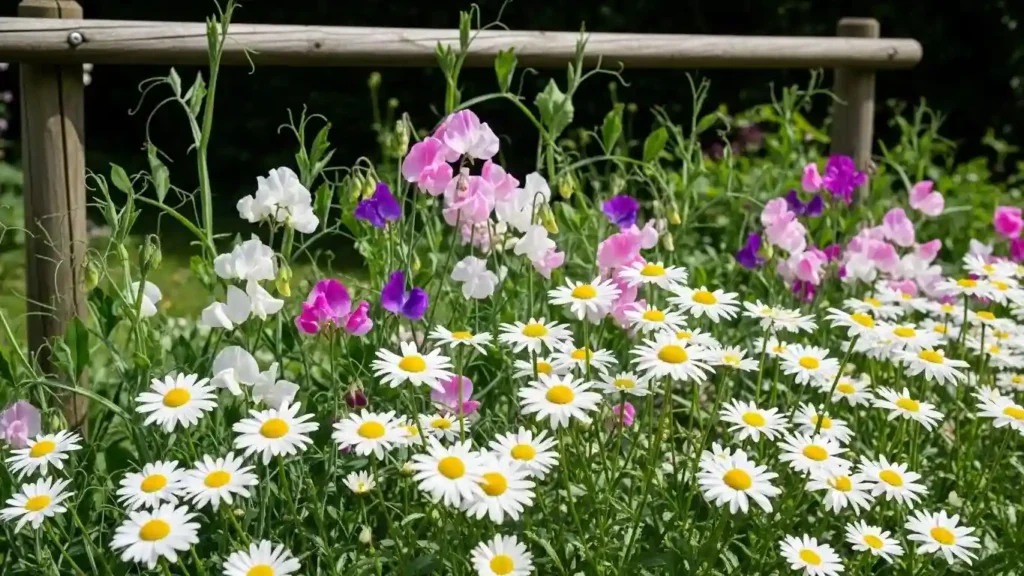
Plant daisies in early spring after the last frost or in fall for establishment before winter. Space plants 6-9 inches apart for proper air circulation. Sweet peas should be planted in late winter or early spring (4-6 weeks before last frost), spacing seeds 6 inches apart for optimal displays.
Common Pests and Diseases
Like most garden plants, both April birth flowers can occasionally face pest or disease issues. Catching problems early and treating promptly prevents serious damage to plants.
Aphids
Look for clusters of small, soft-bodied insects on new growth, buds, and undersides of leaves causing distorted foliage. Treat with strong water spray, insecticidal soap, or neem oil applied every 5-7 days until populations disappear completely from your April birth flower plants.
Spider Mites
Identify these tiny pests by fine webbing on leaves and stippled, yellowing foliage that eventually browns and drops. Treat with horticultural oil or insecticidal soap, ensuring thorough coverage of leaf undersides where mites congregate and reproduce rapidly during dry conditions.
Powdery Mildew
White, powdery coating appears on leaves, stems, and buds during humid conditions with poor air circulation. Remove affected foliage immediately and apply fungicidal spray or sulfur-based treatments according to University of California IPM package directions for fungal control.
Root Rot
Wilting plants with yellowing leaves and mushy, dark roots indicate overwatering and poor drainage causing fungal infection. Improve soil drainage, reduce watering frequency, and remove severely affected plants to prevent spread to neighboring April birth flower specimens.
Slugs and Snails
These nocturnal pests leave irregular holes in leaves and shiny slime trails on foliage and soil. Set beer traps, apply diatomaceous earth around plants, or handpick pests during evening hours when they’re most active and visible on your April birth flowers.
Common Problems with April Birth Flower
Here’s how to troubleshoot common issues:
Poor or No Blooms
Insufficient sunlight is the primary culprit both flowers need at least 4-6 hours of direct sun daily for adequate flower production. Over-fertilizing with high-nitrogen formulas promotes leafy growth at the expense of blooms.
Yellow or Browning Leaves
Overwatering and poor drainage cause root suffocation, leading to yellowing leaves that eventually turn brown and drop from your plants. Nutrient deficiency, particularly iron chlorosis, causes yellowing between leaf veins. For plants like the croton plant, similar drainage issues cause comparable problems.
Wilting or Drooping
Underwatering during hot, dry periods causes rapid wilting that recovers quickly after thorough watering of your garden. Water deeply once or twice weekly rather than frequent shallow watering to encourage deep root growth. Transplant shock affects recently moved plants maintain consistent moisture.
Leggy or Sparse Growth
Insufficient light causes tall, weak stems with sparse foliage and few blooms as flowers stretch toward light sources. Move plants to locations receiving at least 6 hours of direct sun daily for compact, bushy growth. Over-fertilizing produces excessive foliage at the expense of flowers.
Frost Damage
Late spring frosts can damage new growth and flower buds on both varieties despite their cold tolerance. Cover plants with row covers or sheets when frost threatens, removing covers once temperatures rise above freezing. Much like white bird of paradise plants, protecting tender new growth prevents setbacks.
Premature Decline in Summer
Sweet peas naturally decline when temperatures consistently exceed 75°F-80°F, causing reduced flowering and eventual plant death. This is normal behavior for these cool-season annuals enjoy blooms during spring and replace with warm-season flowers for summer color. Expect flowers to finish by midsummer.
FAQ
What is April birth flower?
April has two official birth flowers: the daisy (Bellis perennis) and sweet pea (Lathyrus odoratus). Both symbolize innocence, purity, and new beginnings, making them perfect spring celebration flowers for April birthdays.
Why does April have two birth flowers?
Many months have two birth flowers to provide variety and accommodate different growing regions and climates worldwide. This tradition allows people to choose the April birth flower that grows successfully in their specific area and matches personal preferences.
What is the official flower of the month of April?
Both daisy and sweet pea are considered official April birth flowers recognized worldwide. The daisy represents innocence and loyal love, while sweet pea symbolizes blissful pleasure and departure both fitting for spring’s renewal celebration.
Is April daisy or sweet pea?
April is represented by both daisy and sweet pea as birth flowers traditionally. You can celebrate with either variety or grow both together for a complete April birth flower garden display featuring complementary colors and heights.