
In This Article
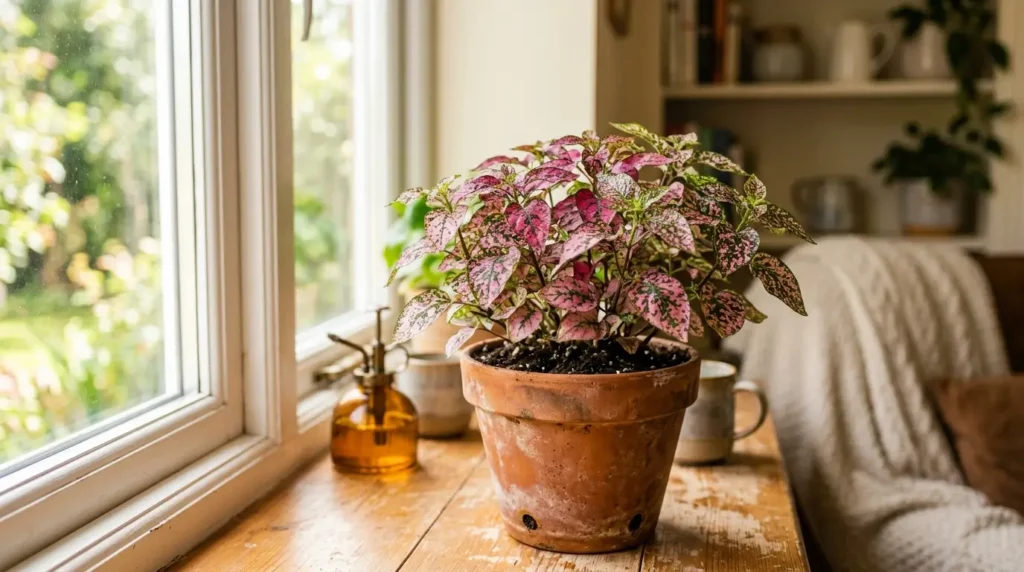
Meet the polka dot plant (Hypoestes phyllostachya), the houseplant that looks splattered with paint. Its leaves burst with pink, white, or red spots, no two ever quite alike. Native to Madagascar’s shady forest floors, it’s also called the freckle face plant. Easy to grow, it’s a fun pick for beginners.
Plant Care Card
| Attribute | Details |
|---|---|
| Common Name | Polka Dot Plant, Freckle Face Plant |
| Botanical Name | Hypoestes phyllostachya |
| Family | Acanthaceae |
| Plant Type | Herbaceous perennial, grown as houseplant |
| Mature Size | 12–24 in tall x 12 in wide |
| Sun Exposure | Bright, indirect light |
| Soil Type | Well-draining, peat-based potting mix |
| Soil pH | 5.0–6.0 (slightly acidic) |
| Hardiness Zones | USDA 10–11 |
| Native Area | Madagascar |
| Toxicity | Non-toxic to cats and dogs |
Polka Dot Plant Care
Let’s face it the polka dot plant is fairly forgiving, but it does have a few quirks worth knowing. Below, we’ll cover light, soil, water, humidity, and feeding so it stays bushy and bright. It’s naturally short-lived, so don’t panic if yours needs replacing every year or two. You’ve got this!
Light
Your polka dot plant wants bright, indirect light, a spot back from an east window. Too little light fades its spots green, while too much sun scorches leaves, like the arrowhead plant in sun. A curtain helps, or add a bright grow light.
Soil
A loose, well-draining potting mix is key here. Heavy, compacted soil holds too much water and can suffocate the roots pretty quickly.
Try a simple DIY blend of 1:1 peat (or coir) and perlite, which suits a polka dot plant’s shallow, moisture-loving roots well. A standard indoor potting mix works fine too, as long as it drains freely. According to University of Florida IFAS Extension, soilless mixes with perlite or bark give roots the air space they need to thrive indoors.
Water
Keep soil consistently moist, never soggy water when the top inch feels dry. Use a pot with drainage holes. This plant’s rhythm is similar to the nerve plant: droopy leaves mean underwatering, yellowing means overwatering. Water less in winter, more in summer months.
Temperature and Humidity
The polka dot plant likes it warm, ideally between 65-80°F, and it’s not a fan of the cold. Anything below 60°F can cause leaf drop pretty quickly, so keep it well away from chilly windowsills in winter.
Humidity is where it really shines, though aim for 50% or higher if you can, using a pebble tray or small humidifier nearby. Keep it away from cold drafts, heating vents, and air conditioning units. Sudden temperature swings and dry winter air will stress it out faster than almost anything else.
Fertilizer
Feed with a balanced liquid fertilizer diluted to half strength, every 2-4 weeks in spring and summer. Cut back completely in fall and winter. Per Oklahoma State University Extension, overfeeding dormant houseplants does more harm than good.
Popular Polka Dot Plant Varieties
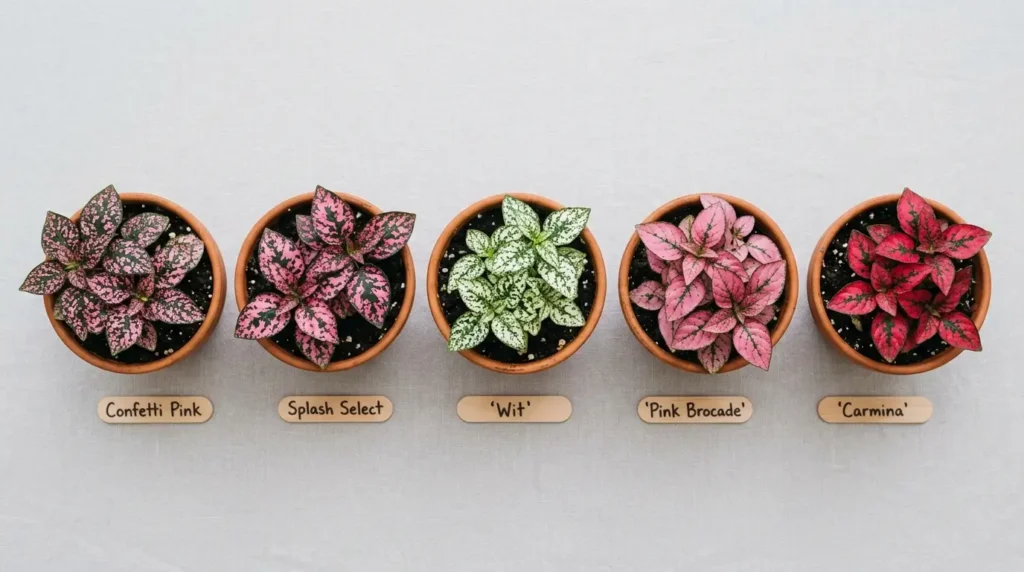
There are quite a few polka dot plant cultivars out there, each with its own spotty personality. Breeders have worked hard to create bolder colors and tighter growth habits over the years, giving hobbyists plenty of options to collect.
- Confetti Series: Compact, with tight, dense spotting in pink, red, or white. Stays smaller and bushier than the standard variety, great for small pots.
- Splash Select Series: Known for larger, bolder color blotches rather than tiny dots. The leaves look almost hand-painted, and hold their color well.
- ‘Wit’ (White): Deep green leaves with creamy white speckles. A cooler, more understated look than the pink cultivars.
- ‘Pink Brocade’: Rich pink spotting that nearly covers the whole leaf. One of the showiest, most saturated options around.
- ‘Carmina’ (Red): Bright red-pink dots against dark green foliage. Holds its vivid color especially well in bright light.
Pruning
Pinch back leggy stems every few weeks to keep the polka dot plant bushy instead of stringy. Simply snip just above a leaf node using clean scissors or small pruning snips.
Removing flower spikes also helps, since blooming tends to slow down leaf production. Honestly, regular pinching is the easiest way to keep it looking full and colorful, and trimmed pieces make perfect cuttings.
Propagating Polka Dot Plant
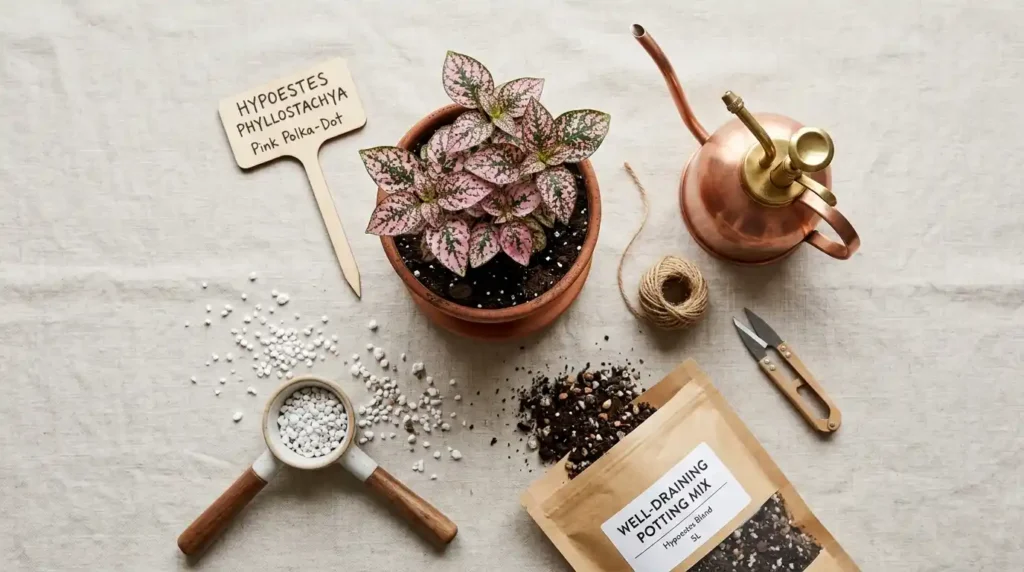
Best time to propagate a polka dot plant is during spring and summer, while it’s actively growing and recovers from cuttings quickly.
Propagating by Stem Cuttings
Stem cuttings are the easiest and most reliable way to multiply this plant. You’ll need:
- Clean, sharp scissors or pruning snips
- A 3–4 inch stem cutting with a few healthy leaves
- Small pot with well-draining potting mix (or a glass of water)
Here’s how to do it:
- Step 1: Snip a healthy stem just below a leaf node, removing any lower leaves that would otherwise sit in soil or water.
- Step 2: Dip the cut end in rooting hormone if you have it, though it’s not strictly necessary for success.
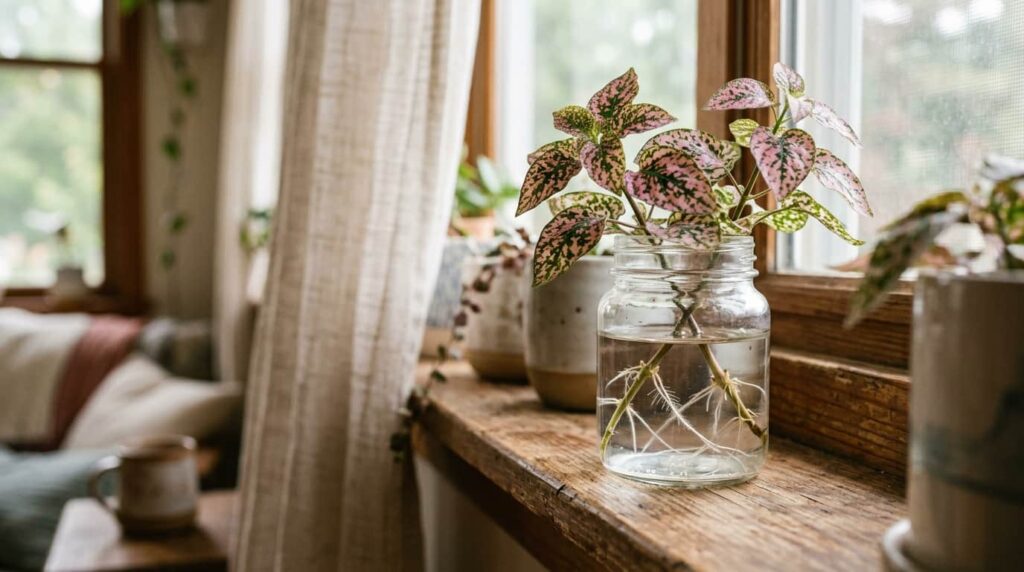
- Step 3: Plant the cutting in moist potting mix, or set it in a glass of water on a bright windowsill.
- Step 4: Keep the soil or water consistently moist, refreshing water every few days if rooting in a glass.
You’ll typically see new roots within 2–3 weeks, and the cutting can be potted up shortly after. This method works a lot like propagating the Swedish ivy, another fast-rooting trailing houseplant.
Propagating by Division
For an older, bushier plant, you can also divide it at the roots instead of taking cuttings. Gently remove the plant from its pot and tease the root ball into two or three sections. Repot each section into its own container with fresh soil, then water well. Give divided sections a few weeks to recover before expecting much new growth.
Potting and Repotting Polka Dot Plant
Repot when roots poke out of the drainage holes, or growth slows down noticeably despite regular feeding. Most people repot every 1–2 years, moving up to a pot just 1–2 inches larger than the current one.
Spring is usually the best time, since the plant is entering active growth and recovers quickly from the disturbance of fresh soil. Loosen the roots gently before placing the plant in fresh, well-draining mix, and avoid packing it down too tightly.
Good drainage matters a ton here, since soggy roots lead to rot fast. Choose a pot with a drainage hole rather than a sealed decorative container. Water thoroughly after repotting, then keep the plant out of direct sun for a few days while it settles in.
Common Pests and Diseases
Like most houseplants, a polka dot plant can occasionally attract a few unwanted visitors. Per the EPA’s integrated pest management guidelines, catching these early and monitoring often keeps pesticide use to a minimum.
Spider Mites
Look for fine webbing and tiny speckled spots on leaves. Treat with neem oil or insecticidal soap, applied every few days until they’re gone.
Mealybugs
Look for white, cottony clusters tucked into leaf joints and stems. Treat with rubbing alcohol on a cotton swab, or use insecticidal soap weekly.
Scale Insects
Look for small, brown bumps stuck along stems and leaf undersides. Scrape them off gently, then treat with horticultural oil weekly until clear.
Aphids
Look for tiny green or black bugs clustered on new growth. A strong water spray usually clears them right up within a few tries.
Fungus Gnats
Look for small flies hovering around the soil surface, especially after watering. Let the topsoil dry out fully between waterings to break their cycle.
Common Problems with Polka Dot Plant
Here’s how to troubleshoot common issues on a struggling plant:
Yellow Leaves
Yellowing on a polka dot plant usually points to overwatering, which suffocates roots and blocks nutrient uptake. Nutrient deficiency and natural aging can also cause it. Cut back watering and check drainage first. Similar yellowing shows up on calathea under the same conditions.
Brown Leaf Tips
Brown, crispy tips usually mean low humidity or mineral buildup from tap water. Underwatering can also cause crunchy, curled edges over time. Try filtered or distilled water and set up a humidity tray nearby. Trim damaged tips with clean scissors for a tidier look.
Drooping or Wilting Leaves
Drooping on a polka dot plant signals a watering problem, either too much or too little. Check soil moisture and adjust your routine. This same wilting pattern often shows up on prayer plants when watering gets inconsistent.
Leggy Growth
Sparse, stretched-out stems mean the polka dot plant isn’t getting enough light. Move it closer to a bright window and pinch back leggy stems often to encourage fuller, denser growth.
Slow or No New Growth
Stalled growth often comes down to low light, cold temperatures, or a lack of nutrients during the active season. Check that it’s getting bright indirect light and a regular feeding schedule before assuming the worst.
FAQ
Do polka dot plants like sun or shade?
They prefer bright, indirect light over deep shade or harsh direct sun. Too much direct light fades their spots, while too little dulls the color.
Do polka dot plants spread?
Yes, they spread through low, trailing stems and self-seed readily if left to flower. Regular pinching keeps growth compact instead of sprawling everywhere.
How do you take care of a polka dot plant?
Give it bright indirect light, moist well-draining soil, warm temps, and humidity. Feed every 2-4 weeks in the growing season for best color.
Do polka dot plants come back every year?
Indoors, they’re usually grown as short-lived perennials that decline after a year or two. Regular propagation from cuttings keeps your collection going strong.