
In This Article
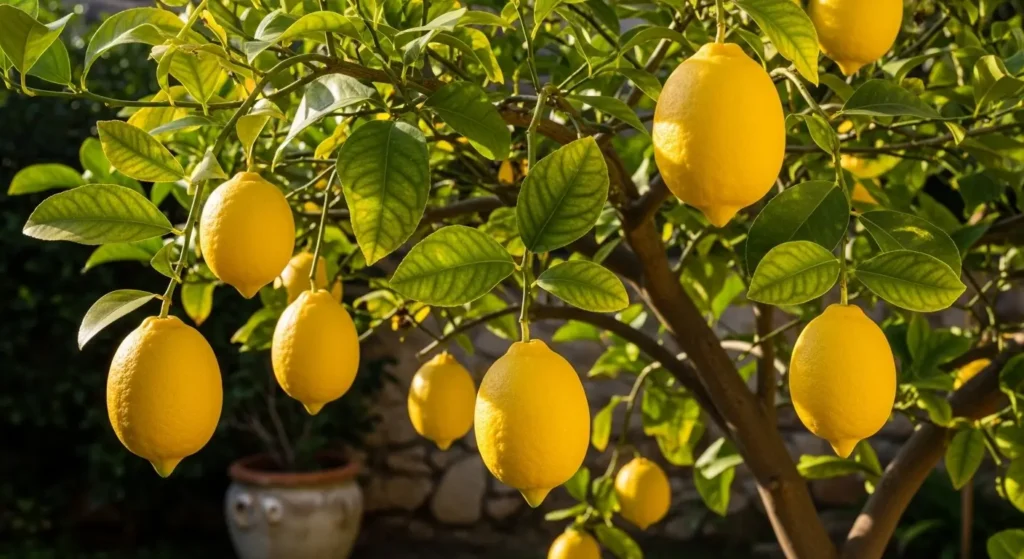
The Eureka lemon tree (Citrus limon ‘Eureka’) is a popular evergreen citrus known for its bright yellow fruits and glossy dark green foliage. Native to Italy, it thrives in USDA Zones 9–11 and produces reliable harvests nearly year-round making it a rewarding choice for beginners and experienced gardeners alike.
Plant Care Card
| Detail | Info |
|---|---|
| Common Name | Eureka Lemon Tree |
| Botanical Name | Citrus limon ‘Eureka’ |
| Family | Rutaceae |
| Plant Type | Evergreen tree/shrub |
| Mature Size | 8–15 ft tall × 8–12 ft wide |
| Sun Exposure | Full sun |
| Soil Type | Well-draining, loamy or sandy |
| Soil pH | 5.5–6.5 (slightly acidic) |
| Hardiness Zones | USDA 9–11 |
| Native Area | Italy (Mediterranean region) |
| Bloom Time | Intermittent throughout year |
| Toxicity | Non-toxic to humans; mildly toxic to cats and dogs |
Eureka Lemon Tree Care
The Eureka lemon tree does well with consistent care once it’s settled into the right spot. Here’s what you need to know about sun, soil, water, and maintenance. With proper placement and a steady routine, this citrus tree practically runs itself.
Light
The Eureka lemon tree needs full sun at least 6 to 8 hours of direct sunlight daily. Without enough light, you’ll see fewer blooms and smaller harvests. Position your tree in a south- or west-facing spot, away from shade. According to UC Agriculture and Natural Resources, a sheltered wall works well in cooler Zone 9 gardens.
Soil
The Eureka lemon tree prefers well-draining, slightly acidic soil with a pH between 5.5 and 6.5. Poor drainage quickly leads to root rot. If your soil is heavy clay, mix in sand and compost at a 1:1:1 ratio. Similar to growing a Cara Cara orange tree, drainage is everything.
Water
Water your Eureka lemon tree deeply once or twice a week, letting the top 2–3 inches of soil dry out between sessions. Reduce watering in fall and winter. Yellowing leaves signal overwatering, while curling edges mean underwatering. Established trees handle some drought but produce better fruit with consistent moisture.
Temperature and Humidity
The Eureka lemon tree thrives between 55°F and 100°F but is frost-sensitive temperatures below 28°F can damage fruit and branches. USDA Zones 9–11 are ideal. If frost threatens, wrap young trees with burlap and add a 3–4 inch mulch layer. Container trees should move indoors before temperatures drop.
Fertilizer
Feed your Eureka lemon tree with a slow-release citrus fertilizer (look for formulas labeled 6-3-3 or similar) three times a year in early spring, early summer, and early fall. Avoid fertilizing during winter dormancy. Follow package directions carefully, as over-fertilizing causes lush foliage at the expense of fruit.
Types of Eureka Lemon Tree
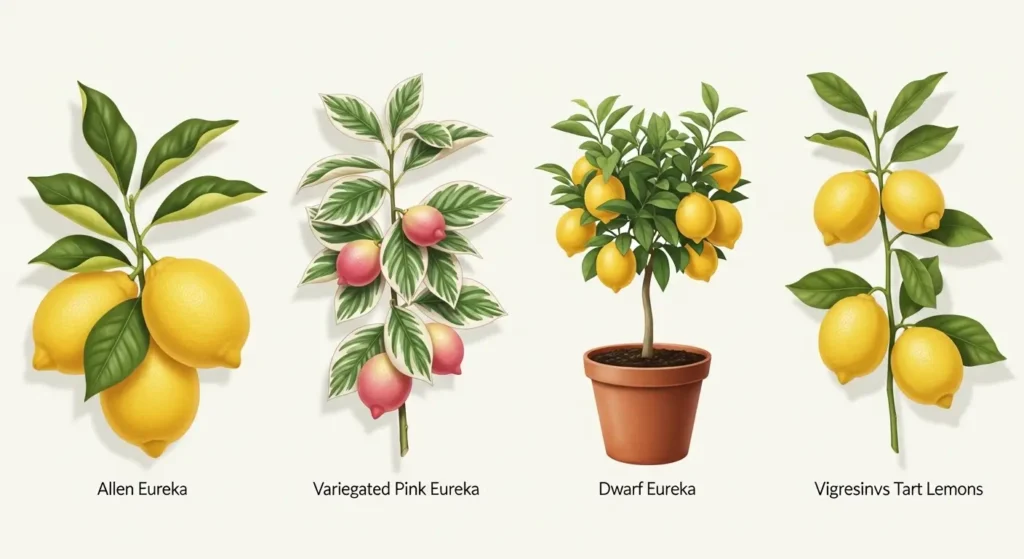
There are a few notable selections worth knowing before you plant:
- ‘Allen Eureka’ — A classic variety with large, juicy fruit and a slightly longer bloom period; widely grown commercially in California.
- ‘Variegated Pink Eureka’ (Citrus limon ‘Eureka Variegated Pink’) — Stunning green-and-white striped foliage with immature fruit that shows pink flesh; a real showstopper in any garden.
- ‘Dwarf Eureka’ — A compact form grafted onto dwarfing rootstock; stays 6–8 ft tall and produces full-sized fruit; perfect for containers or small yards.
- ‘Lisbon’ (closely related variety) — Often compared to the Eureka lemon tree; produces similarly tart lemons but is slightly more cold-hardy and vigorous in tough conditions.
Pruning
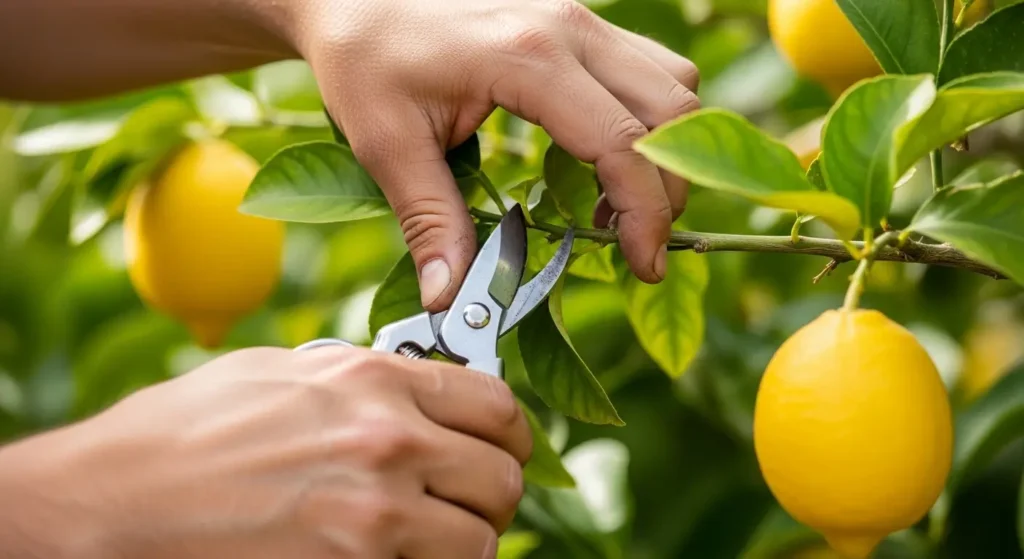
Prune your Eureka lemon tree in late winter to early spring, just before new growth begins. Remove any dead, damaged, or crossing branches, along with suckers growing from below the graft union. Thinning the canopy improves airflow and allows sunlight to reach inner branches, which directly boosts fruit set.
Use sharp, clean pruning shears or loppers for smaller branches and a pruning saw for anything thicker. Make clean cuts at a 45-degree angle just above a leaf node or lateral branch. Light annual pruning keeps the tree at a manageable size and encourages consistent fruiting throughout the year. Avoid heavy pruning in summer or fall this removes developing fruit and exposes wood to heat stress.
Propagating Eureka Lemon Tree
The best time to propagate the Eureka lemon tree is spring or early summer when the tree is actively growing and warmth helps roots develop quickly.
Propagating by Stem Cuttings
Stem cuttings are the most reliable method for home gardeners who want a tree that’s true to the parent Eureka lemon tree.
Materials needed:
- Sharp, sterilized pruning shears
- 4-inch pot with drainage holes
- Well-draining propagation mix (50% perlite, 50% potting soil)
- Rooting hormone powder or gel
- Clear plastic bag or dome
Steps:
- Take your cutting. Select a 4–6 inch stem from healthy, semi-hardwood growth. Choose a stem with at least 2–3 leaves and no flowers or fruit.
- Prepare the cutting. Remove the lower leaves, leaving 1–2 at the top. Dip the cut end into rooting hormone, tapping off any excess.
- Plant the cutting. Insert it 1–2 inches deep into the moistened propagation mix. Firm the soil gently around the base of the stem.
- Create humidity. Cover loosely with a clear plastic bag or dome to trap moisture. Place in bright indirect light direct sun will overheat and damage the cutting.
Roots typically develop within 6–10 weeks. Once you see new leaf growth emerging, gradually remove the cover to acclimate the young Eureka lemon tree to normal conditions.
Propagating by Budding
Budding is the method nurseries use to produce grafted Eureka lemon trees on disease-resistant rootstock, but it’s also doable at home with a little patience. According to University of Florida IFAS Extension, T-budding onto compatible rootstock gives the most reliable results for home citrus propagation.
- Select a healthy bud from the Eureka lemon tree and a compatible rootstock seedling (such as trifoliate orange).
- Make a T-shaped cut in the rootstock bark and carefully insert the bud shield beneath the flaps.
- Wrap firmly with grafting tape, leaving the bud itself exposed.
- In 3–4 weeks, the bud should swell and push new growth that’s your success signal.
Planting and Transplanting Eureka Lemon Tree
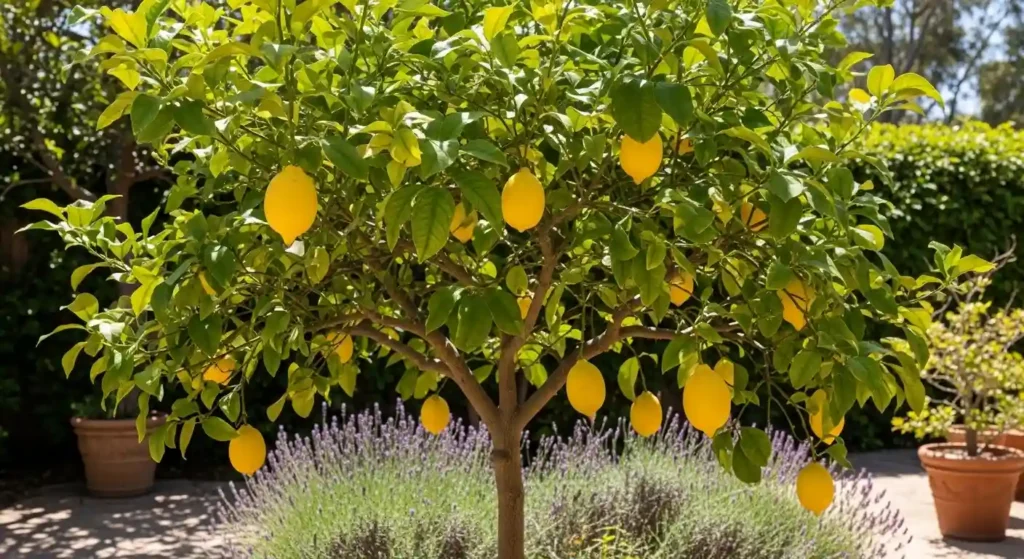
Plant your Eureka lemon tree in spring after the last frost date, or in early fall in frost-free Zones 10–11. Space trees 10–15 feet apart to allow for mature spread and adequate airflow between plants. Container-grown nursery trees can go in the ground almost any time in frost-free climates.
Dig a hole twice as wide and the same depth as the root ball. Set the tree so the graft union sits 2–3 inches above soil level burying it invites collar rot. Backfill with amended soil, water deeply, and add a 3-inch mulch ring (keep mulch off the trunk). The USDA National Agricultural Library recommends keeping the graft union exposed and visible for the life of the tree.
Transplant container trees every 3–4 years as needed, or when roots begin circling the bottom of the pot. Similar timing applies when growing other outdoor fruit trees like the loquat tree.
Common Pests and Diseases
Like most garden plants, the Eureka lemon tree can occasionally face pest or disease challenges especially in humid conditions or when trees are stressed.
Aphids
Look for sticky residue and clusters of small, soft-bodied insects on new growth. Treat with a strong jet of water or insecticidal soap spray; repeat weekly until clear.
Spider Mites
Tiny webbing on the undersides of leaves signals mites. Treat with neem oil or a miticide, making sure to coat leaf undersides thoroughly for full coverage.
Powdery Mildew
A white, powdery coating on leaves and new shoots indicates this fungal issue. Improve airflow, reduce overhead watering, and apply a sulfur-based fungicide as directed.
Root Rot
Yellowing leaves, wilting, and a mushy base are classic signs of root rot. Improve drainage immediately, trim away affected roots, and treat the area with a copper-based fungicide.
Asian Citrus Psyllid
Look for waxy, tube-like deposits on new growth. This pest can spread the devastating citrus greening disease; contact your local extension office immediately if detected.
Common Problems with Eureka Lemon Tree
Here’s how to troubleshoot common issues with your Eureka lemon tree:
Poor or No Blooms
Insufficient sunlight is the most common cause move your tree if it gets fewer than 6 daily sun hours. Over-fertilizing with high nitrogen pushes leafy growth over flowers; switch to a balanced citrus formula. Avoid pruning flower-bearing wood. Like French lavender, too much shade kills blooms fast.
Yellow or Browning Leaves
Yellow leaves on a Eureka lemon tree most often point to overwatering or poor drainage check the soil and allow it to dry out more between waterings. Nutrient deficiency, especially iron or magnesium, causes interveinal yellowing; a soil test and targeted amendment will correct this quickly. Brown leaf edges usually signal underwatering or salt buildup from fertilizer flush the soil thoroughly with water to clear excess salts.
Wilting or Drooping
Wilting during summer heat is often just heat stress water deeply and add fresh mulch to insulate the root zone. Newly planted trees may wilt from transplant shock; consistent watering for the first few weeks helps them settle in comfortably. In rare cases, root damage from rot or pests causes drooping that doesn’t respond to watering inspect the root zone carefully if normal watering doesn’t resolve it.
Leggy or Sparse Growth
A Eureka lemon tree that stretches but doesn’t fill in is almost certainly not getting enough direct sun. Relocate it if possible, or prune nearby vegetation that’s casting shade. Too much nitrogen fertilizer also produces vigorous but sparse stems; balance your feeding routine. Consistent light pruning encourages branching and a denser, more productive canopy over time similar to how bougainvillea responds to regular shaping.
Frost Damage
Brown, mushy leaves or bark after a cold snap indicate frost damage. Wait until spring and the appearance of new growth to confirm which wood is still viable before pruning. Protect vulnerable trees like the anna apple tree and citrus alike with frost cloth when freezing temperatures threaten.
FAQ
Which lemon is better, Meyer or Eureka?
It depends on your goal. Meyer lemons are sweeter and less acidic, great for desserts. Eureka lemons deliver classic tart flavor, making them better for cooking and drinks.
Are Eureka lemon trees easy to grow?
Yes, the Eureka lemon tree is fairly easy with full sun, well-draining soil, and consistent watering. Beginners in Zones 9–11 typically do very well with it.
How long does it take for a Eureka lemon tree to bear fruit?
A grafted Eureka lemon tree typically begins fruiting within 3–5 years of planting. Seed-grown trees take significantly longer often 7 to 10 years before producing fruit.
Is Eureka lemon a dwarf tree?
Standard Eureka trees grow 8–15 feet tall. Dwarf grafted varieties are available and stay compact at 6–8 feet, making them ideal for containers or small garden spaces.
1 thought on “How to Grow and Care for Eureka Lemon Tree”
Comments are closed.