
In This Article
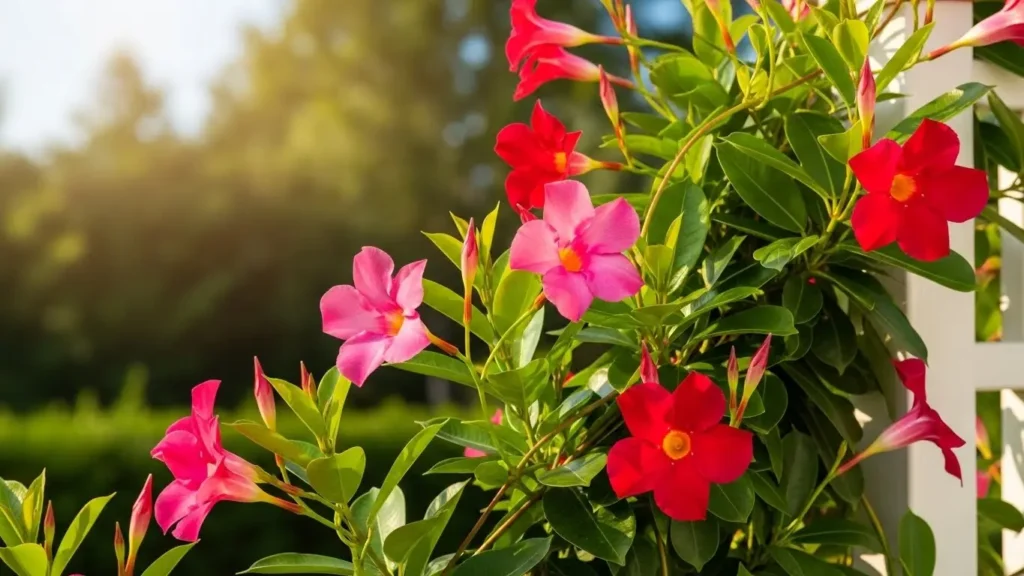
Dipladenia (Mandevilla sanderi) is a stunning tropical vine with vibrant trumpet-shaped flowers and glossy foliage. Native to Central and South America, it blooms in pink, red, white, and yellow throughout warm months. Thriving in zones 9-11, this moderately easy climber attracts hummingbirds and butterflies to gardens.
Plant Care Card
| Characteristic | Details |
|---|---|
| Common Name | Dipladenia, Brazilian Jasmine |
| Botanical Name | Mandevilla sanderi |
| Family | Apocynaceae |
| Plant Type | Perennial vine (tropical) |
| Mature Size | 6-10 feet tall, 2-3 feet wide |
| Sun Exposure | Full sun to partial shade |
| Soil Type | Well-draining, sandy, loamy |
| Soil pH | 6.0-7.0 (slightly acidic to neutral) |
| Hardiness Zones | 9-11 (USDA) |
| Native Area | Central and South America |
| Bloom Time | Spring through fall |
| Toxicity | Toxic to pets and humans |
Dipladenia Care
Dipladenia thrives with regular attention to watering and sunlight, especially during its active growing season. Here’s what you need to know about sun exposure, soil requirements, watering schedules, and basic maintenance. With proper placement in a sunny spot with good drainage, this tropical vine will reward you with months of continuous blooms.
Light
Dipladenia requires at least 6-8 hours of direct sunlight daily for abundant flowering. Insufficient light causes fewer blooms and leggy growth. Position plants in south or west-facing locations for bright morning sun. In extreme heat, afternoon shade prevents stress. More sun equals more flowers with this tropical beauty.
Soil
Dipladenia needs well-draining, organic-rich soil with a pH of 6.0-7.0. Sandy or loamy mixes work best, allowing moisture to escape while retaining adequate hydration. For containers, combine equal parts potting soil, perlite, and compost. Avoid heavy clay soils that cause root rot.
Water
Water dipladenia once or twice weekly during the growing season, checking the top 2-3 inches of soil first. Increase frequency in hot weather, especially for containers. Reduce watering in fall and winter. Similar to bougainvillea plant, mature dipladenia prefers slightly drier conditions over constantly wet soil.
Temperature and Humidity
Dipladenia thrives in 65-80°F temperatures and tolerates heat up to 95°F with adequate water. This frost-sensitive vine suffers damage below 50°F. In cooler zones, bring containers indoors before frost. Moderate humidity (40-60%) is ideal. Mulch retains moisture and regulates root temperature effectively.
Fertilizer
Feed dipladenia every 2-4 weeks during the growing season with a balanced, water-soluble fertilizer diluted to half strength. A formula like 10-10-10 or 20-20-20 supports both foliage and flower production. Apply fertilizer to moist soil to prevent root burn. Stop fertilizing in late fall and winter when growth naturally slows and the plant enters dormancy.
Types of Dipladenia
Dipladenia offers several stunning varieties, each with unique flower colors and growth habits. While all types share similar care requirements, they differ in bloom color and size. Here are some popular varieties to consider for your garden:
‘Rio’ Series: This compact variety reaches 3-4 feet tall and produces large flowers in pink, red, or white. Rio varieties are bred specifically for container growing and smaller spaces. They’re exceptionally floriferous and more resistant to common pests.
‘Sun Parasol’ Series: These vigorous climbers can reach 8-10 feet and feature extra-large blooms up to 4 inches across. Available in crimson, pink, and white varieties. Sun Parasol types are heat-tolerant and thrive in full sun locations with intense summer temperatures.
‘Alice du Pont’: A classic variety with soft pink flowers and a vigorous climbing habit reaching 10-15 feet. This cultivar is one of the most cold-hardy dipladenias available. The flowers have a lovely trumpet shape with delicate, ruffled edges.
‘Red Riding Hood’: Features deep red, velvety blooms that contrast beautifully with dark green foliage. This variety stays more compact at 4-6 feet tall. It’s perfect for focal points in garden beds or as a statement container plant.
Pruning
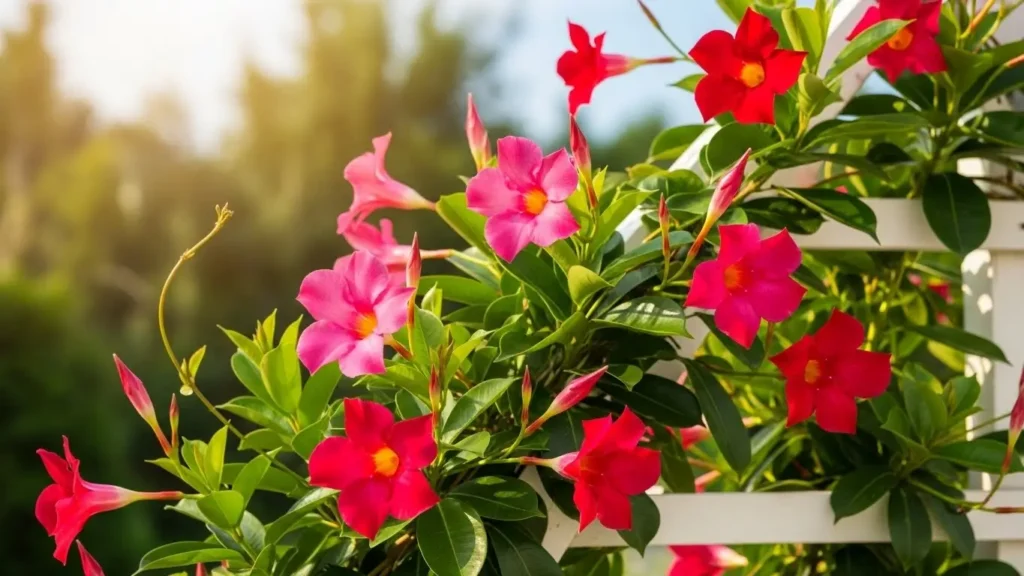
Prune dipladenia in late winter or early spring before new growth emerges. Remove dead or damaged branches, then cut back up to one-third of previous growth. Use sharp shears at 45-degree angles above leaf nodes. Deadhead spent blooms throughout the season. Similar to lipstick plant maintenance, regular pruning promotes continuous flowering. Wear gloves milky sap irritates skin.
Propagating Dipladenia
The best time to propagate dipladenia is in late spring or early summer when the plant is actively growing. This timing gives new plants the entire growing season to establish strong roots before winter dormancy.
Propagating by Stem Cuttings
Stem cuttings are the most reliable and quickest method for propagating dipladenia, with roots developing in 3-4 weeks.
Materials needed:
- Clean, sharp pruning shears or scissors
- Small pots with drainage holes
- Well-draining potting mix
- Rooting hormone (optional but recommended)
- Clear plastic bag or humidity dome
Step 1: Select healthy, semi-hardwood stems from the current season’s growth that are 4-6 inches long. Cut just below a leaf node using sharp, sterilized shears. Remove the bottom leaves, leaving only 2-3 leaves at the top of the cutting.
Step 2: Dip the cut end in rooting hormone powder to encourage faster root development. This step is optional but significantly improves success rates. Shake off any excess hormone powder to avoid oversaturation.
Step 3: Insert the cutting 2 inches deep into moist, well-draining potting mix in a small container. Firm the soil gently around the stem to provide support. Water lightly to settle the soil without making it waterlogged.
Step 4: Cover the pot with a clear plastic bag or place it in a humidity dome to maintain moisture. Keep the cutting in bright, indirect light at 70-75°F. Mist the leaves every few days and check soil moisture regularly.
Roots typically develop within 3-4 weeks, and you’ll notice new leaf growth once the cutting is established. Once roots are 1-2 inches long, transplant to a larger pot or outdoor location.
Propagating by Layering
Layering is a foolproof method where stems root while still attached to the parent plant, perfect for beginners.
Step 1: Select a long, flexible stem that can easily reach the ground without breaking. Make a small wound on the underside of the stem where it will touch soil by scraping off a bit of bark.
Step 2: Bury the wounded section 2-3 inches deep in soil or a pot placed next to the parent plant. Secure the stem with a U-shaped pin or small rock to keep it in contact with soil. Leave the growing tip exposed above ground.
Step 3: Keep the buried section consistently moist for 6-8 weeks until roots form. Once roots are established, sever the new plant from the parent and transplant it to its permanent location.
Planting and Transplanting Dipladenia
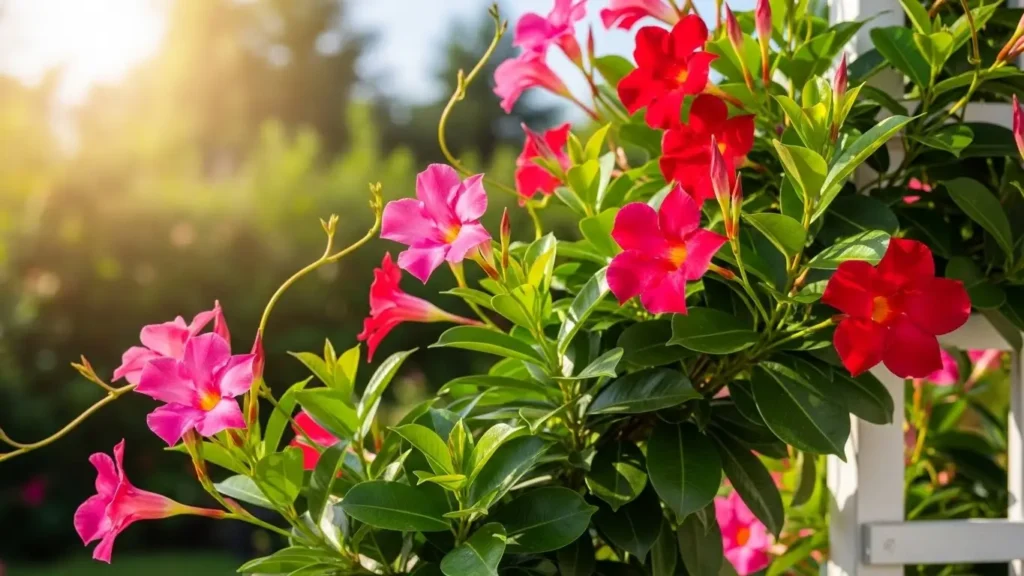
Plant dipladenia in spring after frost when soil reaches 60°F. Space plants 12-18 inches apart for air circulation. According to university extension guidelines, proper spacing prevents fungal issues. Dig holes twice as wide as root balls. Position crowns at ground level and water thoroughly. Install trellises at planting time. Transplant in early spring before active growth begins.
Common Pests and Diseases
Like most garden plants, dipladenia can occasionally face pest or disease issues, especially when stressed by improper care. Regular inspection and quick action prevent minor problems from becoming major infestations. Fortunately, this tropical vine is relatively pest-resistant compared to other flowering plants.
Aphids
Look for small, soft-bodied insects clustered on new growth, buds, and undersides of leaves, often causing distorted growth. Treat with insecticidal soap spray, neem oil, or a strong water spray to dislodge them. Encourage beneficial insects like ladybugs, which naturally control aphid populations.
Spider Mites
Tiny spider-like pests create fine webbing on leaves and cause stippling or yellowing foliage, especially in hot, dry conditions. Increase humidity around plants and spray with neem oil or insecticidal soap every 5-7 days. Severe infestations may require miticide applications according to package directions.
Whiteflies
Small white flying insects congregate on leaf undersides and cause yellowing, weakened growth when present in large numbers. Use yellow sticky traps to monitor and reduce populations, then apply neem oil spray. Similar to issues with croton plant, consistent treatment over several weeks is necessary to break the life cycle.
Powdery Mildew
White, powdery fungal coating appears on leaves and stems, typically in humid conditions with poor air circulation. Remove affected foliage immediately and improve spacing between plants. Spray with fungicidal soap or a baking soda solution (1 tablespoon per gallon of water).
Root Rot
Caused by overwatering or poorly draining soil, resulting in wilting, yellowing leaves, and mushy, dark roots. Reduce watering immediately and improve soil drainage by adding perlite or sand. Severely affected plants may need repotting in fresh, well-draining soil with damaged roots trimmed away.
Common Problems with Dipladenia
Here’s how to troubleshoot common issues with dipladenia:
Poor or No Blooms
Insufficient sunlight is the top cause of poor flowering dipladenia needs 6-8 hours of direct sun daily. Over-fertilizing with high-nitrogen formulas promotes leaves over blooms. Switch to phosphorus-rich fertilizer every 2-3 weeks. Improper pruning removes flower buds. Young plants may take one season to bloom prolifically.
Yellow or Browning Leaves
Overwatering causes root suffocation and yellowing leaves by depriving roots of oxygen. Poor drainage keeps roots constantly wet, worsening the problem. Nutrient deficiencies, particularly nitrogen or iron, also cause yellowing in older leaves. Check soil moisture before watering and ensure adequate drainage. Adjust watering schedules and feed with balanced fertilizer if needed.
Wilting or Drooping
Underwatering during hot weather causes rapid wilting, even in established dipladenia. Transplant shock temporarily disrupts water uptake, causing drooping for several days. Extreme heat above 95°F without adequate moisture triggers wilting. Water deeply and consistently during hot periods. Provide afternoon shade in extreme climates. Newly transplanted plants recover within a week.
Leggy or Sparse Growth
Insufficient light causes dipladenia to stretch, creating leggy stems with sparse foliage and few flowers. Over-fertilizing with high-nitrogen products promotes weak growth. Move plants to sunnier locations and prune leggy stems by one-third. Reduce fertilizer frequency. Similar to spider plant routines, consistent light exposure ensures compact, healthy growth.
Leaf Drop
Sudden environmental changes, such as moving plants indoors or drastic temperature fluctuations, can trigger leaf drop as a stress response. Cold drafts or temperatures below 50°F cause tropical dipladenia to shed leaves rapidly. Gradually acclimate plants to new locations over 7-10 days and protect from cold temperatures and wind.
Bud Drop
Inconsistent watering either too much or too little causes buds to yellow and drop before opening fully. Low humidity combined with high heat can also stress buds, causing them to abort. According to USDA research, maintaining consistent soil moisture during bud formation is critical for flowering success. Water consistently and consider misting plants during dry periods to maintain adequate humidity levels around developing buds.
FAQ
Is a Dipladenia a perennial or annual?
Dipladenia is a tropical perennial in zones 9-11 but is often grown as an annual in cooler climates. In frost-free areas, it returns year after year with proper care.
What is the difference between a Mandevilla and a Dipladenia?
Dipladenia and Mandevilla are closely related, with Dipladenia being more compact and bushy while Mandevilla is a vigorous climbing vine. Dipladenia has smaller, more abundant flowers and works better for containers.
Do Dipladenia come back every year?
This plant returns annually in USDA zones 9-11 where winters are frost-free. In colder zones, bring container plants indoors during winter or treat as an annual and replant each spring.
Do dipladenias like sun or shade?
This plant thrives in full sun and require at least 6-8 hours of direct sunlight daily for best flowering. They tolerate partial shade but produce fewer blooms in shadier locations than sunny spots.