
In This Article
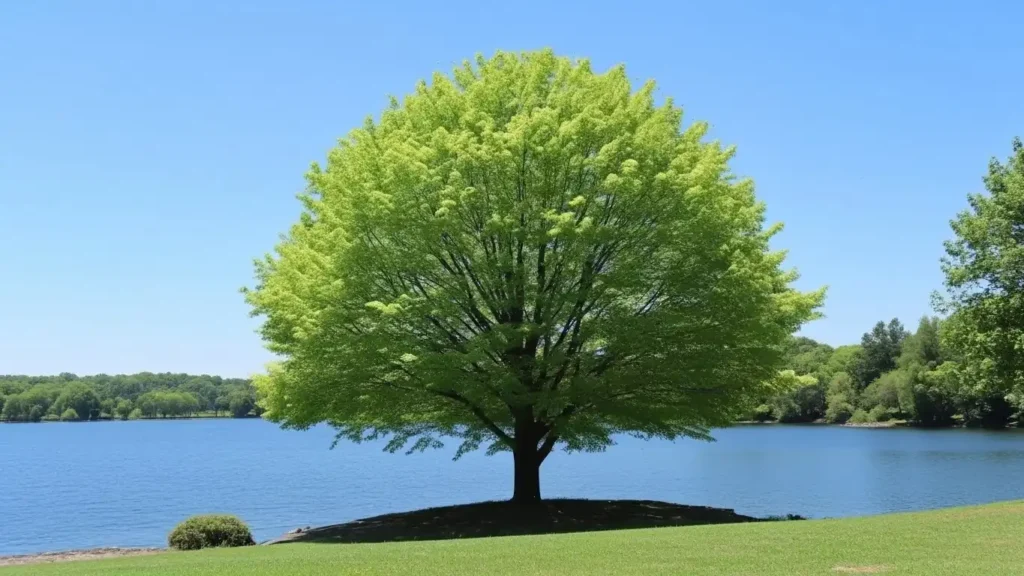
The Princeton Tree (Ulmus americana ‘Princeton’) brings back classic American streetscapes with its majestic vase-shaped canopy and dark green, serrated leaves turning golden yellow in fall. Selected in 1922 from Princeton Nurseries in New Jersey, this cultivar thrives in USDA zones 3-9. Want elm-lined street grandeur without disease heartbreak? This is your tree.
Princeton Tree Care Card
| Characteristic | Details |
|---|---|
| Common Name | Princeton Elm, Princeton American Elm |
| Botanical Name | Ulmus americana ‘Princeton’ |
| Family | Ulmaceae |
| Plant Type | Deciduous tree |
| Mature Size | 60-80 feet tall, 40-60 feet wide |
| Sun Exposure | Full sun to partial shade |
| Soil Type | Adaptable: loam, clay, sandy, well-draining |
| Soil pH | 6.0-7.5 (slightly acidic to neutral) |
| Hardiness Zones | 3-9 (USDA) |
| Native Area | Eastern and Central North America |
| Bloom Time | Early spring (March-April) |
| Toxicity | Non-toxic to pets and humans |
Princeton Tree Care
The Princeton tree thrives with minimal maintenance once established in the right location. You’ll need to focus on proper site selection, adequate space, and consistent care during the establishment period. With appropriate placement and attention to watering during the first few years, this tree practically cares for itself.
Light
Princeton tree needs 6-8 hours of direct sunlight daily for optimal growth, stronger structure, and vibrant fall color, though it tolerates 4-6 hours. Insufficient light causes leggy growth and sparse foliage. Plant in south or west-facing locations, avoiding buildings or larger trees that block sunlight.
Soil
Princeton tree adapts to loam, clay, and sandy soils, tolerating wet, dry, alkaline, and compacted urban conditions. It handles occasional flooding well. For optimal growth, plant in deep, rich, moist soil (pH 6.0-7.5). University of Florida’s Environmental Horticulture Department notes specimens endure decades of stress. Keep mulch 2-3 inches from trunk.
Water
Water newly planted Princeton elms deeply 2-3 times weekly during the first season. Check soil moisture 3 inches deep water when the top 2-3 inches feel dry. After 2-3 years, trees become drought-tolerant like silver buttonwood plant, needing water only during extended dry spells. During hot summers, supplement every 10-14 days if rainfall is scarce.
Temperature and Humidity
Princeton tree tolerates zone 3 temperatures (hardy to zone 2) through zone 9, withstanding -40°F to 95°F without stress. Winter protection is unnecessary. Heat tolerance is equally impressive, making it suitable for northern and southern landscapes. It thrives in humid eastern and drier western climates. Mulch 2-4 inches around roots for insulation.
Fertilizer
Apply a granular fertilizer with a 5-10-5 or 5-10-10 ratio in the root zone each fall. Sprinkle the fertilizer around the drip line, not against the trunk. One annual application is sufficient for mature trees. Young trees may benefit from a second light feeding in spring during active growth. Stop fertilizing by late summer to allow the tree to harden off before winter.
Pruning

Never prune Princeton tree April 1-August 31 when elm bark beetles are active fresh cuts attract disease-spreading beetles. Prune during late fall through early spring when dormant. Remove dead, diseased, or broken branches and narrow crotch angles while young to develop strong structure. Use sharp, clean tools disinfected with 70% alcohol. Hire certified arborists for large branches or disease symptoms.
Propagating Princeton Tree
Princeton tree propagation works best during the growing season when the tree is actively producing new growth. Most gardeners find success with semi-hardwood cuttings taken in late spring through summer.
Propagating by Semi-Hardwood Cuttings
The ideal time ranges from late May through August when new growth has partially hardened. This method has about a 50% success rate, so take multiple cuttings.
Materials needed:
- Sharp, sterile pruning shears
- Rooting hormone powder
- Small pots (4-6 inch)
- Well-draining rooting medium (peat moss and perlite mix or sand)
- Clear plastic bags or humidity dome
Step 1: Select healthy branches with new growth that has begun to firm up but isn’t fully hardened. Cut 6-8 inch sections just below a node, ensuring the cutting is at least 1/4 inch wide. Take cuttings from young, vigorous trees older trees lose regenerative ability over time.
Step 2: Remove leaves from the bottom half of each cutting. Wound the base by making 1-inch vertical cuts on opposite sides. Immediately place prepared cuttings in water to maintain viability and prevent drying.
Step 3: Dip the wounded base in rooting hormone powder, coating thoroughly. Insert cuttings 2-3 inches deep into moist rooting medium. Space multiple cuttings 3-4 inches apart in larger containers to allow adequate airflow.
Step 4: Cover pots with clear plastic bags or place under a humidity dome to maintain high humidity. Keep in bright, indirect light at 65-85°F. Water when the top inch of medium feels dry, keeping it consistently moist but not waterlogged to prevent rot.
Roots should develop within 4-6 weeks to 8-12 weeks depending on conditions. Gently tug cuttings after 6 weeks resistance indicates root formation. Gradually acclimate rooted cuttings to lower humidity over 2 weeks before transplanting to outdoor locations.
Propagating by Layering
Layering works well for Princeton tree propagation, especially when started in spring. This method has higher success rates than cuttings because the stem remains attached to the parent tree during rooting.
Step 1: In May, select a flexible young branch or sapling that can bend to ground level. Remove a few leaves from a 6-10 inch section in the middle of the branch where it will contact soil.
Step 2: Bend the denuded section to ground level and pin it horizontally using wire pins or stakes. Bury this section 1-2 inches deep in soil, packing firmly around it. The protruding tip should point upward like a regular stem.
Step 3: Water daily to keep soil constantly moist throughout the growing season. Allow an entire growing season for rooting roots may form after 1-2 months but leaving until spring ensures better establishment and vigor.
After several months or the following spring, check for roots by gently excavating around the buried section. Clip the new plant from the parent and transplant carefully to its permanent location with adequate spacing.
Planting and Transplanting Princeton Tree

Plant Princeton elm in spring or fall when temperatures are moderate and stress is minimal. This tree grows 50-70 feet tall with a 30-50 foot spread, so space trees 40-50 feet apart for proper canopy development. Closer spacing creates competition for light and nutrients, reducing tree vigor.
Dig a planting hole 2-3 times wider than the root ball but no deeper to prevent settling. The root flare (where trunk widens at the base) should sit at or slightly above ground level. The Arbor Day Foundation recommends proper planting depth as critical for tree establishment and long-term health in landscape settings. Place the tree in position, backfill halfway with native soil, and saturate with water before continuing.
Transplant mature Princeton trees only with professional help their extensive root systems make moving difficult and stressful. Similar to considerations for best privacy trees, young trees transplant fairly easily in early spring before bud break. Water transplanted trees 2-3 times weekly for the first 6-8 weeks to reduce transplant shock and promote root establishment.
Common Pests and Diseases
Like most garden trees, the Princeton tree can face occasional pest or disease challenges despite its improved resistance.
Elm Bark Beetles
These beetles spread Dutch elm disease by carrying fungal spores from infected to healthy trees. Look for small exit holes in bark and fine sawdust around the trunk base. Remove and destroy dead or dying elm wood immediately, as beetles breed in this material. Prune only during dormant season to avoid attracting beetles with fresh wound scents.
Elm Leaf Beetle
This pest can defoliate portions of the tree, with damage levels fluctuating dramatically between years. Watch for skeletonized leaves with only veins remaining and small yellow-green larvae on leaf undersides. Treat with insecticidal soap or neem oil when populations are high, though healthy trees usually tolerate moderate damage without long-term harm.
Powdery Mildew
This fungal disease creates white, powdery coating on leaves, particularly during humid conditions. Look for dusty white patches on leaf surfaces in late summer. Improve air circulation through proper spacing and pruning during dormant periods. Destroy fallen infected leaves to reduce spore overwintering and following year’s infection pressure.
Verticillium Wilt
All elms, including Princeton cultivars, are susceptible to this soil-borne fungal disease. According to North Carolina State University Extension, symptoms include wilting branches, yellowing leaves, and brown streaking in sapwood when bark is peeled. Avoid planting elms where Verticillium has killed other trees the fungus persists in soil for years.
Dutch Elm Disease
While the Princeton tree shows good disease resistance, no cultivar is completely immune when stressed. Watch for yellowing and wilting of individual branches that progress rapidly throughout the canopy. Brown streaking appears in outer sapwood when bark is peeled back. Contact a certified arborist immediately if DED is suspected early intervention with fungicide injections may save the tree.
Common Problems with Princeton Tree
Here’s how to troubleshoot common issues:
Wilting or Drooping Branches
Your tree may have water stress or disease. Underwatering causes temporary wilting that recovers with deep watering. Transplant shock in new trees requires consistent moisture for 6-8 weeks. Wilting unresponsive to watering may indicate Dutch elm disease or verticillium wilt. Check for brown bark streaking and consult an arborist if persisting.
Yellow or Browning Leaves
Leaf discoloration stems from watering issues or nutrient problems. Overwatering causes yellowing, especially on lower branches. Let top inches dry between waterings. Nitrogen or iron deficiency causes yellowing with green veins. Apply balanced fertilizer in fall and add compost. Early fall yellowing is natural.
Weak or Sparse Growth
Insufficient sunlight causes leggy, weak growth on Princeton elm. This tree needs 4-6 hours of direct sun daily but prefers full sun for optimal vigor. Relocate young trees or prune competing vegetation. Over-fertilizing with high-nitrogen formulas produces weak growth. Apply balanced fertilizer once annually in fall.
Cracked or Raised Sidewalks
Extensive root systems impact nearby hardscaping as trees mature. Roots crack and raise sidewalks and driveways. Provide 10-15 feet clearance from pavement when planting. For existing trees causing problems, consult an arborist about root pruning or consider installing flexible paving materials that accommodate root growth.
Bark Damage or Wounds
Physical bark injury creates disease and pest entry points. Young trees suffer from lawnmower strikes, string trimmers, and animal browsing. Like majesty palm care requirements, protect Princeton trees from deer and rabbits with vinyl guards. Maintain 3-4 foot mulch rings. Trim loose bark but avoid wound dressing trees seal injuries naturally.
FAQ
Is Princeton elm a good tree?
Yes, the Princeton tree is undisputably one of the most ornamental shade trees, featuring a stately vase-shaped form and excellent disease resistance. Its fast growth, adaptability to various conditions, and improved Dutch elm disease tolerance make it a reliable landscape choice.
How big do Princeton elm trees get?
Princeton elm typically reaches 60-80 feet tall with a spread of 40-60 feet at maturity in ideal growing conditions. This tree grows at a fast rate, adding 3-5 feet annually under optimal conditions with adequate water and nutrients. Plan for adequate space these trees develop substantial canopies.
What caused the death of 80% of Dutch elm trees in the 1980s?
Dutch elm disease, a fungal infection spread by bark beetles, decimated American elm populations during the 1970s and 1980s. The disease peaked during this period in many cities before resistance programs began. Toronto lost approximately 80% of its elms during this devastating period.
What does a Princeton elm look like?
The Princeton tree features a distinctive vase-shaped, broad-rounded crown with dark green, rough-textured leaves measuring up to 6 inches long. The foliage creates dense shade throughout summer before transforming to golden yellow in fall. Mature trees develop deeply furrowed gray-brown bark adding winter interest.