
In This Article
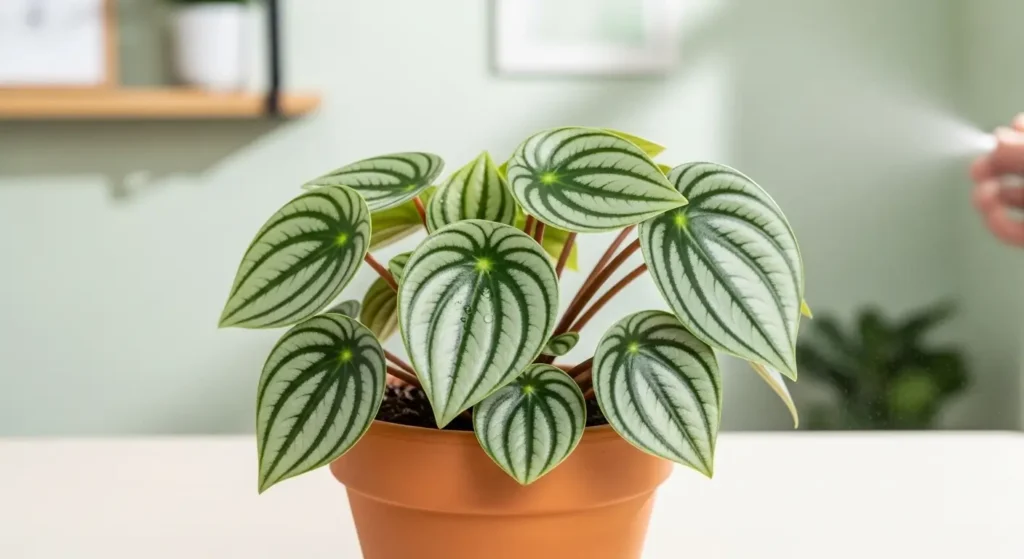
If you’re looking for a houseplant that’s as eye-catching as it is easy to care for, the watermelon peperomia (Peperomia argyreia) is calling your name. This tropical beauty steals the show with its distinctive watermelon-patterned leaves silvery-green stripes on deep green foliage that look like they belong on a fruit stand.
Native to South America, particularly Brazil and Ecuador, this compact plant has become a favorite among indoor gardeners. The best part? It’s beginner-friendly and forgiving of occasional care mistakes. Let’s face it we’ve all killed a plant or two, but this one’s tougher than it looks.
Plant Care Card
| Attribute | Details |
|---|---|
| Common Name | Watermelon Peperomia, Watermelon Begonia |
| Botanical Name | Peperomia argyreia |
| Family | Piperaceae |
| Plant Type | Tropical perennial |
| Mature Size | 6-12 inches tall, 8-10 inches wide |
| Sun Exposure | Bright indirect light |
| Soil Type | Well-draining, peat-based mix |
| Soil pH | 6.0-6.5 (slightly acidic) |
| Hardiness Zones | 10-12 (USDA) |
| Native Area | South America (Brazil, Ecuador) |
| Toxicity | Non-toxic to pets and humans |
Watermelon Peperomia Care
Watermelon peperomia is pretty easy to care for, making it perfect for beginners. The key is getting the basics right light, water, and a good potting mix. Stick with me, and you’ll have a thriving plant in no time.
Light
Watermelon peperomia thrives in bright indirect light think of a spot near an east or north-facing window where the light filters in gently. Direct sunlight will scorch those beautiful patterned leaves, causing them to fade or develop brown spots. On the flip side, too little light makes the plant leggy and dulls the striking silver markings.
Honestly, this plant adapts well to medium light conditions too, but the leaf patterns stay most vibrant in brighter spots. If you notice the stems stretching toward the light source, it’s time to move it closer to a window.
Soil
Watermelon peperomia needs well-draining soil that doesn’t stay soggy. According to research from Cornell University, proper drainage is essential for preventing root rot in tropical houseplants. A peat-based potting mix works perfectly, or you can create your own blend using a 2:1:1 ratio of peat, perlite, and coarse sand.
The key is keeping the soil light and airy. Heavy, compacted soil spells disaster for these plants since their roots need oxygen to stay healthy.
Water
Here’s the thing: watermelon peperomia prefers to dry out slightly between waterings. Check the top 2-3 inches of soil with your finger if it feels dry, it’s time to water. During spring and summer, you’ll typically water every 7-10 days. In fall and winter, cut back to every 2-3 weeks.
Overwatering shows up as yellowing leaves and mushy stems. Underwatering causes leaves to droop and wrinkle. The trick is finding that sweet spot. Additionally, always use room-temperature water and avoid getting the leaves wet, as this can lead to fungal issues.
When you water, do it thoroughly until water drains from the bottom, then empty the saucer so the plant isn’t sitting in standing water.
Temperature and Humidity
Watermelon peperomia loves warmth aim for temperatures between 65-75°F. It tolerates typical household humidity levels just fine, but it’ll appreciate 40-50% humidity if you can provide it. Moreover, keep it away from cold drafts, air conditioning vents, and heating units.
If your home is particularly dry, group it with other plants or place it on a pebble tray with water to boost humidity naturally.
Fertilizer
Feed your watermelon peperomia with a balanced liquid fertilizer diluted to half strength every 2-4 weeks during spring and summer. However, stop fertilizing in fall and winter when growth naturally slows down. Overfertilizing causes salt buildup in the soil and can burn the roots.
Propagating Watermelon Peperomia
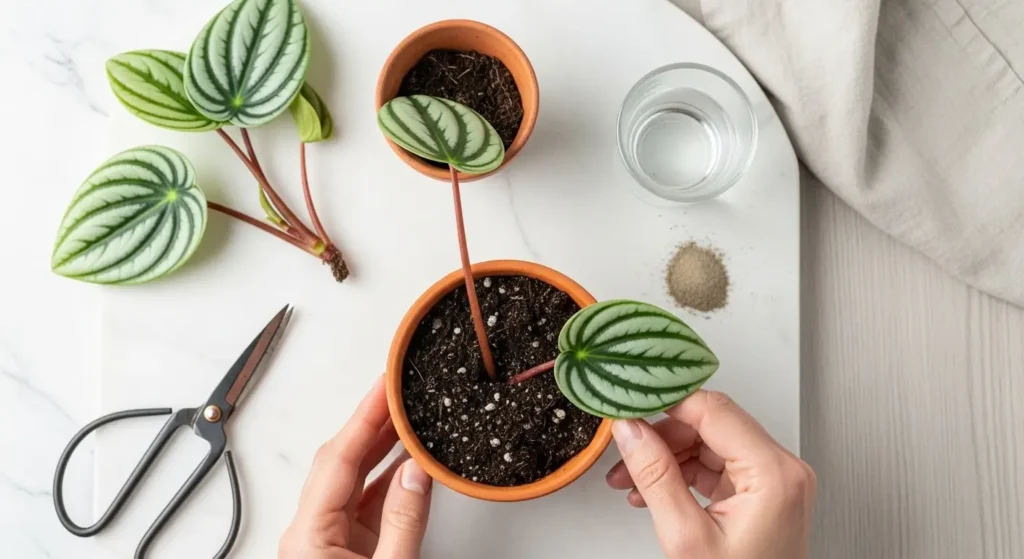
The best time to propagate this plant is during spring and summer when it’s actively growing.
Propagating by Leaf Cuttings
This is the most common and successful method for watermelon peperomia. Furthermore, according to the University of Missouri Extension, leaf cuttings are an effective propagation technique for many houseplants.
Materials needed:
- Sharp, sterilized scissors or knife
- Small pot with drainage holes
- Well-draining potting mix
- Plastic bag or humidity dome (optional)
Steps:
- Select a healthy, mature leaf with about 2 inches of the petiole (leaf stem) attached. Make a clean cut where the petiole meets the main stem.
- Let the cutting callus over for a few hours to reduce the risk of rot. Meanwhile, prepare your pot with moist potting mix.
- Insert the petiole into the soil at a 45-degree angle, burying about an inch of the stem. Firm the soil gently around it.
- Place the pot in bright indirect light and keep the soil consistently moist but not soggy. You can cover it with a plastic bag to maintain humidity, but remove it daily to prevent mold.
In 4-8 weeks, you’ll see new growth emerging from the base of the petiole. That’s when you know roots have formed!
Propagating by Division
If your watermelon peperomia has multiple rosettes or has become crowded, division is a quick method that gives you instant mature plants.
Steps:
- Gently remove the plant from its pot and shake off excess soil to expose the root system.
- Identify natural separation points where individual rosettes have their own root systems. Carefully tease them apart or use a clean knife to separate them.
- Plant each division in its own pot with fresh potting mix, water thoroughly, and place in bright indirect light.
Divisions establish faster than leaf cuttings because they already have developed roots. You’ll see new growth within 2-3 weeks.
Potting and Repotting Watermelon Peperomia
Watermelon peperomia grows slowly and doesn’t need frequent repotting. Look for these signs it’s time: roots growing out of drainage holes, water draining too quickly, or the plant becoming top-heavy. Typically, you’ll repot every 2-3 years.
When to Repot
Spring is the best time for repotting since watermelon peperomia is entering its active growth phase. Choose a pot that’s only 1-2 inches larger than the current one—these plants prefer being slightly rootbound.
How to Repot
Gently remove watermelon peperomia from its current pot and shake off old soil. Trim any dead or mushy roots with sterile scissors. Place it in the new pot with fresh potting mix, making sure not to bury the crown deeper than it was before. Water thoroughly and return it to its usual spot.
Common Pests and Diseases
Like most houseplants, watermelon peperomia can occasionally attract pests, but they’re generally pest-resistant when kept in good conditions.
Spider Mites
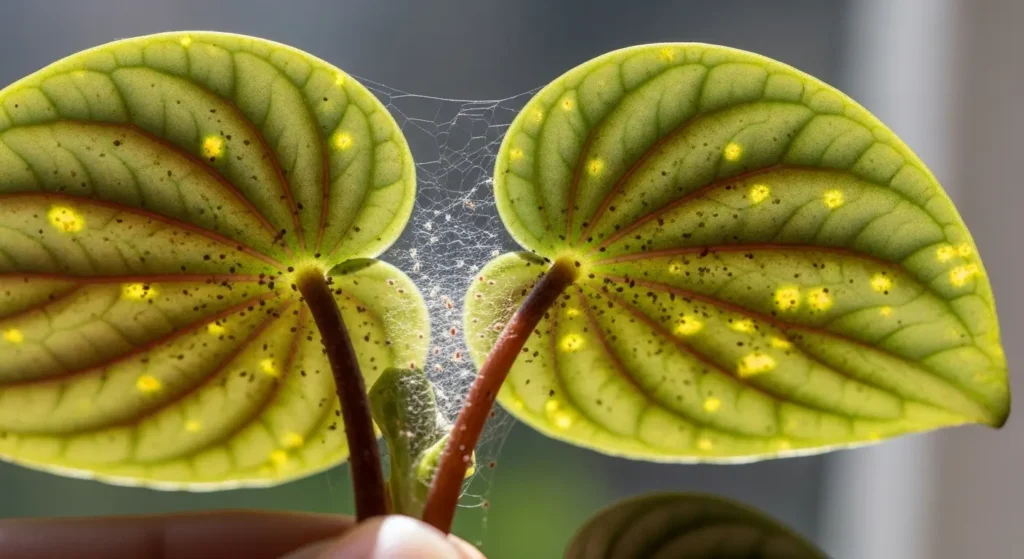
Look for fine webbing on leaf undersides and tiny moving dots. The leaves may also appear stippled or dusty. Treat with insecticidal soap or neem oil, spraying thoroughly every 5-7 days until they’re gone.
Mealybugs
These white, cottony pests hide in leaf crevices and along stems. They suck plant sap and leave behind sticky honeydew. Remove them with a cotton swab dipped in rubbing alcohol, or use neem oil spray.
Scale Insects
Scale appears as small brown or tan bumps on stems and leaves. They’re stationary and can be scraped off with your fingernail or treated with horticultural oil. Check plants regularly since they spread slowly but persistently.
Aphids
These small green or black insects cluster on new growth and undersides of leaves. They cause distorted leaves and sticky residue. Wash them off with a strong stream of water or treat with insecticidal soap.
Common Problems With Watermelon Peperomia
Here’s how to troubleshoot common issues you might encounter with your watermelon peperomia:
Yellow Leaves / Yellowing Leaves
Yellow leaves are the plant’s way of telling you something’s off. The most common culprit is overwatering if the soil stays wet for too long, the roots can’t breathe and start to rot. Check your watering schedule and make sure the pot has drainage holes.
Another cause is nutrient deficiency, especially if you haven’t fertilized in months. Additionally, older leaves naturally yellow and drop as part of the plant’s lifecycle. If it’s just one or two bottom leaves and the rest look healthy, don’t panic. Trim off the yellow leaves and adjust your care routine as needed.
Similar to care requirements for spider plants, maintaining consistent moisture without overwatering is key.
Brown Leaves / Brown Leaf Tips
Brown leaf tips on your watermelon peperomia typically signal low humidity or water quality issues. Tap water contains minerals like fluoride and chlorine that can accumulate in the soil and damage sensitive roots. Try using filtered or distilled water instead.
Low humidity also causes browning, especially if you’re running heat in winter. Underwatering can lead to crispy brown edges too. The solution? Increase humidity with a pebble tray or humidifier, and make sure you’re watering when the top few inches of soil dry out. Trim off the brown parts with clean scissors to keep the plant looking tidy.
Drooping or Wilting Leaves
When leaves droop, watermelon peperomia is thirsty or drowning. Feel the soil to determine which it is. If the soil is bone dry, give it a thorough watering and the leaves should perk up within hours. However, if the soil is wet and leaves are still drooping, you’ve overwatered and the roots may be struggling.
In the case of overwatering, let the soil dry out completely before watering again. If the problem persists, check the roots for rot and repot if necessary.
Leggy Growth / Sparse Foliage
Leggy stems with lots of space between leaves mean your plant isn’t getting enough light. Move it to a brighter location somewhere with more indirect sunlight. You can also prune back the leggy stems to encourage bushier growth.
As with many foliage plants like the croton plant, adequate light is crucial for maintaining compact, vibrant growth.
Leaf Drop / Falling Leaves
Sudden leaf drop usually happens when watermelon peperomia experiences shock from temperature changes, overwatering, or being moved to a drastically different environment. These plants don’t like change. Make sure the temperature stays consistent and avoid placing it near drafts or vents.
If you’ve just brought it home or moved it to a new spot, give it a few weeks to adjust. It should stop dropping leaves once it acclimates.
FAQ
How do you take care of a watermelon peperomia?
Water when the top 2-3 inches of soil dry out, provide bright indirect light, and keep temperatures between 65-75°F. Feed it monthly during growing season with diluted liquid fertilizer. Watermelon peperomia is low-maintenance and perfect for beginners, making it an excellent choice alongside other easy-care options like the snake plant.
How often should I water a watermelon peperomia?
Water every 7-10 days during spring and summer, and every 2-3 weeks in fall and winter. Always check the soil moisture first the top few inches should be dry before watering. Overwatering is the number one killer of these plants.
How to make watermelon peperomia bushy?
Prune leggy stems back to just above a leaf node to encourage branching. Additionally, make sure it’s getting enough light low light causes sparse, stretched growth. Rotate the pot every few weeks so all sides get equal light exposure.
Is watermelon peperomia an air purifier?
While watermelon peperomia does contribute to indoor air quality like most houseplants by producing oxygen and absorbing carbon dioxide, it’s not on NASA’s list of top air-purifying plants. However, it’s still a fantastic addition to your indoor garden for its stunning looks and easy care requirements.
2 thoughts on “Watermelon Peperomia: The Ultimate Care & Growing Guide”
Comments are closed.